
Adam Warwick retweetledi

After slavery ended, Brazil launched a campaign called blanqueamiento, meaning to "whiten" the country. Between 1880 and 1930, over 4 million Europeans were brought in and interracial marriage was encouraged to reduce Black and Indigenous ancestry over time.
After slavery was abolished in Brazil in 1888, the country’s leaders feared the newly freed Black majority and sought to reshape the nation’s population. They promoted “blanqueamiento” (whitening), a state policy rooted in racist ideology that aimed to reduce the presence of Black and Indigenous people through immigration and mixing with Europeans.
Between 1880 and 1930, Brazil encouraged the arrival of more than 4 million European immigrants, mainly Italians, Portuguese, Germans, and Spaniards, to work on plantations and in cities.
The government believed that interracial marriage would gradually “dilute” African and Indigenous ancestry, producing a whiter population over generations. This policy was even supported by intellectuals of the time, who framed it as a path to “progress” and “modernization.”
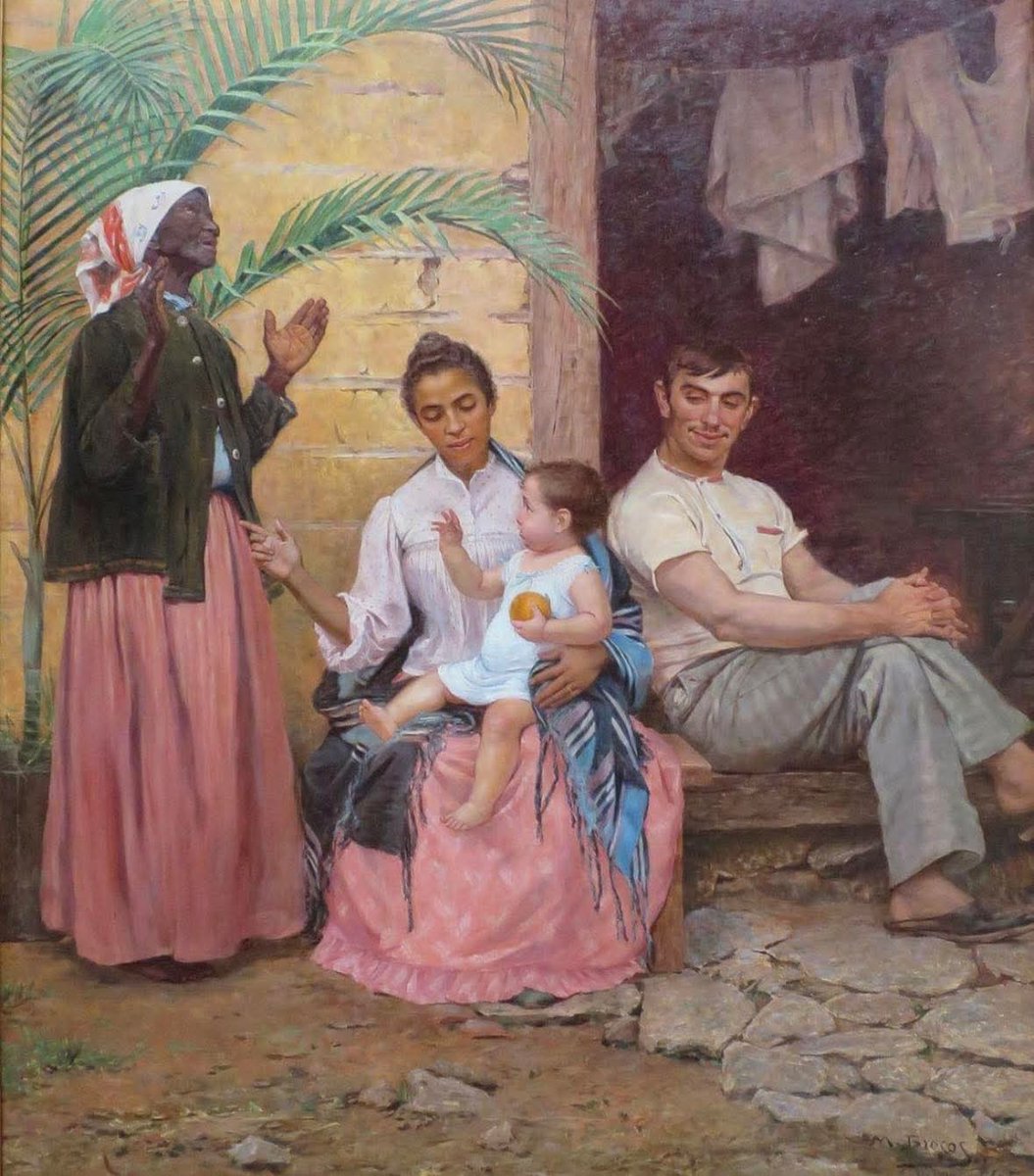
📷 : a 1895 painting "Ham's Redemption" (A Redenção de Cam) by Spanish-Brazilian artist Modesto Brocos.
The painting illustrates 19th Century theory of "whitening" (branqueamento) through miscegenation, which was a controversial racial ideology prevalent in Brazil. It depicts a Black grandmother, her mixed-race (mulatta) daughter, the daughter's white Portuguese husband, and their white child. The grandmother, with hands raised, is seen as thanking God for her white grandson, symbolizing the perceived "redemption" of her lineage from the "curse of Ham". The work won the Gold Medal at the National Fine Arts Exposition in Rio de Janeiro in 1895 and is a classic illustration of the racist vision of the era.
© Reddit
#archaeohistories
English