Adrián Cabrera

1.1K posts

Adrián Cabrera banner
Adrián Cabrera

Adrián Cabrera

@adrianm_cabrera

"No esperes que el rigor de tu camino, que tercamente se bifurca en otro, que tercamente se bifurca en otro, tendrá fin".

Ciudad Autónoma de Buenos Aires, Argentina Katılım Nisan 2013
728 Takip Edilen128 Takipçiler
Sabitlenmiş Tweet
Adrián Cabrera
Adrián Cabrera@adrianm_cabrera·
Refugio El Vergel, acceso Gándara, Chascomús.
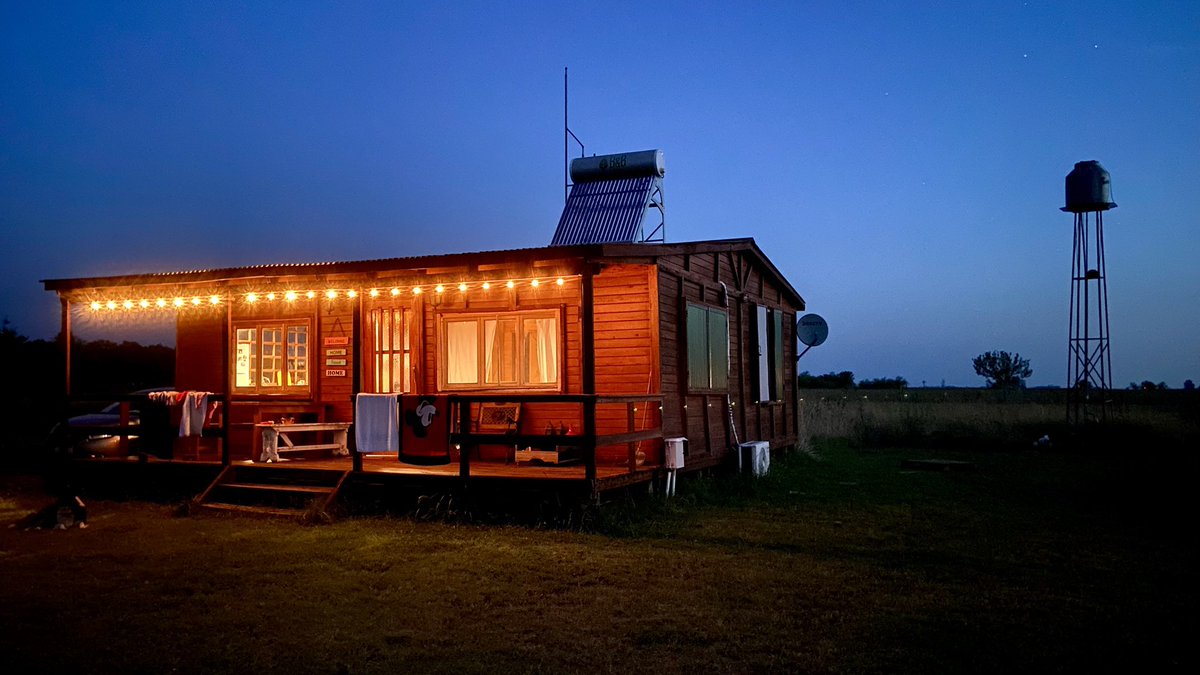
Adrián Cabrera tweet mediaAdrián Cabrera tweet media
Buenos Aires, Argentina 🇦🇷 Español
0
0
0
205
🇦🇷 lucas llach 🇺🇦
Le di a Claude un libro de 400 páginas en indonesio para que me lo resuma en 10 páginas en inglés. Lo hizo en cinco minutos. Incluso si no está perfecto, no se puede creer. La inteligencia artificial nos acerca a poder leer literatura (al menos académica) en todos los idiomas.
Español
17
3
243
44K
Adrián Cabrera retweetledi
Marcelo Cetkovich
Marcelo Cetkovich@MCetko·
Médicos, no mitos: la salud mental detrás del escándalo de los anestésicos - Infobae Clarísimo aquí el dr Ricardo Corral. infobae.com/opinion/2026/0…
Español
0
1
1
111
Google en español
Google en español@googleespanol·
Si los resúmenes de vídeo en @NotebookLM cambiaron tu forma de estudiar, prepárate para cambiar tu forma de crear contenido. 🍿 Llegan los Resúmenes en Video Cinematográfico. ✅ Libre de marcas de agua. ✅ Alta fidelidad de imagen y movimiento. ✅ Acceso directo en web y móvil.
Español
23
113
661
28.8K
Adrián Cabrera
Adrián Cabrera@adrianm_cabrera·
@MasGrandeRP Pero si Coudet jugó en River…. ¿Cómo no va a conocer la historia del Club?
Español
0
0
0
2.5K
#ElMasGrande👑
#ElMasGrande👑@MasGrandeRP·
Hay que llevarlo al Chacho Coudet a recorrer el museo de River... tal vez no conozca la historía del club.
Español
106
17
556
212.2K
Adrián Cabrera
Adrián Cabrera@adrianm_cabrera·
Oh @claudeai llegaste a mi vida volando y te quité las alas… me besas y me vuelves listo”🎵
GIF
Español
0
0
0
25
Om Prakash, MD
Om Prakash, MD@ompsychiatrist·
As one of the editors, I’m pleased to invite colleagues to the inauguration of book 'Spectrum Disorders in Psychiatry' at #ANCIPS2026, New Delhi. The book will be released during the inaugural function (28.01.2026) by IPS President Prof. Savita Malhotra and is dedicated to the memory of Late Dr. Ram Kumar Solanki. Looking forward to your presence @Ancips2026
English
11
2
22
740
Om Prakash, MD
Om Prakash, MD@ompsychiatrist·
Antidepressants and Severe Depression Q & A for Public 🧵 Q1. Do antidepressants work in severe depression? Yes. The strongest evidence comes from a large network meta-analysis of 522 randomized controlled trials involving more than 116,000 adults, which found that all commonly used antidepressants were more effective than placebo in major depressive disorder (Cipriani et al., The Lancet, 2018). While average effect sizes were modest, they were consistent and clinically meaningful, particularly relevant in moderate to severe illness. Q2. Critics claim these benefits are “statistical illusions.” Is that accurate? No. That claim overreaches. Concerns about blinding, expectancy effects, and publication bias are legitimate and widely acknowledged in psychiatry. However, antidepressant efficacy has been demonstrated across multiple analytic approaches and independent datasets. The persistence of benefit across sensitivity analyses argues against the idea that results are purely artifacts (Cipriani et al., The Lancet, 2018; Hieronymus et al., Molecular Psychiatry, 2016). Q3. Are antidepressants ineffective in mild depression? Often, yes. Patient-level analyses of FDA trial data show minimal benefit in mild depression, where psychosocial interventions are usually preferred. The same analyses, however, demonstrate clinically meaningful symptom reduction in severe depression, with differences large enough to matter in practice (Fournier et al., PLoS Medicine, 2010). This distinction is broadly accepted in clinical guidelines. Q4. What does the evidence say about suicide risk? Risk depends on age and timing. Regulatory reviews show an increased risk of suicidal thoughts and behaviour in children and adolescents, particularly early in treatment, which led to the FDA black-box warning (Stone et al., BMJ, 2009). In adults, randomized and observational studies generally show no increase in suicide risk and some large population studies report lower rates of suicide attempts among treated patients after adjustment for illness severity (Khan et al., Archives of General Psychiatry, 2003; Coupland et al., BMJ, 2015). Q5. Did antidepressant safety warnings have unintended consequences? Possibly. After antidepressant prescribing declined following regulatory warnings, several population-level studies observed rises in suicide attempts among young people. These studies are ecological and cannot establish causation but the temporal association has raised concerns about reduced access to effective treatment (Gibbons et al., American Journal of Psychiatry, 2007; Lu et al., BMJ, 2014). Q6. Are antidepressants better than psychotherapy? This is the wrong comparison. Meta-analyses show antidepressants and evidence-based psychotherapies have similar short-term efficacy. However, in moderate to severe depression, combined treatment is superior, leading to faster improvement and lower relapse rates. This integrated approach is recommended by major international guidelines (Cuijpers et al., World Psychiatry, 2014; Cuijpers et al., Lancet Psychiatry, 2020). Q7. Do antidepressants reduce relapse in the long term? Yes, for recurrent or severe depression. Maintenance antidepressant therapy reduces relapse risk by approximately 50–70% compared with discontinuation, especially in patients with multiple prior episodes (Geddes et al., The Lancet, 2003; Glue et al., Nature Reviews Drug Discovery, 2010). Q8. Are antidepressants driving rising mental health problems, and are psychiatrists ignoring their harms? No. There is no credible evidence that antidepressants drive rising mental health problems. Increases in depression disability are largely linked to social stressors such as inequality, trauma, substance use & pandemics. Psychiatry does not ignore harms. Its modern practice emphasises informed consent, close monitoring and regular review. Antidepressants are not for everyone but they remain effective for many people with severe depression.
Om Prakash, MD tweet media
English
25
20
63
13.4K
Adrián Cabrera
Adrián Cabrera@adrianm_cabrera·
Great work by @Grok answering on the sources of scientific evidence of pharmacological treatments in #psychiatry
English
1
0
0
41
Adrián Cabrera retweetledi
CochraneIberoamerica
CochraneIberoamerica@CochraneIberoam·
La evidencia científica sobre un tratamiento no depende de un solo estudio, sino de la conclusión del conjunto de estudios relevantes 👉 Suscríbete a nuestro boletín para estar al día de las últimas revisiones Cochrane y tener recursos para tus pacientes:sbee.link/m8gcv7jy9r
Español
0
9
16
1K
Tácticas River
Tácticas River@TacticasCARP·
River vs Platense, fecha 1 del torneo clausura 2025.
Tácticas River tweet media
Español
9
9
410
14.8K
Allen Frances
Allen Frances@AllenFrancesMD·
Remarkable gift to mental health field: 'WORLD PSYCHIATRY' is by far best mental health journal- 9 straight years at #1 for impact factor/very readable/most pertinent for clinical practice. Please pass word that latest & all back issues available free at: wpanet.org/english
English
4
22
78
4.1K