Adrian Powell

1.3K posts

Adrian Powell banner
Adrian Powell

Adrian Powell

@adrianwrites1

Pastor-theologian, former Redcoat at OSU press box elevator, author of “Resident Aliens”Faith Community Grove City’s expositor; pastor-teacher, husband & papi.

Columbus, OH Metro Area Katılım Ocak 2014
464 Takip Edilen142 Takipçiler
Adrian Powell retweetledi
The Astronomy Guy
The Astronomy Guy@astrooalert·
🚨 GENERAL ALERT! THE HIGHEST-QUALITY VIDEO OF THE MOON IN HISTORY HAS JUST BEEN UNVEILED 😱 IT'S SIMPLY SPECTACULAR.
English
116
1.9K
13.2K
264.5K
Adrian Powell retweetledi
Chad Bird
Chad Bird@birdchadlouis·
The Hebrew verb for sanctify is קדשׁ (qadash), which means “to make holy or remove from common use." Sanctification is often misunderstood merely as moral improvement or good works. While good works are important, they do not make us holy; God does. Holiness belongs exclusively to God (Rev. 15:4; Isa. 6:3). Humans cannot sanctify themselves any more than they can make themselves divine. Holiness is a 100% God thing and a 0% human thing. We can exercise ourselves into physical shape or study ourselves into mental shape, but we cannot sanctify ourselves into holy shape. So when the Bible speaks of people “consecrating” or “sanctifying” themselves (Lev. 11:44; Exod. 19:22), it does not mean they make themselves holy. Rather, they are to remain in the holiness God has already given them. Holiness is always received from God, never self-generated. In the Old Testament, holiness was about proximity to God. The closer something was to his presence, the holier it was, whether people, places, or objects. God's holiness rippled outward from the inner sanctum of the temple, the Holy of Holies, to the Holy Place, the holy courts, holy city, and holy land. In the New Testament, holiness is no longer tied to the Jerusalem temple but to Jesus Christ, the embodied temple. He is the true Holy of Holies (John 1:14; 2:21), the one who sanctifies us through his sacrifice (Heb. 10:10). His blood makes us holy (Heb. 13:12), and we are sanctified in him (1 Cor. 6:11). Even ongoing sanctification is God’s work, not ours. Paul prays, “May the God of peace himself sanctify you completely” (1 Thess. 5:23). Jesus prays, “Sanctify them in the truth; your word is truth” (John 17:17). The Holy Spirit draws us into Christ’s presence, "holying" us through Baptism, the Word, and the Lord’s Supper. Good works naturally flow from sanctification, but they are not its cause but its effect. Because God sanctifies us, good works result. Holiness is not what we do but what God does in us and for us through Jesus Christ. ADDITIONAL RESOURCES ON THIS TOPIC: -Article: "What is Sanctification? Revisiting the Old Testament for the Answer" 1517.org/articles/what-… -Video: "Sanctification: A Matter of Proximity" : youtube.com/watch?v=VOhUH7… _________ Join our online community of Bible readers and students! For more information and to sign up, visit 1517.org/oneyear
YouTube video
YouTube
Chad Bird tweet media
English
9
81
333
7.6K
Adrian Powell retweetledi
Nancy Pearcey
Nancy Pearcey@NancyRPearcey·
How Christianity ended slavery: "Many people fail to realize that virtually every society has had slaves — from the Chinese to the Arabs to the Native Americans. In fact, there is only one worldview that gave rise to moral opposition to slavery — namely, Christianity. The first person to offer a moral and logical argument against slavery as an institution was a church father writing in the 4th century: Gregory of Nyssa argued explicitly on the ground that all persons are in the likeness of God — and therefore, he said, no one has a right to buy or sell another person. In the Middle Ages, Christians made various efforts to limit or outlaw slavery. As early as the 7th century, Saint Bathilde (wife of King Clovis II) became famous for her campaign to stop the slave trade.  St. Anskar tried to halt the Viking slave trade. Finally, in the 13th century, the great theologian Thomas Aquinas pronounced that slavery is a sin. But by then, it was not even a matter of controversy. It was the settled consensus among Christians that human bondage was wrong. This history makes it even more surprising that slavery later made a comeback in the United States. American slaveholders were going against centuries of settled conviction that slavery was wrong. And even then, who rose up to oppose the slaveholders? Who led the movement to abolish slavery? Mostly Christians.  Many abolitionists were inspired by the Second Great Awakening, a series of religious revivals in the 19th century, which emphasized that all humans are created equal in the eyes of God. For example, the famous revivalist Charles Finney, a Presbyterian minister, condemned slavery from the pulpit, calling it a “great national sin.” He refused to give communion to slaveholders. Finney was the president of Oberlin College, an important stop on the Underground Railroad, a network of secret safe houses for escaped slaves who were fleeing north. Finally, there was the Civil War. America is the only country on Earth to sacrifice hundreds of thousands of its own citizens in a war to end slavery. Sociologist Rodney Stark, in For the Glory of God, points out that it was not Enlightenment philosophers who crafted a moral indictment of slavery. It was mostly evangelical Christians, and they were motivated by their firm conviction that all people are made in the image of God." --"Slavery and the Image of God," Science & Culture Today. Link below
Nancy Pearcey tweet media
English
54
627
1.8K
34.9K
Adrian Powell retweetledi
📸🔭Brandon Berkoff🚀✨
I’m not asking you, I’m telling you. Take a moment and listen to this 81 second response from Victor Glover after being asked if he had any thoughts leading up to Easter. I don’t quite think it can be overstated how perfect this crew is for the job.
English
621
9.2K
51.8K
2.1M
Adrian Powell retweetledi
College Football Classics
Montana Tech coach Bob Green has me dead 😂
English
15
219
1.2K
168.1K
Adrian Powell retweetledi
Anish Moonka
Anish Moonka@anishmoonka·
You’re looking at a real dish. Thomas Keller, chef at one of the few restaurants on earth with 3 Michelin stars, made it after Pixar asked him one question: what would you cook if the world’s most famous food critic walked into your kitchen? His answer is called confit byaldi. It’s a fancier, layered version of the peasant stew ratatouille, and the Pixar team actually learned to cook it. The film’s producer interned at Keller’s restaurant, The French Laundry in Napa Valley, during production. They kept live rats in a hallway at Pixar for over a year so animators could study how their fur and tails moved. This movie almost never got made. Jan Pinkava, the original director, worked on it for 6 years before Pixar’s leadership lost faith in the story. With about 18 months to go before the premiere, Steve Jobs personally called Brad Bird (the guy who directed The Incredibles) while Bird was on vacation. They asked him to take over. Bird rewrote the script from scratch and redesigned the rats to walk on four legs instead of two, so they’d look like actual rats. The $150M film grossed $624M and won the Oscar for Best Animated Feature, with 5 total nominations that broke the record for an animated film at the time. Peter O’Toole voiced Anton Ego. Lawrence of Arabia himself. O’Toole had been nominated for an Oscar 8 times across 45 years and never won. Pixar gave the role of a man who judges others for a living to an actor the Academy had been judging for almost half a century. And the character was drawn to look like a vulture. The flashback is weirdly accurate, scientifically. Smell is the only sense that skips the brain’s normal processing line and goes straight to the parts that handle emotion and memory. Every other sense (sight, hearing, touch) has to make a stop first. That’s why a single bite of food can slam you back to your childhood kitchen faster than any photograph ever could. Scientists have a name for it: the Proust Effect, after a French novelist who described this exact experience in 1913. Smell-triggered memories go further back in time and hit harder emotionally than anything your eyes or ears can pull up. In 2016, the BBC asked hundreds of international critics to vote on the greatest films of the 21st century. A cartoon about a rat cooking dinner made the top 100. This scene is a big part of why.
Old Media@oldmedia

This single scene is enough to win an Oscar

English
40
1.2K
17.5K
3.5M
Adrian Powell retweetledi
Shanaka Anslem Perera ⚡
Shanaka Anslem Perera ⚡@shanaka86·
JUST IN: You do not fire your Army Chief of Staff in the middle of a war for no reason. You fire him because of what comes next. Pete Hegseth called General Randy George on April 2 and told him to retire immediately. The Pentagon confirmed it within hours. No reason was given. Not publicly. Not privately. A senior Army official told Fox News that Hegseth offered George nothing: no misconduct, no operational failure, no policy disagreement on the record. Just a phone call and a career ending in the middle of the most significant American combat operation in two decades. George is the 24th general or admiral Hegseth has removed. But he is not the 24th. He is the one that matters. The Army Chief of Staff. The man whose signature sits between a president’s intent and the order that sends soldiers across a beach or into a tunnel complex. The 82nd Airborne is deploying right now. Marines from the 31st MEU are staged on the USS Tripoli. JSOC operators are at forward bases in Israel, Jordan, Saudi Arabia, and the UAE. Kharg Island, 90 percent of Iranian oil exports, sits 16 kilometres off a coast that someone will have to decide whether to approach. And the four-star general whose job it was to advise whether that approach should happen was removed 48 hours after Trump told the nation the war would continue for two to three more weeks. The replacement is Vice Chief General Christopher LaNeve. He was Hegseth’s senior military aide before this appointment. The man who carried the Secretary’s briefcase now commands the Army the Secretary is reshaping. The chain of command did not break. It shortened. The distance between a television studio and a combat order just collapsed to zero intermediaries who were not personally selected by the man giving the order. No reason was given. That is the tell. When someone is removed without explanation during a crisis, the explanation is the crisis itself. George either objected to something or was about to. The ground option. The power plant strikes. The Kharg raid. The escalation that turned a highway bridge in Karaj into rubble on the same day he was told to leave. Something in the next two weeks requires a chief who will not push back, and the Pentagon solved that problem by installing one trained as Hegseth’s aide. A former Fox News weekend host just fired a four-star general with combat tours in Iraq and Afghanistan, replaced him with his own former assistant, and did it during a live war in which the next decision could put American soldiers on Iranian soil for the first time in history. No hearing was held. No misconduct cited. The Army woke up on April 3 with a new chief it did not choose, in a war it did not start, preparing for a phase the previous chief apparently could not be trusted to execute. The question is not why George was fired. Every general in the building knows why. The question is what order is coming in the next fourteen days that required removing the one man in the chain of command who might have said no. The war has no perimeter. The chain of command has no objectors. And the next phase has no one left to stop it. open.substack.com/pub/shanakaans…
Shanaka Anslem Perera ⚡ tweet media
English
2.8K
16.3K
38.3K
5.5M
Adrian Powell
Adrian Powell@adrianwrites1·
@iamrjknight Well stated, my brother. Too many churchgoers have been seduced by the belief that God’s blessings are to never struggle, never have difficulty or heartache, and most of all, never want for anything. What is coveting if you are “blessed and highly favored?”
English
0
0
2
10
Adrian Powell retweetledi
Jeremiah Knight
Jeremiah Knight@iamrjknight·
There is no school that forms a Christian like sorrow and trial. What we often try to avoid is what God most often uses to teach us. In seasons of ease we can remain shallow, but in suffering we are forced to face what we truly believe. Our strength is exposed as weakness, and our confidence in self begins to break. That is where real learning begins. “Consider it all joy, my brethren, when you encounter various trials, knowing that the testing of your faith produces endurance” (James 1:2-3). Trials are not random interruptions. They are purposeful dealings of God. They humble us, correct us, and drive us back to Him. What we learn there cannot be learned in comfort. “Before I was afflicted I went astray, But now I keep Your word” (Psalm 119:67). Affliction has a way of bringing clarity that prosperity never can. Even suffering itself becomes a means of deeper knowledge. Not just about truth, but about God. “And not only this, but we also exult in our tribulations, knowing that tribulation brings about perseverance; and perseverance, proven character; and proven character, hope” (Romans 5:3-4). These are not theoretical lessons. They are formed in real struggle. So sorrow and trial are not wasted seasons. They are classrooms. Hard ones, but necessary ones. And what is learned there stays, because it is learned under the hand of God Himself.
English
9
56
235
4.9K
Adrian Powell retweetledi
ReformedAndDangerous
ReformedAndDangerous@ReformedRap·
“Rock of Ages” Hymn… But It’s Actually Rock The History of the Hymn👇 Rock of Ages was written by Anglican minister and Calvinist theologian Augustus Montague Toplady around 1762 and first published in 1776 in The Gospel Magazine. Written during a time of theological debate with the followers of John Wesley, the hymn emphasizes the Reformation truth that sinners are saved by Christ’s atoning work alone—not by their own efforts. A well-known tradition says Toplady was inspired after taking shelter from a storm in a cleft of rock while traveling through Somerset, England. The hymn quickly became one of the most beloved in the English-speaking church. This version keeps Toplady’s original lyrics intact, while adding a new chorus written for this rock arrangement.
English
5
7
23
1.8K
Adrian Powell retweetledi
Jeremiah Knight
Jeremiah Knight@iamrjknight·
"This is true spirituality. Spirituality...means that Christ is the Lord of all your life and not just your religious life. And if you make a dichotomy in these things, you are denying your Lord His proper place. And I don't care how many butterflies you have in your stomach, you are poor spiritually." - Francis Schaeffer in 1982
English
21
126
606
27.2K
Adrian Powell retweetledi
Athenaeum Book Club
Athenaeum Book Club@athenaeumbc·
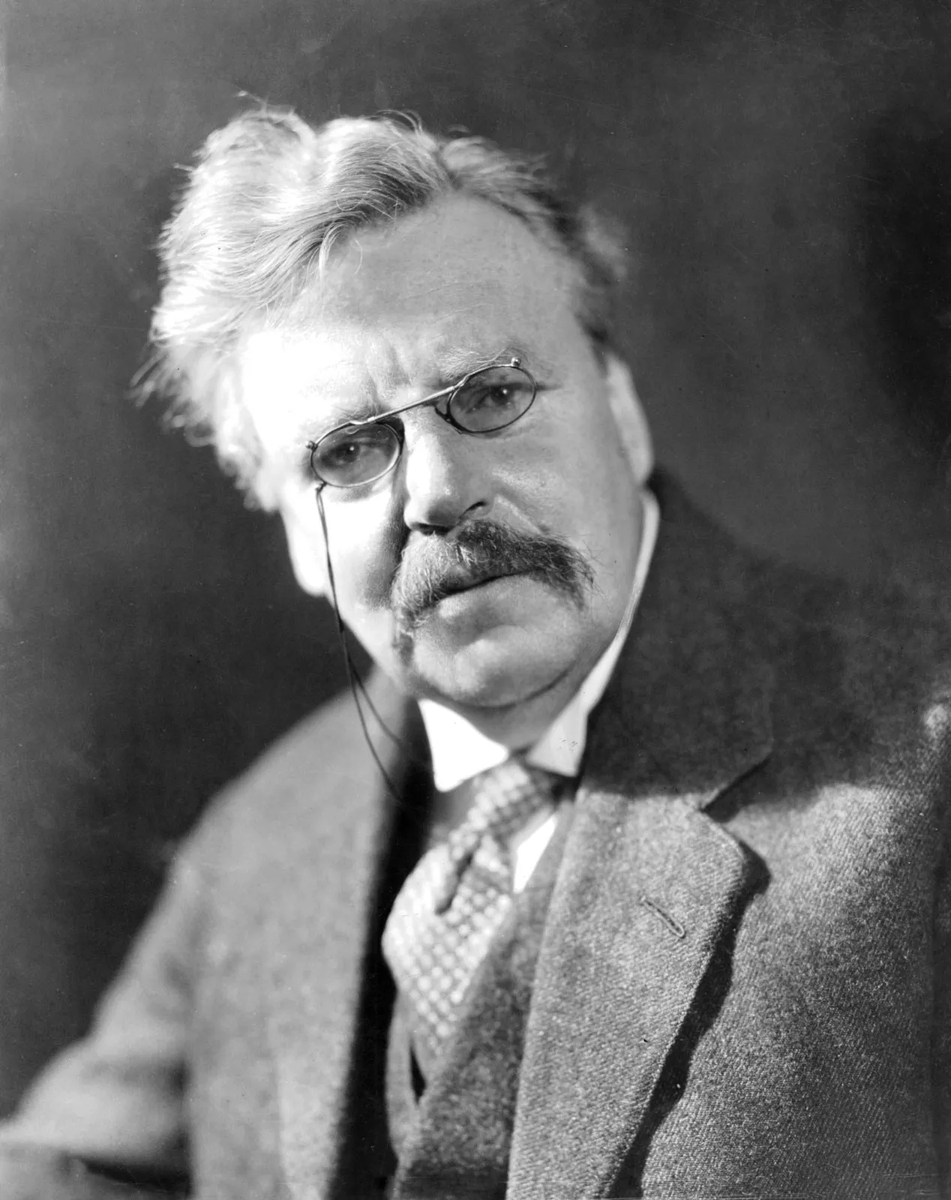
G. K. Chesterton explains that reading gives a man more lives than he was born with: “A man who has read a thousand books is armed for life; a man who has read none is easy prey. The man who has read a thousand books has lived a thousand lives. He has seen cities he has never visited, spoken to men who died centuries ago, and walked in worlds that no longer exist. Reading does not merely inform him; it enlarges him. It stretches the boundaries of his own experience until he becomes something more than himself.”
Athenaeum Book Club tweet media
English
86
1.5K
5.6K
160.5K
Adrian Powell retweetledi
Benjamin L. Gladd
Benjamin L. Gladd@DrGladd·
“The blood of the Lamb silences the accuser!” One of my all-time favorite lines from D. A. Carson. 🩸🐑🤫 I’ve watched this 100x and it never gets old.
English
9
144
874
45.2K
Adrian Powell retweetledi
Aakash Gupta
Aakash Gupta@aakashgupta·
This is an absolute masterclass from MIT on how to speak
English
92
3.1K
16.2K
2.9M
Adrian Powell retweetledi
MLFootball
MLFootball@MLFootball·
OHIO STATE WIDE RECEIVERS HAVE SOME OF THE GREATEST CATCHES IN FOOTBALL HISTORY. 😱 Remarkable video compilation:
English
36
611
3.8K
255.6K
Adrian Powell retweetledi
Matt Smethurst
Matt Smethurst@MattSmethurst·
When @TimKellerNYC was 24 years old, he was a new pastor in rural Virginia. Alice was an elderly Christian who had suffered enormously in her life. More than four decades later, Keller still remembered her perspective.

English
17
121
908
111.6K
Adrian Powell
Adrian Powell@adrianwrites1·
The wisdom of Tim Keller. Too often we think that we should respond with anger when it should actually be with scripture.
Matt Smethurst@MattSmethurst

When @TimKellerNYC was 24 years old, he was a new pastor in rural Virginia. Alice was an elderly Christian who had suffered enormously in her life. More than four decades later, Keller still remembered her perspective.

English
0
0
0
20
Adrian Powell retweetledi
Josh Barzon
Josh Barzon@JoshuaBarzon·
This is called an analemma. If you photograph the sun at the same time each day for a year, it traces a figure eight in the sky due to the tilt of the earth and its elliptical orbit. The same God who set those patterns in motion calls them by name in Job 38.
English
33
137
758
41.5K