

Aedanus Burke
12.7K posts

Aedanus Burke
@aedanusburke
Ancient Planter and First Fleeter
South Carolina, USA Katılım Haziran 2016
1.8K Takip Edilen8.5K Takipçiler

@aedanusburke @Rouxstir It’s funny you say that because growing up in Savannah we called it “Augusta hash” or “Augusta stew.” I always assumed it was their version of Brunswick stew.
English
Seems people from off are confused about hash, here’s a little bit of information for the foreigners.
Aedanus Burke@aedanusburke
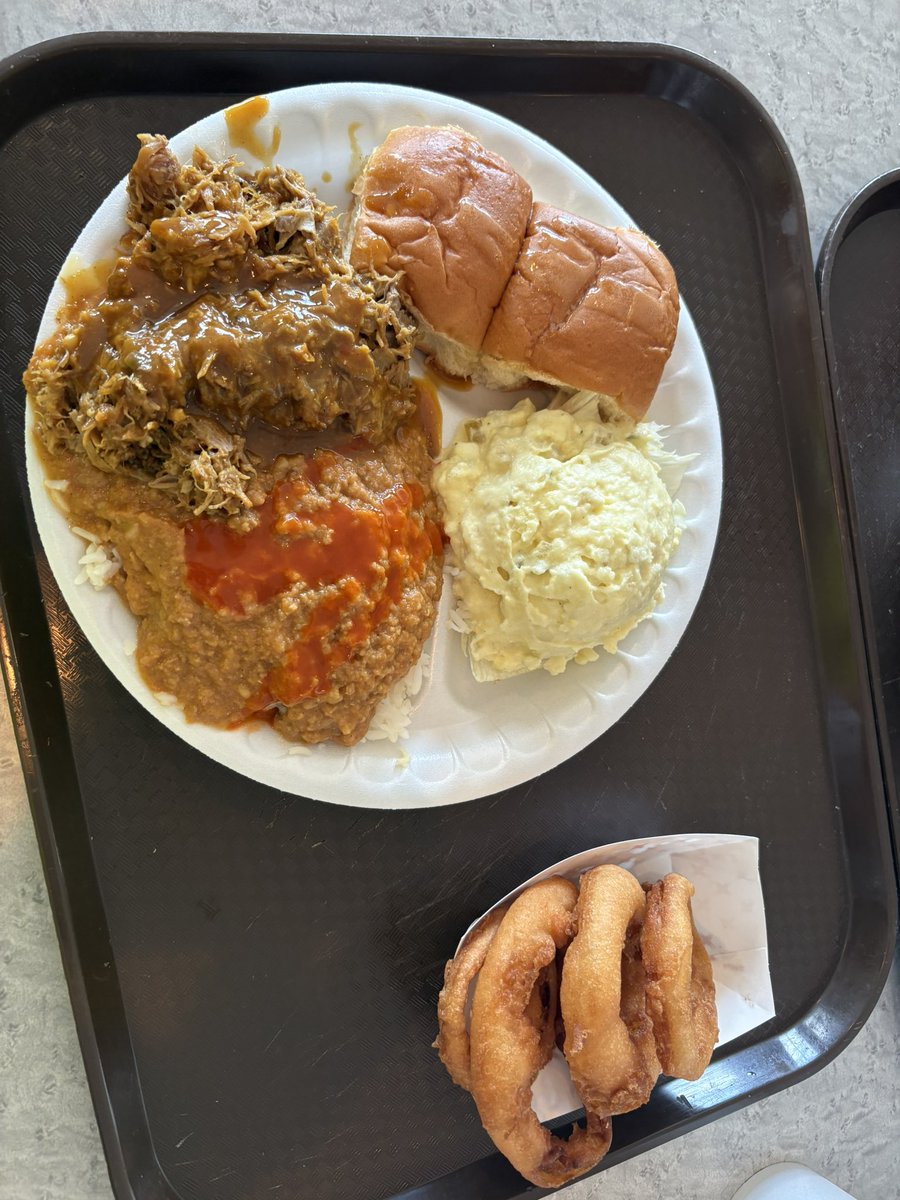
To some this may look unappetizing but it’s a BBQ staple unique to South Carolina. Barbecue Hash is basically a meat gravy or it could be called liquid sausage.
English
Aedanus Burke retweetledi


@Rouxstir They aren’t really that hard, it’s ebbs and flows with time. For instance eastern Georgia used to make hash too in the 19th century but by the present day it’s all but died out there.
English
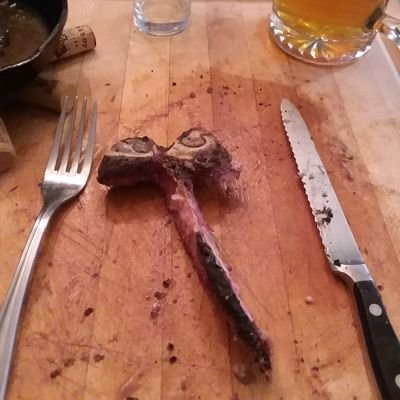
@aedanusburke Wats with the hard regional cooking lines?
Is that topographic or demographic?
English

@aedanusburke Where is the best restaurants to eat this dish, around the eastern third of South Carolina?
English
Aedanus Burke retweetledi

Prepping to talk about Georgia bbq in class today and I have come across an oral history of a now-closed place called Harold's Barbecue. It's an interesting case study in the changing South. southernfoodways.org/interview/haro…
English
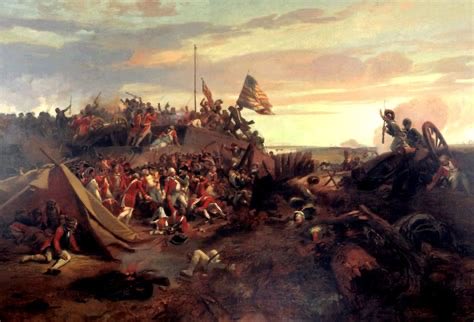
Around this date in 1780 the British were slowly approaching Charles Town from the south. In a few days they would be near Middleton Place and Drayton Hall. The siege began on April 1st, and many South Carolinians would soon be making some tough decisions as the war was now back on their home ground.

English
@Stncoldsteve @RolandGunnTN Don’t knock it till you try it. It’s unique
English

@aedanusburke @RolandGunnTN I don’t think so lmao I have the best sweet tea in the south brewing up in my kitchen rn.
English

This is true outside Memphis but the Memphian diehards love their city in a way no one else in the state loves theirs. Almost no Nashvillians love Nashville the way the loyal Memphians love Memphis.
Eharding@Eharding_2000
@Empty_America I don't think St. Louis or Memphis are all that beloved.
English
@GamecockBourbon Wait till they see a bowl of hash and try to figure out what it is.
English

The amount of people in this post that have no idea about SC bbq culture is mind blowing.
They don’t realize the entire hog is used and thrown on a Buffett, and when the food runs out, they close until more hogs are smoked.
Dude saying the best SC bbq is worse than the worst bbq in Memphis is one of the funniest things I’ve read this year tbh.
Finance Reb 🦈@OleMissRebel90
Why does Carolina BBQ look like Somalian Food?
English
@RolandGunnTN That’s it, they also sell the tea and some really good olive oil, I hope she enjoyed it.
English

Aedanus Burke retweetledi

South Carolina BBQ is by far the most superior bbq in the United States
English
Happy birthday to John C Calhoun, born on this date in 1782 near modern day Abbeville South Carolina.

English
Aedanus Burke retweetledi

New article is up, this one on what the survival of members of the Virginia yeomanry over the second half of the 17th century—the period in which the labor problem was solved for the grandees and scale unlocked—can teach the middle class of today
theamericantribune.news/p/how-to-survi…
English
Aedanus Burke retweetledi

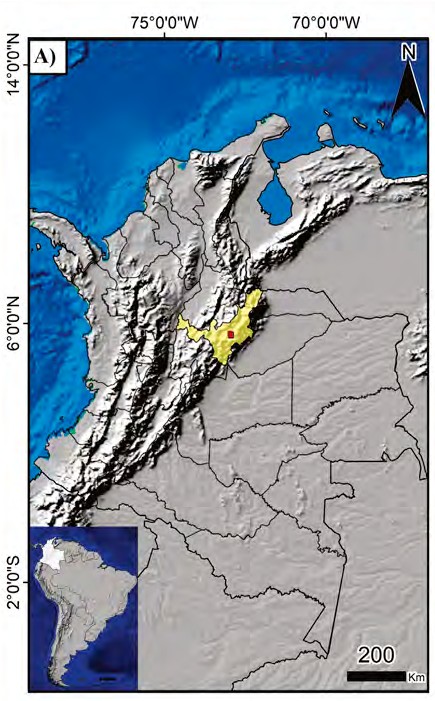
Wow! New Study Reveals Lost Isolated Population 🚨
🧬A 6000‑Year‑Old Ghost Population in the Colombian Andes, was revealed through DNA extraction of 🦴's Discovered at an archeological site on the Bogotá Altiplano.
🏔️This group lived for 4,000 years High on the plateau above Bogotá in the Eastern Andes.
🧬They carried none of the known early ancestries in the Americas and show no special genetic link to any ancient or modern population.
The new study was published in Science Advances by Kim-Louise Krettek et al
English
Aedanus Burke retweetledi

@braxton_mccoy @GoneFishin8gain Seeing tons of this
It’s a caste issue
The warrior caste has different values (and principles) than the political caste
English

Aedanus Burke retweetledi

BREAKING: GOP primary challengers in South Carolina are reportedly projected to force a runoff, in which Senator Lindsey Graham could lose his seat.

English
Aedanus Burke retweetledi

The pemmican bar has been cooking the protein industry for over 5000 years.
Pemmican is dried meat, pounded fine, mixed with rendered fat at roughly a 50/50 ratio by weight, sometimes with dried berries pressed in. The Plains Indians had been making it for millennia. The process took meat that would spoil in days and turned it into something that lasted years. Not in a cool cupboard. Not vacuum sealed. In a leather bag. At ambient temperature. For years.
Hudson's Bay Company traders in the 1700s ran their entire operation on it. Voyageurs paddling twelve to eighteen hours a day across the Canadian interior consumed it as the bulk of their diet. Lewis and Clark brought it west. Sir John Franklin brought it to the Arctic. The British Army field ration trials of the late 19th century examined it seriously. It featured in polar expeditions into the 20th century.
Here is why it worked, and why your overpriced ancestral bar with coconut nectar and collagen does not.
Fat provides nine calories per gram. Protein provides four. The standard pemmican ratio meant that somewhere around seventy percent of its calories came from saturated animal fat. Not as a guilty indulgence. As the primary fuel source.
The result: stable, sustained energy over twelve to eighteen hours of hard physical labour, with no blood sugar spike, no crash, no need for constant re-feeding. The fat was slow-burning. The protein maintained tissue. Together they covered virtually every metabolic need a working human body has.
The Cree and the Blackfoot didn't arrive at this ratio because they had a nutritionist. They arrived at it because they had generations of observational data about what happened when people ate it and what happened when people didn't. They noticed that lean meat alone left men declining. They noticed that the fat was not optional. They noticed that the combination of fat and dried meat produced something that a man could work hard on for a very long time without needing much else.
This knowledge was then borrowed wholesale by the European fur trade, refined for long-distance transport, and used to power one of the most physically demanding commercial enterprises in North American history.
It was later quietly set aside when seed oil shortages ceased to be a problem and processed food became profitable.
Your modern ancestral bar, in the meantime, is an underpowered mix of protein, a sliver of fat, and a big dump of sugar. It will spike your insulin, leave you hungry in ninety minutes, and cost you four quid for the luxury.
Pemmican needs to come back.
Not as a boutique product from a man in a waxed jacket at a farmers' market.
As a staple. As what it always was. Shelf-stable, calorically efficient, metabolically complete animal food that the people who actually had to survive on food, rather than merely consume it for sport, understood perfectly well centuries before anyone invented the concept of a "clean eating snack."

English