Melissa Affolter | Story Companion

2.7K posts

Melissa Affolter | Story Companion banner
Melissa Affolter | Story Companion

Melissa Affolter | Story Companion

@affoltermel

Hiker 🥾 | Bird watcher 🪶 | Creator of ReStoried groups | https://t.co/3VUKD7O7Ql | Content + Equipping Director, Senior Counselor @ Fieldstone Counseling

Akron, OH Katılım Eylül 2012
819 Takip Edilen640 Takipçiler
Melissa Affolter | Story Companion
@Anna_rWalker I was wondering this as well, Anna. For years in my support groups, women have expressed how difficult it is to consider the cross as "the greatest trauma." I appreciate the meaning behind the statement, but find it usually falls flat (or is met with frustration) in counseling.
English
1
0
0
25
Jason Kovacs
Jason Kovacs@jasonkovacs·
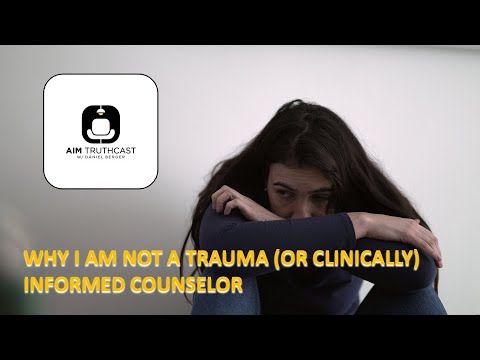
Just watched this video by @drbergerdr about being trauma-informed/clinically-informed and I agree with much of what he says. I have a few differences and I am still comfortable saying I am trauma-informed and clinically-informed. Here are a few points of agreement: 1. Our epistemological priority - I agree with Dr. Berger that biblical truth should be the ultimate guide in counseling, not clinical models or trauma frameworks rooted in psychology. God’s word is our primary meaning-making framework in all things, including trauma. Scripture shapes our psychology - not the other way around - or equally. We must be careful that we do not shift our authority from God’s Word to human experience. I also agree that there is a danger in relying too heavily on trauma language that we may unintentionally replace biblical categories like sin, repentance, faith, and redemption. We must be vigilant in not framing issues in clinical terms so much so that we sideline or distract from the gospel's role in transformation. 2. "Trauma is a wake up call to trust in someone other than ourselves." Amen. So often, suffering strips away our illusions of control and competence. It humbles us, exposing the limits of our self-reliance. In that place of weakness, God meets us with grace. Trauma doesn’t have the final word; it becomes the place where Christ’s sufficiency, not ours, is magnified. 3. "The Cross is the greatest trauma ever endured" — and it is the answer to the trauma of eternal judgment and our suffering in the here and now. No one has ever borne the weight of sin, shame, wrath, and abandonment like Christ did. Agreeing with this frames all our trauma in light of His: not to minimize our pain, but to show that we have a Savior who has gone deeper into suffering than we ever will. The greatest need in trauma is to make sense of it and the Word and work of Christ gives us the ultimate meaning and purpose for our suffering. Here are a few statements where I differ: 1. “We have no need for trauma-informed perspectives because the Bible already covers it sufficiently.” I respectfully disagree. While Scripture is sufficient in addressing the human condition, it is not exhaustive in describing every physical, neurological, or psychological reality. Trauma-informed research provides observations, not authoritative meaning. Being trauma-informed doesn’t mean replacing Scripture, it means being further equipped to apply it. Just as the Reformers valued common grace insights from medicine or language studies, we can welcome insights that help us better understand how people suffer, so we can more wisely care for them. 2. “Those who are trauma-informed are mixing man’s counsel with God’s counsel.” This concern has a legitimate historical root: biblical counselors have long resisted uncritically integrating secular psychology into discipleship. But we must distinguish between borrowing a worldview and gaining practical awareness and insights. When we carefully discern what is descriptive (not prescriptive), we can use what is helpful without compromising theological clarity. We do the hard work of critique, learning, and re-interpretation. 3. “Trauma-informed care sees trauma as deterministic and offers no hope.” Secular trauma frameworks may lack ultimate hope in Christ, but that doesn’t mean trauma-awareness itself is hopeless. Many of the secular resources on trauma offer all kinds of hope for change. The hope they offer is in the self and in healing relationships. That is partially true. The gospel offers hope in relationship with Christ. He uses His people as His agents of grace and hope in the lives of the hurting. Biblical counselors should be the most hopeful people in the room. A biblical counselor who is "trauma-informed" is someone who takes suffering seriously in all the ways it impacts us, while leading sufferers to a hope that’s even more serious, real, and eternal. youtube.com/watch?v=JKu8uy…
YouTube video
YouTube
English
7
0
21
1.9K
Melissa Affolter | Story Companion retweetledi
Diane Langberg, PhD
Diane Langberg, PhD@DianeLangberg·
We damage the dignity of others when we refuse to wait for them—whether they need to tie their own shoes or they are struggling to find words for the indescribable. We bestow honor on another when we consider him or her worth waiting for.
English
0
61
294
7.1K
Melissa Affolter | Story Companion retweetledi
Diane Langberg, PhD
Diane Langberg, PhD@DianeLangberg·
If you want the trauma survivor to understand that God is a refuge, then be one.
English
0
100
400
10.2K
Jason Kovacs
Jason Kovacs@jasonkovacs·
As a believer who has experienced hurt in church in the past what are some questions you would ask a new church to see if it’s a safe place to be known and loved?
English
7
0
4
1.6K
Melissa Affolter | Story Companion
On my walk today, an older gentleman greeted me with, “Happy Mother’s Day." Sometimes God gives us the words we lack in the places we least expect them. Women, may you find a word here, whether you find yourself feeling empty or full this weekend. 🤍 open.substack.com/pub/melissaaff…
English
0
0
1
69
Melissa Affolter | Story Companion
Early spring looks like our lives in many ways. We emerge from seasons of darkness and despondency, desperately looking for signs of life. When we find ourselves surrounded by muddy earth and bare limbs, signs of decay all around, we feel disappointment. open.substack.com/pub/melissaaff…
English
0
0
1
106
Melissa Affolter | Story Companion retweetledi
Doug Wolter
Doug Wolter@DougWolter·
Your best years are not behind you. When you’ve been through some things, your roots are deeper and your branches stronger because of it. Like a weathered oak tree, God is still at work within you bearing the fruit of love in every season of life.
English
0
5
16
717
Melissa Affolter | Story Companion
@JordanStoryline I've continued to work on some ideas, mostly at the research phase. I'm envisioning a resource for counselors who work with those whose consciences have been impacted by abuse (particularly spiritual abuse).
English
1
0
1
39
Jordan Williams
Jordan Williams@JordanStoryline·
@affoltermel Wow, thanks for doing that and sharing! I remember when studying conscience for this work you had asked for resources..any update on what you’re working on in that area? Would love to see it when it’s finished!
English
1
0
1
29
Jordan Williams
Jordan Williams@JordanStoryline·
A recent request for resources on OCD prompted me to make a list of biblical counseling resources for addressing OCD that I want to share with any who might want it. Most are from a biblical counseling perspective. If you want the pdf with hyperlinks please comment with your email. This list does not indicate that I've reviewed or endorsed every piece of the content. Moreover, I do not include the more comprehensive index of published BC resources on OCD that I interact with in my dissertation but you will be able to find those in there once it becomes available. #biblicalcounseling #Biblecn #OCD #biblicalcounselingOCD #OCDresources
Jordan Williams tweet media
English
12
2
32
2.6K
Melissa Affolter | Story Companion
@JordanStoryline Yes, I just saw that you shared it yesterday and downloaded it. I also shared the link with our team at Fieldstone as we just discussed some overlapping themes at our team retreat. Thankful for you!
English
1
0
2
43
Jordan Williams
Jordan Williams@JordanStoryline·
@affoltermel Hey! Can't remember if you ended up receiving my dissertation but it is now available to download through the link in my pinned tweet on my profile.
English
1
0
0
40
Melissa Affolter | Story Companion
@kyleworley Thanks for inviting us in to your study. I don't have anything to add to the helpful feedback you've already received, but wanted to thank you since this theme comes up a LOT in my counseling work.
English
0
0
1
66
Kyle Worley
Kyle Worley@kyleworley·
I'm studying the 5th commandment for a sermon. Do you have any pushback on this frame for honoring different kinds of parents? Faithful, but imperfect: We honor with gratitude. Absent or dead: We honor with grief. Wicked: We honor with grace. Foolish: We honor with growth.
English
17
0
29
5.7K
Melissa Affolter | Story Companion retweetledi
Doug Wolter
Doug Wolter@DougWolter·
Each day I try to remember: I am his BELOVED (Our Father who art in heaven…) I BOW before him (Your kingdom come, your will be done…) I receive his daily BREAD (Give us this day our daily bread…) This helps me stay present to his grace each day.
English
1
3
12
648
Melissa Affolter | Story Companion
@jasonkovacs Especially with those experiencing deep distress, we spend time describing colors and textures we see in natural elements. It seems to "wake up" the senses to beauty and guides them on doing it on their own. We often start by looking at a psalm to prompt those observations.
English
1
0
1
160
Jason Kovacs
Jason Kovacs@jasonkovacs·
Biblical counselors, how do you help your clients access beauty? What role does beauty and the imagination play in your counseling practice?
English
4
2
17
9.1K
Melissa Affolter | Story Companion retweetledi
Amanda Held Opelt
Amanda Held Opelt@AmandaHeldOpelt·
The older I get the more I’m convinced that humility is the highest virtue…the foundation that makes all other virtues possible. Humility isn’t always easy, but ultimately it is a light load. Hubris, however, is heavy; maintaining your own rightness is exhausting
English
8
17
200
8.8K
Melissa Affolter | Story Companion retweetledi
Diane Langberg, PhD
Diane Langberg, PhD@DianeLangberg·
By silencing victims, by rushing to protect our institutions and by striving for externally pristine environments that cover-up our great un-likeness to Christ, we are in fact missing God.  He comes to us through the little, the diseased, the crippled and the fearful.
English
4
42
219
9.4K