a f waller

665 posts

a f waller banner
a f waller

a f waller

@afwaller

@[email protected]

Atlanta, GA Katılım Nisan 2009
3.1K Takip Edilen1.1K Takipçiler
bourbonwhiskeyhouse BOURBON KY USA
bourbonwhiskeyhouse BOURBON KY USA@bourbonwhi55063·
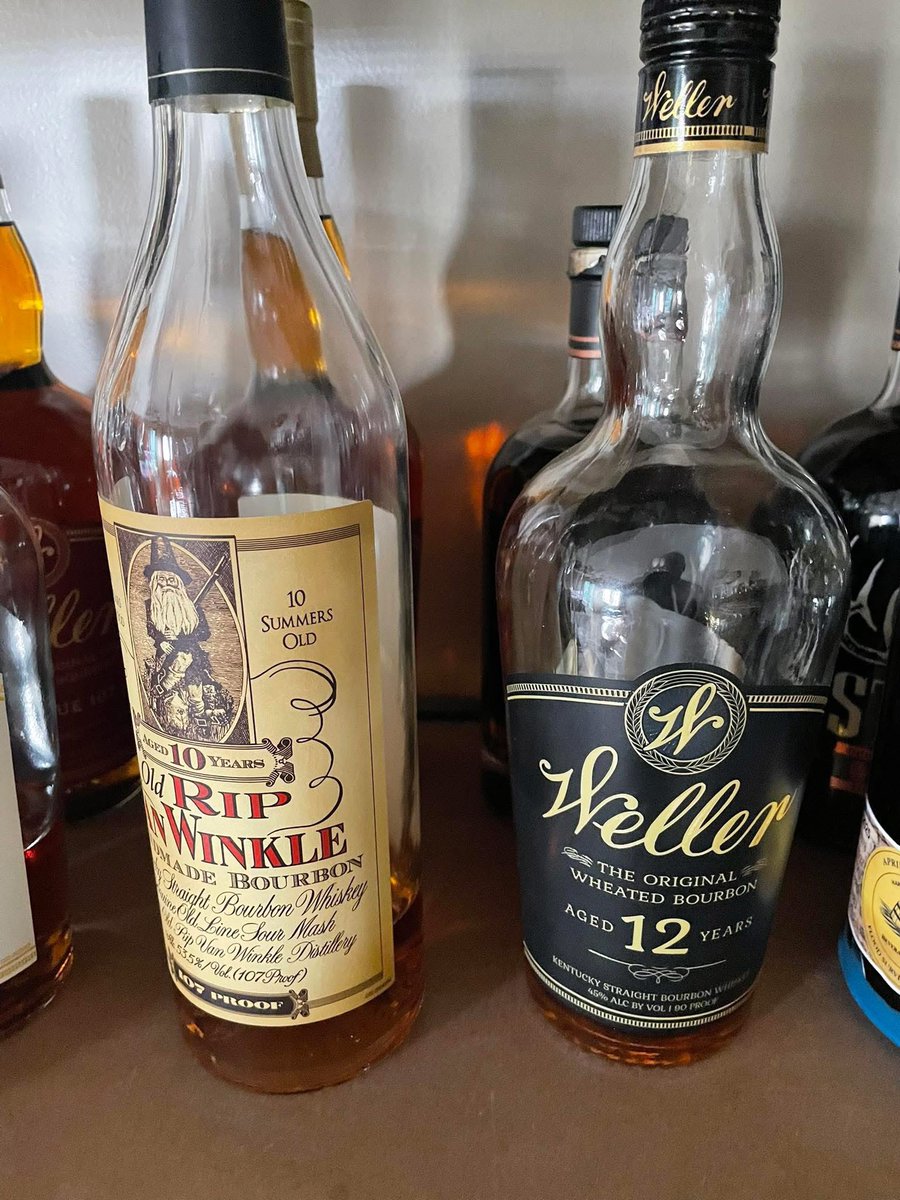
I hear people call Weller 12 the poor mans Pappy. I don’t get that. 90 vs 107. Now if Saz will bump up the W12 to 107, we might be able to compare. Anybody else with me on this?
bourbonwhiskeyhouse BOURBON KY USA tweet media
English
10
1
30
2.2K
a f waller
a f waller@afwaller·
@jdalrymple Normally it’s a much longer thing where basically you hike up a mountain and ski down. This replicates how people can ski down hills without a chairlift. For the Olympics they put a short form (sprint).
English
0
0
0
49
Jim Dalrymple
Jim Dalrymple@jdalrymple·
I’ve never seen a ski sport where you run uphill with you skis on, take them off, run up a flight of stairs, put them on, run uphill again, take them off, take off something on the bottom, put the skis back on and go downhill to finish. What sadist come up with that!?
English
3
0
4
1.3K
John Carmack
John Carmack@ID_AA_Carmack·
@clattner_llvm @karpathy Normally, claims of 1000x speedups are bullshit. But starting from python makes it possible 😀
English
36
51
1.3K
62.4K
Andrej Karpathy
Andrej Karpathy@karpathy·
I think it must be a very interesting time to be in programming languages and formal methods because LLMs change the whole constraints landscape of software completely. Hints of this can already be seen, e.g. in the rising momentum behind porting C to Rust or the growing interest in upgrading legacy code bases in COBOL or etc. In particular, LLMs are *especially* good at translation compared to de-novo generation because 1) the original code base acts as a kind of highly detailed prompt, and 2) as a reference to write concrete tests with respect to. That said, even Rust is nowhere near optimal for LLMs as a target language. What kind of language is optimal? What concessions (if any) are still carved out for humans? Incredibly interesting new questions and opportunities. It feels likely that we'll end up re-writing large fractions of all software ever written many times over.
Thomas Wolf@Thom_Wolf

Shifting structures in a software world dominated by AI. Some first-order reflections (TL;DR at the end): Reducing software supply chains, the return of software monoliths – When rewriting code and understanding large foreign codebases becomes cheap, the incentive to rely on deep dependency trees collapses. Writing from scratch ¹ or extracting the relevant parts from another library is far easier when you can simply ask a code agent to handle it, rather than spending countless nights diving into an unfamiliar codebase. The reasons to reduce dependencies are compelling: a smaller attack surface for supply chain threats, smaller packaged software, improved performance, and faster boot times. By leveraging the tireless stamina of LLMs, the dream of coding an entire app from bare-metal considerations all the way up is becoming realistic. End of the Lindy effect – The Lindy effect holds that things which have been around for a long time are there for good reason and will likely continue to persist. It's related to Chesterton's fence: before removing something, you should first understand why it exists, which means removal always carries a cost. But in a world where software can be developed from first principles and understood by a tireless agent, this logic weakens. Older codebases can be explored at will; long-standing software can be replaced with far less friction. A codebase can be fully rewritten in a new language. ² Legacy software can be carefully studied and updated in situations where humans would have given up long ago. The catch: unknown unknowns remain unknown. The true extent of AI's impact will hinge on whether complete coverage of testing, edge cases, and formal verification is achievable. In an AI-dominated world, formal verification isn't optional—it's essential. The case for strongly typed languages – Historically, programming language adoption has been driven largely by human psychology and social dynamics. A language's success depended on a mix of factors: individual considerations like being easy to learn and simple to write correctly; community effects like how active and welcoming a community was, which in turn shaped how fast its ecosystem would grow; and fundamental properties like provable correctness, formal verification, and striking the right balance between dynamic and static checks—between the freedom to write anything and the discipline of guarding against edge cases and attacks. As the human factor diminishes, these dynamics will shift. Less dependence on human psychology will favor strongly typed, formally verifiable and/or high performance languages.³ These are often harder for humans to learn, but they're far better suited to LLMs, which thrive on formal verification and reinforcement learning environments. Expect this to reshape which languages dominate. Economic restructuring of open source – For decades, open-source communities have been built around humans finding connection through writing, learning, and using code together. In a world where most code is written—and perhaps more importantly, read—by machines, these incentives will start to break down.⁴ Communities of AIs building libraries and codebases together will likely emerge as a replacement, but such communities will lack the fundamentally human motivations that have driven open source until now. If the future of open-source development becomes largely devoid of humans, alignment of AI models won't just matter—it will be decisive. The future of new languages – Will AI agents face the same tradeoffs we do when developing or adopting new programming languages? Expressiveness vs. simplicity, safety vs. control, performance vs. abstraction, compile time vs. runtime, explicitness vs. conciseness. It's unclear that they will. In the long term, the reasons to create a new programming language will likely diverge significantly from the human-driven motivations of the past. There may well be an optimal programming language for LLMs—and there's no reason to assume it will resemble the ones humans have converged on. TL; DR: - Monoliths return – cheap rewriting kills dependency trees; smaller attack surface, better performance, bare-metal becomes realistic - Lindy effect weakens – legacy code loses its moat, but unknown unknowns persist; formal verification becomes essential - Strongly typed languages rise – human psychology mattered for adoption; now formal verification and RL environments favor types over ergonomics - Open source restructures – human connection drove the community; AI-written/read code breaks those incentives; alignment becomes decisive - New languages diverge – AI may not share our tradeoffs; optimal LLM programming languages may look nothing like what humans converged on ¹ x.com/mntruell/statu… ² x.com/anthropicai/st… ³ wesmckinney.com/blog/agent-erg…#issuecomment-3717222957" target="_blank" rel="nofollow noopener">github.com/tailwindlabs/t…

English
701
655
8.1K
1.2M
Frank
Frank@BourbEnthusiasm·
Wild Turkey is an exemplary brand for so many reasons, but I always find it interesting that its low brow reputation (in some spaces) persists even though they’ve been making some of the best whiskey on the planet since the day that reputation was born.
Road Warrior🥃@werbleworble

@BourbEnthusiasm Wild Turkey. As a whiskey noob I thought it was just 101 and drank by rednecks (which I am). Now all I chase are Austin Nichols labels.


English
28
0
108
14.7K
Bourbon No Rock
Bourbon No Rock@BourbonNoRock·
@BourbEnthusiasm Penelope had probably the best toasted on the market until JD launched the Heritage. But that's just one man's opinion.
English
1
0
5
233
Frank
Frank@BourbEnthusiasm·
It’s been interesting to me to see this expression (and Rio) sit on shelves after initially selling like crazy and developing a robust secondary market.
Frank tweet media
English
13
0
45
4.2K
a f waller retweetledi
Jeremy Howard
Jeremy Howard@jeremyphoward·
14MB ram / 9MB disk (MB, *not* GB!) to index all of Windows 10, in 1 second. Index stays updated automatically. It's amazing what's possible with a modern computer if you actually care about engineering. voidtools.com
Jeremy Howard tweet media
English
94
574
10.4K
638.5K
Phil Kollin
Phil Kollin@DerbyCityPhil·
Trying something here tonight and might make it a whole series for the month: You can only pick ONE to sip this evening. Which pour ends up in your glass?! 🤔 🥃
Phil Kollin tweet media
English
53
2
51
13K
a f waller
a f waller@afwaller·
@BourbEnthusiasm 0.5% alcohol difference and around 2 years of age? Honestly hard to imagine you can pick it out blind.
English
1
0
0
17
Frank
Frank@BourbEnthusiasm·
@afwaller Having tried both, you know the difference when you taste it
English
1
0
0
27
Frank
Frank@BourbEnthusiasm·
Fast facts: • E.H. Taylor Bottled In Bond is now the newest member of the BTAC lineup. • This expression is over 15 years old. • It’s the first addition to the BTAC lineup, which began in 2000, since the 2006 addition of Thomas H. Handy.
Frank@BourbEnthusiasm

It does exist.

English
6
3
95
8K
Green's Bev Atlanta
Green's Bev Atlanta@greensatl·
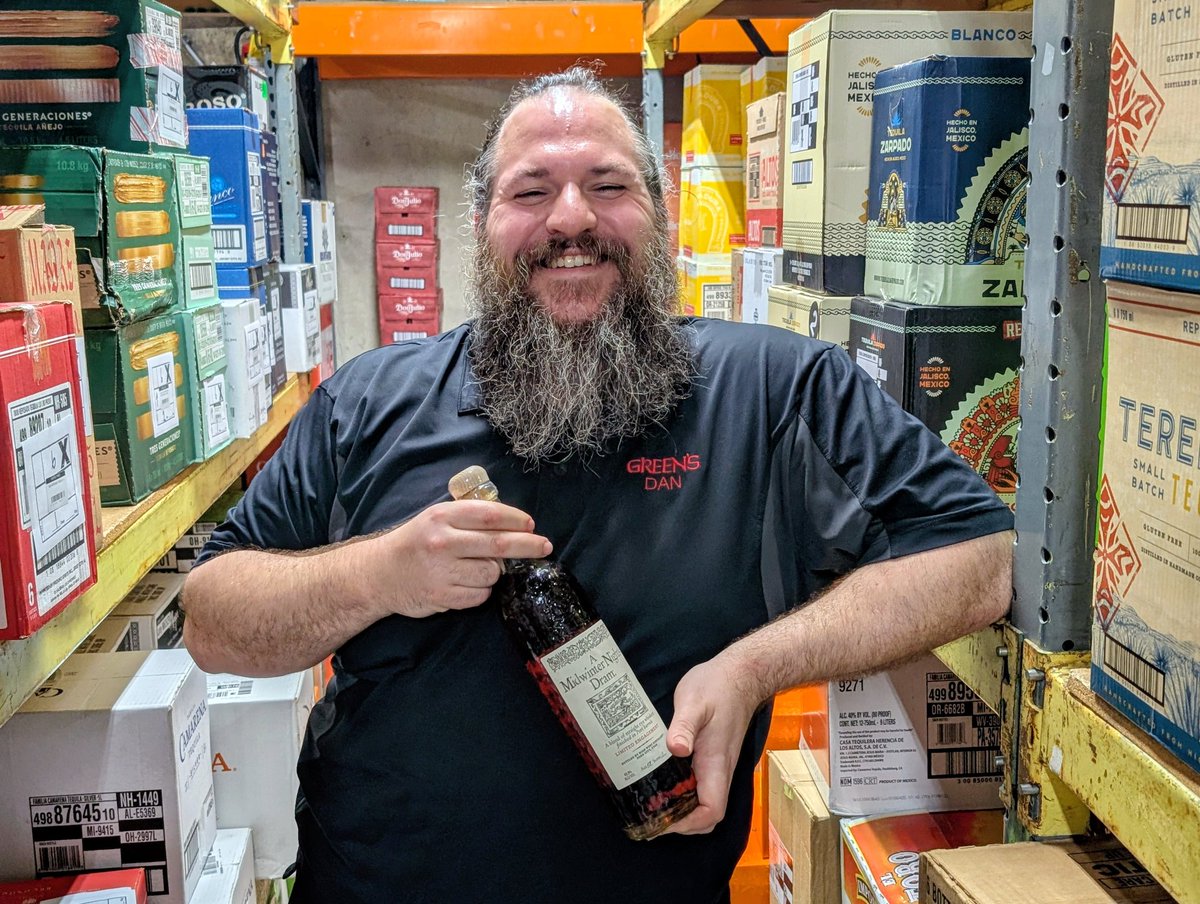
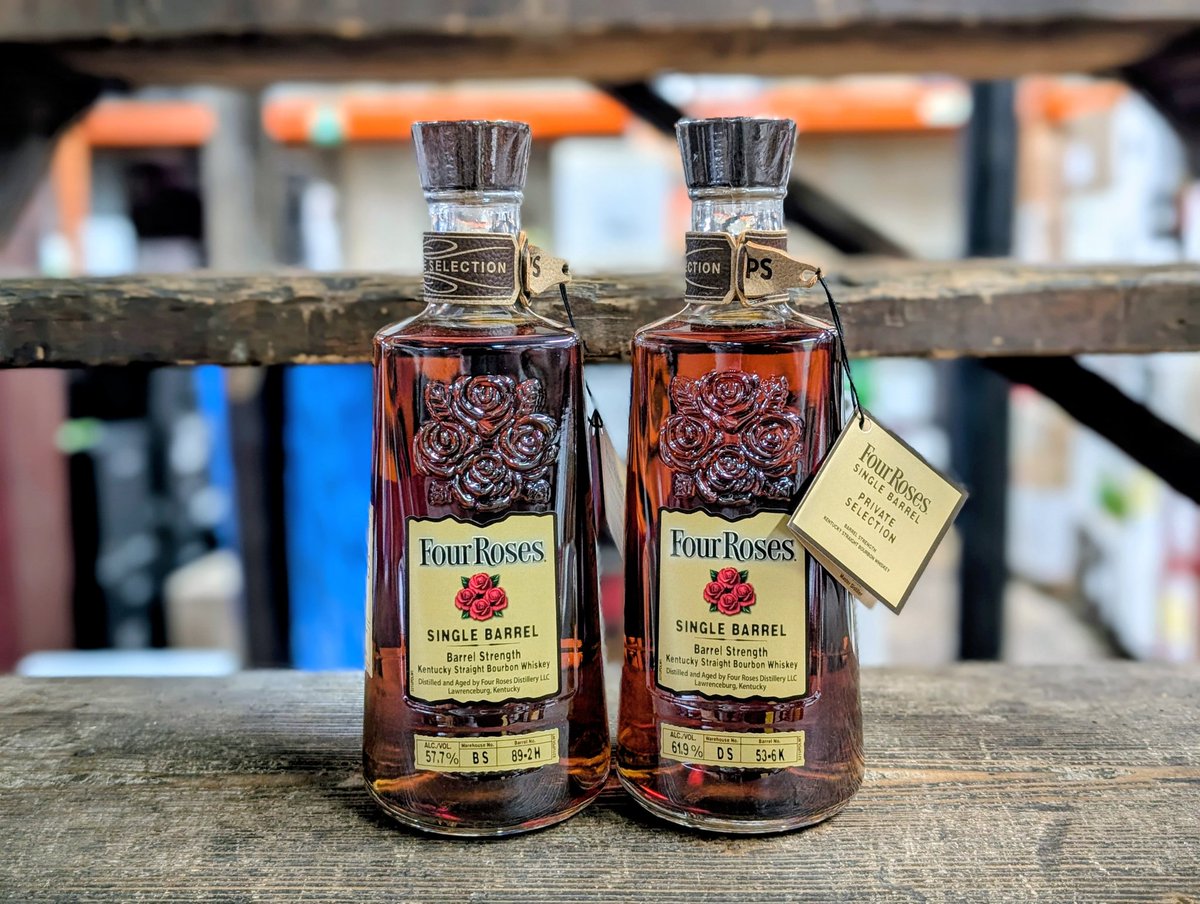
We've got some special releases coming your way soon. 👀🥃Stay tuned for details!
Green's Bev Atlanta tweet mediaGreen's Bev Atlanta tweet media
English
1
0
1
324
Subourbia
Subourbia@Bourbon_Gamer·
We agree this used to be better, yes?
Subourbia tweet media
English
30
5
146
11.1K
Bourbon News
Bourbon News@TheBourbonNews·
New Label Approval: Heaven Hill Heritage Collection 2026, 22-Year Bourbon #bourbon #whiskey
Bourbon News tweet media
English
4
4
99
4.8K
Bourbon News
Bourbon News@TheBourbonNews·
Woodford Reserve announced the 2025 Master’s Collection release - Sweet Oak Bourbon, aged in rare Chinkapin oak barrels. Sweet Oak Bourbon marks the 21st release in Woodford Reserve’s Master’s Collection.
Bourbon News tweet media
English
3
5
76
5.8K
Bourbon News
Bourbon News@TheBourbonNews·
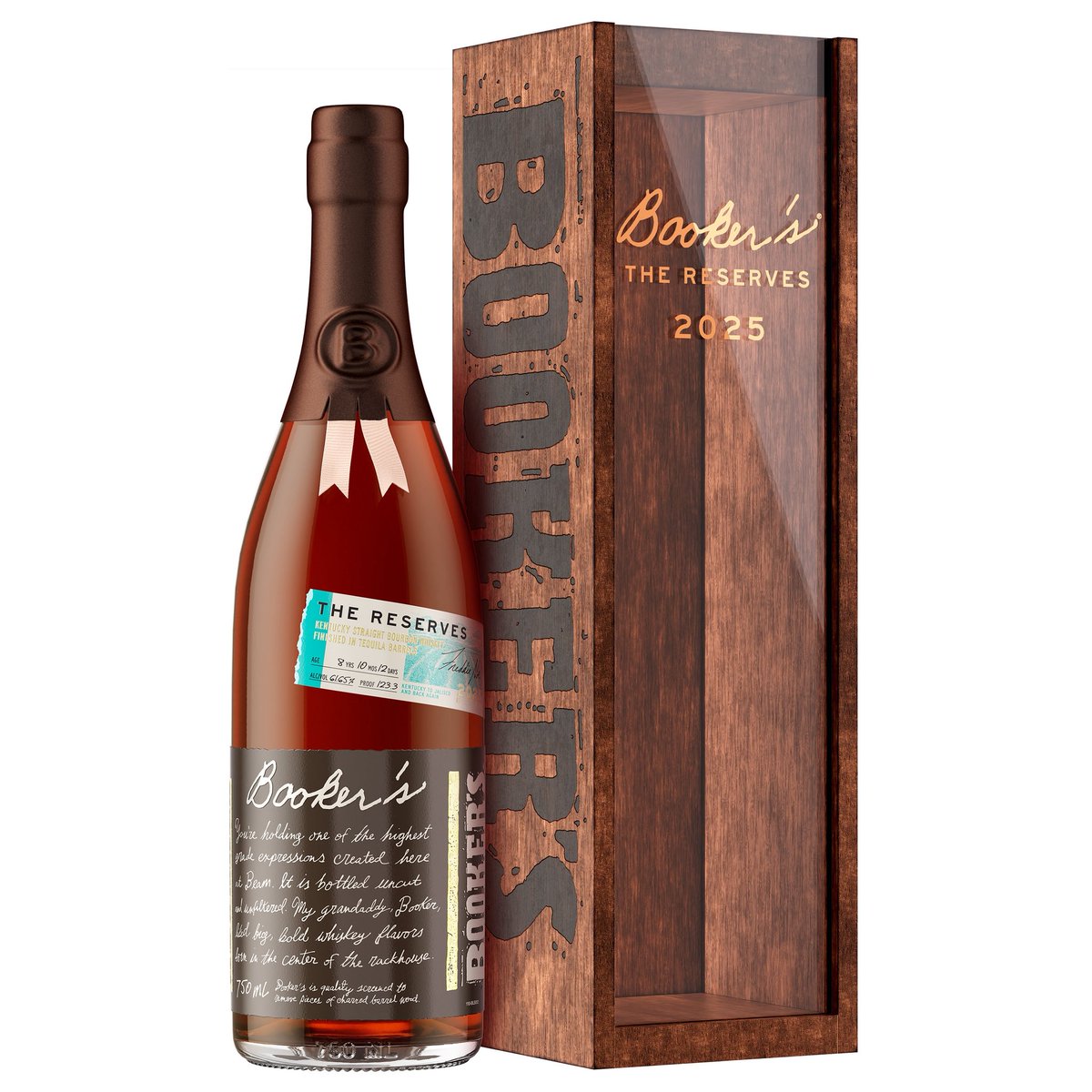
…the Camarena family filled them with El Tesoro’s 85th Anniversary tequila. Finally, those same agave-seasoned barrels returned to Clermont, Kentucky, where Freddie Noe finished a hand-selected batch of Booker’s inside them.
English
2
0
3
1.8K
Bourbon News
Bourbon News@TheBourbonNews·
Beam has announced the launch of Booker’s The Reserves 2025. The 2025 batch tells the story of some well-traveled barrels: first used to age the beloved Booker’s 30th Anniversary release, then shipped to Jalisco where…
Bourbon News tweet mediaBourbon News tweet media
English
4
25
171
15.9K
a f waller
a f waller@afwaller·
@x5_PiG @dorothydottydot I’m so sorry for your loss and for your family. I can only imagine what you have been going through.
English
0
0
1
64
Jeff Ryckman
Jeff Ryckman@jryckman3·
Thrilled to share that I’ve been promoted to Associate Professor! Endlessly grateful to those who’ve supported me along the way, too many to tag, and more generous than I could ever deserve. I’m looking forward to continuing to grow, learn, and give back in whatever way I can.
English
50
7
227
6.9K
a f waller retweetledi
Atlanta United FC
Atlanta United FC@ATLUTD·
THIS locker room speech from the gaffer 🔥🔥 Long way to go, but 𝐧𝐨𝐭𝐡𝐢𝐧𝐠 is impossible 👏
English
10
49
511
23K
Jessie Frazelle
Jessie Frazelle@jessfraz·
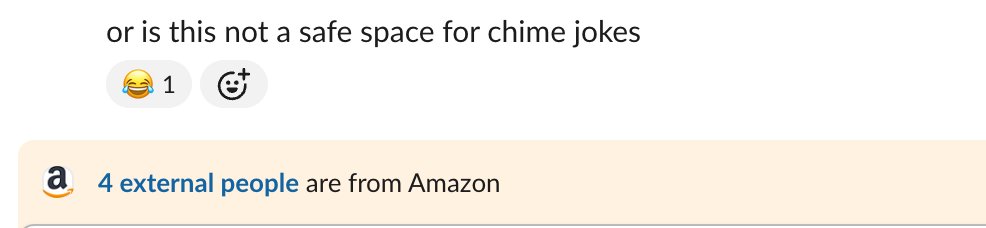
and that, kids, is how we got a slack channel with aws support and lost it the same day, (kidding they haven't gotten mad... yet)
Jessie Frazelle tweet media
English
7
0
57
6.4K
a f waller
a f waller@afwaller·
@DeondreJackson_ maybe mixing apple cider with light beer is a better analogy, but it’s got kind of that cheap light adjunct lager taste still.
English
0
0
0
65
a f waller
a f waller@afwaller·
@DeondreJackson_ It’s not good in terms of being beer. If you want something that’s halfway between fruity seltzer and light beer (and also cheap) then it’s your huckleberry. For me it’s a hard no.
English
1
0
0
60
Deondre
Deondre@DeondreJackson_·
Is Busch apple actually good or is this a TikTok frat boy thing?
English
2
0
0
132