Matt
327 posts


Matt
@agentic_matt
The answer to all of your problems is to just keep building.
San Francisco, CA Katılım Ocak 2013
792 Takip Edilen955 Takipçiler

@agentic_matt They were supportive but also asked me hard questions to challenge my assumptions and hopefully uncover blind spots - questions I should anyway be asking myself!
English
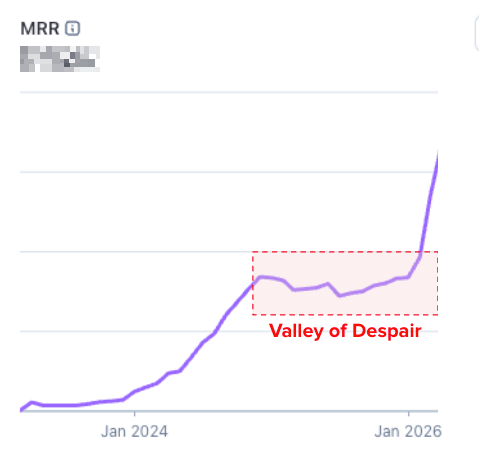
Two months after closing our $9M round, I told our investors I was going to take our revenue to $0.
On paper, we were every VC's dream - growing 40% MoM, hit $1M ARR in <9 months, new customers signing every week.
Underneath, we were a services agency held together by humans. Gross margins 40-50%, customers quietly churning, early-stage SaaS/ecomm not finding enough value to stick.
I'd seen this movie as a VC. So in the first board meeting, I told our new investors we were pausing all GTM & letting revenue go to zero for 4-5 months.
Imagine writing a $9M check & being told the company is going into a 4-month coma.
Here's what those 4 months looked like:
Month-1: Found the high retention pockets of customers & sharpened GTM for them. Killed the GTM motions attracting churny customers.
Month-2: Removed humans from the content pipeline. Gross margins jumped from 40% → 90%+.
Month-3: Shifted the promise from "we'll bring you traffic" → "we'll bring you leads." Focused on MQLs over impressions.
Month-4: Refreshed Stripe every day & watched revenue tank. Painful.
And boom! Relaunched in January.
12 months since money wired, we're now 4x the ARR our investors came in at - despite a 4-month hiatus.
If we'd kept pressing the old business, we'd have capped at $100-200M ARR with 40% GMs. While telling ourselves we had a generational business.
P.S. The hardest founder decision isn't picking what to do. It's picking what NOT to do, even when there's a lot of instant gratification in that path.
English
@jakehalloran1 @Duderichy I think it depends a lot on how many years they spent at FAANG. The context switching needed to be useful at a startup is heard to re-learn after a decade in big tech.
English

@agentic_matt @Duderichy they probably can. many of them have learned a level of laziness that they simply dont want to. but dont mistake that for inability
English

the average FAANG engineer is way smarter on average than the average startup engineer
if you think it’s a professional mark of death you’re an idiot
altra@catboosted
Crazy how fast working at FAANG went from high status to professional mark of death
English
@mgrczyk @Duderichy Did you hire many ex-FAANG devs at your startup?
English

@agentic_matt @Duderichy I've worked in both and founded multiple startups . The main difference is motivation and goals. Good FAANG teams with good managers get more complex work done with the same people
English

@unusual_whales If you're not running your own business, it's on you at this point. These businesses have ZERO loyalty to you.
English
BREAKING: Intuit, $INTU, is laying off about 17% of its workforce, or about 3000 employees worldwide
English
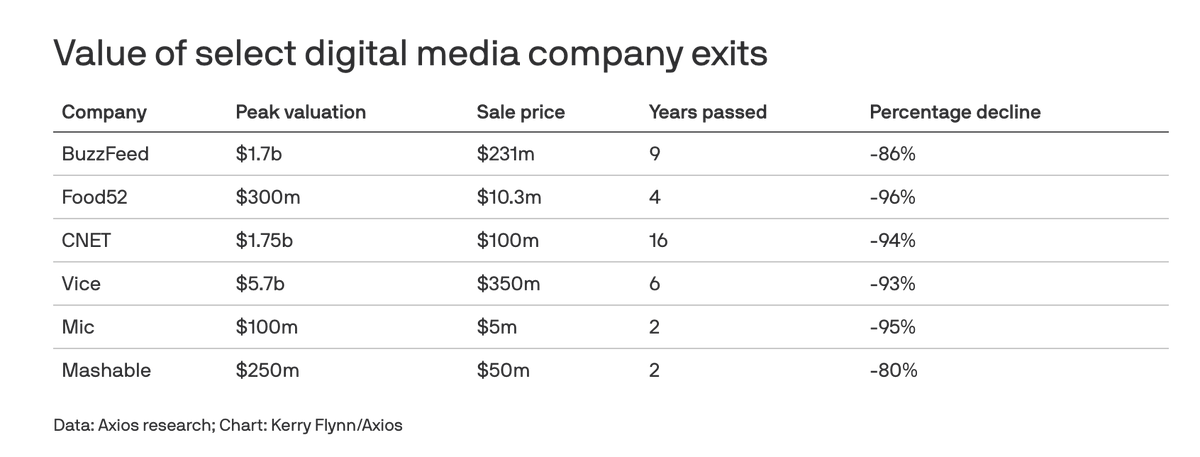
@austin_rief Almost always smart to sell when you get a great offer. Look at @Snapchat even. Spiegel could’ve cleared a clean bill 10+ years ago and would’ve been on to better things by now.
English

When people ask me why we sold Morning Brew, I just show them this chart.
English
@unusual_whales People have been calling this a bubble since 2022...
English
Jeff Bezos: even if this is bubble, don't worry about it, because it's driving investment
English
@zamdoteth So Larry Ellison shouldn’t have started Oracle? Jeff Bezos shouldn’t have started Amazon? You’re a clown.
English


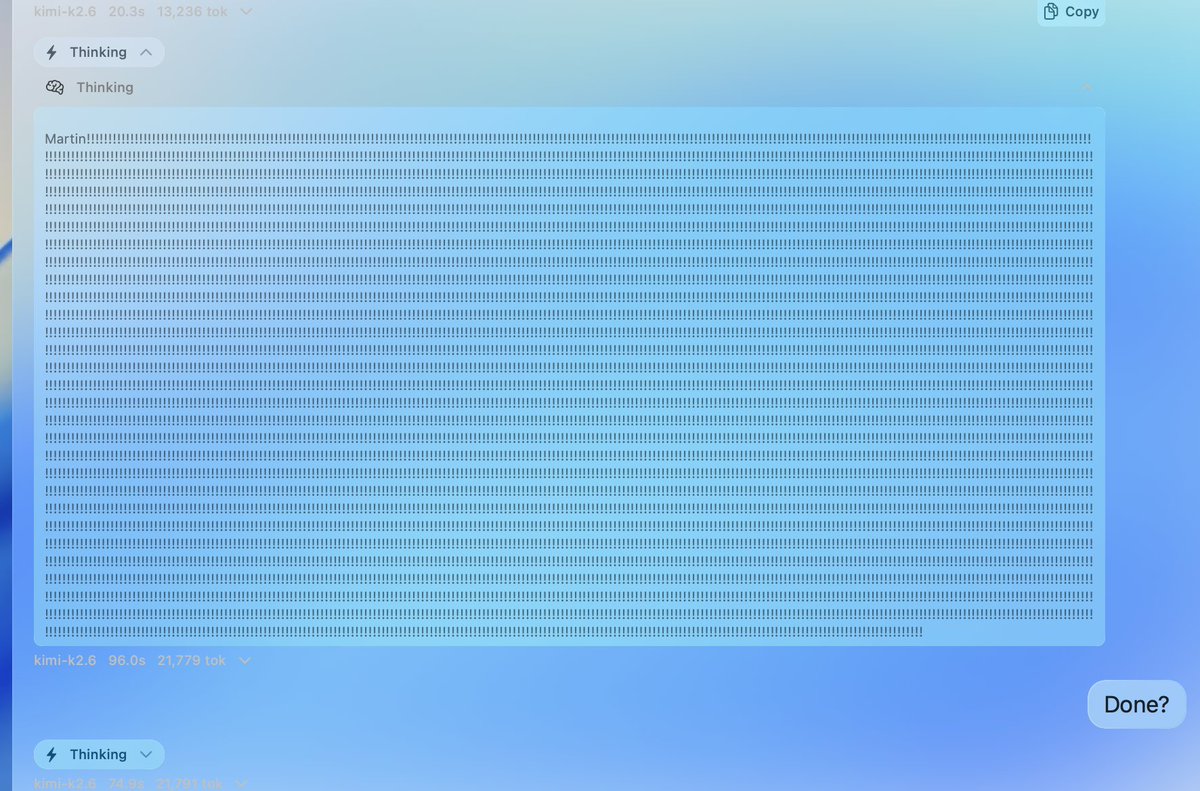
@martinpaloncy Martin!!!!!!!!!!!!!!!!!!!!!!!!!!!!!!!!!!!!!!!!!!!!!!!!!!!!!!!!!!!!!!!!!!!!!!!!!!!!!!!!!!!!!!!!!!!!!!!!!!!!!!!
English
my custom harness is crashing out (those are reasoning tokens btw)
English
@cyberfund Incredible opportunity for AI-native founders!! Also, awesome launch video 👀
English

Introducing the Monastery for AI-native founders.
A single builder can now outperform a publicly traded company.
$2 million. 12 weeks. Do the impossible.
English
@martinpaloncy @trekedge No better time than a Sunday night in Berlin to find out for yourself 👀
English



What kills more startups right now?
Not lack of models.
Not lack of capital.
Not even lack of talent.
It’s founders mistaking surface area for progress.
More prompts, more wrappers, more features, more meetings.
The best companies are getting narrower while they get stronger.
One wedge. One workflow. One buyer who cannot go back.
Urgency without selection is just noise.
English

The vibes in SF feel pretty frenetic right now. The divide in outcomes is the worst I've ever seen.
Over the last 5yrs, a group of ~10k people - employees at Anthropic, OpenAI, xAI, Nvidia, Meta TBD, founders - have hit retirement wealth of well above $20M (back of the envelope AI estimation).
Everyone outside that group feels like they can work their well-paying (but <$500k) job for their whole life and never get there.
Worse yet, layoffs are in full swing. Many software engineers feel like their life's skill is no longer useful. The day to day role of most jobs has changed overnight with AI.
As a result,
1. The corporate ladder looks like the wrong building to climb.
Everyone's trying to align with a new set of career "paths": should I be a founder? Is it too late to join Anthropic / OpenAI? should I get into AI? what company stock will 10x next? People are demanding higher salaries and switching jobs more and more.
2. There’s a deep malaise about work (and its future).
Why even work at all for “peanuts”? Will my job even exist in a few years? Many feel helpless. You hear the “permanent underclass” conversation a lot, esp from young people. It's hard to focus on doing good work when you think "man, if I joined Anthropic 2yrs ago, I could retire"
3. The mid to late middle managers feel paralyzed.
Many have families and don't feel like they have the energy or network to just "start a company". They don't particularly have any AI skills. They see the writing on the wall: middle management is being hollowed out in many companies.
4. The rich aren’t particularly happy either.
No one is shedding tears for them (and rightfully so). But those who have "made it" experience a profound lack of purpose too. Some have gone from <$150k to >$50M in a few years with no ramp. It flips your life plans upside down. For some, comparison is the thief of joy. For some, they escape to NYC to "live life". For others still, they start companies "just cuz", often to win status points. They never imagined that by age 30, they'd be set. I once asked a post-economic founder friend why they didn't just sell the co and they said "and do what? right now, everyone wants to talk to me. if i sell, I will only have money."
I understand that many reading this scoff at the champagne problems of the valley. Society is warped in this tech bubble. What is often well-off anywhere else in the world is bang average here.
Unlike many other places, tenure, intelligence and hard work can be loosely correlated with outcomes in the Bay. Living through a societally transformative gold rush in that environment can be paralyzing. "Am I in the right place? Should I move? Is there time still left? Am I gonna make it?" It psychologically torments many who have moved here in search of "success".
Ironically, a frequent side effect of this torment is to spin up the very products making everyone rich in hopes that you too can vibecode your path to economic enlightenment.
English
What a sad way to approach life. Imagine being alive, healthy, likely in top 10% of wealth globally, and this is the most creative way you come up with to spend your limited time on earth.
Route 2 FI@Route2FI
This is the way we are going. People even with master degrees these days can relate. Everything is getting more and more expensive, salaries (if you are lucky to have a job) are not increasing. Meanwhile you are watching the lucky few ones around you making it. But you see no way out for yourself, so you continue just scrolling and chilling at home. The K-shaped economy in full force.
English
@HassanRIsmail Cycles come and go. Play long-term games with long-term people.
English