AI Realized

28 posts

AI Realized banner
AI Realized

AI Realized

@airealized

A community for executives adopting AI AI Realized is a peer-driven network for enterprise executives to share strategies, case studies, and lessons learned. Ou
Silicon Valley Katılım Eylül 2024
14 Takip Edilen0 Takipçiler
AI Realized retweetledi
John Peslar
John Peslar@johnwhereareu·
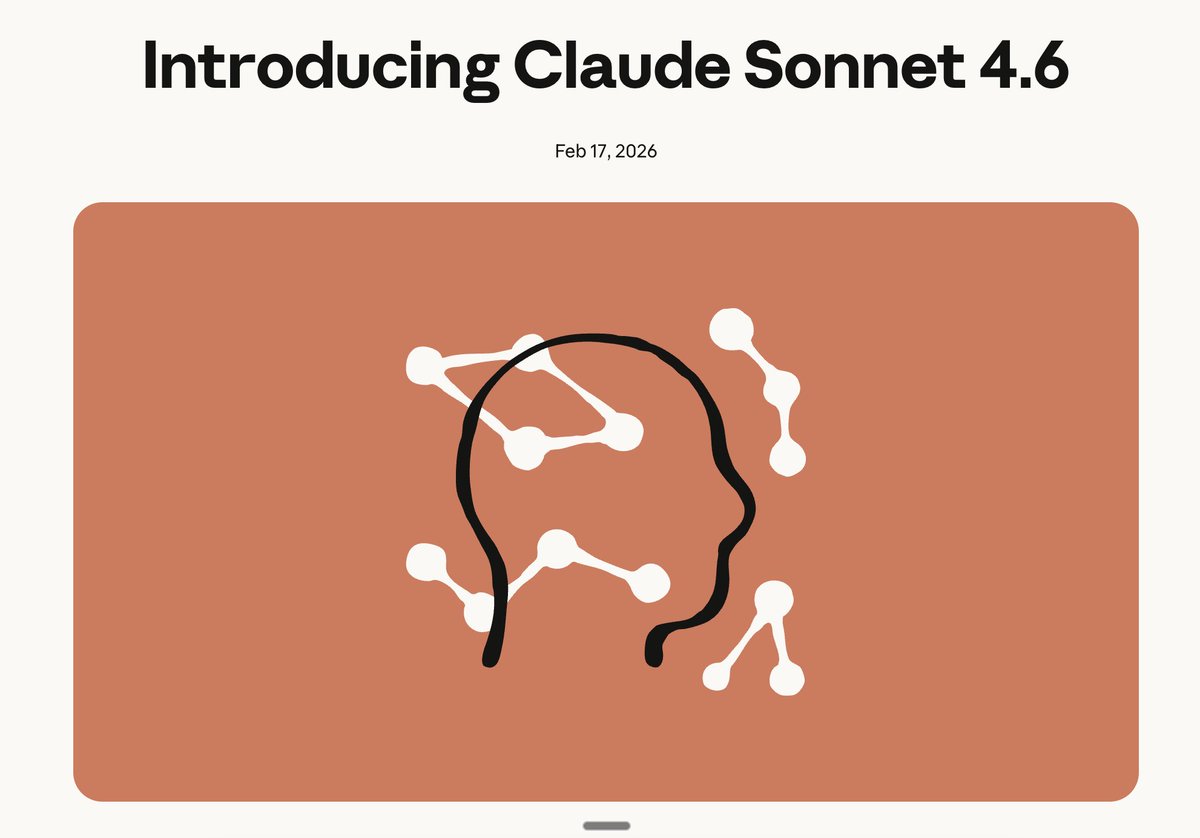
Last week, while everyone was waiting for Claude Sonnet 5 to come out, Claude just released Sonnet 4.6 and it just changed the internet as we know it. again.
John Peslar tweet media
English
0
1
1
88
AI Realized retweetledi
Carlos E. Perez
Carlos E. Perez@IntuitMachine·
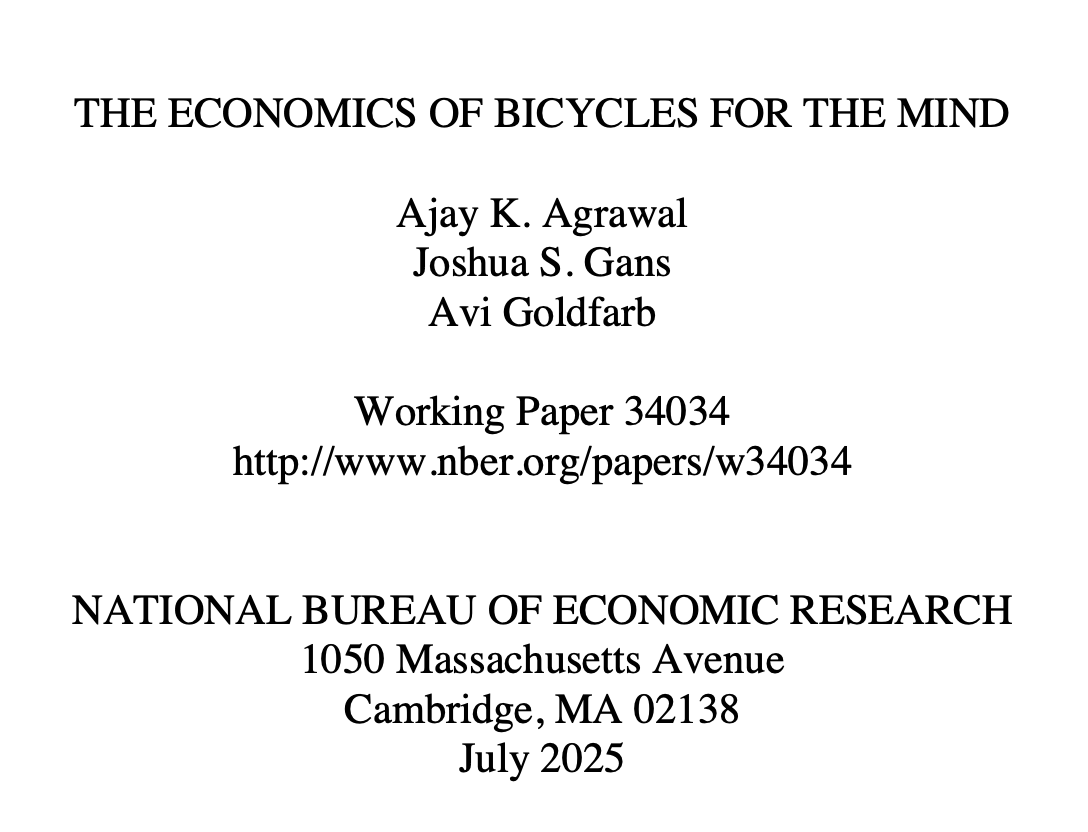
1/ What if I told you that the smarter AI gets, the less likely it is to fully automate your job? And that the "equality" we’re seeing in AI adoption right now is actually a trap? I just read a fascinating new NBER paper that explains the economics of AI. It changes everything. 🧵👇 2/ The paper is called "The Economics of Bicycles for the Mind" (a nod to Steve Jobs). Economists Agrawal, Gans, and Goldfarb built a model to figure out exactly what cognitive tools—like ChatGPT—do to our brains and our wallets. Here are the 5 biggest takeaways. 3/ 1. The "Bicycle" Effect Steve Jobs called computers "bicycles for the mind." Why? A bike makes your legs more efficient. You put in less effort but go further. The model proves AI does the exact same thing for cognitive work. 4/ It acts as a substitute for "Implementation Effort." Instead of spending 4 hours coding or drafting, you spend 15 minutes prompting. You work less, but achieve more. 5/ 2. The Inequality U-Turn This is where it gets wild. Right now, studies show AI reduces inequality. It helps junior employees catch up to seniors. It’s the great equalizer. But the paper predicts this is just Phase 1. 6/ We are currently in the "Inverse Skill Bias" phase. AI is commoditizing "Implementation Skill" (the grunt work). Since experts used to be paid for their grunt work, the gap between them and novices is shrinking. But wait for Phase 2... 7/ Once implementation is cheap for everyone, a new skill becomes king: Opportunity Judgment. This is the ability to identify what problem to solve. If you have great taste and vision, AI gives you infinite leverage. If you don't... you're just generating faster noise. 8/ The model predicts a U-shaped curve. Inequality drops now (as technical skills lose value). But it will skyrocket later (as judgment skills get amplified). The future belongs to the people who know where to steer the bike, not the people who pedal the hardest. 9/ 3. The Automation Paradox Everyone assumes: Better AI = More Automation. The paper argues the opposite. Automation requires "pre-specified judgment." You have to teach the machine the rules before it starts. Humans have "flexible judgment." We adapt. 10/ Here’s the kicker: As AI tools get better, they make human judgment more valuable, not less. If an AI makes it cheap for me to test 100 ideas, my ability to pick the winning idea becomes worth 100x more. Better tools entrench the human in the loop. 11/ 4. The "Communication Tax" So, who gets to be the boss? The visionary (Opportunity Specialist) or the closer (Payoff Specialist)? The model introduces a "communication tax." If it takes too much effort to explain your vision to a specialist, you won't do it. 12/ But because AI lowers the barrier to doing the work yourself, we might see a shift. Visionaries might stop delegating. Instead of a team of 10 specialists, you get 1 visionary with 10 AI agents. The "doers" lose power. The "choosers" gain it. 13/ 5. The Three Skills of the Future The paper breaks cognitive work into 3 buckets: Implementation (Doing) Opportunity Judgment (Finding problems) Payoff Judgment (Knowing what to do with results) 14/ If your career is built on #1 (Implementation), you are in the danger zone. That is what the "bicycle" replaces. If your career is built on #2 or #3 (Judgment), you are about to become superhuman. 15/ The Bottom Line: We are moving from an economy of "How" to an economy of "What." Don't worry about AI taking the pedals. Worry about whether you know how to read the map. 16/ If you want to dive deeper, the paper is "The Economics of Bicycles for the Mind" (Agrawal, Gans, Goldfarb, 2025). It’s a masterclass in understanding the shift from labor to leverage. 17/ I break down complex research like this every week. If you found this useful: Subscribe for more. RT the first tweet to share the knowledge. What's your take? Is your job mostly "Implementation" or "Judgment"? 👇
Carlos E. Perez tweet media
English
20
47
245
18K