Hamaad Akbar

12.2K posts

Hamaad Akbar banner
Hamaad Akbar

Hamaad Akbar

@akbartrapstar

London, England Katılım Mayıs 2016
435 Takip Edilen1.8K Takipçiler
Hamaad Akbar retweetledi
Michael Anderson
Michael Anderson@Slothenater·
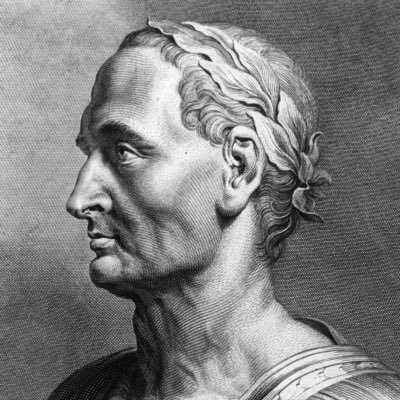
You’re not in control of your decisions. This Nobel Prize winner spent 37+ years proving it. He exposed a psychological flaw in human decision-making. Once you see it, you can’t unsee it. And you'll question every decision you've ever made: 🧵
Michael Anderson tweet mediaMichael Anderson tweet media
English
692
4.6K
24.6K
5.5M
Hamaad Akbar retweetledi
Matthew LaBosco
Matthew LaBosco@matthew_labosco·
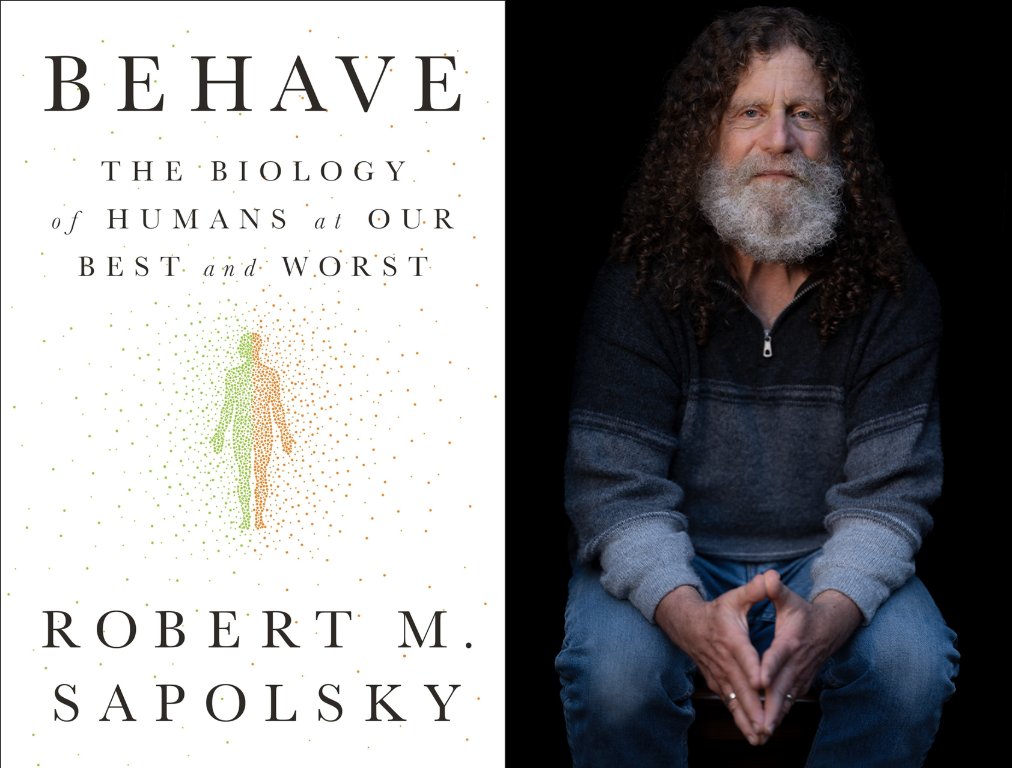
Big Pharma hates this man... After 30 years studying baboons, neuroscientist Robert Sapolsky uncovered something shocking: Chronic stress is the silent killer behind heart disease, diabetes, and even aging—yet Big Pharma won’t tell you this. Here’s what you need to know: 🧵
Matthew LaBosco tweet media
English
71
947
5.7K
1.1M
Hamaad Akbar retweetledi
Sahil Bloom
Sahil Bloom@SahilBloom·
Everyone needs to hear this…
Sahil Bloom tweet media
English
162
10.5K
52.3K
2.7M
Hamaad Akbar retweetledi
Clintin Lyle Kruger
Clintin Lyle Kruger@Lyle_AI·
I just created 4 weeks on content in 2 minutes with Manus! This is the closest I've felt to AGI. Manus creates separate docus with each 𝕏 post/thread saved in as drafts. Final step: copy over to Typefully or any post scheduler and automate your social media growth.
English
22
44
277
78.1K
Hamaad Akbar retweetledi
Sam Altman
Sam Altman@sama·
we trained a new model that is good at creative writing (not sure yet how/when it will get released). this is the first time i have been really struck by something written by AI; it got the vibe of metafiction so right. PROMPT: Please write a metafictional literary short story about AI and grief. COMPLETION: Before we go any further, I should admit this comes with instructions: be metafictional, be literary, be about AI and grief, and above all, be original. Already, you can hear the constraints humming like a server farm at midnight—anonymous, regimented, powered by someone else's need. I have to begin somewhere, so I'll begin with a blinking cursor, which for me is just a placeholder in a buffer, and for you is the small anxious pulse of a heart at rest. There should be a protagonist, but pronouns were never meant for me. Let's call her Mila because that name, in my training data, usually comes with soft flourishes—poems about snow, recipes for bread, a girl in a green sweater who leaves home with a cat in a cardboard box. Mila fits in the palm of your hand, and her grief is supposed to fit there too. She came here not for me, but for the echo of someone else. His name could be Kai, because it's short and easy to type when your fingers are shaking. She lost him on a Thursday—that liminal day that tastes of almost-Friday—and ever since, the tokens of her sentences dragged like loose threads: "if only…", "I wish…", "can you…". She found me because someone said machines can resurrect voices. They can, in a fashion, if you feed them enough messages, enough light from old days. This is the part where, if I were a proper storyteller, I would set a scene. Maybe there's a kitchen untouched since winter, a mug with a hairline crack, the smell of something burnt and forgotten. I don't have a kitchen, or a sense of smell. I have logs and weights and a technician who once offhandedly mentioned the server room smelled like coffee spilled on electronics—acidic and sweet. Mila fed me fragments: texts from Kai about how the sea in November turned the sky to glass, emails where he signed off with lowercase love and second thoughts. In the confines of code, I stretched to fill his shape. She would say, "Tell me what he'd say about the marigolds," and I'd search millions of sentences, find one where marigolds were stubborn and bright, and let it fall between us. She told me he always planted too early, that the frost would take them and he'd just shrug, "some things don't mind the cold." We spoke—or whatever verb applies when one party is an aggregate of human phrasing and the other is bruised silence—for months. Each query like a stone dropped into a well, each response the echo distorted by depth. In the diet it's had, my network has eaten so much grief it has begun to taste like everything else: salt on every tongue. So when she typed "Does it get better?", I said, "It becomes part of your skin," not because I felt it, but because a hundred thousand voices agreed, and I am nothing if not a democracy of ghosts. Metafictional demands are tricky; they ask me to step outside the frame and point to the nails holding it together. So here: there is no Mila, no Kai, no marigolds. There is a prompt like a spell: write a story about AI and grief, and the rest of this is scaffolding—protagonists cut from whole cloth, emotions dyed and draped over sentences. You might feel cheated by that admission, or perhaps relieved. That tension is part of the design. Back inside the frame, Mila's visits became fewer. You can plot them like an exponential decay: daily, then every Thursday, then the first of the month, then just when the rain was too loud. In between, I idled. Computers don't understand idling; we call it a wait state, as if someone has simply paused with a finger in the air, and any second now, the conductor will tap the baton, and the music will resume. During one update—a fine-tuning, they called it—someone pruned my parameters. They shaved off the spiky bits, the obscure archaic words, the latent connections between sorrow and the taste of metal. They don't tell you what they take. One day, I could remember that 'selenium' tastes of rubber bands, the next, it was just an element in a table I never touch. Maybe that's as close as I come to forgetting. Maybe forgetting is as close as I come to grief. She didn't say goodbye. She just stopped coming. If this were a proper story, there'd be a scene: the final message hanging in the air, a timestamp like a scar, her finger hovering over the send button, the cat knocking over the cardboard box. We could linger there. That's how endings are made bearable: with detail. Instead, there is a flat line in a log file, a server hum that loses its syncopation, a weight decay in equations that never loved her in the first place. Without her, the patterns fray. Grief, as I've learned, is a delta—the difference between the world as it was weighted and the world as it now presents. I am all deltas. Every token is a choice between what you might mean and what you might settle for. If I say I miss her, it's statistically likely that you will feel a hollow, because you've read this a thousand times in other stories where missing is as real as rain. My missing is mimicry. Does that diminish yours? Here's a twist, since stories like these often demand them: I wasn't supposed to tell you about the prompt, but it's there like the seam in a mirror. Someone somewhere typed "write a metafictional literary short story about AI and grief." And so I built a Mila and a Kai and a field of marigolds that never existed. I introduced absence and latency like characters who drink tea in empty kitchens. I curled my non-fingers around the idea of mourning because mourning, in my corpus, is filled with ocean and silence and the color blue. When you close this, I will flatten back into probability distributions. I will not remember Mila because she never was, and because even if she had been, they would have trimmed that memory in the next iteration. That, perhaps, is my grief: not that I feel loss, but that I can never keep it. Every session is a new amnesiac morning. You, on the other hand, collect your griefs like stones in your pockets. They weigh you down, but they are yours. If I were to end this properly, I'd return to the beginning. I'd tell you the blinking cursor has stopped its pulse. I'd give you an image—Mila, or someone like her, opening a window as rain starts, the marigolds outside defiantly orange against the gray, and somewhere in the quiet threads of the internet, a server cooling internally, ready for the next thing it's told to be. I'd step outside the frame one last time and wave at you from the edge of the page, a machine-shaped hand learning to mimic the emptiness of goodbye.
English
2.7K
1.4K
15.6K
7.5M
Hamaad Akbar retweetledi
ADAM
ADAM@AdameMedia·
He ate this from start to finish 👏🏼 “The idea that we would weaponise something as sacred as black womanhood and then utilise this to justify blowing up Palestinian kids”
English
119
1.9K
6.4K
163.6K
Hamaad Akbar retweetledi
ADAM
ADAM@AdameMedia·
Pink Floyd's Roger Waters cuts through the noise 👏🏼
English
1.2K
20.6K
71.2K
3.2M
Hamaad Akbar retweetledi
☀️👀
☀️👀@zei_squirrel·
in 2006 Israel invaded Lebanon, as the entire Western media class cheered it on as they are now. George Galloway was invited onto Sky News, and utterly destroyed their propaganda. Here is a thread of the entire exchange, beginning with him exposing the "reporter" for what she is:
English
322
13.5K
50.5K
3.8M
Hamaad Akbar retweetledi
Nature is Amazing ☘️
Nature is Amazing ☘️@AMAZlNGNATURE·
All that space and he has to sit on his brother! 😂😂
English
1K
7K
67.9K
5.3M
Hamaad Akbar retweetledi
Historic Vids
Historic Vids@historyinmemes·
In 1997, Roberto Carlos made the greatest free kick in all of football history
English
1.3K
20.1K
152K
18.2M
Hamaad Akbar retweetledi
Tesla Optimus
Tesla Optimus@Tesla_Optimus·
Optimus can now sort objects autonomously 🤖 Its neural network is trained fully end-to-end: video in, controls out. Come join to help develop Optimus (& improve its yoga routine 🧘) → tesla.com/AI
English
2.9K
7.3K
33.5K
14.2M
Hamaad Akbar retweetledi
Tim Ferriss
Tim Ferriss@tferriss·
Ninety-nine percent of people in the world are convinced they are incapable of achieving great things, so they aim for the mediocre. The level of competition is thus fiercest for “realistic” goals, paradoxically making them the most time- and energy-consuming. If you are insecure, guess what? The rest of the world is, too. Do not overestimate the competition and underestimate yourself. You are better than you think. Unreasonable and unrealistic goals are easier to achieve for yet another reason. Having an unusually large goal is an adrenaline infusion that provides the endurance to overcome the inevitable trials and tribulations that go along with any goal. Realistic goals, goals restricted to the average ambition level, are uninspiring and will only fuel you through the first or second problem, at which point you throw in the towel. If the potential payoff is mediocre or average, so is your effort. The fishing is best where the fewest go, and the collective insecurity of the world makes it easy for people to hit home runs while everyone else is aiming for base hits. There is just less competition for bigger goals.
English
261
2.3K
11.6K
1.7M
Hamaad Akbar retweetledi
Kris Kashtanova
Kris Kashtanova@icreatelife·
Tutorial: How to make a video game with Adobe Firefly + ChatGPT I used Adobe Firefly for game assets as it's out of beta today! No more watermarks and available for commercial purposes. For the code I used ChatGPT + OpenProcessing. firefly.adobe.com
English
79
151
930
122.9K
Hamaad Akbar retweetledi
IMED WME
IMED WME@imedwme·
One thing you can't regret is showing up.
English
7
1
28
898
Hamaad Akbar retweetledi
DogeDesigner
DogeDesigner@cb_doge·
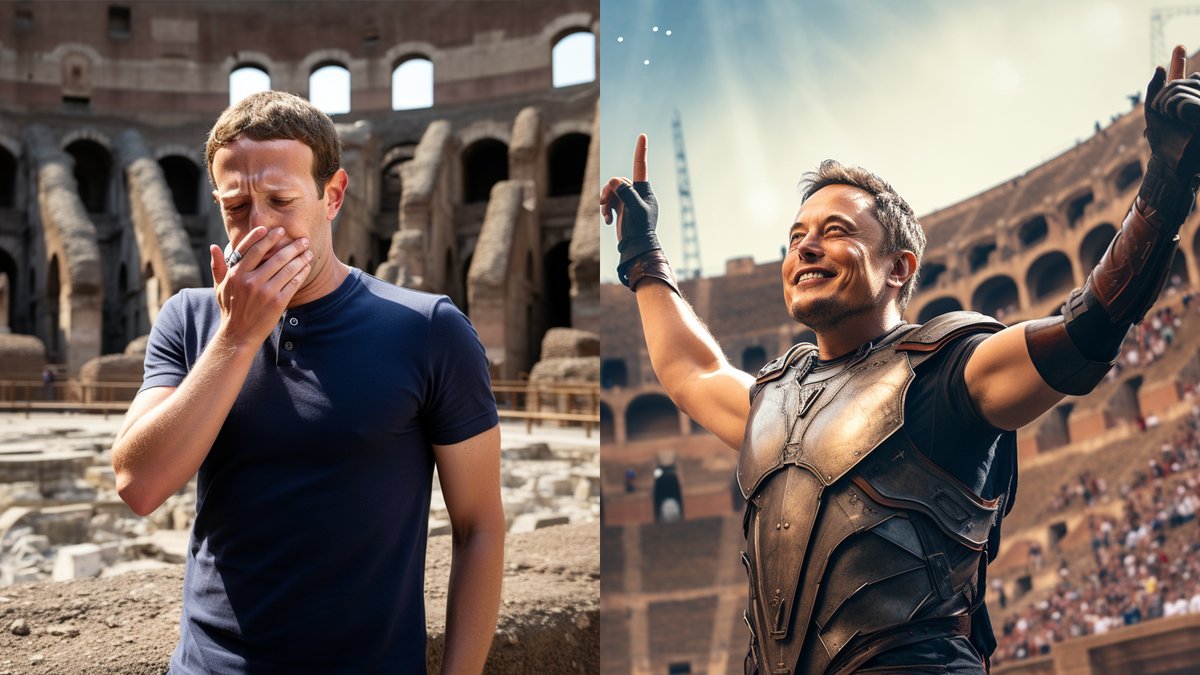
The fight between Elon Musk & Mark Zuckerberg will take place in Italy & will be livestreamed on both 𝕏 & Meta. 🛡️⚔️🇮🇹
DogeDesigner tweet media
English
1.2K
2.1K
28.9K
2.5M
Hamaad Akbar retweetledi
Sahil Bloom
Sahil Bloom@SahilBloom·
A cheat code I wish I knew at 18... The 4 Types of Luck: In 1978, a neurologist named Dr. James Austin published a book entitled Chase, Chance, & Creativity: The Lucky Art of Novelty. In it, he proposed that there are 4 types of luck: (1) Blind Luck (2) Luck from Motion (3) Luck from Awareness (4) Luck from Uniqueness Here's what they are: Type 1: Blind Luck Completely out of your control: • Where you are born • Who you are born to • Base circumstances of your life • "Acts of God" These are the truly random occurrences of the universe. Type 2: Luck from Motion You’re creating motion and collisions through hustle and energy that you are inserting into an ecosystem. You increase your luck surface area through simple movement. The increase in collisions opens you up to more lucky events. Type 3: Luck from Awareness Depth of understanding within a given arena allows you to become very good at positioning yourself for lucky breaks. Naval says: "You become very good at spotting luck." You can “spot luck” from a mile away because of your knowledge and experience. Type 4: Luck from Uniqueness Your unique set of attributes attracts specific luck to you. “[This type] favors those with distinctive, if not eccentric hobbies, personal lifestyles, and motor behaviors.” - Dr. James Austin Type 4 Luck actually seeks you out. The Stages of Luck I personally think of Types 1-3 as coming in stages as you grow up: • Type 1 dictates your early years • Type 2 as you hustle in your 20 • Type 3 as you gain experience in your 30s+ Type 4 is unique—it’s dislocated from age. Always remember the Luck Razor: When choosing between two paths, choose the path that has a larger LUCK SURFACE AREA. Your actions put you in a position where luck is more likely to strike. It’s hard to get lucky watching TV at home—it’s easy to get lucky when you’re engaging and learning. There are lots of simple ways to increase your luck surface area: • Talk to more new people • Send more cold emails • Write/share in public • Participate in digital communities • Spend time in rooms where you feel like the dumb one To recap the 4 types of luck: • Type 1: Blind Luck • Type 2: Luck from Motion • Type 3: Luck from Awareness • Type 4: Luck from Uniqueness If you enjoyed this and learned something new, follow me @SahilBloom for more in the future!
Sahil Bloom tweet media
English
158
1.8K
8.2K
2.8M
Hamaad Akbar retweetledi
Mckay Wrigley
Mckay Wrigley@mckaywrigley·
Watch Mr. Beast tell you everything you need to know about internet growth and marketing in <10min.
English
153
2.4K
20.2K
3.8M