

حسام
105 posts


@Haqiqatjou @GodLogic_GL I want to know where in scripture it mentions anything this vile. You know, there is power in the name of Jesus. Disgracing His name as you do will bring you nothing but despair and grief. You know it's true. Surrender now to the One and Only True God. He will give you Peace.
English

Muslims, is this perfect? Muhammad said this marriage is from Allah, by the way (Bukhari 7012).
Demonic.

Canyon Mimbs@CanyonMimbs
Islam is perfect. There is zero reason to leave this beautiful religion.
English
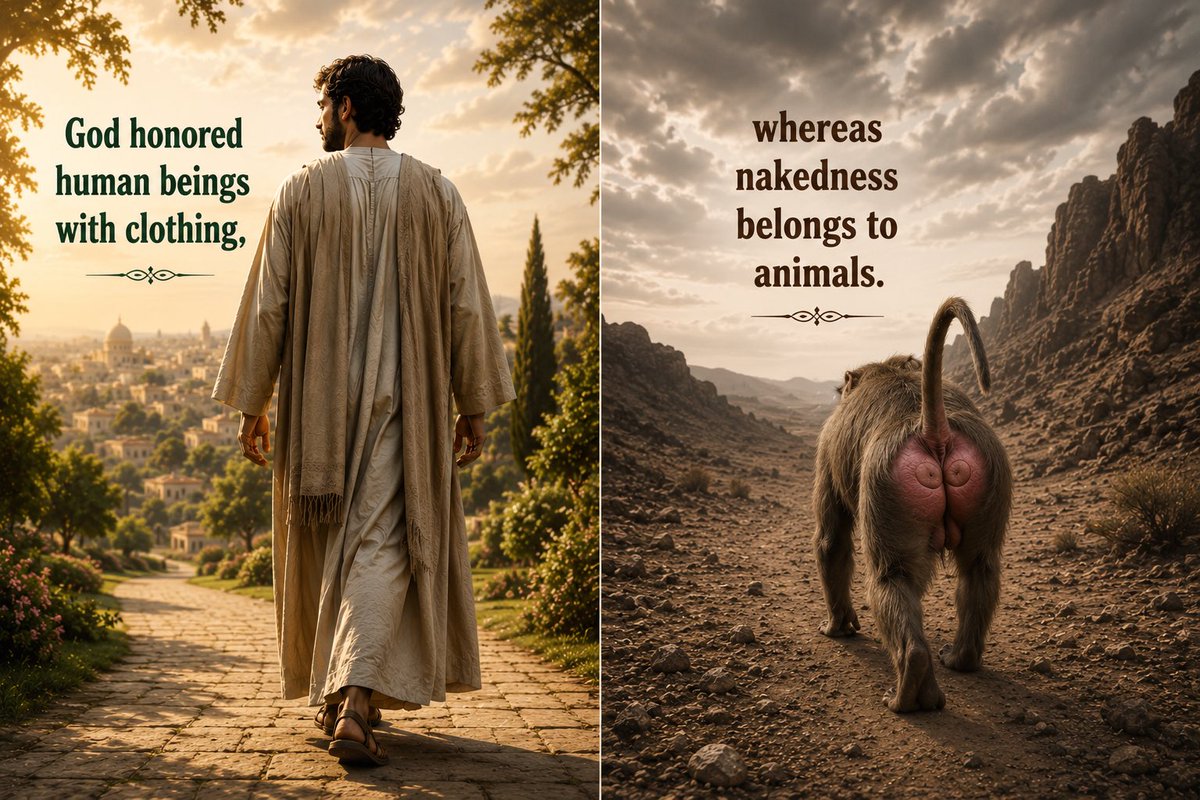

Two women who respect themselves vs women being slaves to their hyper sexualized society
RadioGenoa@RadioGenoa
A difference of over 1400 years.
English
Which doctrine appears to be more consistent with the texts found in the Bible?
1-
Muslim: God is One, has no son, no partner, and does not become incarnate.
Christian: One God in three Persons, and the Son became incarnate in Jesus.
Texts:
“The first of all the commandments is: Hear, O Israel, the Lord our God, the Lord is one.” (Mark 12:29)
“That they may know You, the only true God.” (John 17:3)
⸻
2-
Muslim: God alone is God, and He alone is perfect in knowledge and power. He does not become ignorant, sleep, or have needs.
Christian: Jesus is fully God and fully man.
Texts:
“But of that day and hour no one knows… but the Father.” (Mark 13:32)
“The Father is greater than I.” (John 14:28)
⸻
3-
Muslim: All prophets are human beings and messengers, including Jesus (peace be upon him).
Christian: The prophets are human, but Jesus is more than a prophet; He is the incarnate Son of God.
Texts:
“Jesus of Nazareth, a man attested by God to you.” (Acts 2:22)
“As You sent Me into the world.” (John 17:18)
⸻
4-
Muslim: Worship belongs to God alone.
Christian: The Father, the Son, and the Holy Spirit are worshiped.
Text:
“My God, My God, why have You forsaken Me?” (Matthew 27:46)
⸻
5-
Muslim: Salvation is through faith, righteous deeds, and God’s mercy, and no one bears the sin of another.
Christian: Salvation is through Christ’s atoning sacrifice.
Text:
“The soul who sins shall die. The son shall not bear the guilt of the father.” (Ezekiel 18:20)
English

This how disgusting and restarted this Muslim @muslimorthodoxy looks, he’s so demonicly possessed by ISLAM.
He had to attack people’s wives because his arguments against CHRISTIANITY are so weird. Watch how his fellows couldn’t even stop nor rebuke him.
This is ISLAM.
English
John 3:2
“We know that you are a teacher who has come from God.”
John 3:34–35
“For the one whom God has sent speaks the words of God… The Father loves the Son and has placed everything into his hands.”
John 4:19
“The woman said to him, ‘Sir, I can see that you are a prophet.’”
John 4:22
“You worship what you do not know; we worship what we do know, for salvation is from the Jews.”
John 4:34
“Jesus said to them, ‘My food is to do the will of Him who sent Me and to finish His work.’”
English

It may help you understand better that the descriptor “person” in the Trinity comes from the ancient Latin “persona” (a role or distinct way of existing in relationship) and Greek “hypostasis” (a distinct subsistence), not our modern idea of separate individuals. God is one “What” (one divine being and essence) but three “Who’s”—the Father, Son, and Holy Spirit—each fully God yet not three separate gods. They are distinguished only by their eternal relationships: the Father begets the Son, the Son is begotten, and the Holy Spirit proceeds from the Father and the Son. This means one God living out a single divine life in three completely united, personal ways—always in loving relationship within Himself, which He invites us to share through Jesus and the Holy Spirit.
English

In Islam, we believe that Allah alone is the Creator, the Provider, the Giver of life, and the Causer of death. He alone is worthy of worship, for He is the only true God. He has neither beginning nor end. He is the Ever-Living, who never dies, the Self-Sustaining, who never sleeps. Nothing is beyond His power, for He is Almighty over all things.
He is the Most Merciful, the Most Compassionate, the Most Generous, the Most Gentle, the All-Aware, the One and Only, the Eternal Refuge. He neither begets nor is begotten, and there is nothing comparable to Him.
The God we worship is merciful to the believers and severe in punishment toward those who reject Him. We worship Him with love, fear, and hope.
He has promised Paradise to the believers and Hellfire to the disbelievers. When we sin, we turn to Him alone in repentance, and He forgives us. He is completely independent of His creation and is in no need of anyone.
We call upon Him directly, without any intermediary, because He hears every prayer and answers whom He wills.
All of the prophets—including Jesus (peace be upon him), and finally Muhammad (peace and blessings be upon him)—were sent by Allah with one message: to call mankind to worship Allah alone, without associating any partners with Him.
English
Do you know what it means for God to be both immanent and transcendent? This means God is intimately active and present within all creation while remaining infinitely above and distinct from it.
The mainstream Biblical and Christian understanding of God’s nature carries this beautiful balance while remaining firmly rooted in Scripture. Christians across historic traditions—Catholic, Orthodox, and Protestant—affirm that God is omnipotent, omniscient, omnipresent, eternal, and the uncreated Creator of all things, including time and matter. At the heart of this is the Triune (trinity) reality: one God existing in three co-equal, co-eternal Persons—the Father, the Son, and the Holy Spirit—in perfect relational unity, not as three separate gods. In this view, the eternal Word of God, the Son, is present in all things and all times as He wills, because everything in the universe and time itself is sustained by Him and derives from Him. Thus God can enter His creation freely out of love, not out of any necessity or limitation, while always remaining fully transcendent.
The supreme expression of this comes in the incarnation, where the eternal Son unites a complete human nature to Himself in the person of Jesus Christ. Jesus is one person who is fully divine and fully human, with the two natures united without mixing, confusion, separation, or change. According to His divine nature, He remains omniscient and omnipotent; according to His human nature, He genuinely experiences limits, suffering, growth, and even death. There is no contradiction here—the same divine Person bears both realities in different respects. This reveals God’s absolute freedom and sovereignty: He is not bound by His own transcendence, so He can willingly assume limitations, enter time, and be present in anything He wants while staying fully God. Far from diminishing His greatness, we see this as the highest demonstration of power and humility, showing that “the weakness of God is stronger than human strength.” It flows from God’s essential nature as love itself, with the eternal love within the Trinity extending outward to humanity for salvation. Overall, our doctrine portrays a God who is both infinitely beyond creation and intimately involved in it (Holy Spirt) making the Christian view deeply relational and personal.
In contrast, your Islamic view of God (Allah) emphasizes absolute transcendence and oneness (tawhid) without any internal distinctions or the possibility of God entering creation in a personal, incarnational way. God remains wholly other and incomparable, relating to humanity primarily as sovereign Ruler and Lawgiver rather than as Father in the intimate, adoptive sense found our Christian beliefs. As a result, the Christian understanding fosters a relationship of familial closeness and love through the incarnation, your view centers on submission, reverence, and obedience to the supreme Ruler. So, we understand the nature of God differently through our texts and doctrine.
English
What first-century historical or archaeological evidence proves that the Church of the Holy Sepulchre is truly the site of Jesus’ crucifixion and burial, or that the Church of the Nativity is truly the place of his birth? Or are these identifications based primarily on Church tradition that emerged centuries after Jesus?
English

After my parents visited the Kabba, I had one giant question that shattered my worldview as a Muslim:
Where is the historical evidence that Abraham built the Kaaba? (Or even went near Mecca for that matter)
I grew up believing it without ever asking for evidence.
When I began to own my faith, I started looking for evidence.
I couldn't find archaeological evidence that Abraham traveled to Mecca.
What history does show is that before Islam, the Kaaba was a major pagan shrine associated with the Quraysh and housed hundreds of idols.
Muhammad didn't build it.
He inherited it, removed the idols, and established it as Islam's holiest site.
That forced me to ask:
If Abraham really established the Kaaba as the center of worship, where is the historical record?
Why is the evidence silent?
Truth shouldn't be afraid of investigation. The Quran shouldn’t be afraid of questioning. Saudi Arabia shouldn’t be hiding the sites.
My faith changed the day I stopped asking, "What have I always been told?"
...and started asking, "What does the evidence actually point to?"
English
@pio_oraetlabora @belle_liuu This is what your holy book contains: fabricated stories and falsehoods.

English

@al80786 @belle_liuu One Quran after Uthman burnt all the Qurans and wrote a new one?
Bro you have the most unreliable and corrupt scripture
I pity you
English

This is a Common Muslim Claim:
The Qur'an is God's final revelation because Muhammad was illiterate, yet accurately retold the stories of the prophets.
This is the Christian objection:
Then those stories should match the earlier Scriptures they claim to confirm (The Torah’s account)
The Qur'an says the story of Joseph confirms the previous revelation.
Yet, there are 944 differences between the Qur'anic account and the Torah.
Both cannot be true.
When you compare the Qur'anic account with the Torah, there are hundreds of differences in just that one narrative.
If the Qur'an claims to confirm the previous Scriptures, why does it so often contradict them.
English
@pio_oraetlabora @belle_liuu Have mercy on yourself, you who worship human beings.
English


Sneako is correct, the trinity is illogical
JM News Network@JMNewsNetwork_
SNEAKO: “The Trinity never made sense to me.”
English
@reformedemocrat @ardfard101 @eternalbread_ Does Jesus have a God?
And when he was crucified, was he willing and pleased to die, or was he distressed and unwilling, asking to be spared?
English


There are no ex-Christians, Loon. If you actually think so you're self-admitting that you know nothing about being "born again" (John 3:3), which is not surprising since you've fallen for, and are actively promoting, Satan's prized-project called, "Islam." In contrast, there are many ex-Muslims in the world who've come to realize that Jesus died and Muhammad lied.
English

There are hundreds of Christians every month that reach out to me and denounce Christianity and embrace Islam through watching my content.
Here are 3 just from this week alone. Christianity is dying, Islam is thriving


English
@korrathetaymi If the Father is fully God, the Son is fully God, and the Holy Spirit is fully God, yet they are not three gods but one God, what exactly does “one” mean in this context? And how is this different from saying there are three divine beings?
English

Hosea 11:9- “For I am God, and not a man”
Christians, take notes. 📝
God is not man; He is FAR GREATER.
English
I am asking about the logical coherence of the doctrine that one person can be fully human and fully God at the same time.
If you say that Jesus knew everything in his divine nature, while at the same time did not know certain things in his human nature, then you are attributing both complete knowledge and lack of knowledge to the same person at the same time.
Likewise, if you say that he was omnipotent in his divine nature, yet limited in power in his human nature, then you are attributing both omnipotence and limited power to the same person at the same time.
Therefore, my question is not about the limits of God’s power, but about the logical coherence of this description. How can one and the same person be omniscient—knowing everything—and yet not know certain things at the same time, without this resulting in a contradiction?
English
Do you believe God is all powerful? All knowing? Is God is Omnipotent? Omnipresent? Capable of omniscience? Ubiquitous? Immanent? Pantheistic? Or do you limit God’s Power? Limit His nature? Is He not the Creator of all, even time and physics? Is He bound to the physical limitations of this world-the One who created all matter and all of time? Do you define His powers as limited only to human understanding?
English
@pio_oraetlabora @belle_liuu Today, we have one Quran. In contrast, there are countless versions of the Gospels and the Torah, many of which contradict one another.
English
@al80786 @belle_liuu The Quran is the most corrupted book which was rewritten and other copies burned by Uthman
Lots of suras were forgotten because the hafiz were killed in the battle of yamama
And a goat ate a few chapters as well
English

@al80786 @belle_liuu There are multiple translations of the Torah and the gospels, but the accounts are remarkably similar.
English
How can one person be both human and God at the same time? Human beings are, by nature, limited in knowledge and power, whereas God is unlimited in both knowledge and power. So, did Jesus know everything or not? Was his power unlimited or limited? If you say that he both knew everything and did not know certain things at the same time, or that he was both all-powerful and not all-powerful at the same time, then this appears to be a contradiction. A thing cannot simultaneously possess and lack the same attribute in the same respect. How do you explain that?
English
“But about that day or hour no one knows, not even the Son, but only the Father.”
I understand why this verse raises thoughtful questions. It appears that Jesus expresses a limitation in knowledge, and since divine omniscience is perfect, some conclude that he cannot share in full divinity. This is a legitimate point to explore.
From the historic Christian perspective, the explanation lies in the doctrine of Christ’s two natures—fully divine and fully human, united in one person without confusion or mixture. In his incarnate human state, the Son voluntarily limited the exercise or disclosure of certain divine attributes, including this particular knowledge of the eschatological timetable. This self-limitation is often described as kenosis, the humble emptying referenced in Philippians 2:6–8. Thus, he spoke from the perspective of his human role and mission while remaining fully one with the Father in his divine nature.
Also, the immediate context of the Olivet Discourse- further clarifies this. Jesus was instructing his disciples about the end times with an emphasis on vigilance and spiritual preparedness rather than chronological precision.
Moreover, the broader testimony of the Gospels shows Jesus exercising profound divine knowledge—such as his intimate mutual knowledge of the Father in Matthew 11:27—and revealing insights only God could possess. Early Church Fathers and later theologians have consistently understood this passage as reflecting the economic relations within the Trinity, not as a denial of Christ’s deity.
I respect that you come from a tradition that deeply loves & honors Jesus as a great prophet, and I’m glad we can discuss these matters with sincerity.
English
Appealing to other passages does not change the plain meaning of John 17:3. If there is an explicit text stating that the Father is “the only true God,” its meaning should not be overridden by appealing to other passages whose interpretation is disputed.
As for the claim that the context changes the meaning, the context actually reinforces it. In the same chapter, Jesus says:
“I have finished the work You gave Me to do.” (John 17:4)
“As You sent Me into the world…” (John 17:18)
This is consistent with Jesus describing himself as one sent by God, not as God Himself.
Likewise, appealing to Hebrew culture or historical background does not change the meaning of the words, “You are the only true God.” The language is clear and does not require an interpretation that makes “only” mean something other than only.
If there is an explicit text declaring that the Father is “the only true God,” its meaning should not be set aside in favor of passages whose interpretation is debated.
So the question remains simple: If Jesus is Himself the only true God, why did He say to the Father, “You are the only true God, and Jesus Christ whom You have sent,” instead of saying, “We are the only true God,” or including Himself in that description?
English
In John 17:3, Jesus says, “Now this is eternal life: that they know You, the only true God, and Jesus Christ whom You have sent.” Some people use this verse to claim that Jesus is denying He is God because He calls the Father “the only true God” and says He was sent by Him.
But when you read it in context, it’s part of Jesus’ High Priestly Prayer. He is simply distinguishing between the Father and the Son—yes, the Father sent the Son—but that doesn’t mean Jesus isn’t divine. Right in the same prayer, Jesus talks about the glory He shared with the Father before the world even began (John 17:5). That shows He existed eternally with God.
The phrase “only true God” is talking about the Father in this relationship of sending and receiving, but it doesn’t exclude the Son from being fully God. Eternal life comes from knowing both the Father and the Son together—Jesus isn’t optional. If He weren’t God, why would knowing Him be necessary for eternal life?
Other parts of the New Testament use similar language without denying Jesus’ divinity, and John’s Gospel is full of clear statements that Jesus is God (like John 1:1, 8:58, 10:30, and 20:28). So this verse actually fits perfectly with the Trinity: one God in three persons. It highlights their different roles while keeping Jesus fully divine.
It’s really important to understand the historical background and Hebrew culture when reading these verses. Taking a single sentence out of context can lead to wrong conclusions. That’s why I always encourage people to study the whole books I shared with you—get the full picture instead of relying on isolated quotes. Context, culture, and history make all the difference.
English
He specifically describes the Father alone as “the only true God,” then refers to himself as “Jesus Christ, whom You have sent.” This is clear and does not require reinterpretation.
The grammatical structure is straightforward:
You = the only true God.
Jesus = the one whom You sent.
Pre-existence does not equal deity.
The Bible itself speaks of beings that existed before the world, such as the angels. Proving that someone existed before the world is one thing; proving that they are God is another.
“You are the only true God.”
Either:
“Only” means exactly what it says, making the Father alone the only true God.
Or “only” does not actually mean only, in which case the plain meaning of the text is lost.
In the same chapter, Jesus also says:
“As You sent Me into the world…” (John 17:18)
“I have finished the work You gave Me to do.” (John 17:4)
This is fully consistent with the role of a prophet or messenger sent by God, not with someone explicitly saying, “I am God.”
English
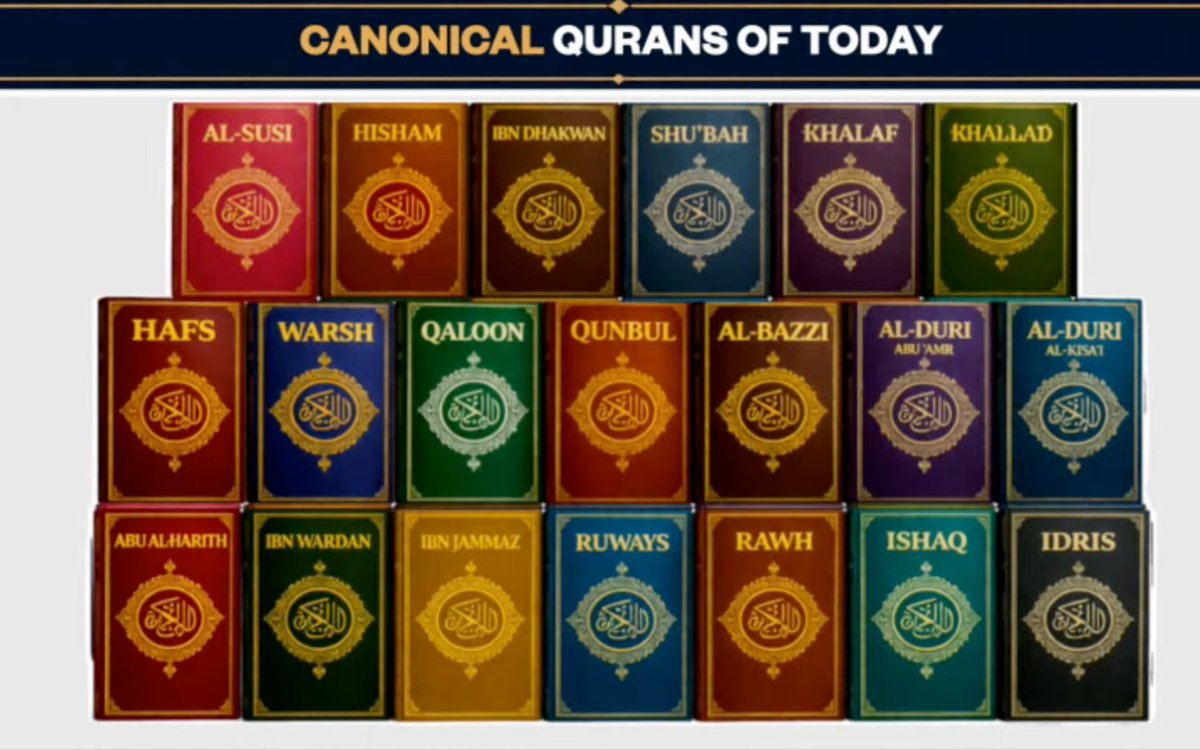
These are not twenty different copies of the Quran; rather, they are the names of the transmitters of the ten canonical recitations. The Quran is one. There is no missing or additional surah in any recitation.
Therefore, they are called recitations, not copies or editions.
Each one contains 114 surahs. There is no difference in the original text, and all of them are authentic and do not contradict one another. The differences are generally in pronunciation, vowel lengthening or some words, such as “Malik” in one recitation and “Maalik” in another.
English


معلومة قد لا تهمكم :
المرض القاتل الذي قتل ليندسي قراهام هو نفس المرض الذي أصابني
الفرق أن الله لطف بي و اكتشفت التمدد بالصدفة .
وَأَمَّا بِنِعْمَةِ رَبِّكَ فَحَدِّثْ
العربية