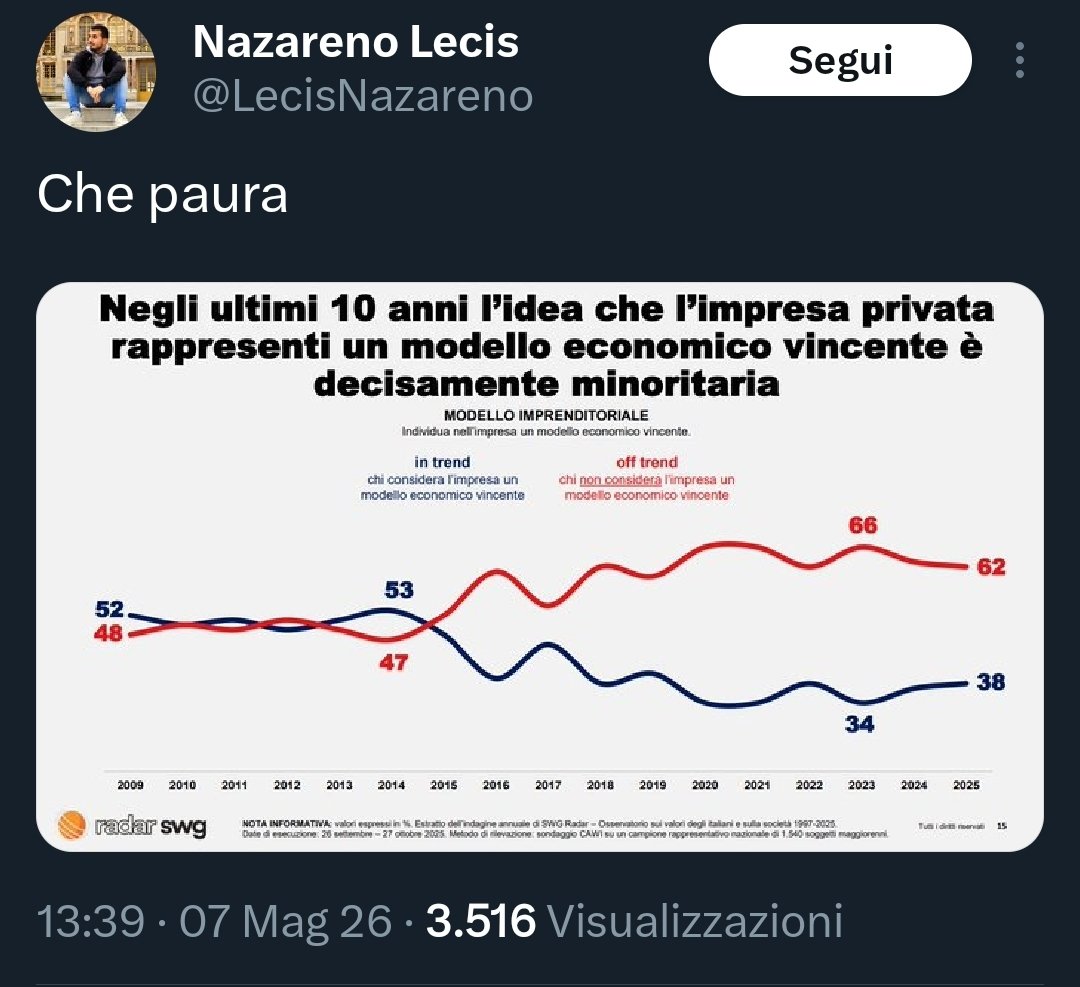
@francelenzi Che sono infatti rispettivamente un paese in costante declino da 10 anni e un altro con stipendi e crescita al palo da 30. Cos’è, dovrebbero essere esempi di successo alternativo slegato dalla produttività?😂
Italiano
Giovanni litimosi
548 posts

Italy economy was not destroyed by the euro. Before the euro, Italy could hide weak competitiveness through repeated lira devaluations. Since the 1980s, Italy has gradually fallen behind its main European peers in productivity growth. The IMF describes Italy as having suffered from sluggish productivity growth for nearly three decades. After the euro, that currency-devaluation escape valve disappeared. From that point, Italy had to compete through: → Higher productivity — stagnant for nearly three decades → Meritocratic and more competitive firms — Italy remains dominated by very small firms, many passed from parents to children or through insider networks, weakening professional management, meritocracy and scale. → Stronger R&D and innovation — Italy has a smaller VC market, weaker startup ecosystem and lower innovation intensity than Europe’s leading economies → Better technology adoption — one of Italy’s biggest weaknesses is the very slow adoption of new technologies by firms → Lower bureaucracy and stronger institutions — Italy remains held back by excessive administrative complexity, slow justice, powerful lobby networks and the persistent influence of organised crime in parts of the economy → A more sustainable state — high public debt, persistent fiscal deficits, demographic decline and rising pension pressures limit Italy’s ability to invest in growth The euro did not sink Italy. It removed the ability to hide stagnation behind currency devaluation.





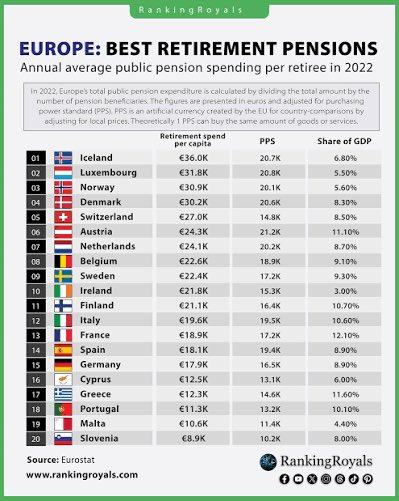
Pensioni, la metà degli italiani prende «troppo»: come rivedere i sussidi (e finirla con il buonismo) trib.al/TOiFiQo


Un partito serio, deve partire dal problema INPS oltre 400 miliardi di spesa, 180 miliardi di trasferimenti, 6 milioni di percettori con meno di 15 anni di contributi, di cui 3 completamente sconosciuti al fisco. 120 miliardi di sole pensioni retributive.