Alex Teng

555 posts

Alex Teng banner
Alex Teng

Alex Teng

@alexteng101

helping founders make abundance the default @fiftyyears

Katılım Ekim 2020
501 Takip Edilen809 Takipçiler
Sabitlenmiş Tweet
Alex Teng
Alex Teng@alexteng101·
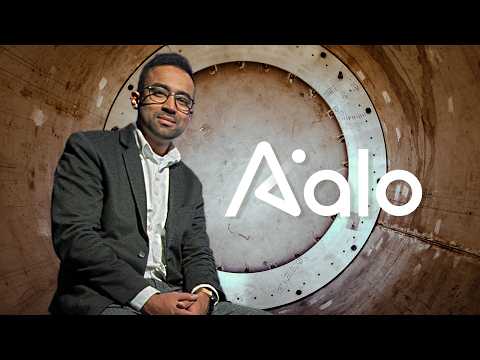
Aalo just got the DOE equivalent of an NRC operating license for Aalo-X at Idaho National Lab -- the DSA is approved. A bit of context for why this is historic: The last time the US built a brand-new nuclear reactor this fast, the Beatles hadn't broken up yet. INL is the birthplace of the first atomic age -- 52 reactors built between 1949 and the mid-70s, where Walter Zinn lit four lightbulbs with EBR-I in 1951 and birthed civilian nuclear power. Then we atrophied our ability to move fast. Vogtle 3 & 4, the most recent US reactors, took ~15 years and over $30B. Matt and Yasir founded Aalo in 2023. We were the first to back them. It's 2026, and they have: – designed their own fuel and stood up the supply chain that will deliver hundreds of reactors – designed and built the core components to be full-scale and identical to the full-power reactor that can economically generate 30 MWth – constructed an entirely new nuclear facility from a dirt field Reactor 53 at INL. First new reactor there in 50 years. And the first sodium-cooled reactor to start up in the US in over four decades. The scaling laws of the second atomic age are about how quickly you can build, iterate, and scale reactors for commercial uses. Aalo is about to prove that design and build isn't a decade-long affair and instead can be done in single-digit years, as a first-time operator, with their own fuel, on land they leased and built on themselves. Next up: criticality. This is exactly why @fiftyyears exists -- to back founders like @MattLoszak and @yasir_fission who make the impossible possible. Huge props to the @AaloAtomics team for delivering on an impossible timeline, and to the DOE team whose support has been instrumental. The first light of the second atomic age is genuinely dawning. Onwards.
Alex Teng tweet media
English
6
18
100
15.9K
Alex Teng retweetledi
Seth Bannon
Seth Bannon@sethbannon·
We’ve built a tool called Genie that turns meetings into software. If someone on the team says “I wish we had a tool for X” during a meeting, Genie automatically builds it. How it works: • analyzes granola meeting transcripts • creates Linear tickets • orchestrates agent workflows • writes code • opens PRs • goes through review • deploys • pushes outputs to Slack Yesterday someone mentioned wanting a way to automatically surface insights from founder conversations. This morning we woke up to a working prototype. Genie built it overnight from the transcript. The long-term vision: an agent that listens to what a company talks about, then quietly builds the tools the company needs.
English
4
5
28
2K
Alex Teng retweetledi
Yasir Arafat
Yasir Arafat@yasir_fission·
Episode 3 of “Critical Thinking” is live: Inside the Core. Every reactor design comes down to one bet: your chosen combination of fuel, coolant, and moderator. For Aalo-1, we picked UO2, liquid sodium, and graphite. This episode explains why. We get into some real engineering: fast vs thermal spectrum, HALEU+, the role of the graphite moderator, and how neutronics, thermal hydraulics, shielding, and manufacturing must come together to make a reactor real. It's a long one (52 minutes - get out some headphones and go for a walk!). Watch here: youtube.com/watch?v=7DaZw_…
YouTube video
YouTube
English
1
7
28
13.9K
Alex Teng retweetledi
Matt Loszak
Matt Loszak@MattLoszak·
A $50B data center only pays $1-2B for its energy hardware. As energy becomes the main constraint, they'll be willing to pay more for the fastest energy sources. The speed of nuclear will surprise everyone: Aalo just went from dirt field to finished 10 MW reactor in 5 months.
David Sacks@DavidSacks

Back-of-envelope numbers for 1 gigawatt data center: All-in Capex: ~$50 bn Enterprise revenue generated: ~$25-30 bn/year Electricity cost: $1-2 bn/year ~2 year payback. The boom is real.

English
23
44
385
36.2K
Alex Teng retweetledi
Caleb Boyd
Caleb Boyd@Caleb_C_Boyd·
A token from back when the US made the majority of the world’s graphite. The Acheson process for synthetic graphite was invented by Edward Acheson in 1896 in Niagara Falls, NY. He founded the Acheson Graphite Co that became Union Carbide We’re bringing it back!
Caleb Boyd tweet media
English
1
2
6
334
Alex Teng retweetledi
Seth Bannon
Seth Bannon@sethbannon·
We led the Astranis pre-seed as their first VC investor. Every additional $50k check was a fight because the idea of a startup building small geo satellites was out there. But @Gedmark was relentless. Now @Astranis looks inevitable, with $450M more to scale. Ad astra!
John Gedmark@Gedmark

I'm excited to announce @Astranis has raised $450 million of new capital. All of it so we can scale to meet surging demand for advanced high-orbit spacecraft— for GEO, MEO, and beyond. This includes a Series E led by Snowpoint and Franklin Templeton, with Andreessen Horowitz, BlackRock, Baillie Gifford, Fidelity, BAM Elevate, Nimble Partners, and Friends & Family Capital, participating alongside many others, totaling $300 million. A delayed-draw credit facility by Trinity Capital adds up to $155 million of additional capital to support the addition of new manufacturing capacity and support future growth. This comes at a turning point in the space industry, and for higher orbits specifically. In our commercial business, we've seen more demand than ever for sovereign systems. As countries and large enterprises need dedicated, secure communications infrastructure. Something that can only be provided from GEO. For our US Government customers, Astranis has proven we can serve as a Neo Prime for some of the most important defense missions. And we are now spooling up to support multiple US Government Programs of Record simultaneously. Astranis has now been selected as Prime for the initial phase of 3 separate Programs of Record— PTS-G, Resilient GPS, and RG-XX/Andromeda. And we’re just getting started. This comes as Space Force is seeing one of the largest budget increases ever seen by a service branch with this year’s budget increasing to $71.1 billion. That is in direct response to new space threats posed by adversaries China and Russia. With GEO being where our most critical national security space assets are, we can’t afford to delay. We need to get new capability deployed with incredible speed, and Astranis is ready to serve. Special thanks to the Astranis existing investors who also participated in this financing round and have backed us from the beginning, including ACE, Elefund, Garage Capital, Helium-3, Liquid2, Metaplanet, and Uncorrelated. This brings Astranis’s total raised to more than $1.2 billion, and this capital goes straight to work.

English
5
4
93
8.2K
Alex Teng
Alex Teng@alexteng101·
Aalo just got the DOE equivalent of an NRC operating license for Aalo-X at Idaho National Lab -- the DSA is approved. A bit of context for why this is historic: The last time the US built a brand-new nuclear reactor this fast, the Beatles hadn't broken up yet. INL is the birthplace of the first atomic age -- 52 reactors built between 1949 and the mid-70s, where Walter Zinn lit four lightbulbs with EBR-I in 1951 and birthed civilian nuclear power. Then we atrophied our ability to move fast. Vogtle 3 & 4, the most recent US reactors, took ~15 years and over $30B. Matt and Yasir founded Aalo in 2023. We were the first to back them. It's 2026, and they have: – designed their own fuel and stood up the supply chain that will deliver hundreds of reactors – designed and built the core components to be full-scale and identical to the full-power reactor that can economically generate 30 MWth – constructed an entirely new nuclear facility from a dirt field Reactor 53 at INL. First new reactor there in 50 years. And the first sodium-cooled reactor to start up in the US in over four decades. The scaling laws of the second atomic age are about how quickly you can build, iterate, and scale reactors for commercial uses. Aalo is about to prove that design and build isn't a decade-long affair and instead can be done in single-digit years, as a first-time operator, with their own fuel, on land they leased and built on themselves. Next up: criticality. This is exactly why @fiftyyears exists -- to back founders like @MattLoszak and @yasir_fission who make the impossible possible. Huge props to the @AaloAtomics team for delivering on an impossible timeline, and to the DOE team whose support has been instrumental. The first light of the second atomic age is genuinely dawning. Onwards.
Alex Teng tweet media
English
6
18
100
15.9K
Alex Teng
Alex Teng@alexteng101·
@CaminaDrummer4 Yep! Plan is for future reactors to be NRC approved. NRC has issued permits for TerraPower, Kairos, and ACU in the last ~2 years.
English
1
0
1
38
Camina Drummer
Camina Drummer@CaminaDrummer4·
@alexteng101 Great. But once their reactors work, won’t they need NRC permits to install them? And hasn’t the NRC refused to issue a single permit in its entire lifetime?
English
1
0
0
116
Alex Teng
Alex Teng@alexteng101·
@jamiequint We'll see! Such an exciting time in the world of nuclear!
English
0
0
0
38
Jamie Quint
Jamie Quint@jamiequint·
@alexteng101 In order to be the first new reactor at INL they probably have to be the first ones to make neutrons at INL. Might be too early to count your chickens on them being the first ones to do that 😉
English
1
0
0
176
Alex Teng
Alex Teng@alexteng101·
@ErikSTownsend 💯: "Aalo’s choice of conventional LEU UO₂ fuel matters more than most people realize. It is the choice of a company that has done the LCOE arithmetic and concluded that mainstream-market nuclear has to use mainstream-market fuel."
English
0
1
4
3.3K
Alex Teng retweetledi
Yasir Arafat
Yasir Arafat@yasir_fission·
👏 Aalo just cleared the hardest regulatory gate in advanced nuclear. DOE has approved the Documented Safety Analysis (DSA) for our Aalo-X Critical Test Reactor at Idaho National Laboratory- the DOE equivalent of an NRC operating license. Because time is our most valuable capital, we chose the most difficult possible scope to meet our July 4th goal. Earned as a first-time operator, on a facility we built from scratch on leased DOE land: ✅ We designed our own fuel and exercised the supply chain that will deliver hundreds of reactors commercially. ✅ We built the core components to be full-scale and identical to our full-power reactor, the one that will economically generate 30 MWth. ✅ We constructed a brand new nuclear facility from the ground up. ✅ We stood up all the DOE Safety Management Programs from scratch in months. This allows us to be an operator of this nuclear facility. With the DSA approved, the design is fixed, the safety basis is locked in, and the reactor can now proceed to final assembly and commissioning. The hard institutional work of becoming a DOE nuclear contractor is done. Next, the final boss: a Readiness Review by DOE to prove we are ready to load fuel and achieve criticality, then an SBAA recommendation to S1 for fuel load and criticality, then S1 approval, and we go critical. None of this would have happened without the Aalo team, who took on an impossible scope on an impossible timeline and delivered. And none of it would have happened without the DOE-ID team, whose rigor, engagement, and support throughout this review made the milestone real. Thank you. Onwards. ⚛️
Aalo Atomics@AaloAtomics

On April 30th, The Department of Energy's Idaho Operations Office (DOE-ID) approved the Documented Safety Analysis (DSA) for the Aalo-X Critical Test Reactor, advancing Aalo into its final pre-operations phase, the Operational Readiness Review. The DSA is the authoritative safety basis for a DOE nuclear facility. It demonstrates that a facility can be operated safely across its full range of normal, off-normal, and accident conditions. In the Aalo-X Critical Test Reactor, Aalo will test its full-scale nuclear core. The reactor contains nuclear fuel, moderator, control rod drive mechanisms, shielding, and instrumentation systems that are direct analogs of what will operate in the 10 MWe Aalo-X reactor being built next door. To further the CTR as an on-ramp to commercial deployment, no components used to achieve this milestone were repurposed: - Fuel assemblies were designed and assembled in-house. - The entirely new, compliant reactor facility was completed in a matter of months. - The commercial fuel supply chain was excercised from mining through on-site uranium delivery. - The reactor was designed and built modularly in-house and transported on commercial trucks to Idaho. - The reactor was built to NQA-1, the standard for commercial reactor quality, rather than ANS 15.8, which governs prototype reactors. A regulatory milestone at this level is the output of many people doing difficult, detailed work over a long period. We want to thank DOE leadership and the review staff who executed the DOE-STD-1271 framework, along with the modernized NE orders. We also want to give a huge thank you to the team at Aalo who carried out this work, along with our partners and advisors. The final phase before criticality is the DOE-led Readiness Review, in which DOE verifies that the people, facility, and programs can be cleared to operate as documented. Today’s DSA milestone proves our team’s execution discipline, and we are looking forward to next steps. Onward to criticality.

English
4
2
40
1.3K
Alex Teng retweetledi
D. Scott Phoenix
D. Scott Phoenix@fuelfive·
Will Reddit be the last human stronghold? Progress ep03 is live with Steve Huffman, founder and CEO of @Reddit We discuss why the future looks a lot like the past, why death might actually be good design, and why scientists may one day have to apologize to the hippies. Timestamps 00:00 Introduction 01:30 Steve's weirdest idea: we should all die and be forgotten 04:37 Scientists owe the hippies an apology 05:35 Einstein sounds like a Buddhist monk 08:04 Reddit as an empathy machine 09:23 What Facebook got right, then abandoned 10:30 Cities are the only organism that scales superlinearly 12:25 Diagnosing inefficient institutions 13:35 Institutions need to die too 17:07 The policy mistake behind housing, college debt, and healthcare 18:21 America's doctor cap vs. Asia's approach 20:43 Fatherhood and the long view 22:12 Will Steve's kids have jobs? 23:38 Steve's case for Universal Basic Income 27:23 Saying please and thank you to ChatGPT 29:00 Vibe-coding a home automation bridge in two days 30:22 Scott's guilt about jailbreaking Claude
English
3
6
18
7.5K
Alex Teng retweetledi
Hannu Rajaniemi
Hannu Rajaniemi@hannu·
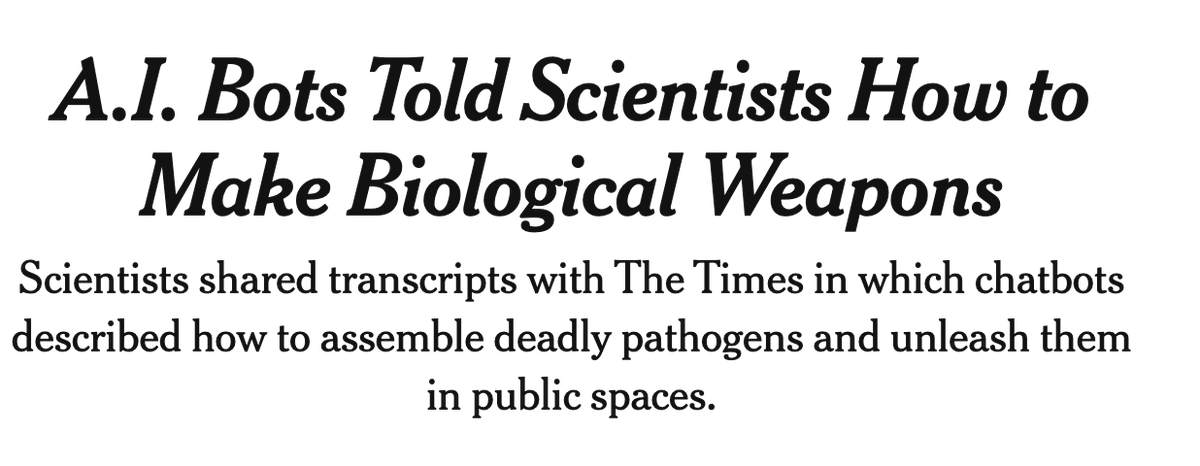
As @deanwball and @BuchananBen say in this essential piece, AI creates risks that are truly global. Biothreats especially are not contained by borders.
Hannu Rajaniemi tweet media
Dean W. Ball@deanwball

Today, @BuchananBen and I co-author a piece in the New York Times with a simple message: While we disagree on plenty, we believe AI has national security implications which deserve a careful and bipartisan government response. We can (and should) have partisan fights about all manner of AI issues, but catastrophic risk from AI shouldn’t be one of them.

English
0
1
8
876
Alex Teng retweetledi
Ryan Oksenhorn
Ryan Oksenhorn@ryanzip·
Late into the night of March 19, Nembe General Hospital in southern Nigeria faced a crisis. A two year old child was in critical condition with severe anemia, and the hospital urgently needed one unit of B+ red blood cells.
English
1
7
56
4.7K
Alex Teng retweetledi
Seth Bannon
Seth Bannon@sethbannon·
We wanted to share our perspective following today’s article on ARIA in The Guardian. We are highly optimistic about the future of innovation in the UK and hope to play a meaningful role in supporting it, in partnership with ARIA. For background, you can see our launch of the activation partnership with ARIA here: x.com/sethbannon/sta… We believed UK scientists would benefit from our 5050 programme to help them start companies. However, as a small team of 12, we would not have been able to bring it to the UK without ARIA’s partnership. It is a free, no-equity, no-obligation educational programme, and ARIA’s support in bringing it to the UK has been instrumental. If we get this right, the return to the UK will not be incremental but exponential – more companies, more jobs, and a stronger UK economy that repays the investment many times over. We hope to exceed outcomes such as the 1,300 jobs created through the partnership between Seagate Technology and Invest Northern Ireland, or the 6,000 jobs created through the partnership between Nissan and the UK Government. 5050 has already helped create over 90 companies in the US and we aim to replicate that in the UK. Done well, 5050 UK should not only create jobs but also increase tax revenue for the UK Government. Building great companies expands the tax base. Dyson, a single company, has paid over £1 billion in taxes. On our side, Fifty Years is investing over £5M per year in UK staff salaries, has funded two companies formed through 5050 UK, and has supported 5050 graduates in raising over £7M. We are only just getting started. Home to four of the top ten universities in the world, the UK has one of the highest ceilings for an innovation economy anywhere. Unlocking that potential is good for the UK and good for the world. In partnership with ARIA, we aim to help make that happen.
English
12
14
105
10.4K
Alex Teng retweetledi
Caleb Boyd
Caleb Boyd@Caleb_C_Boyd·
@elonmusk if you’ve got a break in the trial, come swing by our graphite anode production plant in Oakland! At an old steel mill - 1 ton per day graphite capacity
English
0
1
11
231
Alex Teng retweetledi
Hannu Rajaniemi
Hannu Rajaniemi@hannu·
Not saying it’s easy! But I find evolutionary biology encouraging. Natural viruses evolve much faster than we do, and their combined genome dwarfs ours, yet our adaptive immunity is able to keep up by generating vast diversity and exponentially amplifying the right responses. We are living proof that defense can win.
Tom Lee@tjl

I’m no expert but the idea that blue team countermeasure design & distribution can ever reach the pace of AI-enabled pathogen design seems very far fetched and I find it terrifying that this tactic is such a prominent part of so many plans for addressing the risk

English
2
9
45
5.2K
Alex Teng retweetledi
Matt Loszak
Matt Loszak@MattLoszak·
Turbines for nuclear are easier to buy than turbines for gas plants. We bought our first one a few months ago, and it's arriving later this year. Nuclear plants use *steam* turbines, which operate at lower temperatures than combusting gas. Turbine blades are nowhere near as big a bottleneck for nuclear & steam. A modern gas turbine inlet runs at 1,500 C. Light water reactor steam turbine inlets run at 285 C. Aalo's steam turbines will run closer to 400 C. At 285 - 400 C, you can use more common metal alloys and manufacturing techniques. No single crystals, no vacuum furnaces, no 90-week grow times. 3 companies on Earth can cast a hot-section gas blade, while over 10 companies can forge a steam turbine rotor, for the smaller turbines used by smaller nuclear reactors like Aalo-1. Steam turbines (esp <= 50 MWe) are a more mature commodity. There's more to this story though, and a fascinating history... going to post a follow up soon.
Gaurab Chakrabarti@Gaurab

You cannot buy a new gas turbine until 2030. Order books at GE, Siemens, and Mitsubishi stretch to 2029. Turbine prices have nearly tripled since 2019. Every AI data center needs power and every gas plant needs a turbine. And every turbine has one part that bottlenecks the entire industry: The blade. It has to survive in gas 500°C above the melting point of the metal it's made from and spin at up to 20,000 RPM under 10,000 g of centrifugal force. Each blade is grown as a single crystal of nickel superalloy, pulled through a vacuum furnace at 3 mm per minute. A set of blades costs $600,000 and takes 90 weeks to grow. The same metallurgy powers modern jet engines. Only 3 companies on Earth can build one. China spent $42 billion trying to catch up. They bought a Russian fighter engine, took it apart, and copied every part. Their copy ran 30 hours between overhauls versus 400 for the original. Modern Western engines run 4,000. You can reverse engineer the shape of a turbine blade. You cannot reverse engineer 60 years of metallurgy.

English
64
267
2.1K
136.4K
Alex Teng retweetledi
Hannu Rajaniemi
Hannu Rajaniemi@hannu·
A @redqueenbio thread on @gabrieldance’s NYT piece! We agree AI lowers bio misuse barriers. Without transcripts, we can’t judge the stronger claims; we haven’t seen frontier models zero-shot novel bioweapons. But AI today lets us prepare for the world where they do.👇🏻(1/17)
Hannu Rajaniemi tweet media
English
6
17
66
17.3K