
Alina K. Field

32.5K posts

Alina K. Field banner
Alina K. Field

Alina K. Field

@AlinaKField

Historical Romance author. Follow me on FB at https://t.co/16LJTOJInI. For news/special giveaways: https://t.co/L3PHRlVpRA…

California Katılım Temmuz 2012
2.2K Takip Edilen3.1K Takipçiler
Alina K. Field retweetledi
N.N. Light's Book Heaven/N. N. Light #NNLBH #PR
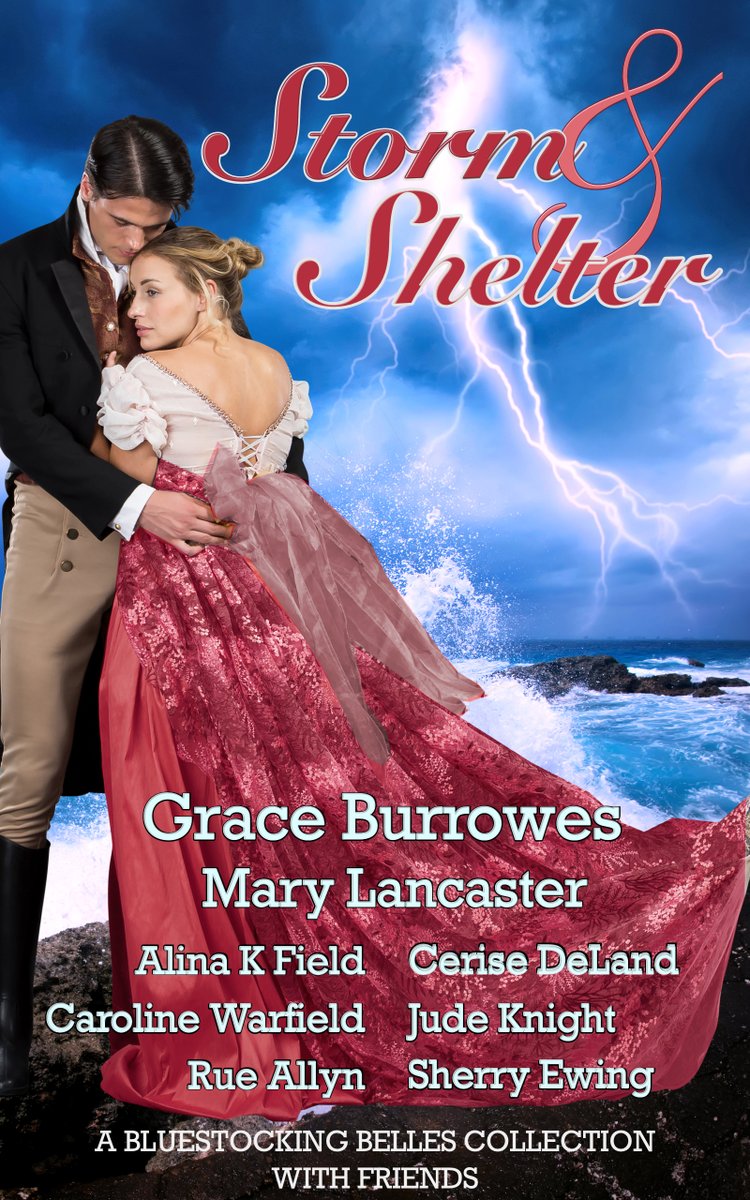
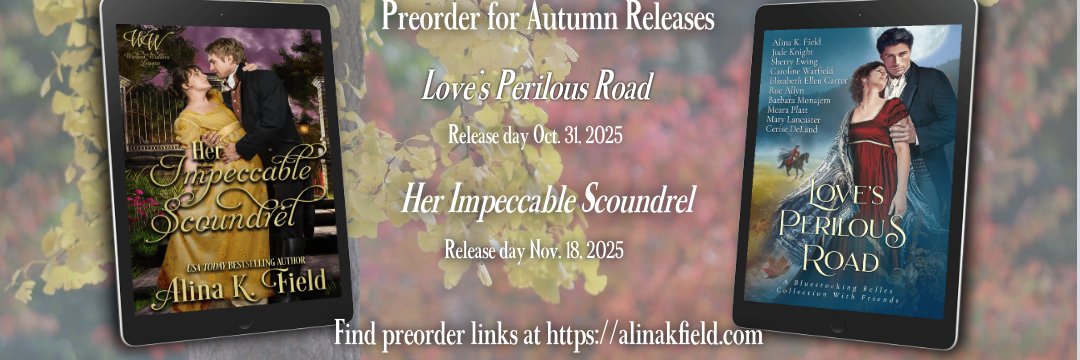
Facing the loss of everything, a widowed countess reluctantly accepts the help of an old enemy. Her Impeccable Scoundrel by USA Today Bestselling Author Alina K. Field Anxious to save a cherished inheritance, Blythe Blatchfield, Countess of Chilcombe, knows she must repair her reputation with the Beau Monde in order to face the powerful marquess challenging her dissolute husband’s will. She vows to resist handsome rogues like her late husband, and to never again give her trust so blithely. But when the new earl, absent from England for many years, finally appears, new rumors swirl around Blythe. Facing the loss of everything, she finds herself needing the help of an old enemy, the man whose interference years earlier led to her unhappy marriage, the new Earl of Chilcombe. Reluctantly returning to England from important duties abroad, diplomat Graeme Blatchfield has one bright hope: a chance to meet his late cousin’s widow again, to see if the rumors about the woman he once held a childish infatuation for are true. Having plunged into marriage with the last earl—Graeme’s fault for revealing their tryst in a vain attempt to rescue her—she’s been tainted by her husband’s decadent reputation. Rumors swirl in the men’s clubs about the new widow. Rumors that may or may not be true. Forced by matters of the estate to spend time together, he soon discovers the vulnerable and lonely woman underneath the society mask. Can he get her to forgive him—and more? Read an excerpt and grab your copy of this intoxicating Regency romance today: @nnlightsbookheaven/p-179163795" target="_blank" rel="nofollow noopener">substack.com/@nnlightsbookh@AlinaKField
N.N. Light's Book Heaven/N. N. Light #NNLBH #PR tweet media
English
1
5
5
114
Alina K. Field retweetledi
Lily Craven
Lily Craven@TheAttagirls·
Woman of the Day Scottish teacher Mary Moffat, born in 1822 in South Africa, the first woman to cross the Kalahari (she did it twice while pregnant). Without her, we might never have heard of the bloke she married. In fact, the locals always referred to him as “Mary Moffat’s husband”. Born in the mission outpost of Kuruman and educated in Cape Town, Mary was fluent in at least six African languages, including the local Bantu language Setswana. She was kind, selfless, practical - she would turn up to formal events in everyday clothes - and resourceful. She baked bread, sewed clothes, made essentials like soap and candles from scarce resources, and found her vocation in teaching. She later ran infant schools for up to 100 Bakwena children at mission stations in Botswana, and taught their mothers sewing and language skills. Mary met her future husband when he was recovering from severe wounds sustained after he’d attempted to shoot a lion which had been terrorising villagers. It savaged his arm before expiring. He recovered at Kuruman, realised what a catch she was and asked her to marry him. It was by far the best decision he ever made in his life, one he openly acknowledged. She’d married a missionary, abolitionist and explorer, but she was even more of a nomad than he. They trekked by ox-drawn wagon for twelve days to their first home, a mission station at Mabotsa, Botswana, where Mary cultivated vegetables, dealt with the daily threat of lion attacks, set up an infant school, and networked with local chiefs, impressing them with her calm diplomacy and cultural sensitivity. She gave birth to their first child, a sickly son, but it was soon time to uproot and establish a new mission at Chonuane. It was a bad move. The river dried up, drought destroyed their crops and they were forced by malnutrition to return to Kuruman, where Mary’s half-starved appearance shocked her family. Soon afterwards, she gave birth to a baby girl. That became the recurring theme of her life: pregnancy (they had six children) and physical hardship in unforgiving terrain. He’d heard of a “remote and shining lake” on the other side of the Kalahari. As soon as Mary gave birth to another son, she joined his 1,500-mile expedition to Lake Ngami in 1849 while pregnant. They were plagued by tsetse flies, endured extreme temperatures, far too little water, and sickness, and lived on iron rations of stewed meat, corn and milk for three months. Mary nursed two children with malaria and suffered partial paralysis (possibly a stroke) but had no choice to press on. Her fourth baby died. Her fifth child was born in the desert. In 1852, she sailed to Britain with the children for safety and recuperation, and after her return in 1958, gave birth to her sixth child. Mary died in 1862, aged just 41. Is that the end of the story? Not quite. Mary Moffat’s husband’s second Zambezi Expedition ended in failure two years later and when he tried to find the source of the Nile, managed to lose contact with the outside world for six years. That never would have happened on Mary’s watch. Here’s the thing. He’d never have found his “remote and shining lake” or its impressive Falls without her. Her diplomacy and language skills smoothed his path. It was Mary who negotiated safe passage for his expeditions, Mary who gathered vital intell on the best routes and how to find sources of water, Mary whose widely-respected reputation secured alliances with groups like the Makololo, enabling her husband to map the Zambezi River and advance north into Zambia. In the end, the New York Herald sent journalist Henry Morton Stanley to track down Mary Moffat’s husband. He found him on the shores of Lake Tanganyika OTD in 1871, greeting him with the famous words: “Dr. Livingstone, I presume?"
Lily Craven tweet media
English
107
560
2.1K
68.3K