ALUX

39 posts

ALUX banner
ALUX

ALUX

@alux_network

ALUX, the Trailblazer of On-Chain State Transitions. Our trailblazing founder @atticbeeus Contact: [email protected]

Katılım Ağustos 2022
21 Takip Edilen3.8K Takipçiler
ALUX
ALUX@alux_network·
🔗 ALUX Roadmap Update In the first quarter of 2026, the team continued progressing toward a fully functional, integrated system. During this period, several critical issues were identified—particularly bugs that caused cross-block execution to stall and replay mechanisms to fail. These findings led us to redesign the replay mechanism into a simpler and more elegant solution, enabling reliable cross-block atomic execution. At the same time, significant portions of the codebase are being refactored to improve modularity and extensibility. A new EVM sandbox architecture has also been proposed, simplifying the interaction between the EVM and TVM while improving overall performance. 🚀 Looking Ahead to Q2 In Q2, our primary goal is to close the loop by successfully completing a full end-to-end integration test of the entire system. The upcoming demo will showcase: ⚡ Atomic cross-block execution in action 🔧 A real-world use case: orchestration of smart contracts using async/await, join, and select This milestone represents a critical step toward validating the system as a cohesive whole—demonstrating not just individual components, but their integration into a working runtime. 💡 Why This Matters Achieving reliable cross-block atomic execution is foundational. It transforms blockchain systems from isolated transaction processors into coordinated execution environments 🧱→🌐, enabling more complex, stateful, and concurrent applications. The Q2 demo is not just a feature milestone—it is a system-level validation of ALUX's core architecture. Stay tuned! 👉 alux.network/roadmap #Web3 #Concurrent #Composite #Blockchain $ALUX
ALUX tweet media
English
4
16
18
402
ALUX
ALUX@alux_network·
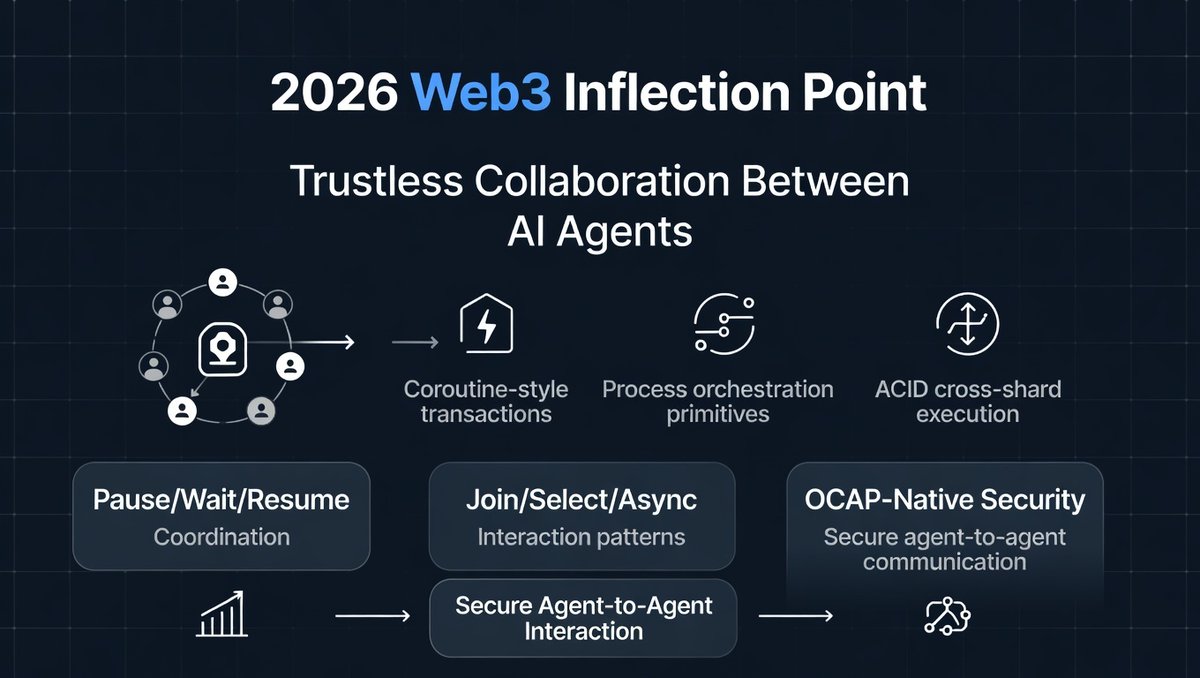
The 2026 Web3 inflection point won’t be faster blockchains, but trustless collaboration between AI agents. Today, the execution model of most blockchains is still based on: instant short transactions, ordering, and then sequential or parallel execution with synchronous calls. This model is almost unusable for an agent economy. A blockchain that can truly support an agent economy needs: ⚡️ Coroutine-style transactions (pause / wait / resume + ACID) ⚡️ Process orchestration primitives (join, select, async coordination) ⚡️ ACID cross-shard execution (true horizontal scalability) ⚡️ OCAP-native security (secure agent-to-agent interactions, preventing prompt injection attacks) When AI agents begin executing autonomously on-chain: Blockchains without a concurrency model will become the biggest architectural bottleneck, and systems without capability-based security will become the largest security vulnerability. A distributed concurrency control layer will be the key infrastructure for the Web3 × Agents era. $ALUX #Web3 #AI #Blockchain #AIagent
ALUX tweet media
English
4
16
19
692
ALUX
ALUX@alux_network·
👨🏻‍🎨 ALUX roadmap update! 1/ In Q4 2025, we continued advancing atomic cross-block long-transaction (long-TX) support. Long-TX test cases now run successfully with hardcoded sync points—putting us one step away from our first major milestone. 2/ Next step: replace those sync points with BlockGit consensus. That unlocks our first working demo: fully on-chain, atomic long-TX execution across multiple blocks. 3/ We also refactored the codebase to improve modularity. These upgrades lay the groundwork for: - faster, more flexible evolution toward sharding - extensions beyond blockchain-only use cases 4/ In parallel, we explored several logical clock designs to capture execution traces efficiently—enabling analysis and enforcement of different transaction isolation levels. Implementation is now underway. 5/ Looking ahead to Q1 2026, our primary objective is clear: Pass integrated tests for atomic long-TX execution on top of BlockGit consensus. This milestone will serve as a proof of concept for our novel blockchain design. 6/ After that, we’ll focus on production-ready features needed to launch a functional testnet. 7/ We’re community-driven—and we wouldn’t be here without you. Our small but capable team continues to deliver, addressing engineering challenges rarely faced by other teams. 8/ A quick look back at our journey: 2022: Built an OCAP-enabled bytecode interpreter + the Tolang compiler 2023: Implemented the tuplespace virtual machine (TVM) with replayability 2024: Built the EVM sandbox on TVM, implemented the Block Merge algorithm, and developed BlockGit 2025: Introduced behavior channel types + completed key components required for atomic long-TX support 9/ Even as the industry cools again, our vision is clearer than ever: Make all forms of state transitions possible in centralized systems equally possible in decentralized ones. A real world computer as a unified logical VM—composed of many smaller VMs across sharded chains, L2s, private clouds, and browsers. 10/ Smart contracts on this unified VM can call one another seamlessly and finalize atomically—even across different sub-VMs. The OCAP-enabled VM ensures these interactions remain safe and controlled. Atomic on-chain long-TX support is the first critical technology we must deliver—and we’re very close. ----------------- As we enter 2026, thank you for building with us! Stay tuned! 👉🏻 alux.network/roadmap #Web3 #Concurrent #Composite #Blockchain $ALUX
ALUX tweet media
English
18
18
25
995
ALUX
ALUX@alux_network·
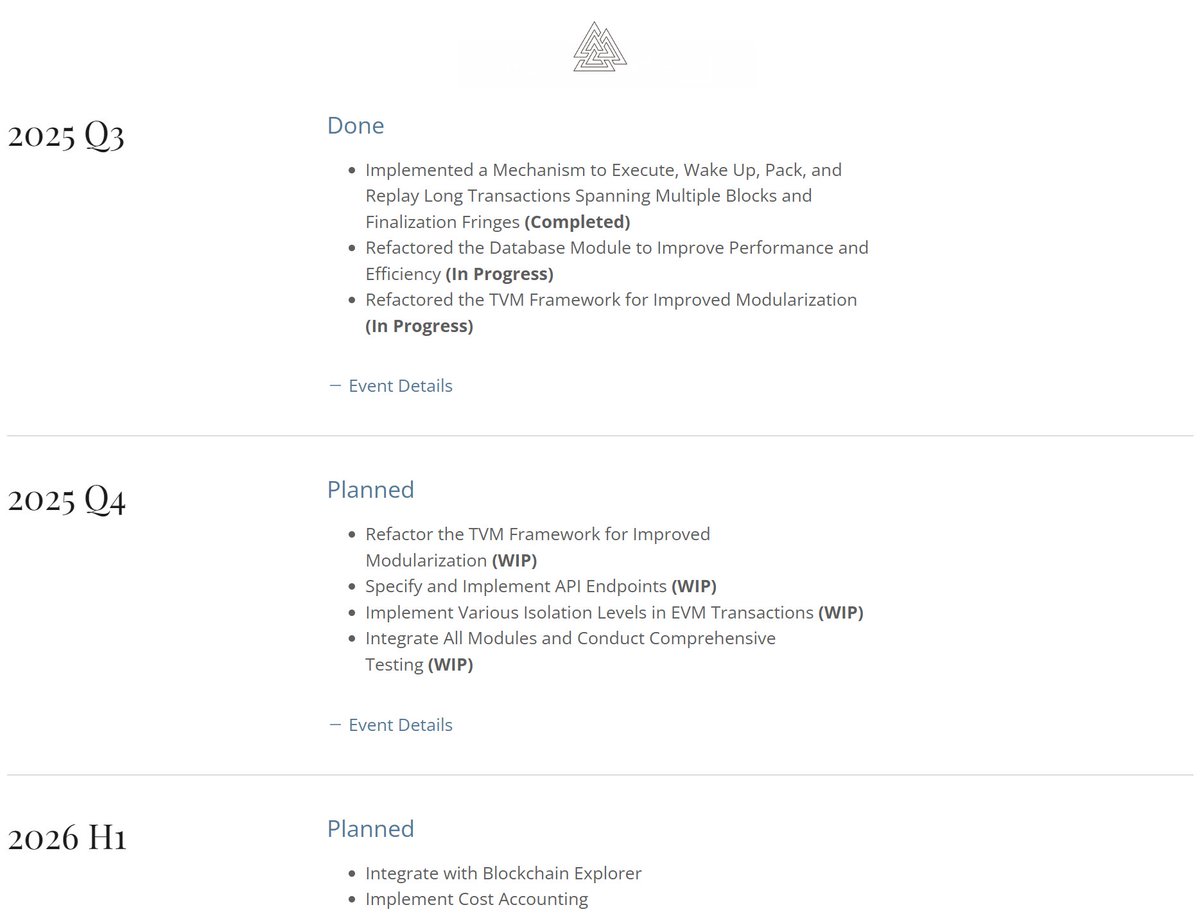
🙋🏻‍♂️ In Q3 2025, we focused on building a key mechanism to enable long transactions — on-chain transactions that can be temporarily suspended and later resumed, allowing execution to span multiple blocks while remaining atomically finalized. This marks a major step toward true scalability, paving the way for the world’s first blockchain capable of actively interacting with the off-chain world, instead of relying solely on oracles. The same mechanism will also power atomic cross-chain transactions in the upcoming sharding phase. Meanwhile, we have continued improving code quality and modularity through multiple refactors across the TVM and database modules, as the system grows in complexity. Next quarter, we will focus on integration and testing, moving closer to a working demo — the first blockchain capable of concurrent, on-chain long-transaction processing. Stay tuned! 👉🏻 alux.network/roadmap #Web3 #Concurrent #Composite #Blockchain $ALUX
ALUX tweet media
English
7
16
23
1.2K
ALUX
ALUX@alux_network·
🧑‍🏭 In Q2 2025, we completed a critical enhancement to our TupleSpace Virtual Machine (TVM): the introduction of simple behavioral channel types. The TVM bytecode standard now enforces three channel types—Single-Owner, Affine, and Linear—enabling significantly faster execution and a much smaller replay log, all while maintaining replay consistency. 🦿 Our Weaklink feature in BlockGit has also passed full testing. Unique to ALUX’s protocol, Weaklink decouples a block’s two roles: contributing to consensus state and to virtual machine state. This separation is vital to achieving ALUX’s vision of supporting on-chain long transactions and atomic cross-shard transactions. 🤖 As we integrate all modules toward a working demo, we have introduced a more advanced test framework. Using Rust’s proptest crate, we built a system that generates millions of random Tolang programs to test TVM execution under various concurrent schedules. Each test ensures state consistency between play and replay across hundreds of execution paths. 🫶 Looking ahead to Q3, we remain focused on delivering a demo showcasing a blockchain capable of processing long-running transactions on-chain. Stay tuned! 👉🏻 alux.network/roadmap #Web3 #Concurrent #Composite #Blockchain $ALUX
ALUX tweet media
English
11
25
37
2.6K
ALUX
ALUX@alux_network·
As part of a recent upgrade to our TupleSpace Virtual Machine (TVM), ALUX has introduced new behavioral channel types to enhance performance and predictability: ※ Single-Owner: A name (channel) is exclusively owned by one process at any time. ※ Affine: A name may be used at most once. ※ Linear: A name must be used exactly once. These constraints are enforced at runtime by our bytecode VM, enabling more efficient execution paths. Why it matters: ALUX is building a Pi/Rho calculus-based VM designed for composable, long-running concurrent transactions on-chain. To scale without compromising performance, we’ve introduced a class of channel types that unlock key optimizations. For example, Single-Owner channels support lock-free access and can be used to hold sequential VM sandboxes like the EVM. Affine and Linear channels ensure deterministic usage, reducing the overhead of recording extra information for validator replay. This is where formal theory meets practical engineering—ALUX brings it to life. $ALUX #Web3 #Blockchain #Concurrent #EVM
ALUX tweet media
English
7
26
41
1.6K
ALUX
ALUX@alux_network·
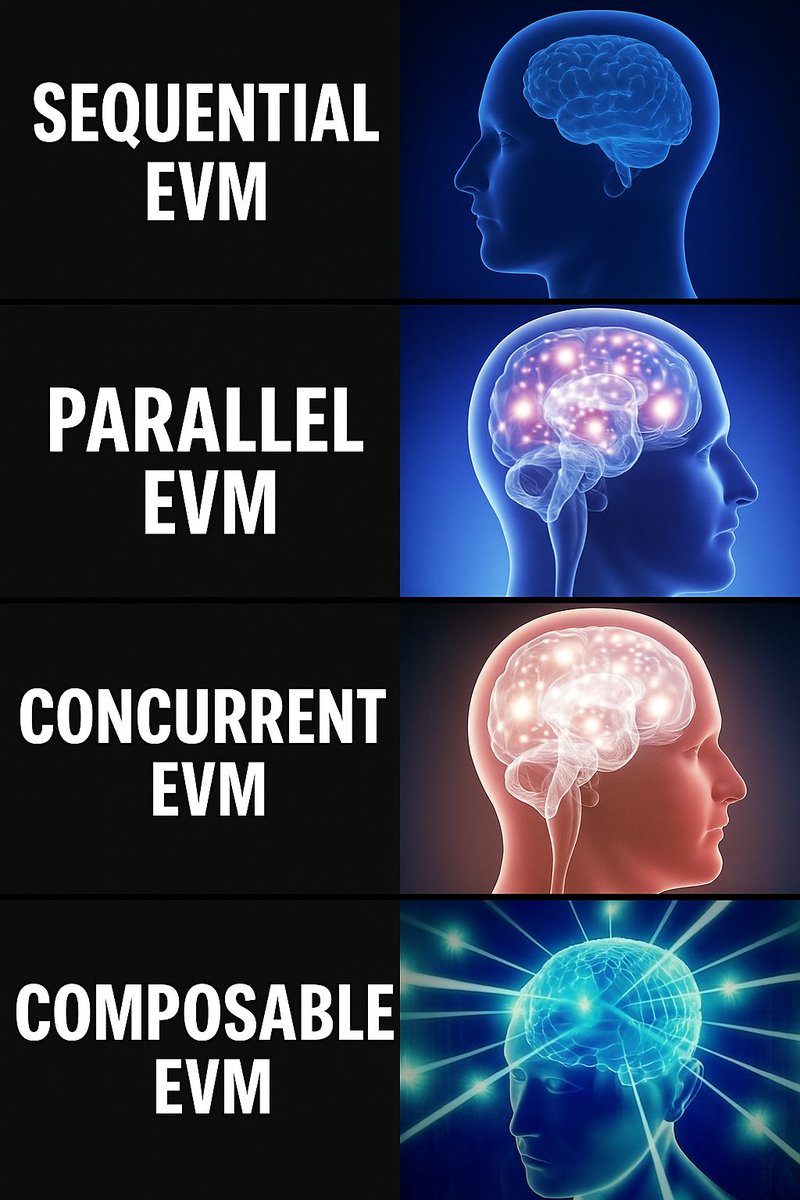
The evolution of the Ethereum Virtual Machine (EVM) can be understood across four distinct levels: Level 1: Sequential EVM (e.g., Ethereum) * Transactions are processed sequentially, one after another. Level 2: Parallel EVM (e.g., Sei, Aptos, Monad) * Enables parallel transaction processing for improved throughput. * Limitations: Depends on trusted oracles (such as Chainlink) to interact with the external world. Level 3: Concurrent EVM (ALUX – Single-Shard Stage) * Supports asynchronous, long-running transactions that can be temporarily suspended and resumed. * Enables direct, active communication with the external world—without relying on intermediaries. Level 4: Composable EVM (ALUX – Multi-Shard Stage) * Allows transactions to run across multiple shards while preserving atomicity. * Unifies shards into a single, logically cohesive virtual EVM. * The only approach to achieve horizontal scalability without compromising usability. $ALUX #Web3 #Blockchain #Concurrent #EVM
ALUX tweet media
English
16
33
47
1.8K
ALUX retweetledi
Atticbee
Atticbee@atticbeeus·
@gakonst The very reason current L1 chains can only support record keeping type of job is all TXs must be (atomically) finished in one block. Huge restriction. Chains can't do async calls to external systems and await for the result. Shards can not be virtualized into one logic VM.
English
0
8
12
726
ALUX retweetledi
Atticbee
Atticbee@atticbeeus·
@gakonst In addition, blockchain state should be better compartmentalized with built in object capabilities support, which is also missing in EVM. So we designed a VM with opcode level support of OCAP. EVM instances can run concurrently(not parallely) in our OCAP compliant VM's sandboxes.
English
0
7
10
688
ALUX retweetledi
Atticbee
Atticbee@atticbeeus·
@gakonst "blockchains are just decentralized record keepers." - it's only the current state of art. But more general state machines capable of executing concurrent long running txs need to be supported by blockchains. The benefit would be enormous. We are retrofitting EVM to achieve this
English
2
7
11
830
ALUX
ALUX@alux_network·
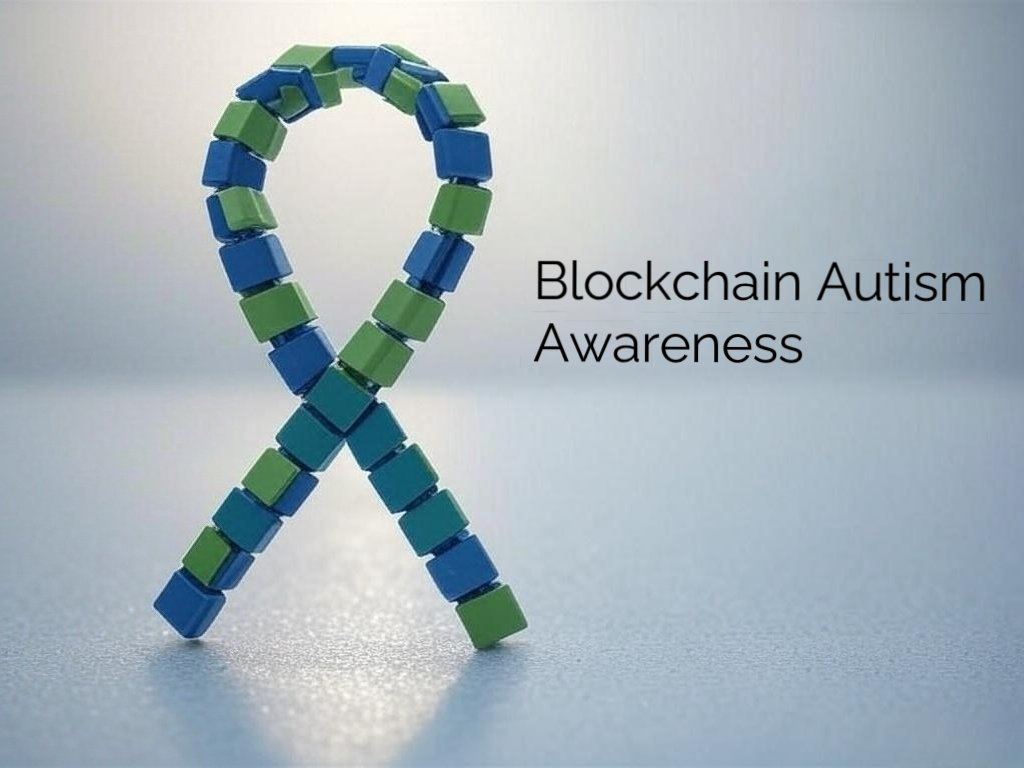
April is Autism Awareness Month. While many know autism’s growing prevalence, few realize: today’s blockchains are "autistic" too. Because no TX can run longer than a block’s execution, blockchains behave like autistic kids: Can't communicate: can't actively pull external data during execution. Can't live independently: rely on "aides" (oracles, relayers) to interact with the world. Can't collaborate: sharded chains can't work together — cross-chain TXs aren't atomic. ALUX is changing that. The first blockchain solution for concurrent, long-running TXs is on the horizon. #Blockchain #Web3 $ALUX #Innovation #Concurrent
ALUX tweet media
English
5
15
30
1.3K
ALUX
ALUX@alux_network·
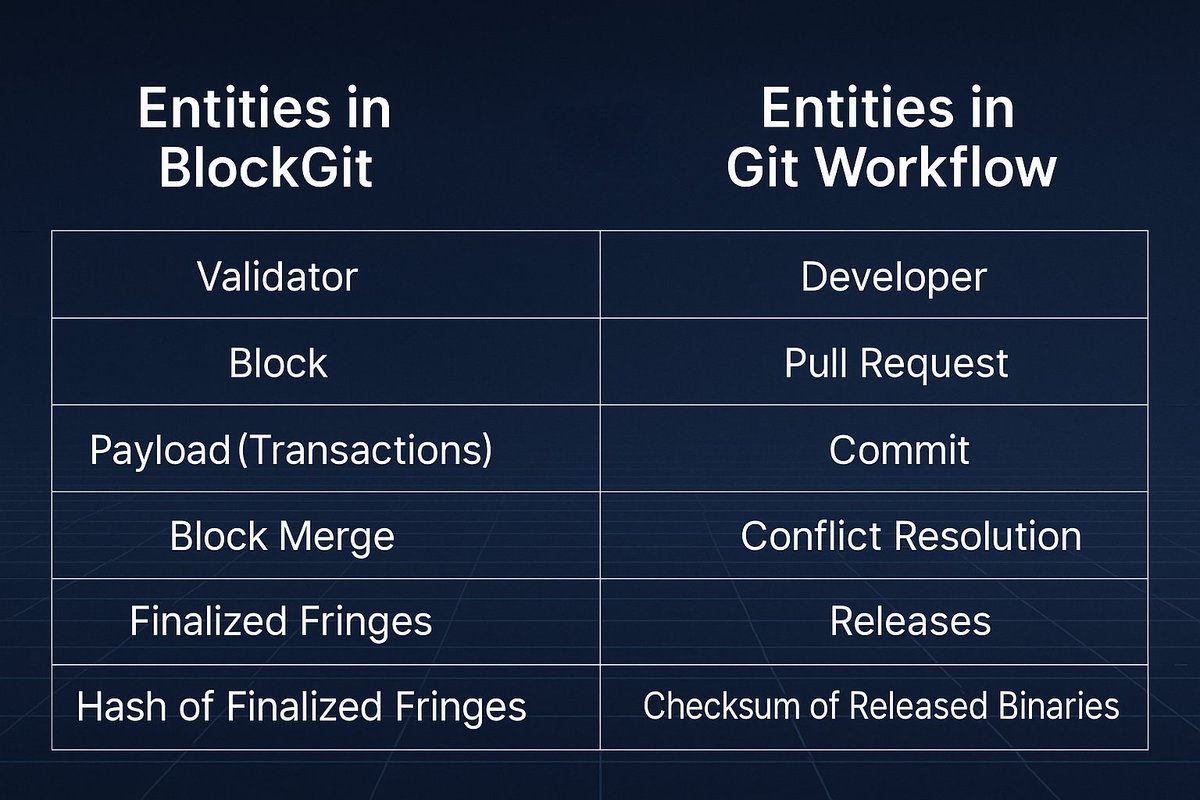
To enable concurrent long-running transactions on-chain, ALUX introduces a novel consensus protocol: BlockGit. Inspired by Git, BlockGit treats the blockchain like a shared repo. Validators act like devs, each proposing blocks (PRs) while independently forming consistent "release schedules." One unique feature of BlockGit is the decoupling of consensus from state transitions via weak links. A block can reference other blocks purely for consensus purposes—without endorsing their state transitions. In Git terms: if block B is weak linked by block A, it’s like PR A acknowledges PR B but isn’t rebased on it. #Blockchain #weaklink #BlockGit #Web3 #Concurrent
ALUX tweet media
English
2
10
22
1.2K
ALUX
ALUX@alux_network·
🙋‍♂️ In Q1 2025, we upgraded to an event-driven framework, enabling concurrent transaction execution, block production, replay, and consensus. Our BlockGit protocol is now more stable with Weaklink, a first-of-its-kind feature that decouples consensus state from the VM state. Next in Q2: full module integration & a demo of on-chain long-running transactions! Stay tuned! 👉🏻 alux.network/roadmap #Web3 #Concurrent #Composite #Blockchain $ALUX
ALUX tweet media
English
1
20
28
1.3K
ALUX
ALUX@alux_network·
🧑‍🔬 We've just updated our roadmap! In 2024, we made history by integrating EVM with TVM, enabling concurrent on-chain EVM execution for the first time. We also introduced the innovative BlockGit consensus protocol, complete with a tested block-merge algorithm for conflict resolution. In 2025, we’ll take it to the next level—demonstrating a blockchain capable of handling concurrent, long-running EVM transactions. Stay tuned! 👉🏻 alux.network/roadmap #Web3 #Concurrent #Composite #Blockchain $ALUX
ALUX tweet media
English
14
26
43
1.9K
ALUX
ALUX@alux_network·
👨‍💻 ALUX's consensus protocol, BlockGit, works like a decentralized GitHub: each node is a developer, and every block is a pull request. The whole blockchain operates GitHub-style. $ALUX #Blockchain #Web3
ALUX tweet media
English
6
23
37
1.9K
ALUX
ALUX@alux_network·
🛠 ALUX has made significant strides in 2024! In Q3, we've completed key milestones, such as the execution context to support reverts. We also designed and implemented BlockGit, our new consensus protocol, and integrated it with the P2P module. 👨🏻‍💻 In Q4, we're focusing on integrating BlockGit into the node platform, testing consensus on AWS, and showcasing the capabilities of on-chain concurrent long-running transactions. 👾 We’ve also just released our latest roadmap! Stay tuned for more innovation! 👉 alux.network/roadmap $ALUX #Web3 #Concurrent
ALUX tweet media
English
13
25
33
2K
ALUX
ALUX@alux_network·
👨🏻‍💻 Check out our test of an EVM instance emulated in our concurrent, deterministically replayable tuplespace VM! Remember: it runs concurrently (NOT in parallel!) and can be temporarily suspended and resumed later. 🔑 Key challenges: non-determinism in execution and isolation level guarantees (like snapshot isolation and serializability). ALUX tackles these with a succinct replay log and a logical clock. 💡 The benefits of a concurrent on-chain EVM are huge—contracts can run for a long time, enabling RPC calls, HTTP requests, SQL queries, and more! #Blockchain #EVM #Web3 #Concurrent $ALUX
ALUX tweet media
English
2
15
25
1.6K
ALUX
ALUX@alux_network·
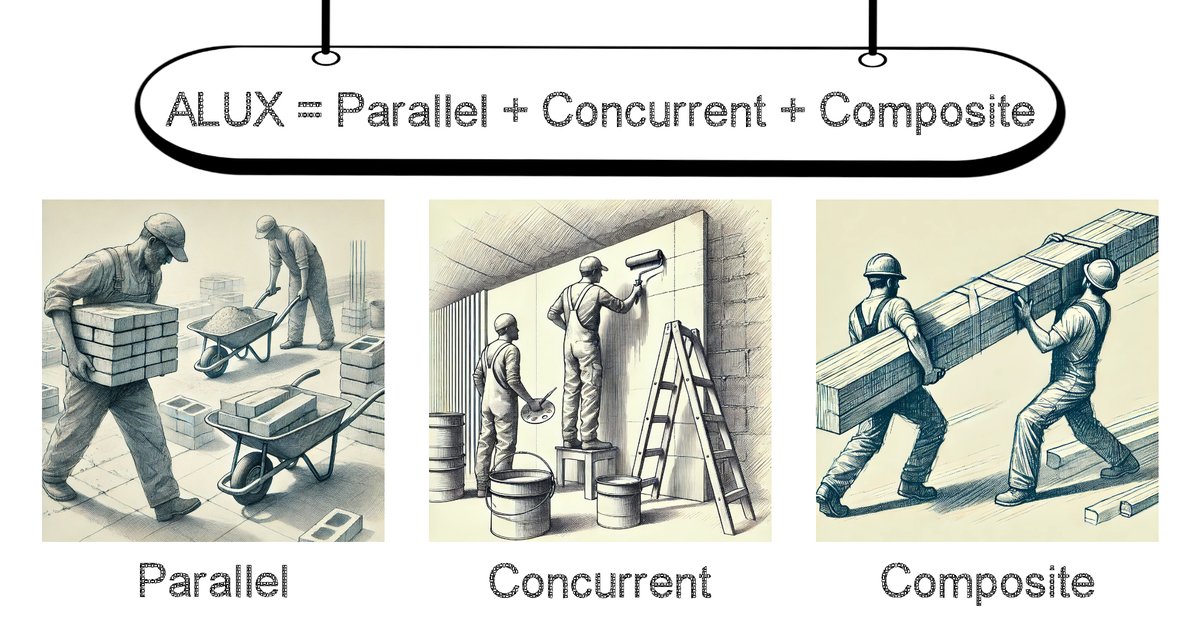
As mentioned in previous twitter, ALUX's focus is to bring all types of state transitions on-chain. To help understand the 3 types of state transitions we mentioned earlier—parallel, concurrent, and composite—imagine a busy construction site with a group of construction workers: · Parallel: They work SIMULTANEOUSLY but independently. · Concurrent: They need to COORDINATE to get things done. For example, the siding installer cannot start his job until the framing is done, and the painter has to wait for the drywall to be installed. · Composite: They need to COLLABORATE to complete a task. For instance, two workers may need to work together to lift a heavy beam. @alux_network $ALUX #Blockchain
ALUX tweet media
ALUX@alux_network

At @alux_network, we bring all types of state transitions on-chain. $ALUX #Concurrent #Composite

English
6
17
20
1.8K