
Amee Seitz

1.3K posts

Amee Seitz banner
Amee Seitz

Amee Seitz

@amee_s

•MSK physical therapist •shoulder rehab •clinician scientist •educator •be kind, humble, & serve

Chicago, IL Katılım Nisan 2012
1K Takip Edilen1.3K Takipçiler
Amee Seitz retweetledi

Astronomy Vibes
Astronomy Vibes@AstronomyVibes·
Death may just be an illusion. New research into quantum physics suggests death may not be the end, but a shift in consciousness within a multiverse shaped by the observer. That’s the bold proposition of biocentrism, a scientific theory suggesting that life and consciousness are not accidental byproducts of the universe, but rather its very foundation. Proponents argue that what we perceive as death is only a transition—a change in our conscious experience—within a reality shaped by the observer. Drawing on quantum physics and decades of experiments, the theory challenges our basic understanding of time, space, and existence itself. Phenomena like entanglement, the observer effect, and retrocausality point to a universe where consciousness influences outcomes, blurring the line between what’s “real” and what’s observed. Experiments in quantum mechanics, from photons predicting future conditions to particles seemingly altering the past, bolster the idea that reality is deeply linked to perception. These results suggest that our sense of a fixed external world may be misleading. If consciousness defines reality, then the end of physical life may not equate to the end of existence. Instead, life might persist in a dimension beyond time—within an interconnected multiverse where all possibilities coexist. Far from science fiction, this view is reshaping how some scientists and thinkers understand mortality, hinting at a universe where death isn’t final but part of a broader, ongoing continuum of awareness.

Astronomy Vibes tweet media
English
68
126
561
21.8K
Renzo Mendoza PT, DPT
Renzo Mendoza PT, DPT@AdudeCalledRenz·
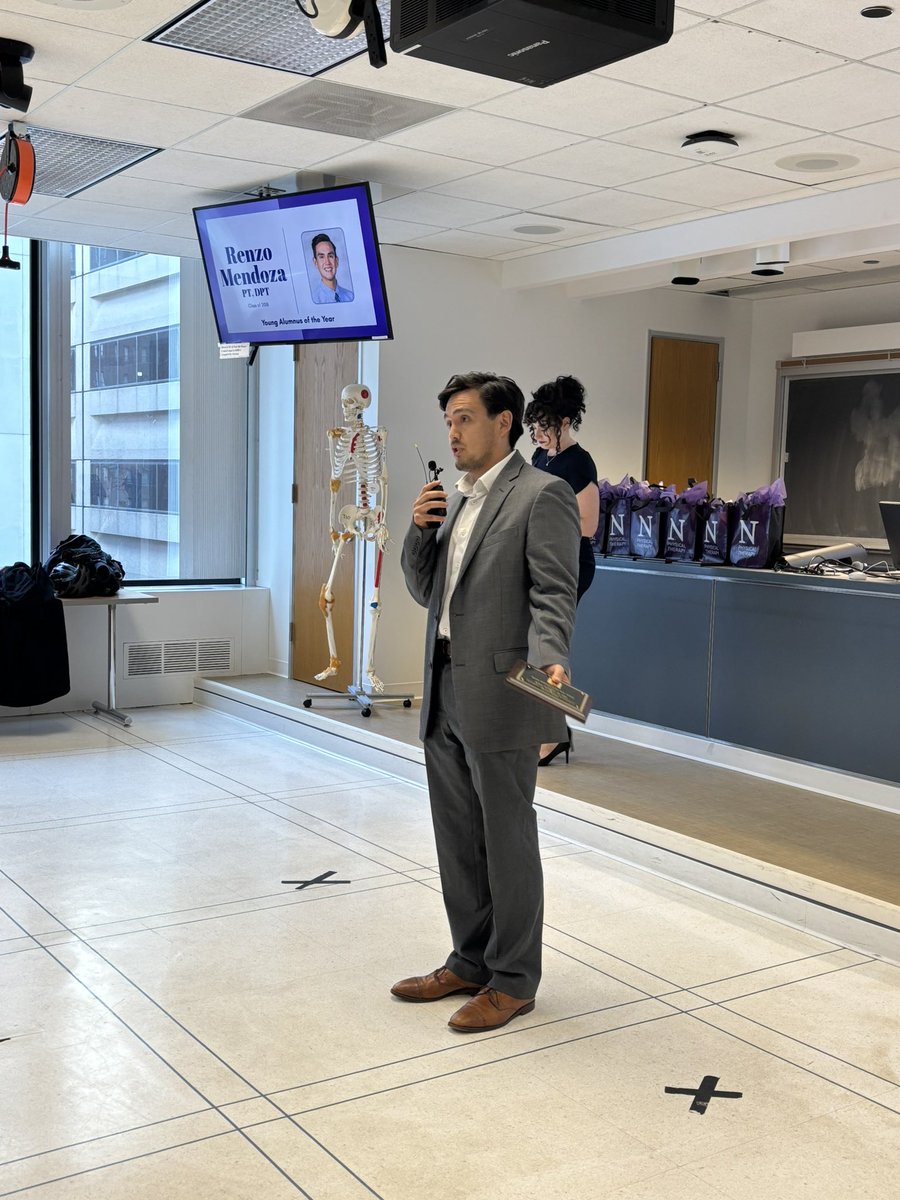
Honored to be named Young Alumnus of the Year by @NUPTHMS. This recognition means so much coming from a place and a community that helped shape me both personally and professionally. Thank you to the faculty, mentors, and peers who continue to inspire my journey in this field.
Renzo Mendoza PT, DPT tweet mediaRenzo Mendoza PT, DPT tweet media
English
4
0
13
275
Amee Seitz retweetledi
Phil Metzger
Phil Metzger@DrPhiltill·
It seems few people know what an “indirect cost” is or why it has to be 40-60%. The reason the government forced universities to raise their indirect costs up to (typically) 40-60% was to force a huge amount of regulations on the universities while also minimizing the bookkeeping to comply with those regulations. This includes the work by contract managers, compliance lawyers, accountants, safety management, etc., who are required by the government per the terms of the contract. If universities had to allocate all those categories of labor to each contract hour-by-hour it would require too much bookkeeping, which would waste money. (I’m setting aside for now the question of whether or how much the regulations are wasting money and only discussing how you bookkeep the effort to comply with the regulations.) So to save money, while also requiring universities to do these types of work, the government requires universities to roll those categories of labor into “cost pools” that must be allocated as a percent of the technical work in each of the contracts. While the actual “overhead” might be only 15%, these pooled labor charges that are required by the government are typically much more. Second, the government doesn’t allow the universities to figure out their own indirect rates. These rates are determined by the federal government through audits every couple of years. The government then sends a document telling the university what rate to use for its cost pools. For example, the University of Colorado was told by the DHHS to use 54% (colorado.edu/controller/sit…) and U. Nebraska was told by DHHS to use 55.5% (uofnelincoln.sharepoint.com/sites/UNL-Spon…). 40-60% is not only reasonable to fulfill the terms of the contract, it is the rate that the government tells the university it can charge for all the work the government requires the university to do. So if the government wants to reduce the indirect rate to 15%, then it needs to do one of these two things: Either (A) eliminate all the federal regulations that force the universities to do those categories of work (compliance, accounting, management, safety management, tracking harmful chemicals, etc.) Or, (B) stop requiring universities to pool those real costs into the “indirect cost” category and allow universities to include them in the “direct costs” of the contract. If the government chooses (A), then the safety rails have been entirely removed. (Even if the government lowers the regulations without entirely eliminating them, the costs they impose will still be real costs that probably come out to more than 15%.) Or, if it chooses (B), then the direct costs will go way up and research will actually be less efficient because all the bookkeeping, not more efficient. But if the government caps the indirect rate at 15% without doing either (A) or (B), then it will be impossible to do research for the federal government without going bankrupt. That’s the worst possible choice. It will kill research in the US. Is that what we want? I can explain it for you but I can’t understand it for you. It’s up to the reader not to be ignorant.
English
91
289
1K
135.9K
Amee Seitz retweetledi
F. Perry Wilson, MD MSCE
F. Perry Wilson, MD MSCE@fperrywilson·
NIH has announced a cut in the "indirect rate" to 15% across the board, in a move that appears to be retroactive to even existing grants. This is a bloodbath for research institutions throughout the country. Brief explainer for those not in this world: buff.ly/3EtML7D
English
173
787
3.4K
472.5K
Amee Seitz retweetledi
Darby Saxbe
Darby Saxbe@darbysaxbe·
It's time to explain a little more about what 'diversity' and DEI initiatives mean in the context of NIH and NSF grants. One of NIH's funding mechanisms is called a 'diversity supplement.' What this means is that if an investigator already has a funded NIH grant (see my earlier
English
13
101
456
89.5K
Stephen Thomas
Stephen Thomas@shoulder_nerd·
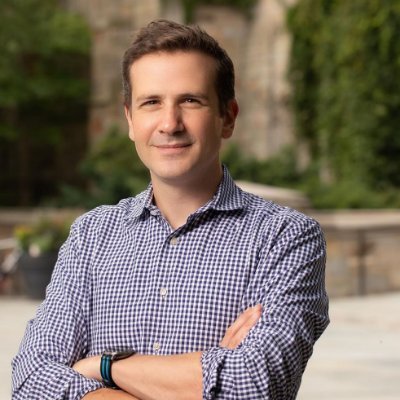
Very excited to announce my successful promotion to full professor @JeffersonUniv! This was no sole act as I had so much help by so many people a long the way. I am beyond grateful for all those family, friends, mentors, colleagues, and students. Thank you all so much!
Stephen Thomas tweet media
English
10
0
67
1.6K
Lori Michener
Lori Michener@LoriMichener·
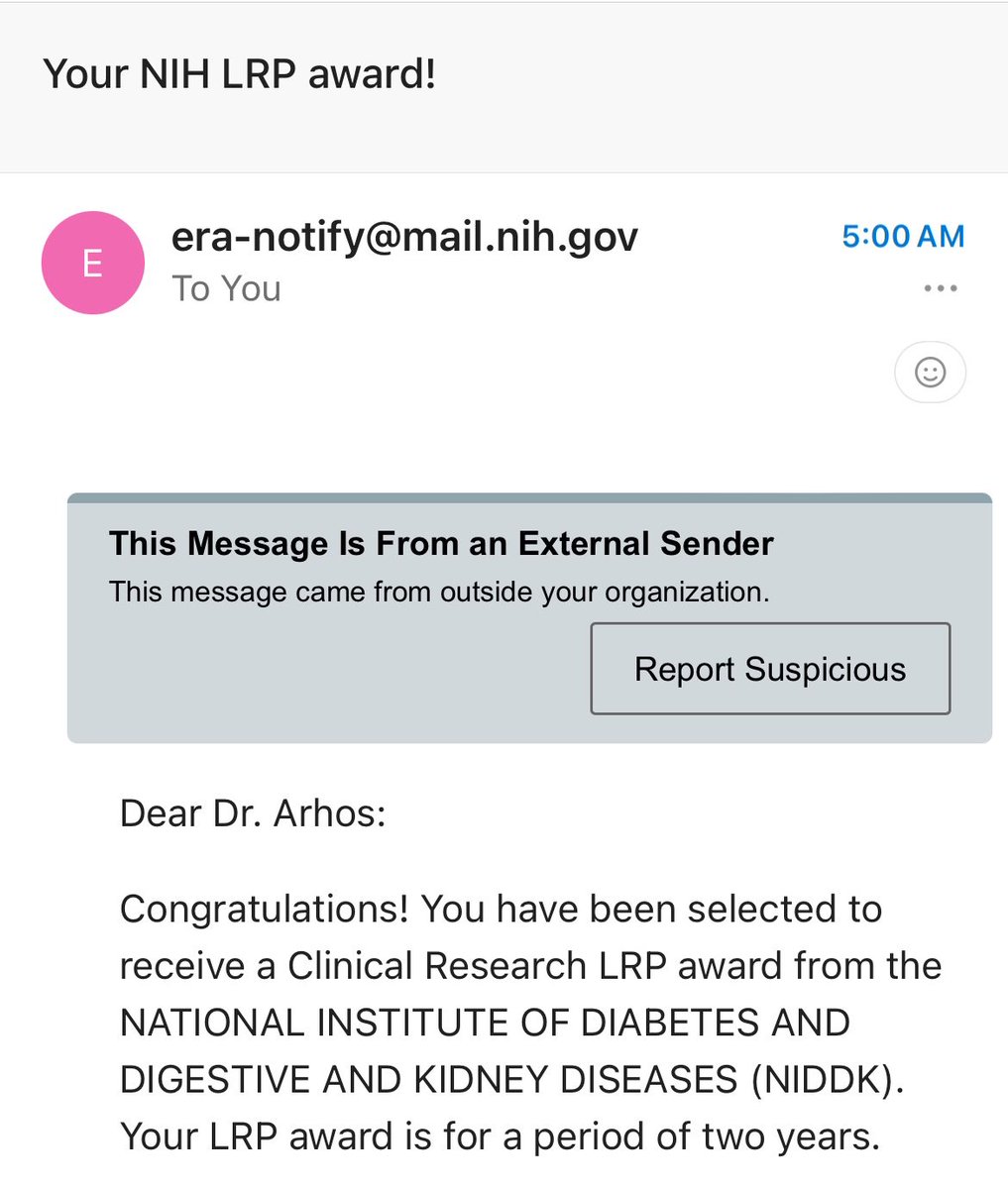
Excited for this R01 @NIH_NIAMS to fund the identification of mechanisms associated with response (+/-) to resistance exercise for those with rotator cuff tendinopathy. If you are interested in our work, a US-eligible PT, and interested in a PhD- please reach out! @CoorLab_USC
Lori Michener tweet media
English
18
18
93
9.8K
Amee Seitz retweetledi
Tweets of Dogs
Tweets of Dogs@TweeetsOfDogs·
This picture is too beautiful not to be seen by everyone. ❤️
Tweets of Dogs tweet media
English
24
234
4.2K
35.1K
Amee Seitz retweetledi
Howard Luks MD
Howard Luks MD@hjluks·
Orthopedic surgery office based decision making isn’t easy …
English
69
212
1.1K
330.8K
Amee Seitz retweetledi
NM Orthopaedics
NM Orthopaedics@NMOrthopaedics·
Findings from a study co-authored by Guido Marra, MD, highlight the importance of careful clinical evaluation of patients presenting with eccentric deformities because some may exhibit potentially detrimental strength deficits. Learn more: pubmed.ncbi.nlm.nih.gov/35675568/
NM Orthopaedics tweet media
English
0
2
1
415