Anas Bashir

1.7K posts

Anas Bashir banner
Anas Bashir

Anas Bashir

@an4s911

Innovating the web, one line of code at a time.

Qatar Katılım Mart 2018
200 Takip Edilen75 Takipçiler
Anas Bashir
Anas Bashir@an4s911·
@AlMansey_Games @psomkar1 If you just spend about 1-2 hours on your weekend, you can setup a linux distribution like Fedora or Mint. Change now because windows seems like its only gonna go downhill from here.
English
1
0
0
32
AlMansey Games
AlMansey Games@AlMansey_Games·
@psomkar1 I dont have time, and i have been a windows user since 3.0 in early 90s, why chamge now? I didnt like windows ME, what did i do? Sticked with 98 SE. Didnt like longhorn nor 8=> 7. Didnt like 11? Still using windows 10. I didnt skip window 9, Microsoft did xD
English
1
0
1
185
Omkar
Omkar@psomkar1·
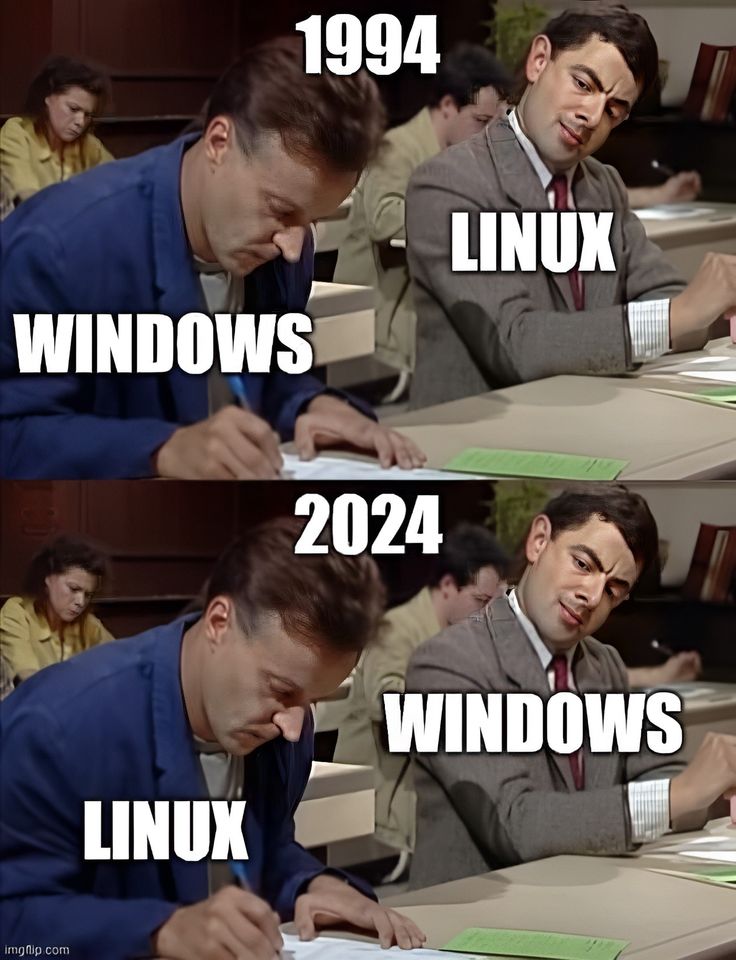
as a developer , what's stopping you from using Linux ?
Omkar tweet media
English
32
22
522
8.9K
Radical Living
Radical Living@RadicalFalk·
What 10 Years in Turkey Does to You 🇹🇷🫖🍵
English
707
1.3K
35.1K
4.9M
Anas Bashir retweetledi
JUMPERZ
JUMPERZ@jumperz·
@claudeai Maybe you should focus on fixing the usage problem that you’ve been ignoring so we actually have some usage left to tryout your new features
English
5
4
172
15.1K
Anas Bashir retweetledi
Moosaa Richardson أبو العباس موسى الطويل
IMPORTANT REMINDER: What is correct about Jumu'ah Prayer on an 'Eid day is that it is NOT REQUIRED for one who prayed the 'Eid prayer. "Not required" does NOT mean discouraged or without virtue. As the scholars mention: Praying Jumu'ah is still better than praying Thuhr instead.
Moosaa Richardson أبو العباس موسى الطويل tweet media
English
2
188
304
20.4K
Anas Bashir
Anas Bashir@an4s911·
@kmcnam1 that feeling of peace when you override your windows partition with linux 😌
English
0
0
0
42
sudox
sudox@kmcnam1·
sudox tweet media
ZXX
71
490
6.2K
80.3K
Security Trybe
Security Trybe@SecurityTrybe·
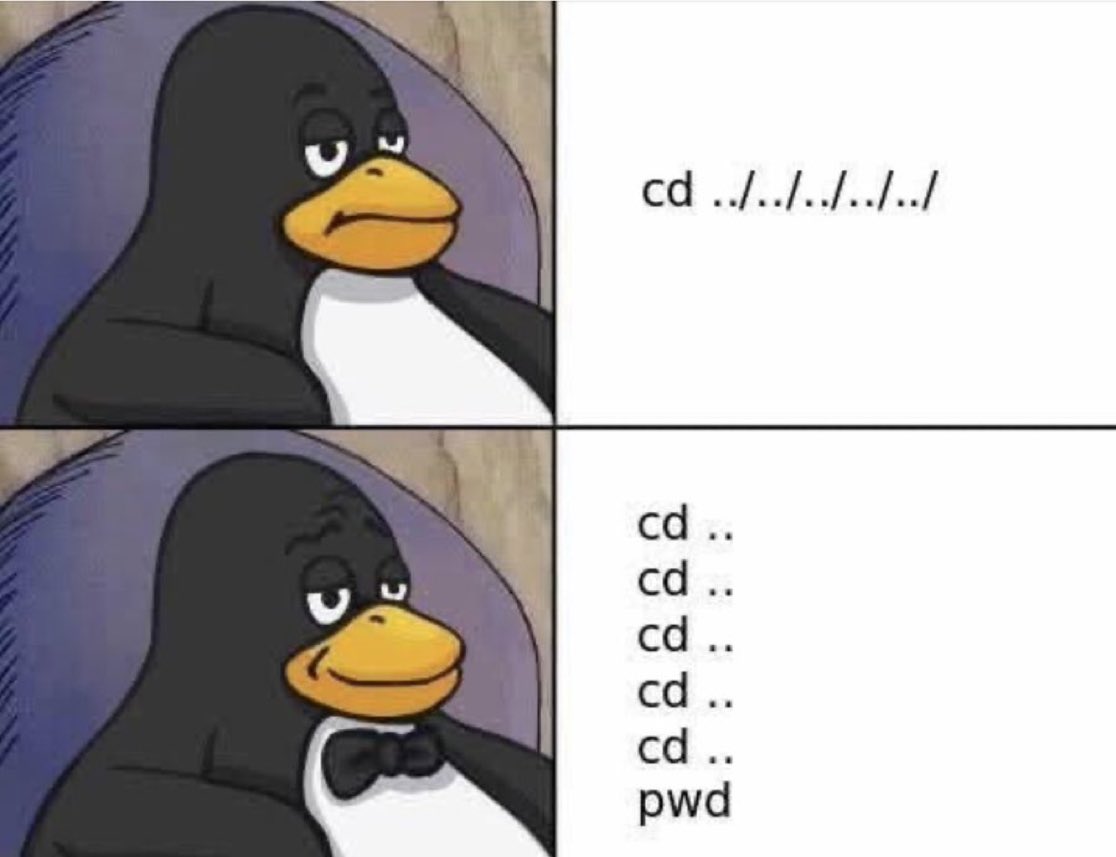
Two type of Linux users
Security Trybe tweet media
English
58
295
6.6K
102.6K
Anas Bashir
Anas Bashir@an4s911·
@Amandasatiro07 @Spidermonkeyy93 @elonmusk Thats not the only joke though, even if he was to have $500b as cash, thats not enough to give every single person $1b, which is a common misunderstanding. If you were to equally divide the $500b to 8b people, then each person only gets $62.5.
English
0
0
5
320
Amandasatiro
Amandasatiro@Amandasatiro07·
Ok , as an portfolio accountant, A billionaire’s wealth isn’t simply cash in hand; it’s a portfolio of assets—stocks, stakes in companies, real estate, and other equity—and liabilities that together determine net worth. If you tried to distribute $1 million to every person, you’d be exhausting equity value and potentially destroying the very stock holdings you’d need to sustain the portfolio. In other words, net worth is assets minus liabilities, and selling large portions of stocks to fund universal payments could crash the value of the portfolio, reduce future gains, and undermine the wealth that still funds more liquidity and long‑term obligations.
English
11
5
43
7.1K
Elon Musk
Elon Musk@elonmusk·
If she’s a 10, you’re an asset 💯😂
Elon Musk tweet media
English
36.7K
33.6K
349.6K
36M
Anas Bashir retweetledi
Anas Bashir
Anas Bashir@an4s911·
I posted a similar question asking Aston Masjid regarding it, but they didn’t respond to me.
Anas Bashir@an4s911

@AstonMasjid السلام عليكم ورحمة الله Is there a completion for the Seerah of the Prophet ﷺ taught by Abu Hakeem? I completed the playlist on your soundcloud, but the seerah isn't complete. Please refer me to the complete playlist. جزاكم الله خيرا وبارك الله فيكم
English
0
0
0
155
Anas Bashir
Anas Bashir@an4s911·
@1MMeducation السلام عليكم Is there any authentic english audio recordings of the seerah of the Prophet (ﷺ). I found a playlist by Abu Hakeem in Aston Masjid’s soundcloud, and I finished it, but it is not complete, and I would love to study the rest. جزاكم الله خيرا
Català
2
0
0
168
Anas Bashir
Anas Bashir@an4s911·
@AstonMasjid السلام عليكم ورحمة الله Is there a completion for the Seerah of the Prophet ﷺ taught by Abu Hakeem? I completed the playlist on your soundcloud, but the seerah isn't complete. Please refer me to the complete playlist. جزاكم الله خيرا وبارك الله فيكم
Català
1
0
0
201
Anas Bashir
Anas Bashir@an4s911·
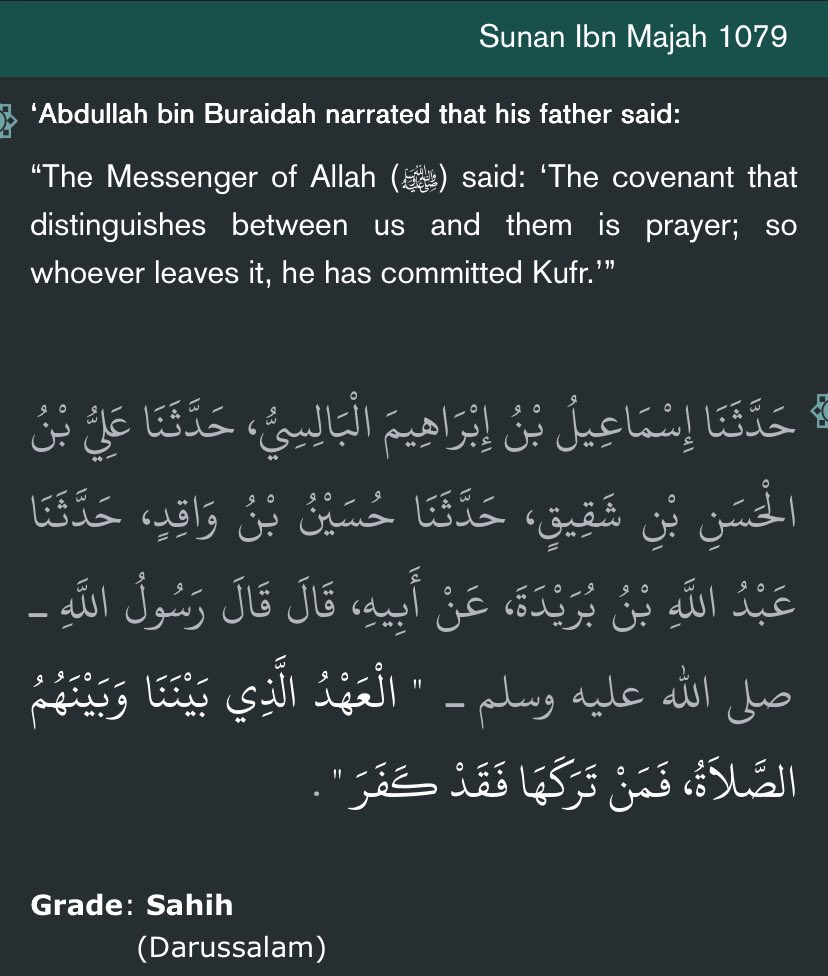
@TweetyGhazal May Allah guide and protect us from ever being one of those who leave the prayer
English
0
0
0
29
Anas Bashir
Anas Bashir@an4s911·
@TweetyGhazal It is not just a pillar of Islam, it is what distinguishes a Muslim from a Non-muslim.
Anas Bashir tweet media
English
1
0
3
92
Anas Bashir retweetledi
Nader ibn Muhammad | نادر بن محمد
The Permissibility of a Follower (Ma’mūm) Holding the Mus'haf Behind the Imam in Prayer When the Imam Needs Someone to Correct Him It is permissible for a ma’mūm to hold the Mus'haf during qiyām behind the imam when there is a valid need—specifically, when the imam wishes to appoint someone to correct him in the event of confusion or error in recitation. Ibn Abī Shaybah narrated in his Muṣannaf, saying: Yaḥyā ibn Ādam told us, saying: ʿĪsā ibn Ṭahmān told us, saying: Thābit al-Bunānī, told me: “Anas used to pray while his servant held the Mus’haf behind him. If he became confused in a verse, the servant would correct him.” Its chain is authentic; its narrators are trustworthy. It was also narrated by Ibn Saʿd and al-Bayhaqī through ʿĪsā. Holding the Mus'haf in this case is minor movements by the ma’mūm for a valid need. The need here is the lengthening of the standing (qiyām) in prayer, as the Prophet (ṣallá Allāhu ʿalayhi wa-sallam) and his companions used to do in the night prayer. The Prophet said: “The best prayer is that with the longest standing.” [Muslim] Correcting the imam helps facilitate this, and increasing worship during virtuous times is encouraged. Moreover, correcting the imam when he needs help (fatḥ ʿalayh) is, in and of itself, a mustaḥabb act—except in the case of Sūrat al-Fātiḥah, where it becomes obligatory. One of the evidences for this is the ḥadīth of Ibn ʿUmar: The Prophet (ṣallá Allāhu ʿalayhi wa-sallam) once led a prayer in which he became confused in his recitation. When he finished, he said to Ubayy, 'Did you pray with us?' He replied, 'Yes.' The Prophet said, 'What prevented you from correcting me?' [Narrated by Abū Dāwūd and others; authenticated by al-Albānī] This also assists in completing the Qur’an during the Tarāwīḥ prayers in the month of Ramaḍān, which is also a mustahab act, and allows the congregation to hear the entire Qur’an. Ibn Qudāmah said: “Abū ʿAbd Allāh [Al-Imām Aḥmad] was asked about an imam in Ramaḍān who omits verses from a sūrah—should someone who prays behind him [later] recite them [to complete what was missed]? He said: Yes, he should. In Makkah, they used to appoint a man to record what the imam left out of letters and verses, and on the night of the khatm, he would complete it.” Ibn Qudāmah added: “This was encouraged in order to complete the khatm and attain the full reward.” [al-Mughnī] Shaykh al-Islām Ibn Taymiyyah said: “The people of Makkah, along with Imām Aḥmad and his companions, permitted the recitation of omitted verses separately in order to complete the khatm and attain its reward.” He also said elsewhere: “Reciting the Qur’an in Tarāwīḥ is recommended by consensus of the scholars of Islam. Indeed, one of the primary purposes of Tarāwīḥ is the recitation of the Qur’an, so that Muslims may hear the words of Allāh. For the Qur’an was revealed in the month of Ramaḍān, and in it, Jibrīl used to review the Qur’an with the Prophet (ṣallá Allāhu ʿalayhi wa-sallam). ((And the Prophet was the most generous of people, and he was most generous during Ramaḍān when Jibrīl would meet him to review the Qur’an.))” Minor movement during prayer—when done out of need or for a valid benefit—is permissible. It is established that the Prophet (ṣallá Allāhu ʿalayhi wa-sallam) removed his sandals during prayer, gestured in return to a greeting of salām, carried and put down a child, and instructed the praying person to stop someone from passing in front of him. In comparison, holding the Mus’haf involves even less movement than carrying or setting down a child, and it serves the beneficial purpose of assisting the imam. Moreover, in voluntary prayers, a level of movement and looking around is permitted that would not be acceptable in obligatory prayers. A proof for this is the Prophet praying voluntary prayers on his riding animal while traveling. As for the ruling on a ma’mūm who is not designated by the imam to correct him, yet holds a Mus'haf and reads from it during the imam’s recitation—then the least ruling in this case is that it is makrūh, for several reasons: • Among them: it entails neglecting many of the Sunnahs of prayer without need. Shaykh Ibn ʿUthaymīn said: “Holding the Mus'haf while the imam is reciting contradicts khushūʿ, and it involves several problems: First: it prevents the worshipper from looking at the place of prostration—which is recommended by most scholars—and one holding a Mus'haf won’t look there. Second: it prevents following the Sunnah of placing the hands properly. Third: it involves unnecessary movement, and unnecessary movement in prayer is disliked; one has to flip the Mus'haf, carry it, and put it down—all of which are needless movements. Fourth: it occupies the eyes with many distractions—looking at every verse, every word, every letter, every movement, every line, every page. Some scholars even held that prayer becomes invalid when reading from a Mus'haf due to excessive movement. The follower’s eye movements are undoubtedly excessive. Fifth: I feel that the one following along in the Mus'haf may lose the sense of being in prayer. He is occupied with following along and feels as though he’s just listening to someone reciting, not actually praying. But when someone places his right hand over his left, lowers his gaze to the place of prostration, and humbles himself to Allah, he will find a sense of closeness and devotion that he would not attain while flipping through the Mus'haf. Therefore, I advise my brothers to abandon this habit—unless there is a need, such as when the imam is not strong in memorization and appoints someone to correct him in case of error. In that case, there is no problem.” [Majmūʿ Fatāwā wa Rasāʾil al-Shaykh] • Also among them: Allah says, {قَدۡ أَفۡلَحَ ٱلۡمُؤۡمِنُونَ * ٱلَّذِینَ هُمۡ فِی صَلَاتِهِمۡ خَـٰشِعُونَ} and among the meanings of khushūʿ is stillness of the limbs. As for following along with the Mus'haf, it entails taking it out, putting it away, opening it, and flipping its pages during every rak'ah. One might ask: aren’t all these same issues present for the person holding the Mus'haf to correct the imam? The answer: in that case, the act falls under need and overriding benefit, as previously explained—and the ruling of something being disliked is waived when there is a valid need and benefit. • Also among the reasons: following along with the Mus’haf—when one is not appointed to correct the imam—can lead to reading ahead of the imam or becoming distracted from reflecting on the recitation. Allah says: {When the Qur’an is recited, listen to it and remain silent so that you may receive mercy.} Therefore, the obligation upon the ma’mūm is to listen to the imam’s recitation, not to read along with him. Reading is not the same as listening; each is a distinct act of worship, and a person feels the difference between the two acts inwardly. This is indicated by the hadeeth of ʿAbd Allāh ibn Masʿūd, who said: “The Prophet (ṣallá Allāhu ʿalayhi wa-sallam) said to me: ‘Recite to me.’ I said: ‘Shall I recite it to you when it was revealed to you?’ He said: ‘I love to hear it from others.’” [Agreed upon] Ibn Masʿūd also said, when asked about reciting behind the imam: “Remain silent, for there is enough going on in the prayer—and the imam is sufficient for you.” [Ibn Abī Shaybah and others] • Also among them: we often see some people who follow along with the Mus’haf in prayer rush to correct the imam, only to end up distracting him instead. • Also: if it is permitted for one ma’mūm to carry the Mus’haf without being designated to correct the imam, then it follows that all of the ma’mūms could do the same. There is no meaningful distinction between one, a few, or the entire congregation if the underlying justification is the same—namely, the permissibility of following the recitation through the Mus’haf without a genuine need. Whoever claims a difference between the few and the many bears the burden of proof. And if no clear line can be drawn, then the door is open for the entire congregation to stand behind the imam holding Mus’hafs in their hands. This, however, has no basis in the religion and was never practiced by the Salaf—even though the need existed, as not all of them had memorized the Qur’an. Of course, having all the ma’mūms carry Mus’hafs during prayer is not part of the outward practices of Islam; rather, it completely alters the form and appearance of the prayer. The imam’s recitation is intended to bring the hearts of those behind him together in listening and reflection—not for each person to behave as though they’re praying individually while merely standing in a group. Also, by the same logic, one could justify installing electronic screens for each individual in the mosque to follow along with the imam’s recitation. And I wouldn't be surprised if, in the near future, people begin asking about the permissibility of wearing augmented reality glasses during prayer with the Mus’haf displayed before their eyes under the same claim of following the imam's recitation. Thus, this door shouldn't be opened, and needs must be evaluated proportionately. From the Fatāwā of Our Scholars on This Issue: Al-ʿAllāmah Ibn al-ʿUthaymīn said: “There is no doubt that following along with the imam using the Mus'haf, when there is no need, is disliked. But if the imam is in need—due to weak memorization—and asks someone from the congregation to follow and correct him if he errs, then there is no problem.” [Majmūʿ Fatāwā wa Rasāʾil al-Shaykh] Al-ʿAllāmah Ibn Bāz said, when asked about a ma’mūm holding a Mus'haf in Tarāwīḥ prayer: “I do not know of any basis for this. What is best is for the worshipper to be humble and tranquil, and not to hold a Mus'haf. Rather, he should place his right hand over his left—on his wrist and forearm—and place them on his chest, as is the Sunnah. Holding the Mus'haf distracts him from these Sunnahs, and it may also distract his heart and his gaze as he flips through the pages and verses, and from listening to the imam. What I see is that leaving this practice is the Sunnah—that one should listen and be attentive, and not use the Mus'haf ... As for one person holding it to correct the imam when needed, that is acceptable. But for everyone to hold a Mus'haf: this is contrary to the Sunnah.” [From the Shaykh’s website] And Allah knows best.
Nader ibn Muhammad | نادر بن محمد tweet media
English
2
57
104
12.4K
Anas Bashir
Anas Bashir@an4s911·
@bcd_wxy @linuxopsys Nah, im not an ubuntu user, I used to be. But if given the choice between these two I’d go with ubuntu because of how annoying fedora’s installation process is, especially the partition management
English
1
0
0
159
Linuxopsys
Linuxopsys@linuxopsys·
Ubuntu or Fedora
Linuxopsys tweet media
Indonesia
344
50
1K
70.6K
Nature is Amazing ☘️
Nature is Amazing ☘️@AMAZlNGNATURE·
A polar bear was recorded having traveled 9 days straight without stopping!
English
745
4.8K
61.7K
4.5M
Anas Bashir retweetledi
Moosaa Richardson أبو العباس موسى الطويل
@fi_happy *When needed: As the imam of the prayer, in order to read passages that one has not memorized well enough, or by a single designated follower to make corrections to an imam reciting from memory, when he errs or gets stuck; such is only done with brotherly cooperation & agreement.
English
1
7
35
1.7K
Anas Bashir retweetledi
Moosaa Richardson أبو العباس موسى الطويل
@fi_happy With notifications OFF, yes, when needed.* Otherwise, many distractions can pop up while he is reading. The basis for holding the Quran while praying optional night prayers when needed is something approved of by our mother, 'Aa'ishah (may Allah be pleased with her).
English
1
10
30
2.1K
Anas Bashir retweetledi
Moosaa Richardson أبو العباس موسى الطويل
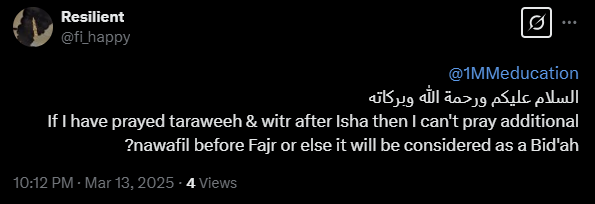
وعليكم السلام ورحمة الله وبركاته There is nothing preventing you from praying in the nights of Ramadhaan, even if you have already prayed Witr. There are only encouragements to increase in your worship these nights. You are only forbidden from making two Witr's in a single night
Moosaa Richardson أبو العباس موسى الطويل tweet media
English
4
48
128
8.8K
Anas Bashir retweetledi
Moosaa Richardson أبو العباس موسى الطويل
@an4s911 وعليكم السلام ورحمة الله وبركاته He prayed with the imam until he finished; that's the requirement to get the reward for praying all night, as mentioned in the hadeeth. There is nothing in the hadeeth about not praying any more. من قام مع الإمام حتى ينصرف كتب له قيام ليلة
0
1
1
134