

Timi the analyst
34 posts

In Web3, trust is earned not assumed.
And that’s why @OpenledgerHQ is different.
It doesn’t ask you to trust the system.
It shows you how the system works out in the open.
*Open, verifiable infrastructure
* Fully EVM-compatible
* No opaque bridges or backdoors
* Modular design = fewer moving parts to break
* Auditable, scalable, and community ready
In short?
It’s Layer 2 done right no shortcuts, no centralization traps, no fake decentralization vibes.
#OpenLedger #Layer2 #Web3Infra #ModularBlockchain #CryptoBuilders #DecentralizedInfra #TrustlessTech #ETHScaling #CryptoAfrica

English
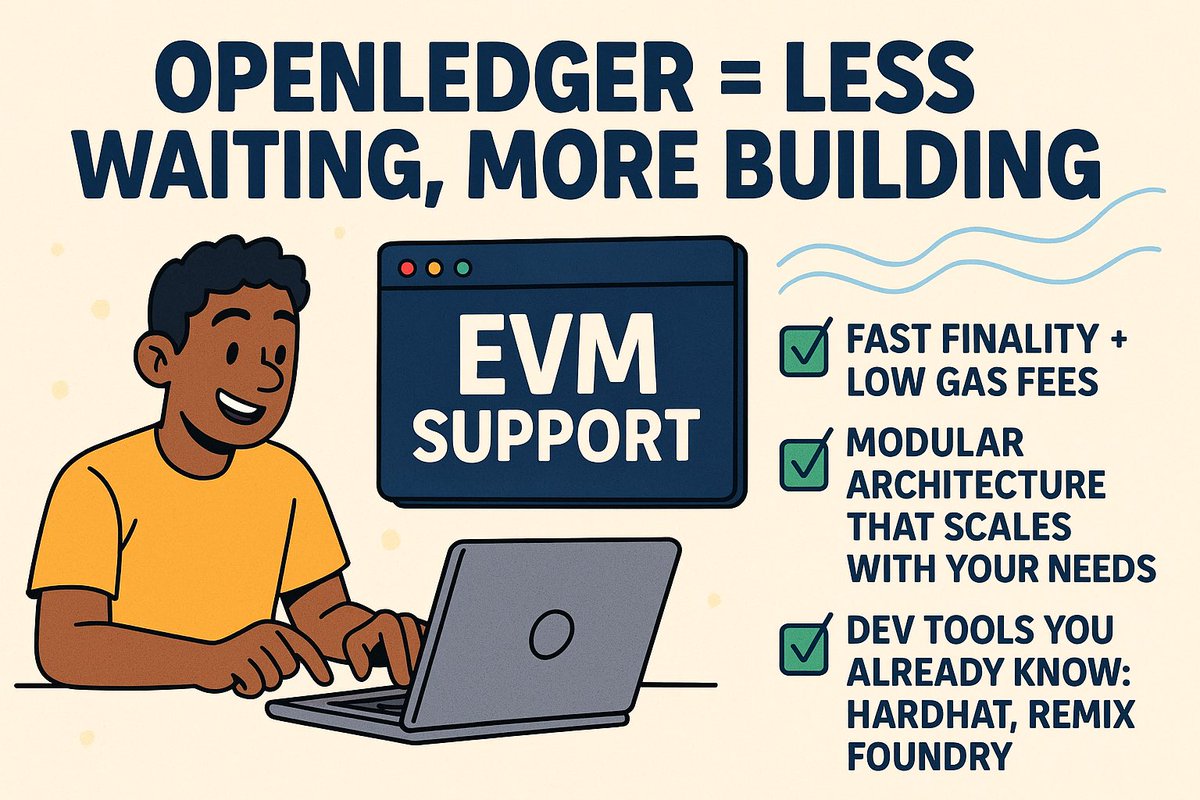
OpenLedger is for teams that want to ship fast and scale smart.
From DeFi to gaming, it’s your launchpad not your bottleneck.
@OpenledgerHQ
#OpenLedger #Layer2 #ModularBlockchain #CryptoBuilders #Web3DevTools #EthereumScaling #CryptoAfrica #ShipFastBuildSmart
English
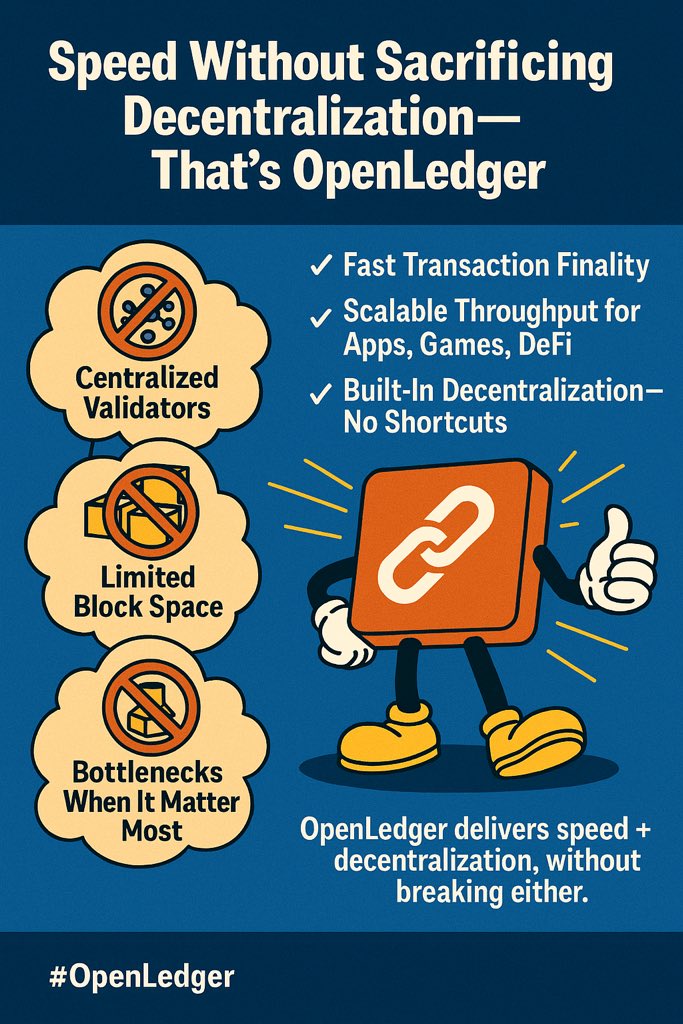
Today I focus on @OpenledgerHQ in relation with real-time performance showing how it balances speed, scale, and decentralization without compromise.
Most chains promise speed, but give you tradeoffs:
Centralized validators
Limited block space
Bottlenecks when it matters most
@OpenledgerHQ said: Why not do it right?
✅ Fast transaction finality
✅ Scalable throughput for apps, games, DeFi
✅ Built-in decentralization no shortcuts
Whether you’re launching an NFT mint, settling a DeFi trade, or running a high volume dApp OpenLedger handles it.
No lags. No lockups. Just performance you can trust.
#OpenLedger #Layer2 #Web3Performance #EthereumScaling #CryptoInfra #FastFinality #DeFiReady #CryptoAlpha #BlockchainInfra
English
@BiggsWeb3 @satlayer See ya at the top !
An efficient layer 2 project
English
Let’s be real:@satlayer
Most Bitcoin Layer 2s either lack smart contracts or are a pain to build on.
SatLayer flips the script.
Here’s what devs are loving:
*Fast execution & low fees
*DeFi-ready out the gate
*Anchored to Bitcoin’s security no trade offs
It’s like giving Bitcoin the Ethereum developer experience but with more efficiency

English
English
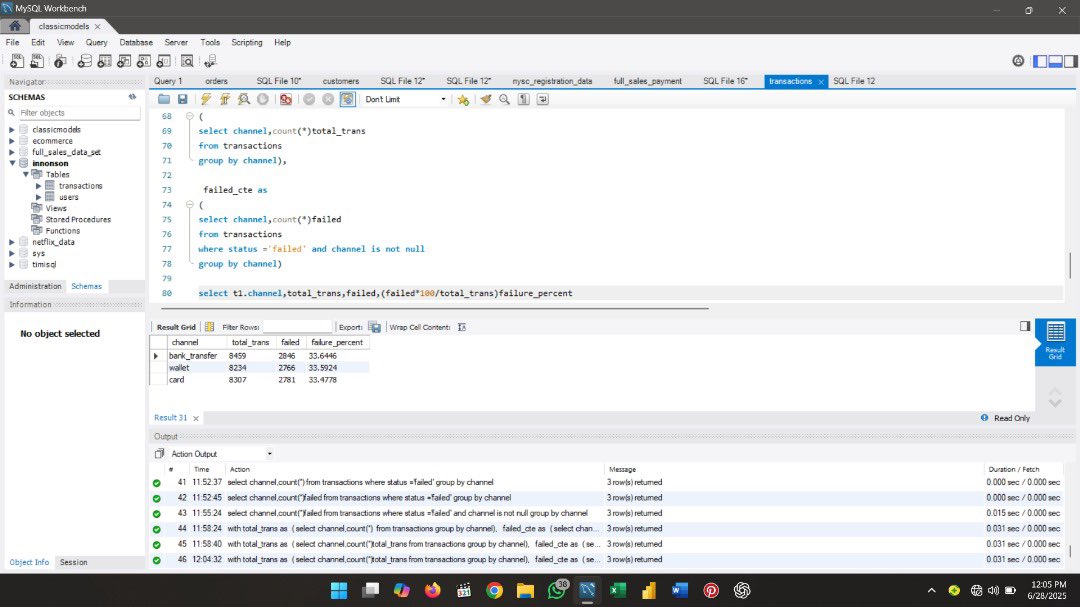
No 2 Approach: from the innotransfer data
Selected count to know the total transaction the created a “total transaction cte”
Then again from the innotransfer payment table selected count failed transaction by using where to specify then created a “payment failed cte”
English
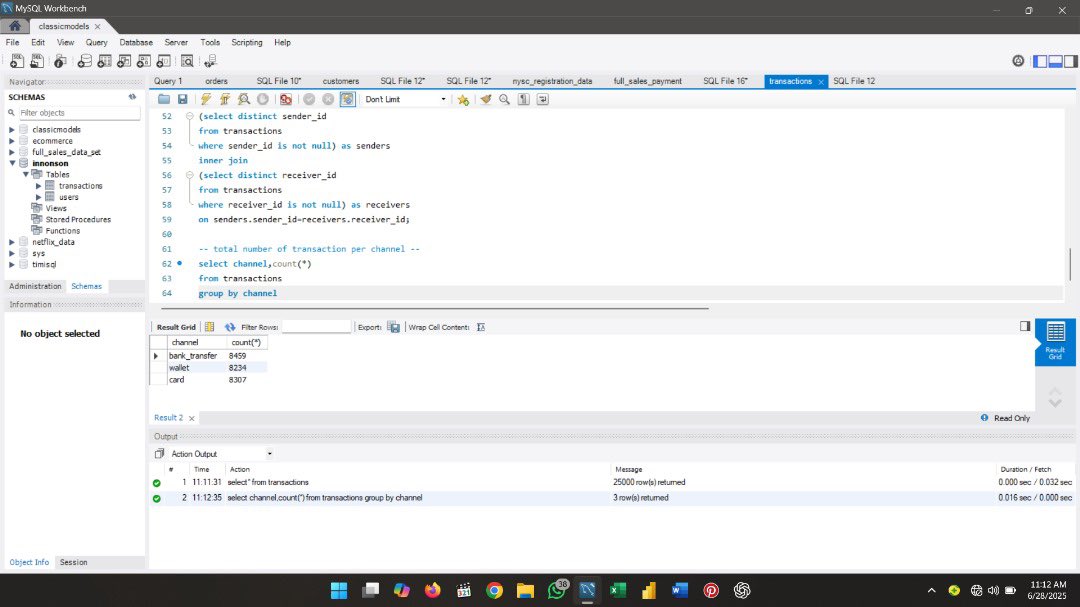
No 1 Approach:from the innotransfer table selected the channel and used the count function to count total number of transactions then grouped by channel to get the total
Transaction per channel
English
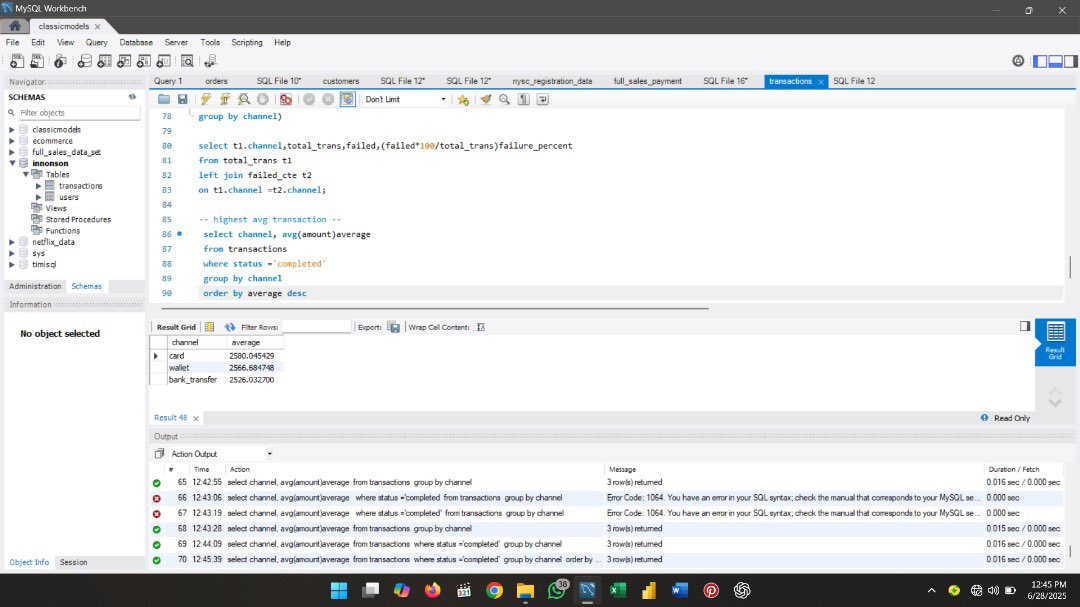
No 3 Approach: from the innotransfer transaction table
Selected channel , used the avg function
Then used the where function to specify the output of completed transaction
Then group by channel to get each channel average
Then I order by avg “desc” to get the highest
English
Then multiplied “the payment_failed cte “by 100 and divided it by “total transaction cte “to get the failure rate percentage
English
Day 23 of 30 Days of #SQLwithFunmi
Questions
1 What is the *total number
of transactions* per channel?
2.What is the *failure rate*
of each payment channel?
3.Which channel has the
*highest average transaction value* (A) for completed
English
Then created a subquery and used the count function to count the total users that were both receiver and senders
English
No3 approach: from the innotransfer data
Selected the sender id
And used the where sender id is not null to filter out null set and used inner join to join the receiver id that I selected from the innotransfer where receiver id is not null

English
Day 22 of 30 Days of #SQLwithFunmi
Question
1 Find the *average number of transactions per active user*.
2 Identify the *top 5 most active users* by number of total transactions (sent + received )
3. How many users have acted as *both sender and receiver*?
English
and use the count function to get total transaction
And grouped by user to to get each how many times each user used and order by desc
English
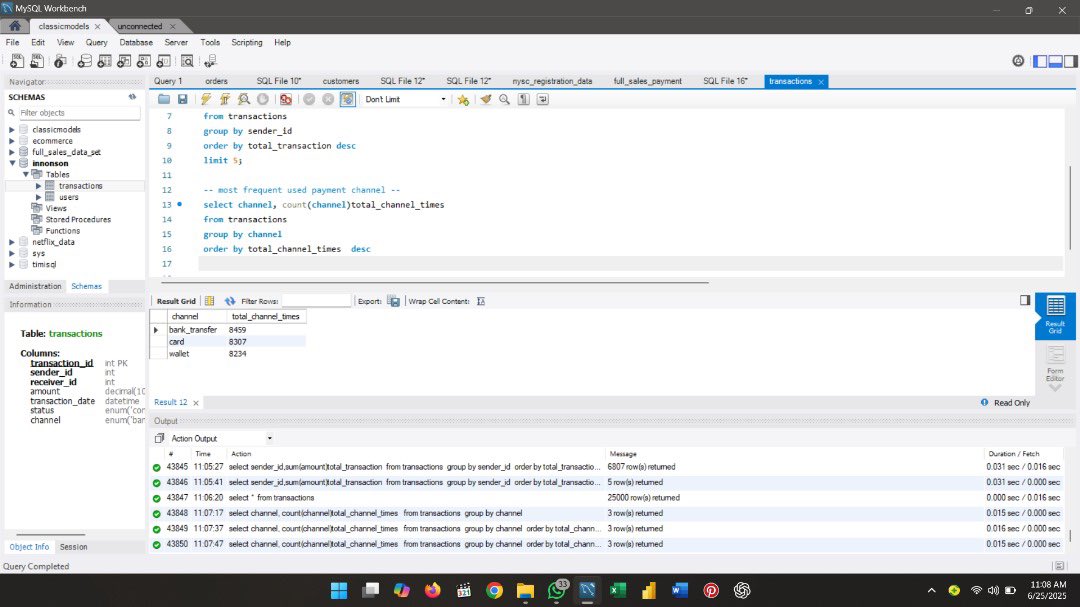
No 3Approach: from the innotransfer data set selected the payment mode and used the count function to count how many times the channels were used and used the group by function to determine how many times each channel was used then order by desc to get the most transfer channel
English
Day 20 of 30 Days of #SQLwithFunmi
#DataAnalytics
Today we dive into another data set of innotransfer
1 What is the total amount
of money transferred on the platform?
2 Identify the top 5
senders by total amount sent
3 Determine the most
frequently used payment channel.
English
No 2 approach: from the innotransfer data set used the select function to select the sender_id and used the sum function to get total amount then grouped by the sender_id to get total amount made by each sender then used the order by and desc function to get the highest

English
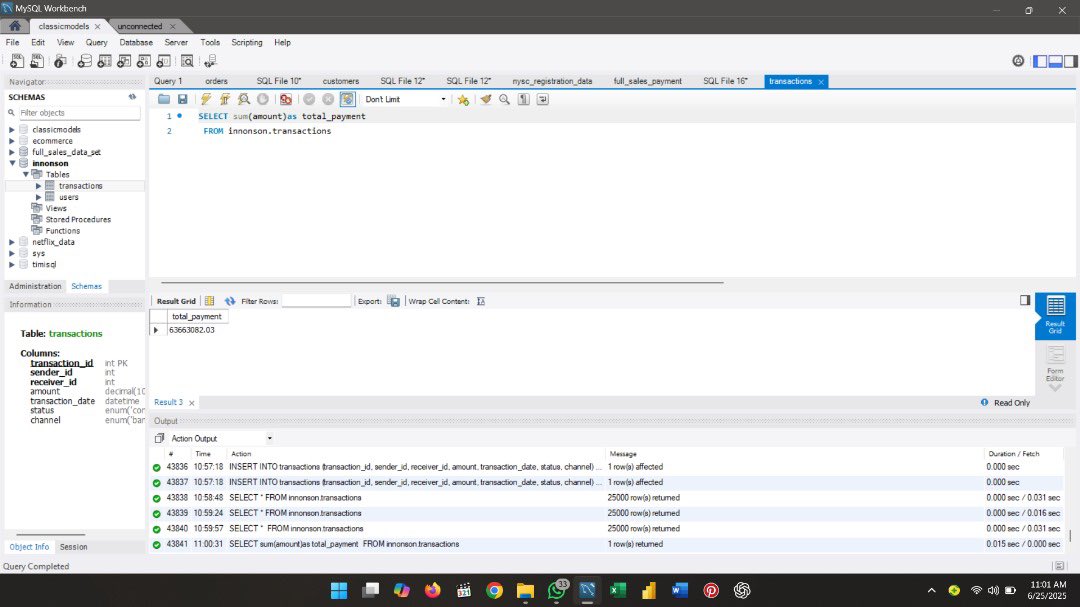
No 1 approach from the innotransfer set selected the sum function to get the total amount of money transferred on the platform
English