Ananth Narayan

3.4K posts

Ananth Narayan banner
Ananth Narayan

Ananth Narayan

@ananthng

Learning, practicing, reading, and writing about financial markets, economics, policies & governance.

Mumbai, India Katılım Haziran 2009
257 Takip Edilen16.7K Takipçiler
Sabitlenmiş Tweet
Ananth Narayan
Ananth Narayan@ananthng·
Amongst other things, I try & argue 1) banks don’t need funds to give loans - rather, loans create deposits 2) banks can’t lend away liquidity surpluses, or address deficits 3) banks don’t borrow/ lend clean money with RBI - lazy banking can be a misnomer. cnbctv18.com/views/how-the-…
English
27
113
372
0
Ananth Narayan
Ananth Narayan@ananthng·
The Credit-Deposit Ratio—A Primer Some of the recent commentary around the high banking Credit-Deposit (CD) ratio seems to miss a basic point: deposit growth is largely an outcome of credit creation, currency withdrawals, and foreign currency flows — not an independent driver. Growth in overall banking deposits is a dependent variable, that is mathematically a result of: • (+) Growth in banking loans • (+) Net FX inflows • (+) Growth in bank and RBI lending to the government (that is spent by the government) • (-) Growth in currency in circulation • (-) Retained profits & capital raises of banks and RBI The Takeaways: 1. Loans funds themselves (systemwide): The banking system creates deposits when it extends credit. Counterintuitively, at a systemic level, a "lack of deposits" is not a structural constraint to lending. Individual banks, however, still have to compete for funding stability - more on that later. 2. Headline statutory reserves (SLR/ CRR) are not a constraint: With banks holding significantly excess SLR/ liquidity, the system is not constrained by headline SLR/ CRR statutory reserves. 3. The "Raising Deposits" Myth: When we exhort the banking system to "raise deposits," look at the above equation. What is actually under banking control? Ironically, the easiest way for the banking system to create more deposits is by lending more! Individual banks can compete for a larger slice of the deposit pie with better rates, but that doesn't grow the overall pie itself. 4. Mutual Funds are not a "Leakage" of bank deposits: When households invest in mutual funds, insurance, or pensions, the money remains within the banking system — it simply moves between accounts. 5. The real possible constraint for bankers: A shift from long-term deposits to short-term or demand deposits, particularly away from retail and into wholesale, can impact banking LCR (Liquidity Coverage Ratio) and NSFR (Net Stable Funding Ratio). This can be the real constraint to banking business. This is a nuance of duration and stability, not a "loss of deposits”, and has to be articulated and debated as such. If all this boils down to banks needing more long-term deposits, especially from households, the discussion points could well be around fair interest rates (is there financial repression?), banking efficiency, and the need for a level playing field across household savings into fixed income and equity. In the current context, net FX outflows and relatively high growth in currency in circulation are the primary reasons deposit growth is trailing, leading to the optically high CD ratio. But the real policy discussion should focus on liquidity drivers and funding stability, not the headline ratio alone. #Banking #Macroeconomics #RBI #MonetaryPolicy #Finance #IndiaEconomy
Ananth Narayan@ananthng

1/5 Is the RBI's support of the fiscal balance a "free lunch"? My latest for @bsindia explores the money and fiscal footprint of record RBI dividends and OMOs, and why this may not last forever. 🧵 bit.ly/3OytWFt

English
1
21
120
44.9K
Ananth Narayan
Ananth Narayan@ananthng·
5/5 To prepare for a turn in the cycle, India must grow non-bank lending by deepening fixed-income markets. Giving debt a level playing field with equity may be one way to start. There is also a need to reduce revenue deficits further - RBI dividends mask their true extent.
English
1
1
10
843
Ananth Narayan
Ananth Narayan@ananthng·
4/5 As long as consumer inflation is low, this is not an immediate problem, other than perhaps putting pressure on the Rupee (via the Impossible Trinity) and perhaps contributing to asset price inflation.
English
1
0
7
805
Ananth Narayan
Ananth Narayan@ananthng·
1/5 Is the RBI's support of the fiscal balance a "free lunch"? My latest for @bsindia explores the money and fiscal footprint of record RBI dividends and OMOs, and why this may not last forever. 🧵 bit.ly/3OytWFt
English
1
5
37
19.5K
Ananth Narayan retweetledi
Prashant Nair
Prashant Nair@_prashantnair·
"Do we want to be afraid of the AI disruption ? Or do we want to look at the opportunities of what is now possible ? I want to focus on the later" The sell-off in Indian IT stocks is fueled by a powerful narrative that AI agents will automate complex enterprise workflows & capture a disproportionate share of software budgets. I spoke with Dr. Vishal Sikka, former CEO of Infosys & someone who has been intimately involved with AI for a long time. 10 key points. Hope it helps. 1. Disruption is Real but Gradual -> While the application of generative AI to knowledge work is a "real" disruption that is "here," large enterprises are like "civilizations" or "countries"; their complexity means adoption takes significant time. 2. The Gap Between Potential & Reality -> Addressing fears of immediate price deflation, Sikka notes there is a "gap" between the potential of AI and the "actual reality of creating an enterprise-ready offering". Whether it hits a particular project or quarter "depends on the nature of the situation," and for many complex services, it "might take years" for these new offerings to show up. 3. The Lesson of Waymo -> Sikka notes that autonomous driving was proven at Stanford 20 years ago, yet today Waymo still accounts for "less than 1% of all the taxi type rides" in the US, illustrating that technological breakthroughs take decades to fully diffuse. 4. Acceleration through Integration -> The pace has accelerated shaprply (in the last few weeks) because "frontier model companies have integrated tools into the models," such as Python interpreters & compilers, making them exponentially more powerful & easier to integrate into workflows.+ 5. The Productivity Leap -> Sikka highlights a staggering real-world example where a student rebuilt a site that previously took 15 people over nine months by himself in just 14 days. 6. The "Jagged Frontier" -> Not all tasks or people see the same gains; productivity increases depend on the "nature of the task" & whether the individual has the "fundamentals" to wield AI effectively. 7. Deflationary Pressure is Conditional -> Whether AI hits a specific project's pricing or a particular quarter's revenue depends on the "service line" & the "nature of the situation," as the gap between AI's potential & enterprise reality varies. 8. Strategy in Minutes, Not Months -> Using his product, Hila, Sikka's customers performed complex business "scenario simulations" in "one minute to five minutes" that would have normally taken "armies of people" & months to execute. He highlights this example to point out that AI is being used not to just code faster but also for strategy purposes. 9. Switch from Operators to Creators -> The fundamental challenge for India's IT professionals is to "switch from being operators and executors of what is known, towards being creators and innovators of what is not yet known". 10. Adaptation is the Survival Equation -> India has thrived through disruptions like Y2K, mobile & cloud; the current goal is to "adapt to this and make it a tailwind" faster than it destroys the prior generation of work. Much like how everyone is now a "photographer" because of phone cameras, AI is shifting power to the end user. Sikka warns, "it behooves us to find opportunities in that shift... There is not that much time" #Nifty #BankNifty #India #stockmarkets @CNBCTV18News @ShereenBhan
English
41
121
463
124.8K
Anand
Anand@anvaya_anand·
@ananthng what about huge money fio making in f & o ? Cleatly there is no hedging ..pure speculation. Actually manipulation..for more taxes & benefit of exchange,brokers.. r qe providing free ground to fii .?
Ananth Narayan@ananthng

2/2 Part 2: We must address tax friction. Foreign investors see India as an outlier with source-based withholding. We must move to a residence-based model. We should consider an asset-agnostic, low LTCG tax rate for balanced & sustained capital formation. bit.ly/49LGUI5

English
1
0
0
105
Ananth Narayan
Ananth Narayan@ananthng·
2/2 Part 2: We must address tax friction. Foreign investors see India as an outlier with source-based withholding. We must move to a residence-based model. We should consider an asset-agnostic, low LTCG tax rate for balanced & sustained capital formation. bit.ly/49LGUI5
English
0
2
2
1.1K
Ananth Narayan
Ananth Narayan@ananthng·
1/2 Despite our macros, net foreign flows to India have disappointed. In two @BSIndia pieces, I explore why. Part 1: The domestic surge into equities has created an exit door for FPI/FDI and fewer entry points. We need better tax-adjusted savings options. bit.ly/4k21mYC
English
1
1
6
992
Ananth Narayan retweetledi
Business Standard
Business Standard@bsindia·
#Opinion | Capital market regulation must balance investor protection, avoid penalising honest enterprise, and reduce system-wide risk. @ananthng explains Type I and Type II errors, limits of enforcement, and how regulator–industry engagement in AIFs helped recalibrate rules. mybs.in/2g38PtQ
English
0
1
3
1.2K
Ananth Narayan retweetledi
TheLiverDoc™
TheLiverDoc™@theliverdoc·
THE RIGHT SIDE UP: We often hear: "Government meds are weak" or "Cheap meds don't work." This is false. Our lab data proves that Indian generics match the quality of premium brands. Don't let marketing fool you. The molecule doesn't care about the brand name on the box. Your health deserves quality. Your wallet deserves fairness. This large scale study proves that in general: Generics ≠ Inferior We tested. We verified. The results are undeniable. EVERY. SINGLE. PILL. PASSED. Whether it was a ₹61 liver tablet from a big brand or a ₹16 one from Jan Aushadhi - they ALL met the strict Indian Pharmacopoeia standards. Zero failures. The cheap meds worked just as well in the lab. Please share and RT to help your family & friends save tens of thousands on medicines! 11/11
TheLiverDoc™ tweet media
English
36
208
748
58K
Ananth Narayan retweetledi
Thefynprint
Thefynprint@thefynprint·
Stop Chasing Trades: 94% of Returns Come From Asset Allocation (Not Stock Picking) Former SEBI whole-time member Anant Narayan breaks down a simple framework for building wealth: start with risk appetite, build an asset allocation across equity, fixed income and other assets, and diversify—because “diversification is the closest thing to a free lunch.” He also delivers a blunt warning: for most individuals, the more you trade, the less you make costs like brokerage, STT and fees quietly compound against you. And the big takeaway: stock selection and market timing explain only ~5–6% of return differences, while ~94% is driven by asset allocation (Brinson, Hood & Beebower). Full conversation: Thefynprint x Anant Narayan (Former SEBI WTM) youtu.be/2QsWdVg8MvI?si…
YouTube video
YouTube
English
1
11
65
7.7K
Ananth Narayan retweetledi
Thefynprint
Thefynprint@thefynprint·
@ActusDei , @thefynprint sits down with Anant Narayan, former Whole Time Member at SEBI, to talk about what India’s market boom means for everyday investors. Why are so many people getting pulled into weekly options and why do most of them lose money? How do “free” investing apps really make money, and what risks does that create? Narayan also shares simple, practical ideas on diversification, overseas investing, and how investors can protect themselves as markets get faster, noisier, and more complex. Full podcast dropping tomorrow.
English
1
3
10
4.6K
Ananth Narayan retweetledi
Thefynprint
Thefynprint@thefynprint·
700–800x Options vs Cash: Ex-SEBI WTM Warns of a LIBOR-Style Risk in Nifty/Sensex Former SEBI whole-time member Anant Narayan explains why regulators get uneasy when derivatives start dwarfing the underlying market. He points to Aug 2025 data where weekly Nifty and Sensex options—measured in delta/cash-equivalent terms—were estimated at about 700–800 times the cash-market traded volumes. Such a large imbalance, he argues, can weaken trust and raise concerns about manipulation—drawing a parallel to the LIBOR episode, where a small underlying mechanism influenced a far larger universe of contracts. Full podcast: youtu.be/2QsWdVg8MvI?si… @ActusDei
YouTube video
YouTube
English
2
6
27
5.9K
Ananth Narayan retweetledi
CNBC-TV18
CNBC-TV18@CNBCTV18News·
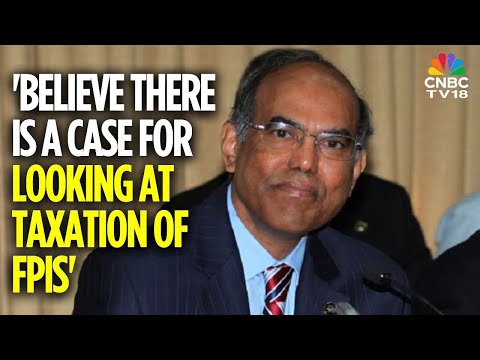
#MoneycontrolExclusive | D Subbarao, Former RBI Governor to @latha_venkatesh - FPIs, FDIs exiting because domestic investors have come in a big way - Believe there is a case for looking at taxation of FPIs - There is a plausible case to argue that inflation-targetting has been a success - Too early to declare victory over fiscal deficit as our debt-to-GDP ratio is still quite high WATCH: youtu.be/eAQvnbmFNyc?si…
YouTube video
YouTube
English
5
12
82
84.5K