Angry Crypto Show

68.9K posts

Angry Crypto Show banner
Angry Crypto Show

Angry Crypto Show

@angrycryptoshow

Follower of Jesus | $ADA • $NIGHT • $XRP News

Canada Katılım Temmuz 2023
709 Takip Edilen18.9K Takipçiler
Sabitlenmiş Tweet
Angry Crypto Show
Angry Crypto Show@angrycryptoshow·
JUST IN: Charles Hoskinson says "yes Vitalik, UTXO is a good idea. I didn't invent it, I perfected it. Satoshi had every opportunity to do bank style accounting, he chose cash register style, because it's a much better way to do a distributed system. We perfected it with EUTXO."
English
8
94
810
26.7K
Angry Crypto Show
Angry Crypto Show@angrycryptoshow·
UPDATE: Altcoin Daily says "I know the Cardano ecosystem is bigger than Charles Hoskinson himself, but one of the big reasons why I really like Cardano, is because of the Founder, and how smart and outspoken he is." $ADA
English
7
52
445
11.2K
Don Digital Finance
Don Digital Finance@niroshan682·
🚨 LATEST: Charles Hoskinson says #Cardano could re-enter the crypto top 10 by the end of 2026. He pointed to upcoming upgrades including Ouroboros Leios and RealFi, saying they could significantly strengthen Cardano’s performance and long-term growth.
Don Digital Finance tweet media
English
8
32
212
3K
Angry Crypto Show retweetledi
Token Terminal 📊
Token Terminal 📊@tokenterminal·
🆕🤝 We’re excited to announce our Data Partnership with @MidnightNtwrk! Midnight is a blockchain with programmable privacy and a predictable cost model, designed to bring global finance onchain. Learn more. 🧵👇
Token Terminal 📊 tweet media
English
23
73
312
22.8K
crypto.news
crypto.news@cryptodotnews·
LATEST: Cardano RealFi testnet goes live. Phase 1 allows public testing of swapping test assets for test USDr, staking for sUSDr, and unstaking, as the protocol gathers input before mainnet launch
crypto.news tweet mediacrypto.news tweet media
English
4
33
175
6.6K
Angry Crypto Show
Angry Crypto Show@angrycryptoshow·
INSIGHT: #Cardano ETFs / ETPs have accumulated over $9.7M of net inflows this year with zero outflow months, highlighting continuous institutional adoption and whales stockpiling $ADA, according to data from Blockworks.
Angry Crypto Show tweet media
English
2
6
55
1.7K
Mintern
Mintern@MinswapIntern·
UPDATE SECONDFI STILL IN QUARANTINE MODE 😱😱😱 SecondFi is still in quarantine mode, disabling all transactions users can still view balances and addresses While the team works on recovery efforts and urges users to migrate assets only through official recovery tools when available.
Mintern tweet mediaMintern tweet media
English
5
5
71
4.8K
Angry Crypto Show
Angry Crypto Show@angrycryptoshow·
UPDATE: Altcoin Daily includes #Cardano $ADA in their top 10 cryptocurrencies that are "fundamentally sound, have metrics under-the-surface which are exploding, yet price is down today. Crypto prices are not going to stay suppressed forever."
Angry Crypto Show tweet media
English
4
31
177
3K
Angry Crypto Show
Angry Crypto Show@angrycryptoshow·
@seal_kiman @Blockworks Still around, as far as I know, but has lost some steam due to the fiat-backed ones. The landscape heavily favors fiat-backed, but there is utility for the algorithmic and mixed styles.
English
1
0
1
60
Angry Crypto Show
Angry Crypto Show@angrycryptoshow·
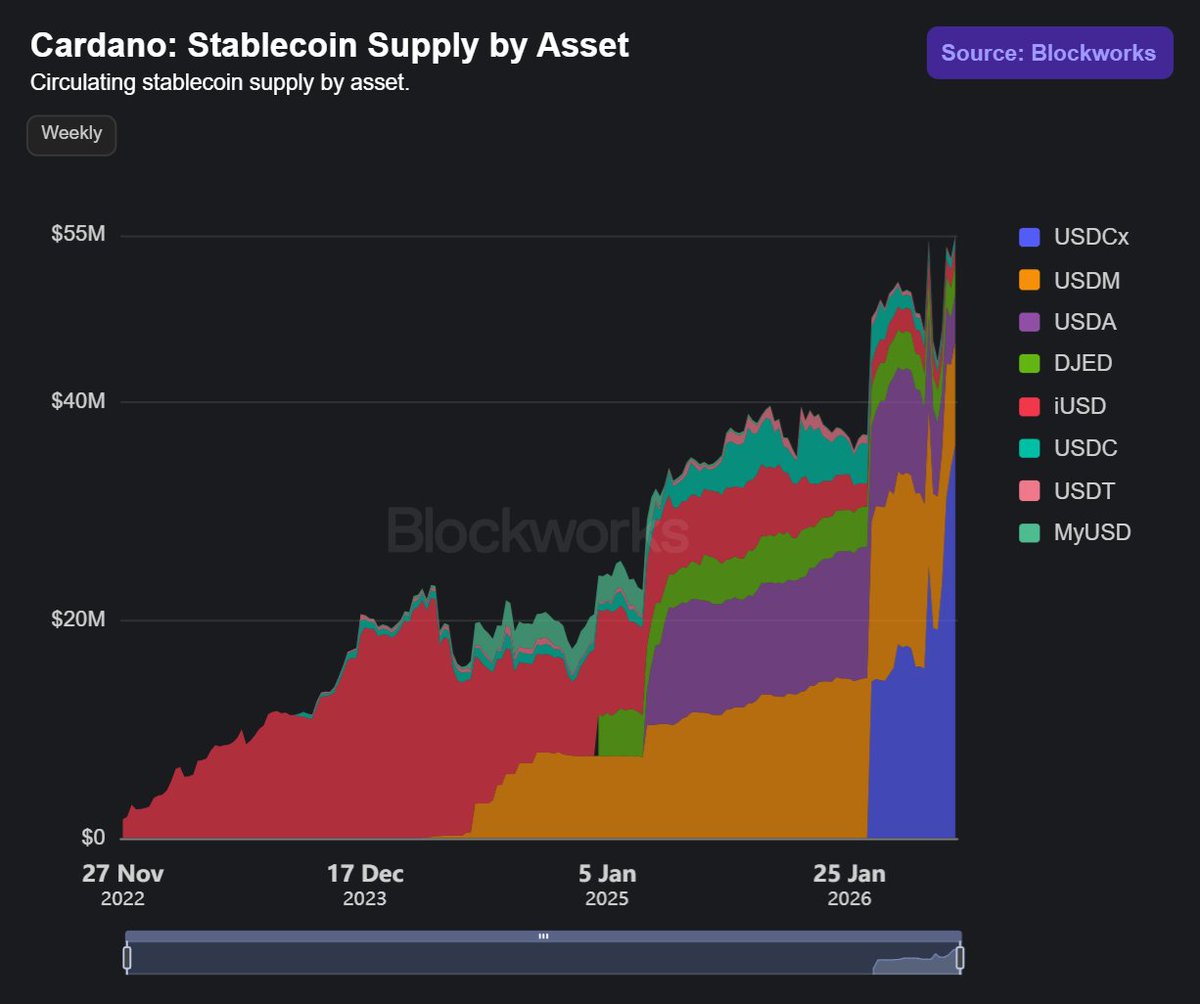
INSIGHT: #Cardano $ADA's stablecoin market cap has been steadily growing, now surpassing $55.3M, with Circle's $USDCx leading dominance at over $36M in reserves, according to data from Blockworks.
Angry Crypto Show tweet media
English
2
15
116
2.9K
CoinGecko
CoinGecko@coingecko·
⟦𝙂𝑴⟧
QST
295
19
364
43.9K
Angry Crypto Show
Angry Crypto Show@angrycryptoshow·
JUST IN: #Cardano $ADA 24h trade volume surpasses $250,000,000 according to CoinGecko.
Angry Crypto Show tweet media
English
2
7
88
1.8K
vitalik.eth
vitalik.eth@VitalikButerin·
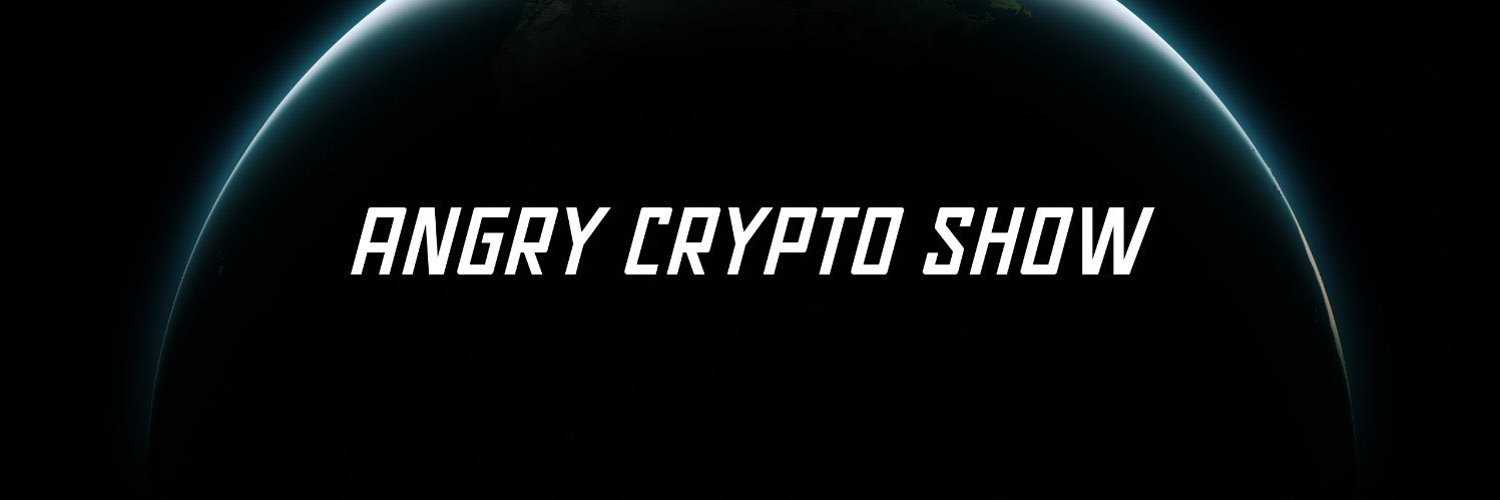
Two weeks ago, Ethereum researchers met in Berlin to continue charting the protocol's long-term trajectory, following along discussions with client teams in Svalbard in April. The updated strawmap is at strawmap.org, and I attached a picture of it to this post. My own high-level takeaways: * "Lean Ethereum" is not a single one-shot upgrade, it is a collection of improvements that will come online to the Ethereum network over the course of three or four years. But make no mistake, this IS the third major iteration of Ethereum in the same way that the Merge was the second. Almost every major piece of the protocol will be replaced: - Verification through recursive STARKs, rather than direct re-execution. Recursive STARKs become an enshrined first-class core component of the protocol - Replacing everything quantum-vulnerable with quantum-safe alternatives - Consensus: decoupled available chain and finality, one or two-round finality. Theoretically optimal security properties, simpler than today, and faster than today - Multidimensional gas - State: not just tree structure, but what *types* of state are available - Changes to client architecture ... At the same time, simplification, cleanup and future-proofing. And this will all be done in a way that minimizes disruption to existing application. We've done this before (the Merge), we can do it again. * H-star (aka Hegota) is probably Ethereum's last thematically "pre-Lean" fork. Starting from I-star, most of everything we do will have a very strong "Lean" feel to it in one way or another. * Privacy is no longer an afterthought, it is a first class goal. When designing Frames, the mempool, additions to the state tree, we explicitly ask the question "okay, how do quantum-safe, intermediary-free privacy protocol transactions go through this, and what is the overhead?" * Formal verification of everything for security. * FV also makes us much more comfortable with canonicalization (having pieces of the protocol that are directly defined as a piece of bytecode expressed in some language). evm-asm is being written in part to become a canonical proof system for the EVM. * Quantum safety has shifted up a LOT in priority. This adds a lot of work (eg. finalizing a quantum-safe blobs design has become urgent; this work has already been ongoing for months) * Probably the single most disruptive part of the plan is the changes to state. There is growing consensus around leaving present-day-style "dynamic state" mostly unchanged, but scaling it only a medium amount, and adding new types of state that are more scalability-friendly (eg. no need for builders to sync/store all of it) but more restrictive, and that will scale a large amount. eg. possible Ethereum in 2030: 2 TB of present-day-style (dynamic) state, and 100 TB of new-style (scalable but restrictive) state This "new-style" state would work very well for ERC20s, NFTs, many defi use cases, but not eg. highly "central" objects like Uniswap contracts, or onchain order books, or other complex things (which are crucial for Ethereum but which only take up a small percentage of state) Hence, it will not be *necessary* to rewrite any apps, but it will be *very cost-effective* to eg. rewrite an ERC20 token into a newer design that uses a new type of UTXO storage that is currently being explored, so that it will have >10x lower txfees. Design of these new state types (current ideas: keyed nonces, ring buffers, UTXOs, statically accessible state, temp state) is an area where we will need a lot of feedback from application developers (incl. privacy-friendly application developers) and probably several rounds of rethinking and iteration. * In the context of a much larger total state size, we need to figure out the incentive issues around who stores this state and what motivates them to. Even saying "each node stores 1%" is not good enough - why do they store that 1% and why are they willing to serve it? This is being elevated as a first-class research area. * Ethereum will need to have a "VM" other than EVM in one form or another - at the very least, we need something like leanISA for recursive STARKs - and the gains are large in exposing it to users so that we support programmable privacy and better scalability. Right now, the most likely contenders are leanISA and RISC-V. My own ideal is that in this world, we adjust the protocol so that the EVM becomes a high-level-language compiler-level feature, and the protocol only "sees" RISC-V / leanISA directly. But this is still far away. * Gas limit increases, blob increases and slot time decreases will happen many times over the next ~5 years. We expect a large gas limit increase with Glasterdam. Each step of increased scale or decreased slot time is a matter of getting to the point where it is safe to do it, which comes from a combination of client optimization and protocol changes. Ethereum is CROPS. Ethereum is scaling. Ethereum is reinventing itself. Onward.
vitalik.eth tweet media
English
668
1.6K
5.4K
1.4M
Angry Crypto Show
Angry Crypto Show@angrycryptoshow·
INSIGHT: Zcash Co-Founder says "quantum safety is excellent" for Ethereum's new roadmap. Cardano Founder Charles Hoskinson has already worked with NIST on FIPS 203-205 for post-quantum standards, and is "working on Nightstream with people from Google, Linux, Microsoft Research."
Angry Crypto Show tweet mediaAngry Crypto Show tweet media
English
1
19
116
2.6K
Eli Ben-Sasson | Starknet.io
Eli Ben-Sasson | Starknet.io@EliBenSasson·
My take on the new roadmap for Ethereum: TL;DR - many good things, a few unclear things, still a few problems. The good: - Recursive STARKs - excellent. Huge progress since the days where most of the Ethereum ecosystem was skeptical about the immense value of STARKs. This and more, recursive STARKs are the efficient way to go. - Privacy - excellent. - Formal verification - excellent. - Quantum-safety - excellent. glad to see this as a high priority. I wish the Bitcoin community took a similar approach. Unclear: - New kinds of state: what does that mean? Who is affected by it? Happy to hear explanations and opinions. Needs improvement: - 3-4 years as the timeline is way too long. Especially for quantum readiness. - New EVM - makes sense given the chosen path with STARKs. The simplest, fastest, safest and wisest path goes through Cairo. It’s battle-tested, designed for ZK STARKs, is a next generation smart contract language.
vitalik.eth@VitalikButerin

Two weeks ago, Ethereum researchers met in Berlin to continue charting the protocol's long-term trajectory, following along discussions with client teams in Svalbard in April. The updated strawmap is at strawmap.org, and I attached a picture of it to this post. My own high-level takeaways: * "Lean Ethereum" is not a single one-shot upgrade, it is a collection of improvements that will come online to the Ethereum network over the course of three or four years. But make no mistake, this IS the third major iteration of Ethereum in the same way that the Merge was the second. Almost every major piece of the protocol will be replaced: - Verification through recursive STARKs, rather than direct re-execution. Recursive STARKs become an enshrined first-class core component of the protocol - Replacing everything quantum-vulnerable with quantum-safe alternatives - Consensus: decoupled available chain and finality, one or two-round finality. Theoretically optimal security properties, simpler than today, and faster than today - Multidimensional gas - State: not just tree structure, but what *types* of state are available - Changes to client architecture ... At the same time, simplification, cleanup and future-proofing. And this will all be done in a way that minimizes disruption to existing application. We've done this before (the Merge), we can do it again. * H-star (aka Hegota) is probably Ethereum's last thematically "pre-Lean" fork. Starting from I-star, most of everything we do will have a very strong "Lean" feel to it in one way or another. * Privacy is no longer an afterthought, it is a first class goal. When designing Frames, the mempool, additions to the state tree, we explicitly ask the question "okay, how do quantum-safe, intermediary-free privacy protocol transactions go through this, and what is the overhead?" * Formal verification of everything for security. * FV also makes us much more comfortable with canonicalization (having pieces of the protocol that are directly defined as a piece of bytecode expressed in some language). evm-asm is being written in part to become a canonical proof system for the EVM. * Quantum safety has shifted up a LOT in priority. This adds a lot of work (eg. finalizing a quantum-safe blobs design has become urgent; this work has already been ongoing for months) * Probably the single most disruptive part of the plan is the changes to state. There is growing consensus around leaving present-day-style "dynamic state" mostly unchanged, but scaling it only a medium amount, and adding new types of state that are more scalability-friendly (eg. no need for builders to sync/store all of it) but more restrictive, and that will scale a large amount. eg. possible Ethereum in 2030: 2 TB of present-day-style (dynamic) state, and 100 TB of new-style (scalable but restrictive) state This "new-style" state would work very well for ERC20s, NFTs, many defi use cases, but not eg. highly "central" objects like Uniswap contracts, or onchain order books, or other complex things (which are crucial for Ethereum but which only take up a small percentage of state) Hence, it will not be *necessary* to rewrite any apps, but it will be *very cost-effective* to eg. rewrite an ERC20 token into a newer design that uses a new type of UTXO storage that is currently being explored, so that it will have >10x lower txfees. Design of these new state types (current ideas: keyed nonces, ring buffers, UTXOs, statically accessible state, temp state) is an area where we will need a lot of feedback from application developers (incl. privacy-friendly application developers) and probably several rounds of rethinking and iteration. * In the context of a much larger total state size, we need to figure out the incentive issues around who stores this state and what motivates them to. Even saying "each node stores 1%" is not good enough - why do they store that 1% and why are they willing to serve it? This is being elevated as a first-class research area. * Ethereum will need to have a "VM" other than EVM in one form or another - at the very least, we need something like leanISA for recursive STARKs - and the gains are large in exposing it to users so that we support programmable privacy and better scalability. Right now, the most likely contenders are leanISA and RISC-V. My own ideal is that in this world, we adjust the protocol so that the EVM becomes a high-level-language compiler-level feature, and the protocol only "sees" RISC-V / leanISA directly. But this is still far away. * Gas limit increases, blob increases and slot time decreases will happen many times over the next ~5 years. We expect a large gas limit increase with Glasterdam. Each step of increased scale or decreased slot time is a matter of getting to the point where it is safe to do it, which comes from a combination of client optimization and protocol changes. Ethereum is CROPS. Ethereum is scaling. Ethereum is reinventing itself. Onward.
English
28
28
218
24.2K
Angry Crypto Show
Angry Crypto Show@angrycryptoshow·
INSIGHT: Zcash Co-Founder responds to Ethereum's new roadmap, says "formal verification is excellent." Ivan on Tech recently mentioned that "#Cardano $ADA is at the forefront of formal verification."
Angry Crypto Show tweet mediaAngry Crypto Show tweet media
English
3
19
159
2.9K
Mintern
Mintern@MinswapIntern·
UPDATE GOOGLE ADDS MIDNIGHT TO ITS WEB3 PORTAL 😱😱😱 @Google has integrated @MidnightNtwrk into its Cloud Web3 portal, featuring direct access to the network, protocol validators, and a hosted testnet faucet. The move deepens Google's collaboration with the Cardano-linked privacy blockchain as it continues building programmable privacy and predictable-cost infrastructure.
Mintern tweet mediaMintern tweet media
English
13
132
619
10.6K
Angry Crypto Show
Angry Crypto Show@angrycryptoshow·
INSIGHT: Google Cloud integrated Midnight into its Web3 portal, showcasing Google's Midnight validator and testnet faucet for $NIGHT.
Angry Crypto Show tweet media
English
1
11
63
2K
Ledger
Ledger@Ledger·
pick one forever
Ledger tweet mediaLedger tweet mediaLedger tweet mediaLedger tweet media
English
301
45
408
42.3K