Annu Augustine
6.8K posts

Annu Augustine
@annua
Founder of @NedRockSA, passionate about helping teams create products that are valuable, usable and feasible.
South Africa Katılım Temmuz 2009
1.5K Takip Edilen1.2K Takipçiler
Annu Augustine retweetledi

Be sure to engage with these companies exhibiting at this year's conference.
@africanimpactin , @iaforg , @AfricaPLA , @nedrocksa & @flyethiopian
English

Just wrapped a course on AI evals with @HamelHusain & @sh_reya.
Big shifts for me:
• Obsess over quality
• 60–80% dev time = error analysis (skip → whack-a-mole)
• Evals sharpen specs, prompts & build trust
👉 Next cohort Oct: maven.com/parlance-labs/…
English

So looking forward to this, and visiting another African country, Rwanda - Here I come!
InspireAfricaCon@inspireafricon
Annu Augustine has spent 25+ years in tech helping teams build products that truly matter. Founder of @nedrocksa , she’s shaping Africa’s next generation of product leaders with a mix of Silicon Valley best practices and African market realities. Catch Annu live this October at the Inspire Africa Conference 2025 in Kigali. Register now at inspireafricaconference.com. #InspireAfricaConference #IAC2025 #ProductLeadership #DigitalTransformation #BuildForAfrica #TechLeadership #AfricaTech

English
Annu Augustine retweetledi

Once again back to UCT campus, attending #uctparentorientation2025. What a beautiful campus, 4 000 new students this year. Super happy to see the diversity.


English
Annu Augustine retweetledi

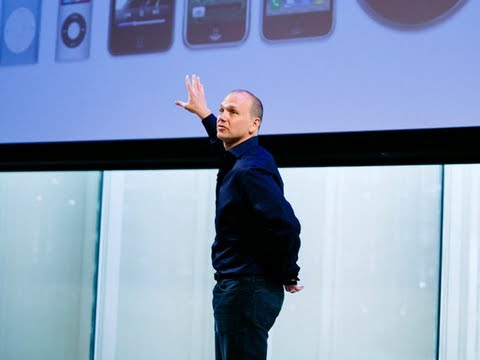
Tony Fadell (co-creator of the iPod and iPhone) on opinion-based decisions
“When you make the first version of anything—something revolutionary—there are a lot of opinion-based decisions… And when you have those opinions, and you’re trying to work with a team to implement those decisions, you have to really tell the ‘why’ of those decisions. That way everyone can feel like they’re a part of those decisions and understand the tradeoffs... A lot of times, people want a data-driven decision, but with v1s you don’t have data... If you look at most companies that are paralyzed and cannot make new innovations and new products, it’s because they’re trying to turn opinion-based decisions into data-driven decisions so that they don’t lose their jobs”
— Tony Fadell

English
Annu Augustine retweetledi

Hello X! We are hiring product managers and product designers at Jupiter for different verticals. We want to build India's most loved financial wellness app and want to get in touch with the absolute best PMs and designers.
If you have launched and grown exceptional products with minimum 1m users, please reach out to me on superdm.me/anuj
Repost for good karma!
English
Annu Augustine retweetledi

What does Sam Altman look for in a team?
As Sam looks to reverse-uno his way back onto the OpenAI board, he'll need to rebuild his team.
So what does he look for? Here's what he's said in the past:
First and foremost, you need optimists, "people who say 'you know what, we are gonna do this and it doesn't matter what the haters say. We're gonna figure this out. This problem it must be solvable.'"
Without optimism, "it's very hard to succeed when the world continues to punch you in the face."
Then they need to be idea generators. "Constantly spewing new ideas, most of them terrible." That's Altman's counterintuitive take on creativity. While you only need a few of these prolific thinkers, their offbeat concepts can unlock innovative solutions.
Altman also prizes the "we'll figure it out" attitude. Whether they have the skills or not, he loves people who confront challenges head-on.
Decisiveness is another must-have. Startups operate with imperfect data, so paralysis by analysis can be fatal. Altman wants team members who act swiftly and adapt when things go sideways.
But perhaps most surprisingly, Altman values inexperience. He's seen startups achieve the unthinkable, simply because they didn't know it was supposed to be hard. This naivety sparks fresh approaches that veterans might dismiss.
Keep an eye out for how his new team embodies these characteristics:
- Optimism
- Idea generation
- ‘We’ll figure it out’ attitude
- Decisiveness
- The blessing of inexperience
English

For a Product Management tool, @Jira is a pretty horrible product tool! Someone Save Me!
English

@Bobby_Seq @Jira No, very mixed opinions. My sense is it depends on how you configure and set it up. If you end up with a complex configuration that is frustrating you, maybe it is indicative of deeper issues.
English
Annu Augustine retweetledi

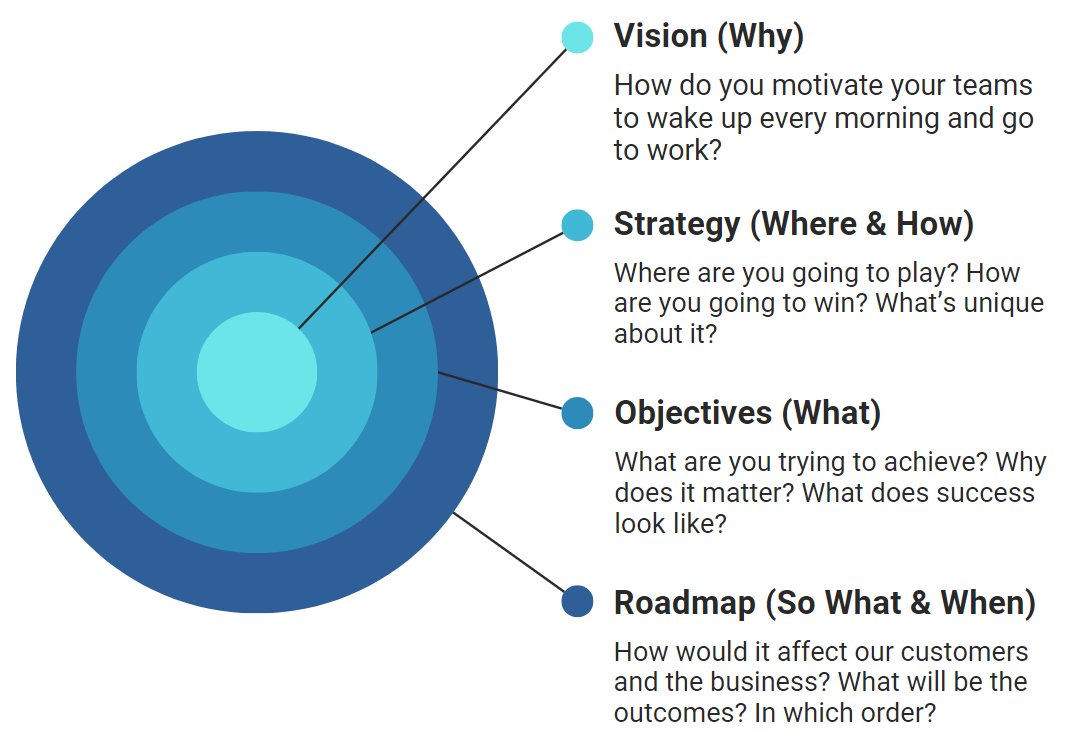
Many PMs struggle to explain the difference between Vision, Strategy, Objectives, and Roadmap.
But those are extremely simple concepts.
Let's tackle them one by one:
1. Product Vision (Why)
Product Vision is the long-term aspiration of your product. It motivates your team to wake up every morning and go to work.
For example, “Send humans to the Moon” or “Help tour operators focus on doing what they love.”
Effective vision needs to be inspiring and emotional. It becomes much more memorable when it speaks to people's hearts.
My favorite example is the JFK Moon speech: youtu.be/th5A6ZQ28pE?si…
2. Product Strategy (Where & How)
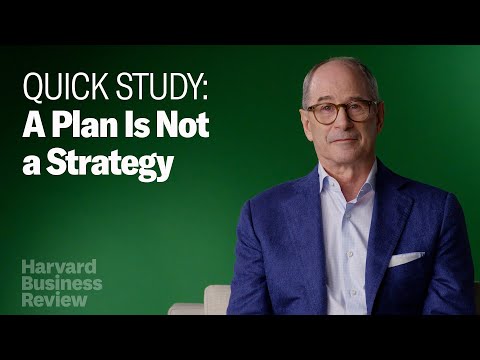
Strategy is not a plan, a goal, or a set of actions.
It's a cohesive set of choices that you believe will allow you to win (achieve your Vision) at the playing field of your choice:
- market and its constraints (e.g., geography)
- value proposition
- relative costs
- tradeoffs
- growth
The strategy should pass the “can’t / won’t test” so that competitors can't copy it without sacrificing their existing businesses.
A fantastic, short video by Prof. Roger Martin: youtu.be/iuYlGRnC7J8?si…
The Product Strategy Canvas (no email, no paywall): lnkd.in/d3w3QUwV
3. Objectives (What)
I encourage you to use the OKR framework. It's a simple, incredibly effective approach for setting, monitoring, and achieving your goals.
While following the SMART goals principle (Specific, Measurable, Achievable, Relevant, and Time-Bound), OKRs add an additional, inspirational aspect to the Objective.
I recently described how to start with OKRs in a free post: x.com/pawelhuryn/sta…
4. Product Roadmap (So What & When)
Product Roadmap is a communication tool that allows you to align everyone in the organization. It creates focus on what’s important right now. It should also explain the reasoning behind it.
In 3 Ways to Create 10X Better Product Roadmaps, I emphasized that it's extremely important to:
- Focus on outcomes, not features
- Do not commit too soon
- Shorten the planning horizon
My favorite format is the Now-Next-Later. Free article (no email, no paywall): lnkd.in/dRKgaJzb
More information:
- Vision, Mission, and Purpose are often confused, and everyone interprets them differently. I use a single term. An article by Prof. Roger Martin: rogermartin.medium.com/the-motivation…
- Some say that Vision is part of Strategy. It makes sense, as Strategy is an integrated set of choices. And you develop them together. But that’s not the most common opinion. So, during interviews, keep it simple.
Hope that helps.
What are your thoughts?
-
P.S. If you liked this, consider joining a community of 32,000+ product professionals. Get one actionable tip for PMs every Saturday: lnkd.in/djnfdris

YouTube

YouTube

English
Annu Augustine retweetledi

I came across this wonderful piece from @marcrandolph, Co-Founder of @netflix, the other day. Highly recommend reading it and internalizing it. 5 key lessons I pulled away from Marc’s reflection:
1. Everyone should have a north star - success is what you make of it; money, influence, impact, balance, intellectual satisfaction. There’s no right or wrong; it’s different for each person. The worst thing you can do is build a life around somebody else’s definition of success
2. Values are easy to have, hard to uphold - Your values shine through in difficult times - Extending Marc’s example, it’s not difficult to wrap up at 5 pm on a quiet Tuesday. In a crisis situation, it is difficult, but not impossible. If it’s truly a value, it will be upheld in rain or shine.
3. Compounding is magical - It is so difficult to measure the compounding quality of non-quantitative actions. In business, we see the impact our decisions have daily; these are easily measurable and can be measured over hyper short duration timeframes. It’s why we gravitate towards them - instant gratification.
What we don’t see however is the impact of daily decisions that aren’t easily measurable, e.g. an individual conversation with a colleague, a sit down dinner with a family member, daily inward reflection. In my experience, these decisions don’t breed instant gratification, but they are so important - they’re the source of enduring and sustainable long term gratification.
4. Balance comes from imbalance - I’ve found that the best way to achieve enduring happiness is to go “all in” on whatever you’re doing. If you’re at work - go all in; focus, be the best teammate and leader you can be. If you’re at home - do the same; be the best spouse, partner, parent, sibling, you can be.
5. Constraints force impact - This has been a learning for me as I’ve scaled myself as a Leader. The biggest challenge when you’re operating a high growth business is focus; my friend has a simple framework he uses that I love (and stole!). Every company earns the *right* to do a handful of things really well. No more, no less. Inserting constraints forces you to focus, prioritize and spend time on areas that are highest impact and highest leverage.

English
Annu Augustine retweetledi