António Filipe Fonseca

29.4K posts

António Filipe Fonseca banner
António Filipe Fonseca

António Filipe Fonseca

@antfilfon

Engineer and complexity science researcher.

Lisboa Katılım Ağustos 2010
479 Takip Edilen569 Takipçiler
António Filipe Fonseca
@tveryf na caça é o mesmo, paulada nos coelhos mal mortos e do género, quando andava aos pardais sujava as mãos todas para nada
Português
1
0
1
26
Tânia®
Tânia®@tveryf·
Adorava saber pescar.
Português
2
0
4
237
António Filipe Fonseca
@joaoc dará muita discussão na linha do "quem criou o criador" se não cair na vulgaridade do otimismo tecnológico vs o pessimismo moral
Português
0
0
0
46
João Cancela
João Cancela@joaoc·
Leão XIII, 1891: "Das coisas novas: sobre a condição dos operários" Leão XIV, 2026: "Magnífica humanidade: a proteção da pessoa humana na era da inteligência artificial" (Embirro com a expressão "pessoa humana", mas a verdade é que talvez venha a dar jeito nos tempos que correm)
James Martin, SJ@JamesMartinSJ

Some preliminary thoughts on "Magnifica humanitas," the Pope's upcoming encyclical on the care of the human person in the age of artificial intelligence, to be released at the Vatican on May 25. First, AI has been a concern of the Holy Father since at least the beginning of his pontificate, mentioned several times early on in his papacy. Just a few days ago, he established a new papal commission, bridging several dicasteries, to address this topic; and he also mentioned the topic in his recent address for the World Day of Communications. So the topic is not a surprise. The question will be: what other topics will be included: workers rights? labor unions? capitalism more broadly? Second, as someone who studied mathematics, Pope Leo XIV has perhaps a firmer grasp on this issue than some might imagine of a pope. Third, that the Holy Father will personally present the document on May 25 in the Paul VI Aula (where the Synod convened) is highly unusual. To me (and I have no inside information on this, nor have I read the document) it may indicate the Holy Father's deep personal interest in the topic, and a desire to ensure that the media "get it." Pope Leo is an expert communicator. Fourth, the Vatican has been providing guidance on this topic, in both formal and informal ways, to those who work in this field for some years, and has a surprising number of respected experts (theological and technical) in their orbit. Not long ago, at a meeting of the Dicastery for Communication, we heard from one and I was stunned by the breadth of his knowledge (at least to this neophyte). Fifth, the encyclical was signed (and therefore will be formally dated) on the 135th anniversary of "Rerum Novarum," Pope Leo XIII's groundbreaking encyclical on labor, workers' rights, unions and many other social issues, which set the stage for the modern movement of social justice in the church. Pope Leo XII is seen as the father of the modern tradition of Catholic social teaching. There were many who believed that Cardinal Robert Francis Prevost took the name "Leo" at his election as pope (his first decision after saying "yes" to his election) as a nod to this champion of social justice and workers' rights. Finally, like "Laudato Si," which recast the issue of climate change as not simply a scientific and social one, but a spiritual one, "Magnifica humanitas" may do the same for AI, helping the church and the world see this pressing topic from a spiritual vantage point and also, as "Laudato Si" did, in a systematic way. And, as an important aside, an encyclical is one of the very highest levels of church teaching. All in all, by any measure, an exciting new encyclical to read, study and pray over!

Português
3
0
14
1.3K
António Filipe Fonseca
@fcancio há muitas formas de teclar, há gente que o faz com as mãos inteiras e outra com apenas dois ou três dedos, é toda uma panóplia de possibilidades de desenvolvimento cerebral
Português
0
0
0
71
fcancio
fcancio@fcancio·
bom, nesse caso estou bem arranjada
Ihtesham Ali@ihtesham2005

A Norwegian neuroscientist spent 20 years proving that the act of writing by hand changes the human brain in ways typing physically cannot, and almost nobody outside her field has read the paper. Her name is Audrey van der Meer. She runs a brain research lab in Trondheim, and the paper that closed the argument was published in 2024 in a journal called Frontiers in Psychology. The finding is brutal enough that it should have changed every classroom on Earth. The experiment was simple. She recruited 36 university students and put each one in a cap with 256 sensors pressed against their scalp to record brain activity. Words flashed on a screen one at a time. Sometimes the students wrote the word by hand on a touchscreen using a digital pen, and sometimes they typed the same word on a keyboard. Every neural response was recorded for the full five seconds the word stayed on screen. Then her team looked at the part of the data most researchers had ignored for years, which is how different parts of the brain were communicating with each other during the task. When the students wrote by hand, the brain lit up everywhere at once. The regions responsible for memory, sensory integration, and the encoding of new information were all firing together in a coordinated pattern that spread across the entire cortex. The whole network was awake and connected. When the same students typed the same word, that pattern collapsed almost completely. Most of the brain went quiet, and the connections between regions that had been alive seconds earlier were nowhere to be found on the EEG. Same word, same brain, same person, and two completely different neurological events. The reason turned out to be something nobody had really paid attention to before her work. Writing by hand is not one motion but a sequence of thousands of tiny micro-movements coordinated with your eyes in real time, where each letter is a different shape that requires the brain to solve a slightly different spatial problem. Your fingers, wrist, vision, and the parts of your brain that track position in space are all working together to produce one letter, then the next, then the next. Typing throws all of that away. Every key on a keyboard requires the exact same finger motion regardless of which letter you are pressing, which means the brain has almost nothing to integrate and almost no problem to solve. Van der Meer said it plainly in her interviews. Pressing the same key with the same finger over and over does not stimulate the brain in any meaningful way, and she pointed out something that should scare every parent who handed their kid an iPad. Children who learn to read and write on tablets often cannot tell letters like b and d apart, because they have never physically felt with their bodies what it takes to actually produce those letters on a page. A decade before her, two researchers at Princeton ran the same fight using a completely different method and ended up at the same answer. Pam Mueller and Daniel Oppenheimer tested 327 students across three experiments, where half took notes on laptops with the internet disabled and half took notes by hand, before testing everyone on what they actually understood from the lectures they had watched. The handwriting group won by a wide margin on every question that required real understanding rather than surface recall. The reason was hiding in the transcripts of what the two groups had actually written down. The laptop students typed almost word for word, capturing more total content but processing almost none of it as they went, while the handwriting students physically could not write fast enough to transcribe a lecture in real time, which forced them to listen carefully, decide what actually mattered, and put it in their own words on the page. That single act of choosing what to keep was the learning itself, and the keyboard had quietly skipped the choosing and skipped the learning along with it. Two studies. Two countries. Same answer. Handwriting makes the brain work. Typing lets it coast. Every note you have ever typed instead of written went into your brain through a thinner pipe. Every meeting, every book highlight, every idea you captured on your phone instead of on paper was processed at half depth. You did not forget those things because your memory is bad. You forgot them because typing never woke the part of the brain that would have made them stick. The fix is the thing your grandmother already knew. Pick up a pen. Write the thing down. The slower road is the faster one.

Português
3
0
27
4.5K
António Filipe Fonseca
@al_antdp já chumbei alunos que se deixaram dormir na manhã data da avalição final, está a piorar de dia para dia
Português
0
0
3
373
Αntonio Nogueira Leite
Nas licenciaturas apanhei esta atitude, mas em versão “mild”. Nos Mestrados já se nota uma atitude mais em linha com as pessoas nascidas nos anos 80 e 90
Português
24
8
279
40.1K
António Filipe Fonseca
cada empresa de comunicação tem uma corte de parasitas que vivem à custa dos proveitos, na rtp são muitos, convidam-se uns aos outros para espetáculos e festas numa endogamia obscena, é ver o resultado
António Filipe Fonseca tweet media
Português
0
0
1
52
António Filipe Fonseca
Ninguém pensa nisto a sério, muito a sério, mas, nas redes sociais, a questão da liberdade de expressão fica a cargo das plataformas e não dos autores, porque são elas que em ultima instância decidem se o autor é ouvido ou não. É um facto.
Português
0
0
0
66
Rui Cavaleiro
Rui Cavaleiro@Rui_Cavaleiro_·
Esta foto mostra o local para onde será levado o extra-terrestre uma vez materializado em átomos. Esperamos que tudo corra bem, mas, pelo sim pelo não, puseram aquelas forte correntes em aço, não vá o ET começar a causar problemas. Deste modo termino esta série de imagens, que podemos chamar “ projeto Interstellar” (nome fictício). Não vou revelar o local nem o nome do projeto. Tenho mais desenhos de fotos que também não mostrarei.
Rui Cavaleiro tweet media
Português
2
1
11
216
António Filipe Fonseca
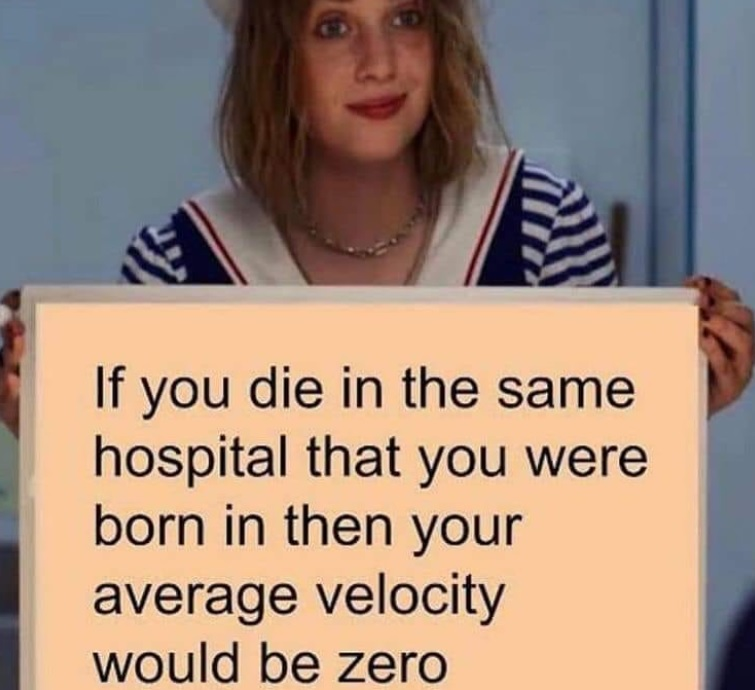
Esta está fabulosa! Quem nasceu e morreu em lisboa deve ter uma velocidade média de vida de poucos metros por ano.
António Filipe Fonseca tweet media
Português
0
0
0
44
António Filipe Fonseca
António Filipe Fonseca@antfilfon·
@_fernando_rosas Instead it worths reading Karl Friston's theory definitively, it explains consciouness, social behaviou, language and developmental psychology, if you think other humans as entities that involuntarily interfere with your cognitive model of the world.
English
0
0
0
36
Fernando Rosas
Fernando Rosas@_fernando_rosas·
I think these ideas are useful for thinking about agency, not consciousness
Big Brain AI@realBigBrainAI

Stephen Wolfram, founder of Wolfram Research, explains how LLMs are quietly dismantling our deepest assumptions about consciousness: He argues that large language models have done something philosophy and neuroscience couldn't: "In terms of consciousness, I have to say, the idea that there's sort of something magic that goes beyond physics that leads to sort of conscious behavior, I kind of think that LLMs kind of put the final nail in that coffin." His reasoning is that LLMs keep doing things people assumed they couldn't: "There were all these things where it's like, oh, maybe it can't do this, but actually it does. And it's just an artificial neural net." Wolfram then challenges a core assumption about conscious experience: the feeling that we are a single, continuous self moving through time. "I think our notion of consciousness is a lot related to the fact that we believe in the single thread of experience that we have. It's not obvious that we should have a persistent thread of experience." He points out that physics doesn't actually support this intuition: "In our models of physics, we're made of different atoms of space at every successive moment of time. So the fact that we have this belief that we are somehow persistent, we have this thread of experience that extends through time, is not obvious." Then Wolfram offers a striking origin story for consciousness itself. @stephen_wolfram suggests it traces back to a simple evolutionary pressure: the moment animals first needed to move. "I kind of realized that probably when animals first existed in the history of life on Earth, that's when we started needing brains. If you're a thing that doesn't have to move around, the different parts of you can be doing different kinds of things. If you're an animal, then one thing you have to do is decide, are you going to go left or are you going to go right?" That single binary choice, he argues, may be the seed of everything we now call awareness: "I kind of think it's a little disappointing to feel that this whole wanted thing that ends up being what we think of as consciousness might have originated in just that very simple need to decide if you are an animal that can move. You have to take all that sensory input and you have to make a definitive decision about do you go this way or that way." The takeaway is unsettling but clarifying. If LLMs can produce complex behavior from simple rules, then consciousness may not be a mystical add-on to physics. It may just be what happens when a layered enough system has to make a decision.

English
12
0
40
6.9K
António Filipe Fonseca retweetledi
Buitengebieden
Buitengebieden@buitengebieden·
Mommy orangutan and her baby.. 😊
English
141
1.1K
12.6K
232.7K
Francisco J. Viegas
Francisco J. Viegas@fjviegas·
David Attenborough,cem anos hoje. Vivo. Todos estamos gratos.
Português
3
2
133
2.1K