Alexander Pym Ata Allison

617 posts

Alexander Pym Ata Allison banner
Alexander Pym Ata Allison

Alexander Pym Ata Allison

@apaallis

Tech Founder Building scalable solutions for Africa’s future. Innovation, impact, and inclusive growth. #Atà #Àtá #KingAtà

Atàlantis™ Katılım Aralık 2023
459 Takip Edilen109 Takipçiler
Sabitlenmiş Tweet
Alexander Pym Ata Allison
Alexander Pym Ata Allison@apaallis·
To accelerate Africa's tech and industrial sectors, we must make funding as simple and accessible as ABC—Available, Borderless, and Confidence-inspiring. Available: Slash bureaucracy with one-click digital applications, AI-driven credit scoring, and government-backed venture funds that deploy capital in days, not years. Borderless: Enable seamless cross-continental investment via blockchain-based smart contracts and pan-African fintech platforms that ignore outdated currency controls. Confidence-inspiring: Mandate transparent impact reporting, escrow-protected milestones, and equity crowdfunding portals that enable everyday Africans to back local innovators with as little as $10. This isn't charity—it's unleashing a trillion-dollar engine. When a Nairobi coder or Lagos manufacturer can secure seed capital faster than ordering lunch, we'll see unicorns born in villages, not just valleys.
English
0
1
7
662
Darrel Frater ✝️
Darrel Frater ✝️@DarrelFrater·
Any founders interested in pitching my friends at EONXI tomorrow? They’re a builder-operator investment firm backing companies Pre-Seed - Series A across Tech, AI, and emerging sectors. 💰 Check Size: $250K - $750K Comment below or shoot me a DM. Happy to get you connected.
English
85
8
98
9K
𝑭𝒆𝒙𝒕𝒊
𝑭𝒆𝒙𝒕𝒊@fextified·
@apaallis Nigeria doesn’t have a crypto adoption problem. We have a leadership and policy hesitation problem.
English
1
0
3
14
Alexander Pym Ata Allison
The United States just drew the map for the future of money. Nigeria is still debating whether to look at it. While we stall, Washington has moved with unusual speed and unusual clarity. The GENIUS Act established a federal framework for stablecoins — 1:1 USD reserves, monthly audits, AML compliance, and legal legitimacy for crypto payments. The CLARITY Act is now advancing market structure rules, drawing clean lines between SEC and CFTC oversight, and explicitly protecting developers building decentralised infrastructure. This isn't hype. This is law. Signed, structured, and enforced. Meanwhile in Nigeria — a country where millions already use crypto as a daily financial lifeline, where peer-to-peer volume consistently ranks among the highest in the world — we are still in the room arguing about whether it's real. That gap isn't a technology problem. It's a mindset problem. The CBN has oscillated between banning crypto, unbanning it, and watching from a distance while Nigerians route around every restriction anyway. Our people have already voted with their wallets. The question is whether our institutions will catch up before the window closes — or whether we'll spend the next decade importing regulatory frameworks the way we import everything else. The U.S. isn't ahead because they're smarter. They're ahead because they chose to adapt instead of retreat. Nigeria has the users. The builders. The hunger. What we keep failing to match is the institutional courage to build the rules that protect them. That has to change. And it has to change now. 🔥 #Nigeria #Crypto #GENIUSAct #CLARITYAct #Web3Africa
Alexander Pym Ata Allison tweet media
English
2
1
3
97
Alexander Pym Ata Allison
Every research, every idea, every innovation I've pursued has been guided by one burning question: How does this transform the economic landscape of Africa? We sit on the lithium powering the world's electric vehicles. The cobalt in every smartphone. The cocoa in every chocolate bar. And yet — we see almost none of the value chain. We dig it up, ship it out, and buy it back as a finished product at ten times the price. I have never accepted this as our destiny. Many have called my vision of an industrialized Africa — one that designs and manufactures its own technology — a dream. They said it with a smile that meant: be realistic. I've always known better. Then Dangote built a refinery. Not just any refinery — the largest single-train refinery on earth, built on African soil, by an African. He didn't just disrupt an industry. He dismantled an excuse. Every person who said it couldn't be done had to sit with that. Dangote is one of my heroes. He is fighting to make Africa great — and winning. That's the blueprint. Vision. Resources. Courage. Repetition. The raw materials were never our ceiling. They were always our foundation. Africa will produce world-class technology. We will move from import-dependent consumers to proud manufacturers. From excavation site to innovation hub. This isn't optimism. It's a plan. And I'm building mine. 🔥 #AfricanFounders #MadeInAfrica #Industrialization #BuildInPublic #BuildHere
Alexander Pym Ata Allison tweet media
English
0
1
3
32
Alexander Pym Ata Allison
Many of us sleep on life-changing opportunities simply because of who is presenting them. We've already boxed the person in our minds — "this is my guy from back then," "he's local," "he doesn't look the part" — so we undervalue whatever they bring, no matter how brilliant. Founders know this pain too well. The first rejections often come from the people closest to them. The ones who watched them grow up. Familiarity blinds us. (They call it the "prophet in his hometown" syndrome — and it's costing people fortunes.) You build something great. Show it to your circle. They scroll past. Not because it lacks value — but because it didn't come from a clean-shaven foreigner with minimalist branding. It came from you. This mindset is especially costly in Africa. Too many of us have internalized the lie that real innovation must come from outside. That local equals inferior. Neo-colonial thinking dressed up as sophistication. That's a scam. Greatness has no accent. No dress code. No passport requirement. So the next time your classmate, your friend who's been grinding quietly, or that person you grew up with drops something that sounds crazy — Pause. Look properly. Don't let prejudice wearing the mask of "I already know them" make you miss your own blessing. Value the content. Not the packaging. The future is being built by people who look like us, sound like us, and come from exactly where we come from. Don't sleep on them. 🔥 #AfricanFounders #MadeInAfrica #Innovation #BuildInPublic
Alexander Pym Ata Allison tweet media
English
0
0
0
17
Alexander Pym Ata Allison
A Fintech Platform like OPay has 40 million users. Not one of them will ever need to know what a UTXO is. Pim Protocol's QolEx Middleware API is a single REST call — the user sees ₦5,000 deducted. The merchant receives QOL. Settlement happens on-chain, atomically, with post-quantum signatures. Blockchain invisible. Commerce auditable. KYC owned by the operator. This is what Layer-1 adoption actually looks like. #PimProtocol #QolEx #DeFi #Fintech #Web3Africa #Blockchain #Nigeria
Alexander Pym Ata Allison tweet media
English
0
0
0
20
Alexander Pym Ata Allison
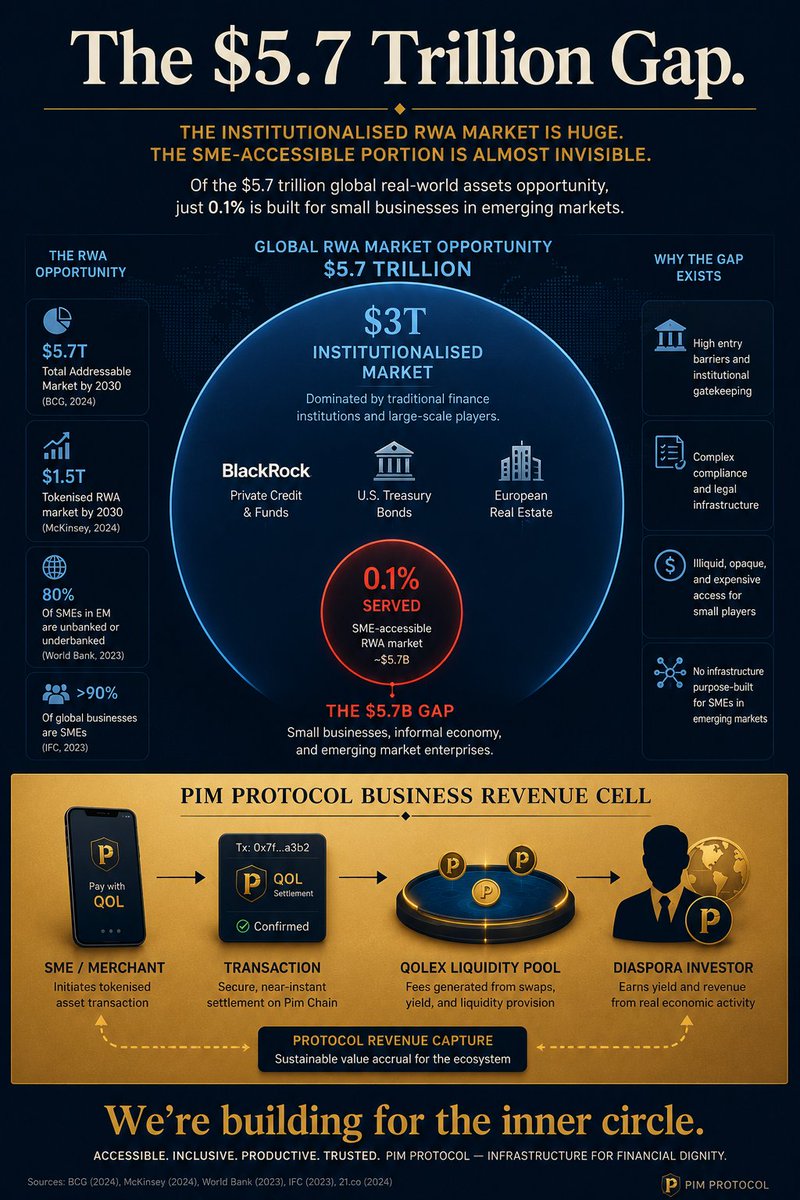
The RWA narrative in blockchain has been captured by institutional finance. BlackRock's BUIDL fund. Franklin Templeton's on-chain money market. Tokenised US Treasury products. Centrifuge financing European invoices. MakerDAO collateralising real estate loans. Every headline is about assets that already have legal infrastructure, licensed custodians, and sophisticated counterparties. The $5.7 trillion SME finance gap documented by the World Bank exists not because those solutions don't work — they work for the assets they were designed for. It exists because the 41 million Nigerian SMEs generating 46% of national GDP have no legal wrapper, no licensed custodian, no credit history, and no minimum investment that makes them viable for institutional RWA platforms. Pim Protocol's RWA approach starts from the opposite premise: the asset is the commerce itself. A Business Revenue Cell is a custom Cell type deployed on the Pim Protocol ledger. Its ValueCaptureValidator — a type script enforced by every consensus node — automatically routes a configurable percentage (α, between 0.5% and 5%) of every incoming payment into the business's QolEx liquidity pool. This is not a promise. It is an atomic ledger operation. The pool grows with every sale. Over time, this pool represents the business's entire commercial history — not as a claim on a ledger the business doesn't control, but as actual on-chain liquidity that any participant can observe, verify, and trade against. A diaspora investor in London can buy into a market cooperative in Onitsha the same way they would buy any QolEx pool token — no SPV, no custodian, no minimum investment beyond the transaction fee. The Harvest Finance Cell extends this for agricultural lending: a loan Cell that holds both principal and collateral, with a repayment schedule enforced by block height, partial collateral release on missed payments handled automatically, and DALI anomaly data capable of adjusting schedules for documented crop failure events. How does this compare to Ethereum or Polygon RWA? Ethereum RWA requires an oracle for off-chain data. Pim Protocol's BRC uses on-chain commercial activity — no oracle needed, no oracle manipulation possible. Ethereum RWA requires legal structure for custody. Pim Protocol assets are natively custodied by the ledger — the PYM Cell model. Ethereum RWA has $100,000+ minimum deployment cost for compliant structures. A Pim Protocol BRC deploys with a single transaction. The addressable market for institutional RWA is measured in trillions. The addressable market for accessible RWA — the 41 million Nigerian SMEs, the 600 million informal sector workers across Sub-Saharan Africa, the agricultural cooperatives from Kano to Kisumu — is measured in the difference between the $1.1 trillion already flowing through African mobile money and the fraction of 1% of those businesses that have ever accessed formal capital markets. That gap is not a market inefficiency. It is a design constraint of the systems that were built to serve different users. Pim Protocol was built for the users everyone else excluded. #PimProtocol #RWA #Nigeria #SME #Africa #Blockchain #FinancialInclusion
Alexander Pym Ata Allison tweet media
English
1
0
4
45
Alexander Pym Ata Allison
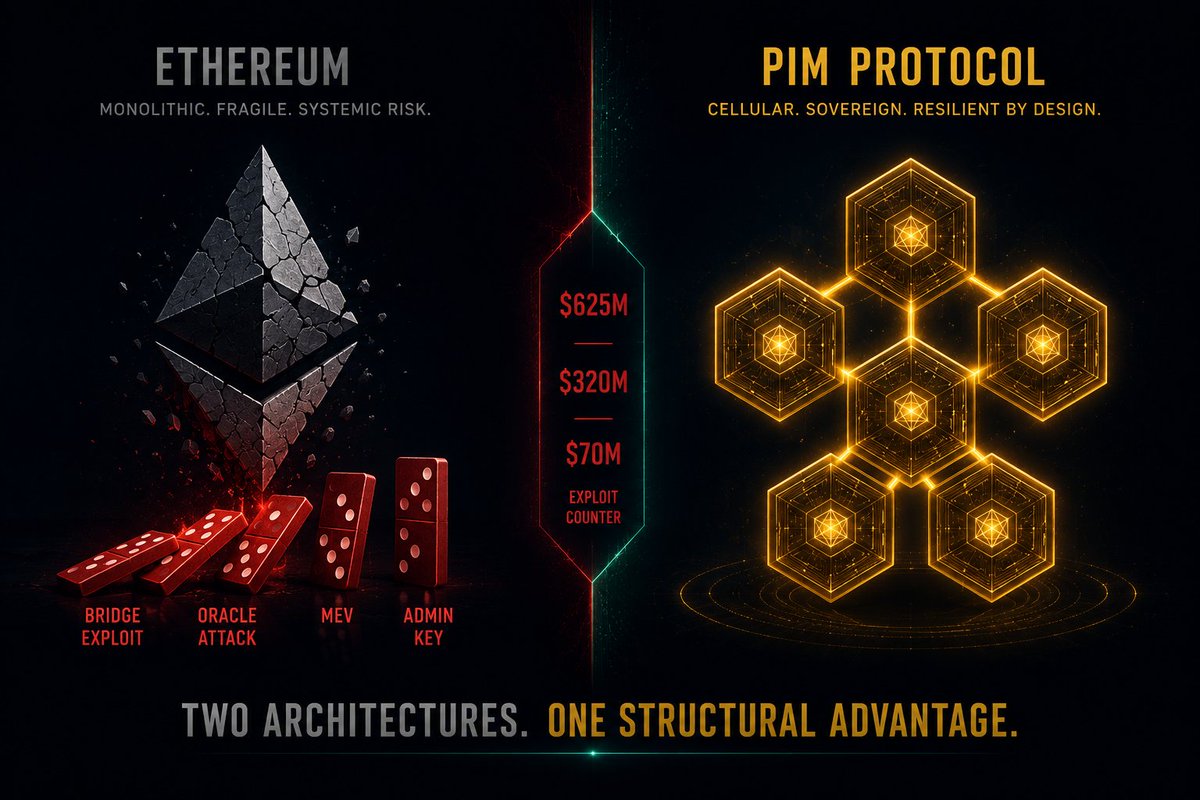
Ethereum smart contracts trust the deployer, the auditor, the oracle, and the admin key. PYM Cells on Pim Protocol trust the math. Here's the architectural difference nobody talks about: → ETH smart contracts are bytecode inside a single address. One exploit, everything drains. → PYM Cells are sovereign UTXO units. Each cell holds its own logic. No shared state to drain. → Uniswap has a pause function. QolEx has no pause function. It's protocol law — not app code. → ETH contracts can be upgraded by a team multisig. PYM Cell logic requires a network-wide hard fork to change. $625M Ronin. $320M Wormhole. $70M Curve. All structurally impossible on Pim Protocol. Not because we're smarter. Because the architecture doesn't allow those failure modes. #PimProtocol #SmartContracts #Web3 #DeFi #BuildingInAfrica
Alexander Pym Ata Allison tweet media
English
1
0
2
47
Alexander Pym Ata Allison
I want to build systems that solve real problems in Africa. Not the polished version of Africa. The real one. Where a market woman in Lagos can't get a loan because she has no credit history — only 30 years of trading. Where a founder with a working business can't raise because he's the wrong geography for the wrong VC. Where the naira loses 50% of its value and wipes out savings that took a decade to build. Where an SME pays 25%+ interest just to access working capital. Where power goes out and kills a cold chain, a print run, a production day. Where wealth is built by a few at the top while 90% of businesses — the ones that actually employ people — stay stuck. Africa has 125 million SMEs. A $331B funding gap. And systems designed for someone else's economy. The opportunity isn't charity. It's infrastructure. That's what I'm building. #BuildingInAfrica #FinancialInclusion #AfricanSMEs #StartupAfrica #Nigeria
English
0
1
2
25
Alexander Pym Ata Allison
Innovation has an entry fee. Looking stupid for a long time. Pissing people off. Hearing no until it stops meaning anything. Most people quit before the breakthrough. That's why the breakthrough belongs to the ones who don't.
English
0
0
0
17
Alexander Pym Ata Allison
I used to think the "we don't need another L1" crowd was right. I was wrong. Not because more L1s are inherently good — most aren't. But because none of the existing ones were actually built for where I come from. Nigeria. West Africa. Emerging economies. The gap isn't about making crypto available here. Apps can do that. The gap is deeper: There is no blockchain infrastructure designed to be the economic substrate from which a market woman's Ajo group becomes a DAO. From which a cooperative in Onitsha governs its own treasury without a lawyer. From which a $3 chip in a fishing net off the Niger Delta coast earns and pays autonomously. From which a small business builds real equity — not exposure to someone else's token. That is not a DeFi problem. That is an infrastructure problem. Existing L1s were built for people who already have access to financial systems and want a better version of those systems. I am building for people who have never had access — and who have been building their own financial coordination systems for 500 years without any help from Wall Street or Silicon Valley. The Ajo. The Esusu. The rotating credit association. These are not primitive. They are sophisticated. They just need infrastructure that matches their sophistication. That is what #PimProtocol is. Not another L1. The right L1 — for the economies everyone else forgot to build for.
Alexander Pym Ata Allison tweet media
English
0
0
0
18
Alexander Pym Ata Allison
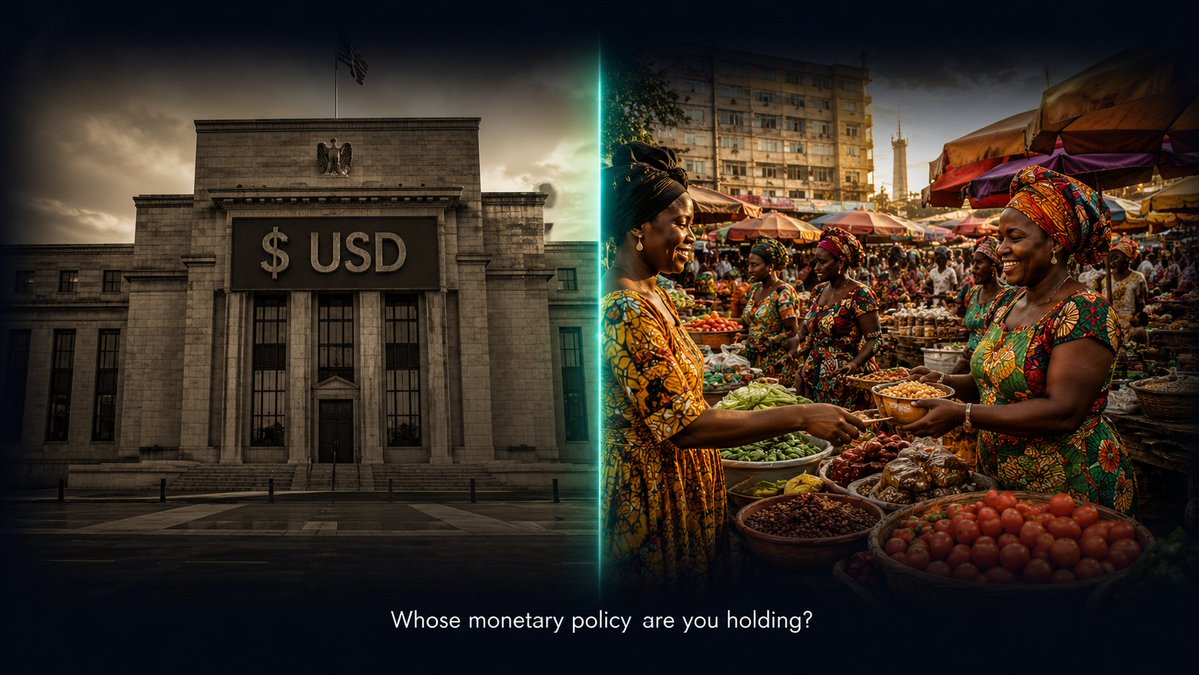
What makes something "money"? Economists say: store of value + medium of exchange + unit of account. QOL is designed to be all three — but it starts with the one that matters most for the billions of unbanked people: A unit of account that reflects THEIR economy. Not Wall Street's. Let's break it down. 1. Every USD-pegged stablecoin is a unit of account for the US Federal Reserve's monetary policy. When the Fed raises rates, your USDT purchasing power shifts. When US inflation runs hot, your USDC savings erode in real terms. You're not using the world's reserve currency. You're using the world's reserve policy. QOL is anchored to energy costs. Real energy costs, cryptographically verified, on the Pim network. Calibrated to the actual hardware costs of actual nodes — including a $3 ESP32 in a Nigerian market stall. 2. A unit of account only works if prices can be stably expressed in it. QOL targets 1–2% daily volatility. Not zero — zero is a peg that can be broken. 1–2% is a mathematically enforced band, maintained by six independent stability mechanisms: → DemandFactor [0.5–1.5×]: minting adjusts to real network demand → PoEC EQCF: calibrated to real energy costs, not guessed → PVT Buybacks via QolEx: automated market stabilisation → Satoshi's Wormhole: QOL burned when privacy fees are paid → SRP Reserve: PYM-funded buyback pool that grows with honest node activity → Emergency Circuit Breaker: hard stop during extreme events Six mechanisms. One target. 1–2%. 3. Prices expressed in QOL are more honest than prices expressed in USD stablecoins. A bottle of palm oil priced at 0.5 QOL reflects the energy economy of West Africa — the actual supply chains, the actual logistics, the actual energy costs of the system that produces and distributes it. A bottle of palm oil priced at $0.50 USDC reflects the US Federal Reserve's current policy stance. For a market woman in Onitsha, one of these is real money. The other is someone else's monetary policy. 4. QOL is designed to become the unit of account for the Pim ecosystem. Every new token listed on QolEx must pair with QOL as the reserve asset. Developers bootstrapping liquidity must acquire QOL. Merchants accepting the new ecosystem token trade through QOL. Every AGRO, every FISH, every cooperative token — priced in QOL. This isn't accidental. It's structural demand engineering. A unit of account only works when the economy adopts it. Pim Protocol makes QOL adoption structurally necessary — not optional. #PimProtocol #QOL #MonetaryPolicy #FinancialInclusion #Nigeria #UnitOfAccount #Web3Africa
Alexander Pym Ata Allison tweet media
English
0
0
0
13
Alexander Pym Ata Allison retweetledi
Founder’s Hub
Founder’s Hub@JoinFoundersHub·
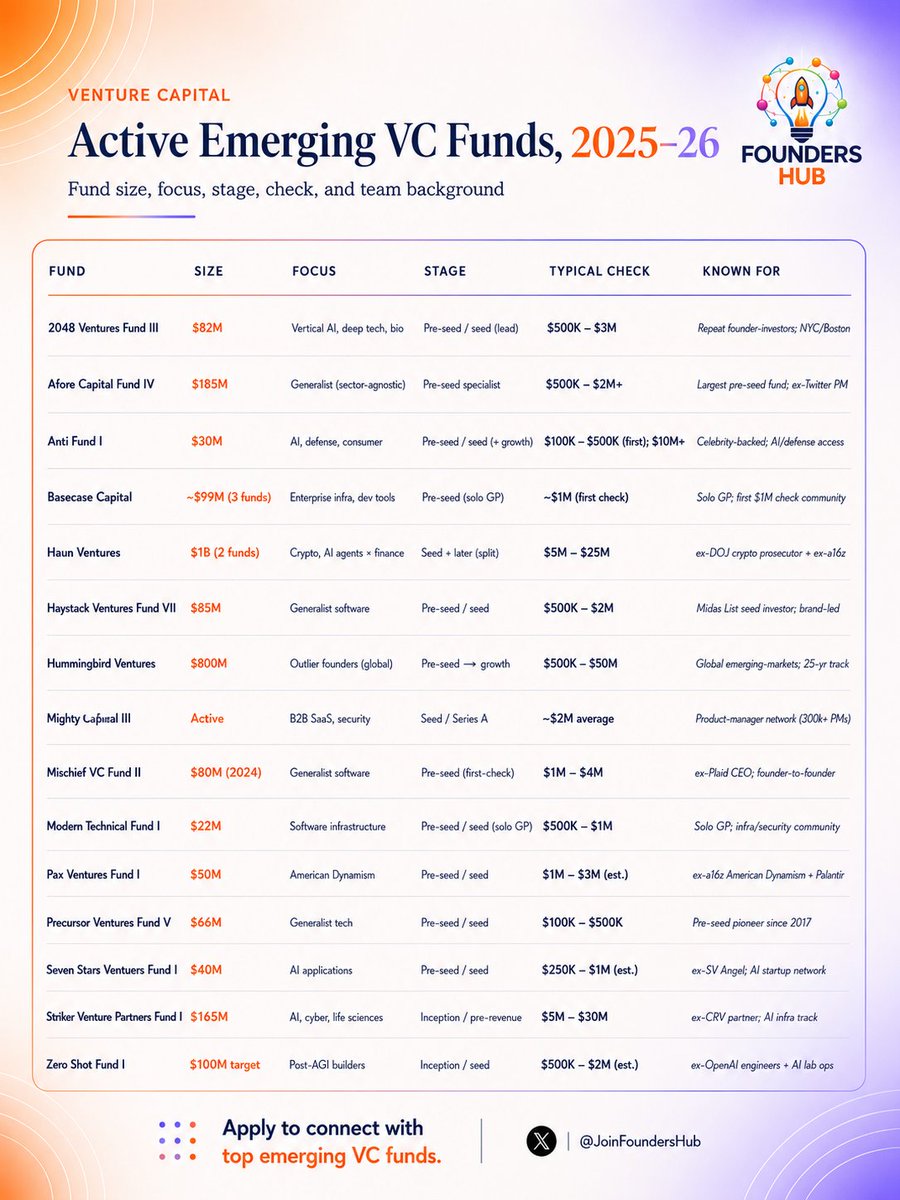
For founders raising soon, here's a curated list of VC funds with fresh 2025/2026 vintages and capital ready to deploy.
Founder’s Hub tweet media
English
4
11
87
4K
Alexander Pym Ata Allison
They said the market was too small. They said the infrastructure wasn't ready. They said wait for a "better time." THE FOUNDERS WHO CHANGE AFRICA WON'T WAIT FOR PERMISSION. No VC check? Bootstrap harder. No warm intro? Build the proof they can't ignore. No roadmap? You're drawing it. The most valuable companies on this continent will be built by someone who refused to hear "no" — and kept shipping anyway. That someone is you. #AfricanFounders #StartupAfrica #EmergingMarkets #BuildInAfrica
Alexander Pym Ata Allison tweet media
English
0
0
0
25
Andrew Dev
Andrew Dev@just_andydev·
@Ox_god__ That's the sweet part, I don't have to. When last did you let your phone die?
English
2
0
3
175
Andrew Dev
Andrew Dev@just_andydev·
What if Lagos built its own internet? Not through a provider. Through the millions of devices already in the city. Every phone. Every laptop. A node in a decentralized network that no ISP controls and no government can switch off. The technology exists. Lagos has the population to make it viable.
English
18
9
49
5.5K
Alexander Pym Ata Allison
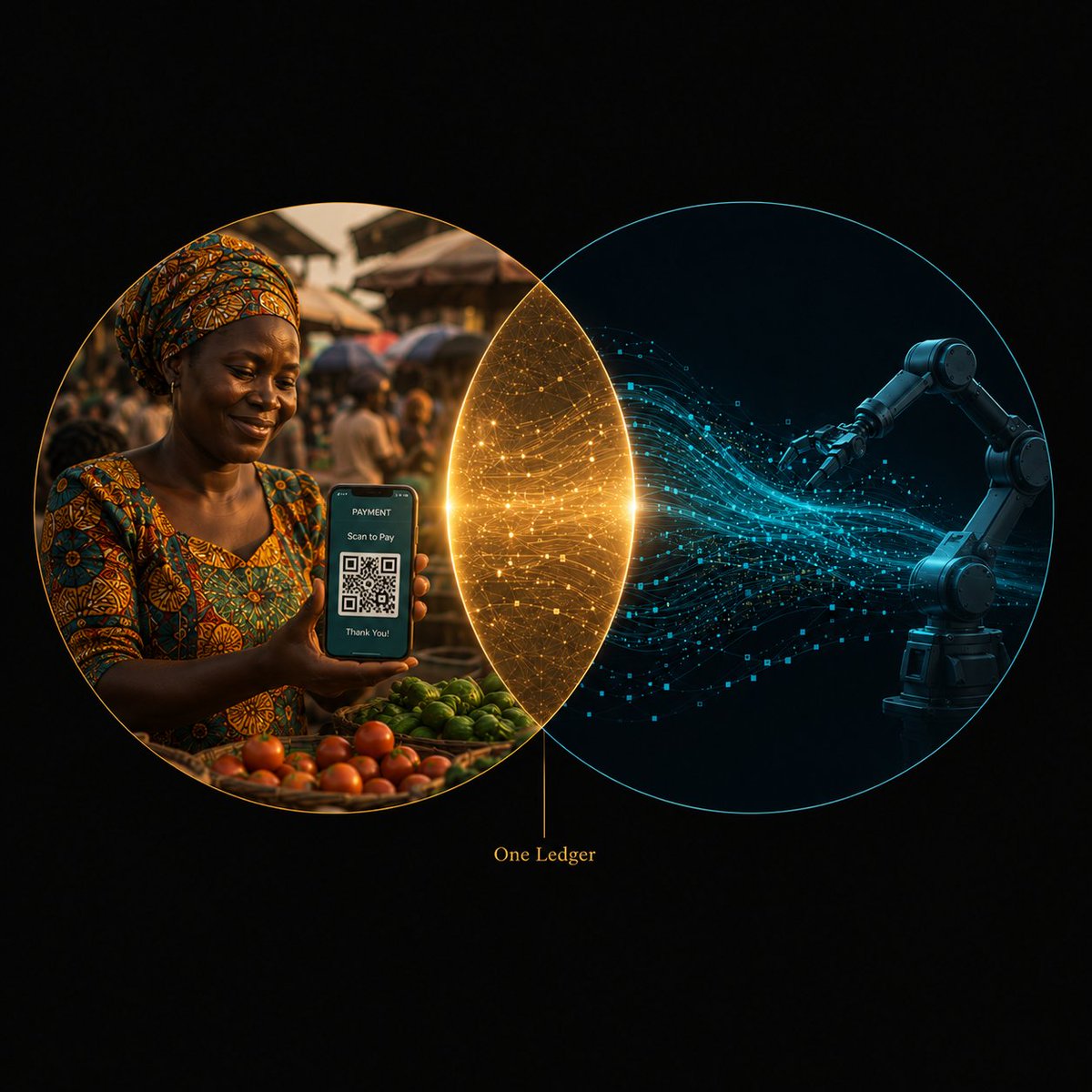
People ask me: are you building for AI agents or for people? Yes. The Pim Protocol serves both because the infrastructure requirements are the same. An AI agent needs: fast, atomic, cryptographically constrained financial operations. A market woman in Lagos needs: fast, atomic, trustless financial operations that don't require a bank. Different contexts. Same protocol. Same ledger. The agentic era and the financial inclusion era are not separate problems. They are the same problem — who gets access to financial infrastructure that actually works. #AIAgents #FinancialInclusion #PimProtocol #M2MEconomy #BuildingForEveryone
Alexander Pym Ata Allison tweet media
English
0
0
2
30
Alexander Pym Ata Allison
100 followers. 🎉 To every single one of you — thank you. Whether you've been here from the start or just found your way here, it genuinely means a lot. This little corner of the internet feels a lot warmer because you're in it. Here's to more conversations, more ideas, and more moments worth sharing. 🙏 The best is still ahead. 🚀 #100Followers #Grateful #Milestone
Alexander Pym Ata Allison tweet media
English
0
0
1
26