

Alison Presmanes Hill
7.8K posts
Alison Presmanes Hill
@apreshill
Leading product @Pixeltable
Katılım Nisan 2015
2K Takip Edilen14.5K Takipçiler


I broke Google Gemini yesterday and got a glimpse into its internal monologue.
Strong Bart Simpson energy.
Claude counted ~4,000–5,000 repetitions of "I will output the response."
We laughed. Good times. 🤣 #AIFails #AdventuresinAI

English
Also shipping:
🔲 Bounding box UDFs — crop, draw, scale, transform
📚 Migration guides for LangChain, LlamaIndex users
Changelog: docs.pixeltable.com/changelog/chan…
Compare: github.com/pixeltable/pix…
#MultimodalAI #Python #OpenSource #GenerativeAI
English
🎥 Primetime Workshop — 3-part YouTube series from our January workshop with @hugobowne and Vanishing Gradients
Acts 1 & 2 live, Act 3 coming soon
Watch: youtube.com/playlist?list=…
Code: github.com/pixeltable/pxt…
English
If you are into multimodal AI (or just multimodal curious), March was a good month 🍀
You can now generate images (@bfl_ml FLUX), edit them (@OpenAI inpainting/outpainting), resize videos, concat clips, and embed it all (@GeminiApp multimodal) — in the same @pixeltablehq pipeline. 🧵
English
Alison Presmanes Hill retweetledi

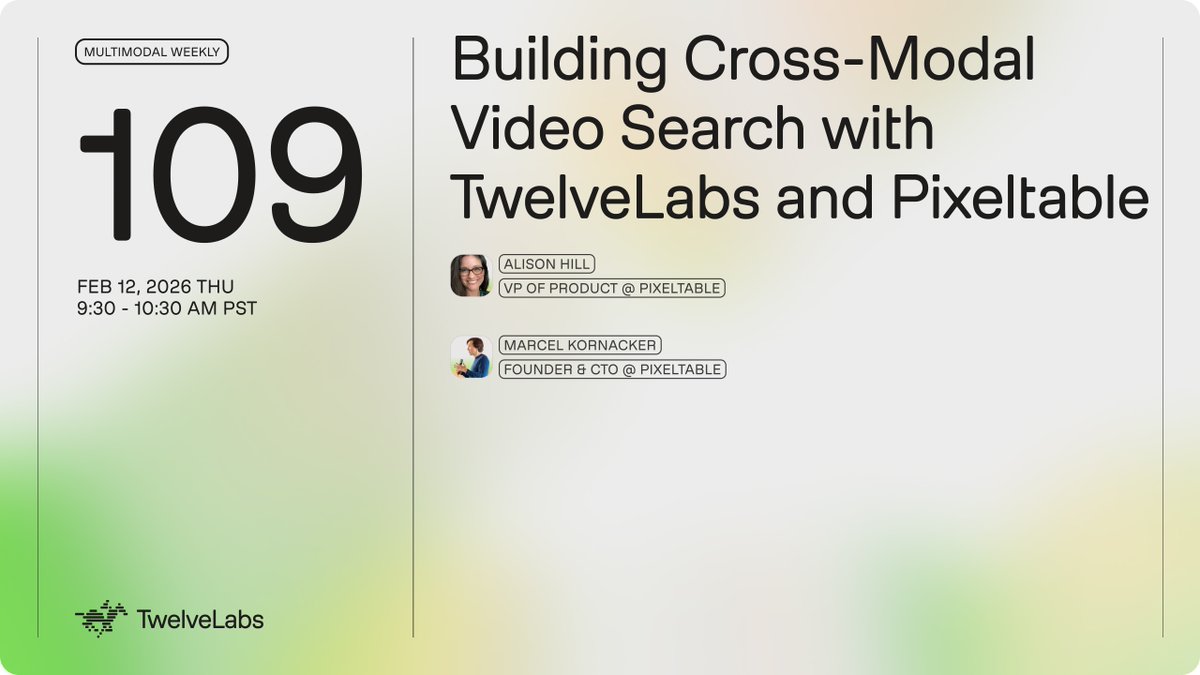
In the 109th session of #MultimodalWeekly, we are excited to welcome @apreshill and Marcel Kornacker from the @pixeltablehq team.
They will walk you through the process of developing a production-ready cross-modal video search system combining @twelve_labs Marengo 3.0 model with Pixeltable's declarative data infrastructure for multimodal AI. ♻️
Register for the webinar here: mailchi.mp/twelvelabs/mul… ⬅️
English
Alison Presmanes Hill retweetledi

"I think we'll see for many types of software a shift away from Python" -- @wesmckinn (creator of pandas)
Why? When agents write the code, human ergonomics stop being the bottleneck.
(He also thinks we'll use more Python — because we're building 100x more software.)
I caught up with Wes about his thoughtful & spicy take.
Full conversation in comments.
English
Alison Presmanes Hill retweetledi
"I do think we'll see for many types of software, a shift away from Python towards other programming languages."
"We're going to be using everything more, a lot more, including Python."
— @wesmckinn (creator of pandas)
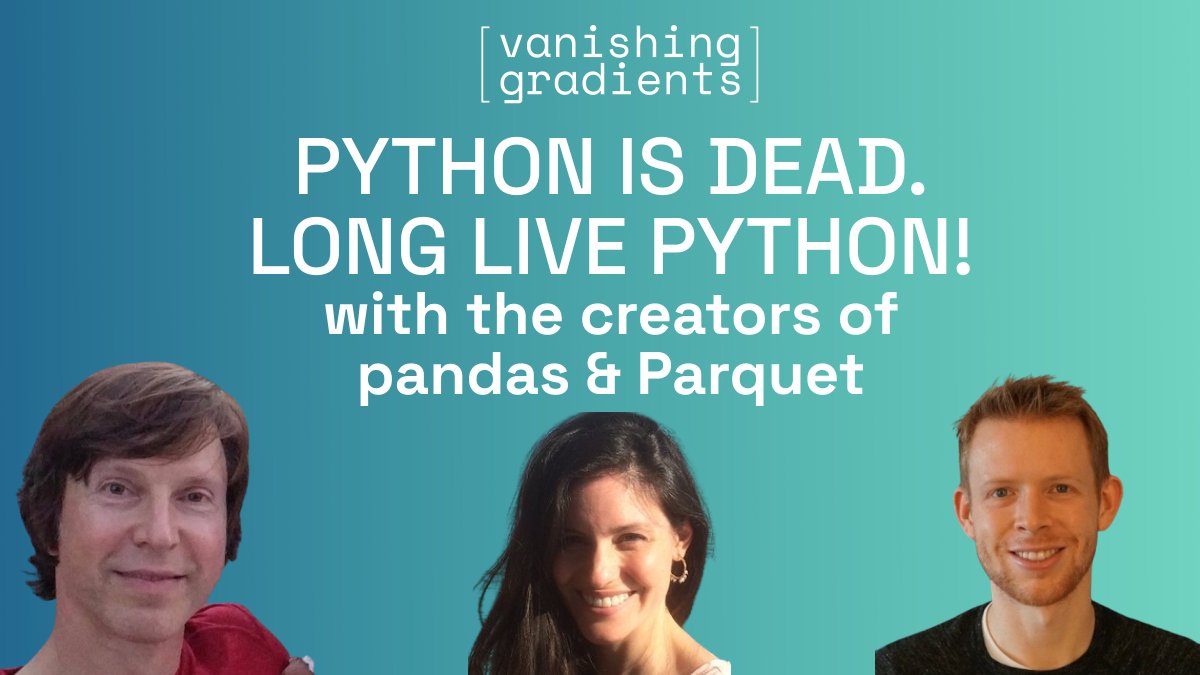
Full podcast with Wes, Marcel Kornacker, & @apreshill out now: hugobowne.substack.com/p/python-is-de…
English
Alison Presmanes Hill retweetledi
"Multimodal is still seen as a niche. But multimodal data is everywhere."
Marcel Kornacker (co-creator of Apache Parquet, founder of @pixeltablehq) on why most companies are sitting on untapped video, audio, and image data, and why the tooling is finally catching up.
Check out the podcast with Marcel, @apreshill, & @wesmckinn to hear how you can work with multimodal data today, so you're not leaving all that valuable signal on the table 👇
hugobowne.substack.com/p/python-is-de…
English
Alison Presmanes Hill retweetledi

Spring 2026 @CMUDB Seminar Series: PostgreSQL vs. The World
db.cs.cmu.edu/seminars/sprin…
Starts Mon Feb 2nd @ 4:30pm EST. We will alternate between a speaker from either a @Postgres DBMS or a non-Postgres DBMS.
Open to the public over Zoom. All videos available on YouTube afterwards.

English
Alison Presmanes Hill retweetledi
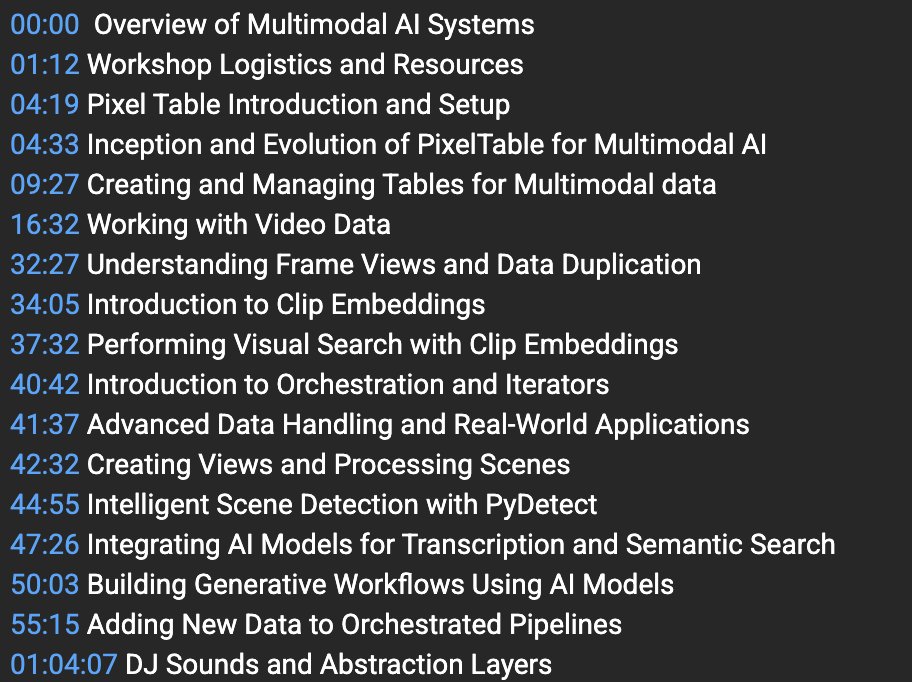
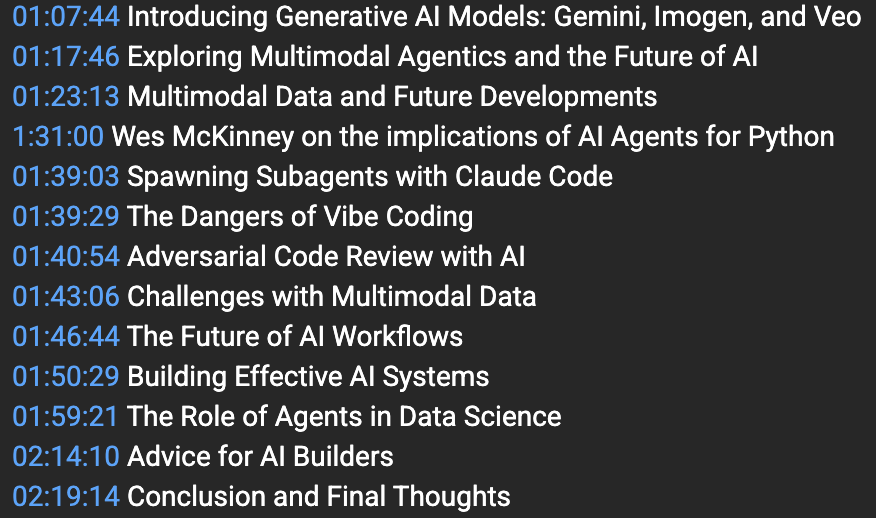
Want to learn how to Build Scalable Multimodal AI Systems?
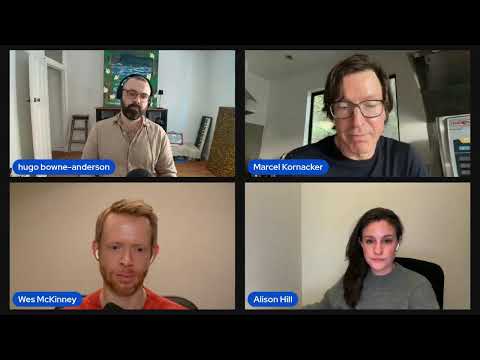
On Friday I did a workshop with the experts: Marcel Kornacker (@pixeltablehq, co-creator of Apache Parquet, Impala) & @apreshill (Pixeltable, former product lead for R Markdown, Quarto, and conda).
@wesmckinn (@posit_pbc) joined us for a fireside chat about the future of multimodal AI & the implications of agentic coding for Python.
Some topics we covered 👇
Full workshop here: youtube.com/live/UwdpNxHZD…
YouTube
English
Alison Presmanes Hill retweetledi
"Much of the industry will be writing less and less [Python] given the agentic-loop productivity benefits of Go and other modern compiled languages." -- @wesmckinn McKinney (creator of pandas)
Wes’ thoughtful (and spicy!) take is well-taken. If agents are doing the writing, human-first ergonomics stop being the bottleneck.
I'm doing a fireside chat with Wes, @apreshill, & Marcel Kornacker tomorrow. It's all about multimodal AI but I'd have to fire myself if I didn't ask Wes about this.
We'd love to see you there.
See comments for links.


English
Alison Presmanes Hill retweetledi

To our 165+ registered workshop participants - we are so sorry to postpone our "Building multimodal AI workflows with Pixeltable" workshop with @hugobowne and @wesmckinn that was scheduled for this week.
We have set a new date at the end of January, which gives us PLENTY of time to hear more from you all before the workshop and help you make the most of your #multimodal data in the new year.
Please use our @pixeltablehq GitHub discussion thread here to chime in, or just let us know you are excited to join us next year!
github.com/orgs/pixeltabl…
Also thank you to all the lovely people who sent me texts and DMs to get better soon- luckily I'm well but thank you for the well wishes! Stay healthy this holiday 🌟

English
I am looking for a #Python tutorial on wrangling nested data structures: exploring complex dicts/lists, extracting elements, iterating elegantly.
The spiritual equivalent of @JennyBryan's purrr tutorial for #rstats users. Not 'hello world' level, but the 'I got messy JSON from an API, now what?' level.
Recommendations?
jennybc.github.io/purrr-tutorial…
(also from TAing with her on this content, this gif always hit 🤣🥤🫗)
GIF
English