Ardavan M. Khoshnood

1.9K posts

Ardavan M. Khoshnood banner
Ardavan M. Khoshnood

Ardavan M. Khoshnood

@ardavank

Associate Professor | MD, PhD | Intelligence & Counterintelligence | Criminology & Violence Research

Malmö, Sweden Katılım Ocak 2011
333 Takip Edilen5.5K Takipçiler
Sabitlenmiş Tweet
Ardavan M. Khoshnood
Ardavan M. Khoshnood@ardavank·
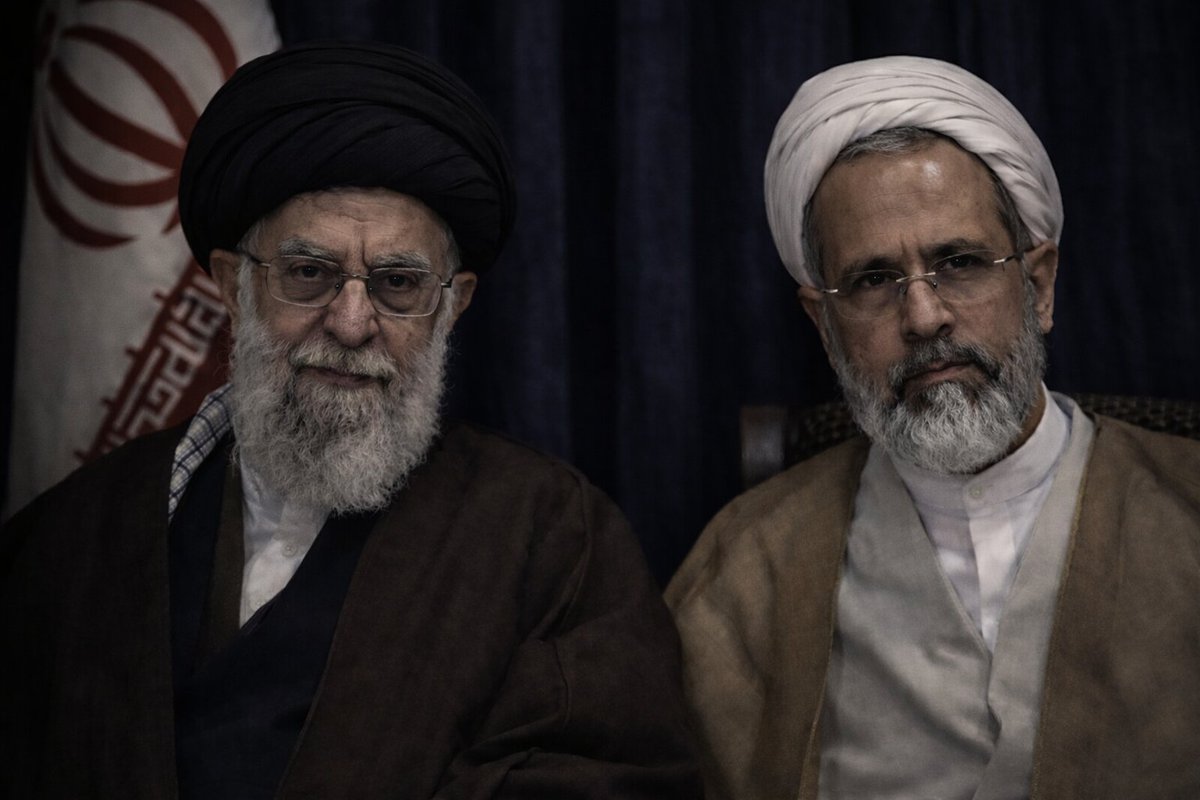
Five years ago (Jan 14, 2021), in a paper for the Begin-Sadat Center for Strategic Studies (@BESA_Center), I outlined the most likely succession scenarios after the death of Ali Khamenei (besacenter.org/when-khamenei-…). Among the probable outcomes: ➡️ Status quo transition ➡️ A Council of Leadership ➡️ Or figures such as Alireza Arafi emerging as compromise candidates. One year ago, in Iran im Diskurs (@IranDiskurs, Nr. 5, August 2025), I revisited and updated that assessment — again identifying Arafi as a structurally plausible successor due to his low public profile, Guardian Council position, and acceptability across elite factions (irandiskurs.de/nr-5-sommer-20…). Now Arafi has been elevated to the Leadership Council. It remains unclear whether he will ultimately become the next Supreme Leader — and even more uncertain which path the Islamic Republic will take, if it survives this transition intact. But do not be surprised if events move quickly. A new Supreme Leader could be selected within 72 hours.
Ardavan M. Khoshnood tweet media
English
0
5
23
2.1K
Ardavan M. Khoshnood retweetledi
Magnus Berntsson
Magnus Berntsson@MagnusBerntsson·
Idag hade jag äran att välkomna HKH kronprins Reza Pahlavi till riksdagen. Han mötte ett brett politiskt deltagande och fick både skarpa och kritiska frågor om sin vision för Iran. Vi kristdemokrater vill se ett fritt, demokratiskt och fredligt Iran och @PahlaviReza presenterar det mest seriösa alternativet för en sådan övergång. Dagens samtal stärkte den bilden. Fler borde lyssna.
Svenska
613
1.7K
4.3K
55.8K
Ardavan M. Khoshnood retweetledi
Filippa Fernqvist
Filippa Fernqvist@tv4filippa·
Bevakade Irans exilprins Reza Pahlavis Sverigebesök idag och direktrapporterade i TV4 Nyheterna, Nyhetsmorgon och Nyhetsdagen.
Svenska
42
190
464
5.6K
Ardavan M. Khoshnood retweetledi
Alice Teodorescu Måwe
Alice Teodorescu Måwe@alicemedce·
Iraniernas kamp för frihet är i allra högsta grad en angelägenhet också för oss. Ett oerhört starkt tal av kronprins Pahlavi om vad som står på spel. Ner med mullorna!
Alice Teodorescu Måwe tweet media
Svenska
301
1.2K
3.5K
22.9K
Ardavan M. Khoshnood retweetledi
Reza Pahlavi
Reza Pahlavi@PahlaviReza·
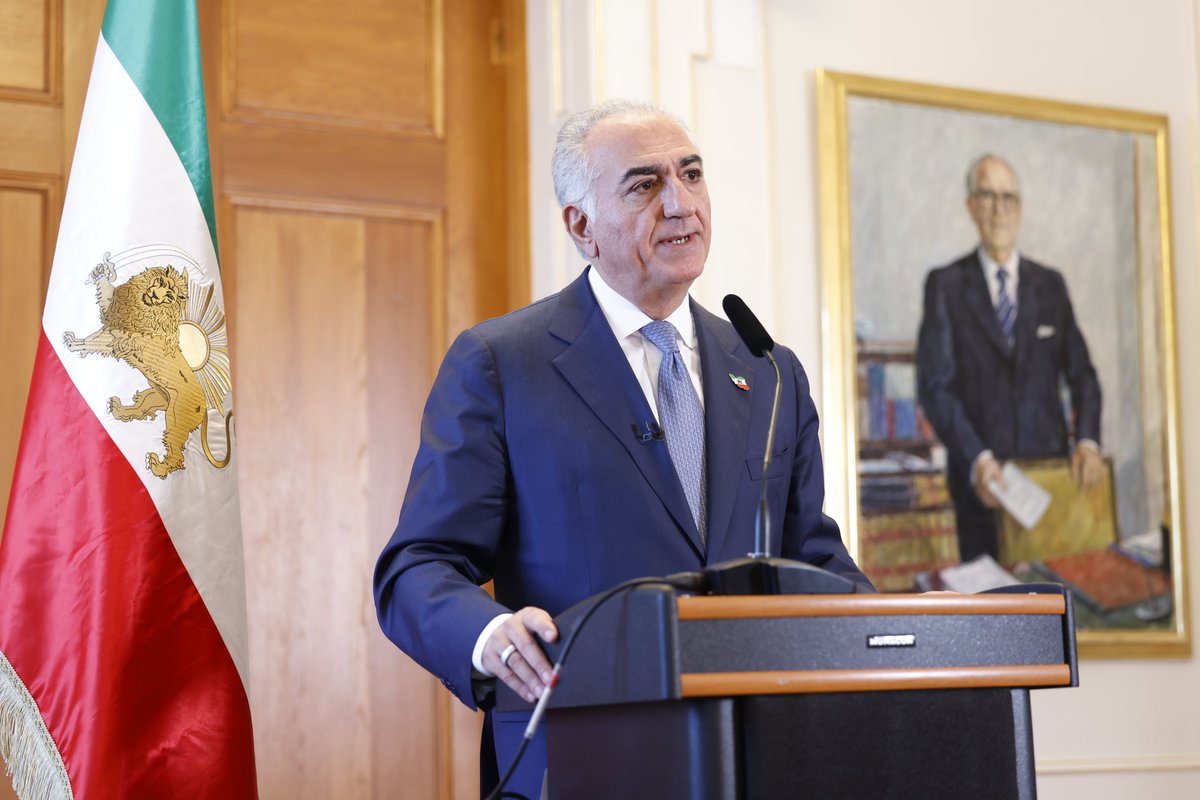
My remarks today at the Swedish Parliament: "Esteemed Members of the Riksdag, Ladies and Gentlemen, I stand before you today, not to speak of policy abstractions or diplomatic courtesies. I stand before you to speak of a people — a great, ancient, and proud people — who at mortal cost, are fighting for freedom. What is unfolding across Iran is not simply a political dispute. It is not a contest between factions within a system. It is something far more elemental: a national reckoning between a civilization, and a ruthless regime that has occupied it for nearly half a century. Since inception, the Islamic Republic has not behaved as a state among states. It has operated as a revolutionary enterprise — exporting instability through proxies, subverting its neighbors' sovereignty, fueling conflict from Baghdad to Beirut, from Sanaa to Damascus, and advancing its nuclear ambitions beneath a fog of denial. It has not sought a place in the community of nations. It has sought to overturn that community. Yet something irreversible has now changed inside Iran. The battle in my country today is not between reformers and hardliners. It is between occupation and liberation. It is a battle for the soul of a nation. What we are witnessing is not a fleeting protest movement. It is a generational revolt — the most profound uprising in Iran since 1979 — uniting workers and students, women and minorities, professionals and poets, and yes, even elements within the state apparatus itself. Together, they have rendered their verdict: this regime has forfeited all legitimacy. Indeed, it is a revolt against the 1979 revolution itself. When legitimacy dies, power begins to crumble. The regime understands this — which is precisely why it silences voices, shuts down the internet, and turns weapons against unarmed citizens. And the cost has been heartbreaking — a cost that demands this noble chamber bear witness. Men and women are being slaughtered in the streets and in their homes. More than 40,000 Iranians were massacred in a single week. The regime's operatives hunted wounded protesters in hospitals and executed them in cold blood. Bodies were collected by dump trucks. Families were forced to search through rows of unmarked body bags. 40,000… The number is almost too large to comprehend. Too abstract. It allows too many in the outside world to look at it like a mere statistic. So let me tell you some of their names and stories. Consider Hamid Mahdavi, the 38-year-old firefighter from Mashhad, who spent his final moments carrying wounded protesters to safety—only to be shot dead by regime forces for the crime of saving lives. Think of Sina Kazemi, 22 years old. He was in his final term of engineering school. He had a lifelong passion for music and technology. He chose to fight for his and his nation’s dignity. He was looking forward. Security forces shot him in the back of the head. In Bushehr, nurse Mansoureh Heydari and her husband, teacher Behrouz Mansouri, were shot dead side by side while protesting peacefully. They left behind two young children, ages 8 and 10 — a family destroyed for daring to dream of freedom. Twenty-eight-year-old biotechnology student Negin Ghadimi went out to protest despite her father’s pleas. Mortally wounded, she died in his arms whispering, ‘Dad, I’m burning’— a bright future stolen in a single night of terror. But the terror is not over. It continues every day. Access to the Internet is still blocked. And while the people of Iran are disconnected from the world, the regime continues to kill. Today the media speak of a ceasefire. What ceasefire? There has been no ceasefire in the Islamic Republic’s war on the people of Iran. At check points that mark most every street, regime thugs and their imported terrorists harass, beat, and murder innocent Iranians. For those who cry of war and its costs, this is the war you should be speaking of: the Islamic Republic’s war on my compatriots. That war that rages on everyday, far from the headlines of your Western newspapers, and the minds of your television producers. But they are not far from my mind. My brave compatriots continue to resist. Many stand with broken bodies but unbreakable wills. They would rather die standing than live kneeling. So would I. Churchill understood such a people when he said that nations do not die when their soldiers fall — they die only when their spirit surrenders. I am here to tell you, Iran’s spirit has not surrendered and it never will! Despite its brutality, the Islamic Republic is closer to collapse today than at any point since 1979. And one fact is now beyond dispute: the Iranian people will never accept a repackaged version of this regime. Too much blood has been spilled. Too many graves have been dug. The demand is not for a kinder jailer. The demand is for freedom. There is a military dimension to these events that this chamber is watching closely, and I will not pretend otherwise. But I say to you: however the military operation currently on pause turns — whether it accelerates the Islamic Republic's fall or merely deepens the fractures within it — the outcome of Iran's revolution will not be determined by any force from the outside. It will be determined by the Iranian people themselves. The Lion and Sun Revolution — the uprising that the people of Iran ignited in January with their own blood and their own courage — cannot be extinguished by any regime calculation, any diplomatic maneuver, or any military result. The people started it. The people will finish it. If the military operation pushes the Islamic Republic into the historical abyss where it belongs, we will be there — ready, organized, and determined — to build what comes after. And if the regime survives the immediate storm, we will continue the revolution until it is complete. We began this journey. We will see it to its end. History has given us no other choice. When I look at Europe, I see ambivalence and a continued inability to see the reality of the streets of Iran. I am disappointed, yet not surprised, at the rush to engage this criminal regime. The regime that has murdered tens of thousands of its own citizens. The regime is sponsoring terrorism on the streets of Europe, including in Sweden. The regime is threatening and blackmailing European Governments with hostages and violence. The Europe I believe in is supposed to stand for human rights, democracy, and equality. It has a proud record in previous struggles - fighting apartheid in South Africa, supporting the Solidarity movement in Poland, and now in backing Ukrainians in the fight for sovereignty. So why should Iran be different? Are Iranians’ human rights less important? Are their lives worth less? Perhaps to some, but not to us. Sadly this is not new. For decades Europe has appeased and emboldened this terrorist regime. It has been a policy that has helped this Regime survive and kill its own people. I hope the Swedish Government will press the European Union and other countries to stand with the people of Iran and their struggle for liberty. I am pleased and heartened that so many members of the Riksdag, across multiple parties, are here today to hear a message from the people of Iran. On behalf of my compatriots who are far too often silenced, thank you. Esteemed members of this Riksdag, this is no longer distant geopolitics — it is a security emergency on Swedish soil. The Swedish Security Service, SÄPO, together with the Swedish Police Authority, has confirmed that the Islamic Republic of Iran operates within Sweden through criminal proxy networks. These are not surveillance operations alone. They carry out acts of intimidation and violence — targeting Jewish communities, Iranian dissidents, and Swedish citizens at large. On the third of March this year, shortly after the outbreak of the current conflict in the Middle East, SÄPO issued an urgent public warning of a heightened threat level.This is not speculation. This is a statement from your own security services. And here is what makes this threat particularly corrosive: the criminal networks that Tehran employs do not cease to exist between assignments. They are embedded in Swedish society. They are the same networks already identified as a major internal threat to public safety. Sweden has responded with resolve. You have restricted visas for Iranian embassy staff. You prosecuted Hamid Noury for crimes against humanity under universal jurisdiction — setting a historic precedent. But it did not last. Sweden returned Noury to Tehran where he was given a hero's welcome by his fellow murderers. While he was allowed to return to boast of his crimes on state television, Dr. Ahmadreza Djalali was forced to continue to suffer in the regime’s torture chambers. It was ten years ago that he was taken. And he is still captive. Decisions like this embolden the Islamic Republic to take more hostages, to commit more crimes, and to further defy the world. A French senator told me a few months ago: our governments have become hostages to our hostages. But governments still have a choice whether to give in to blackmail or not. Václav Havel once said that the only genuine security in the world is a security rooted in truth. The truth is, as long as this regime remains in power, Sweden and the free world will not be safe. Why did Sweden join NATO? Because of Putin’s war of aggression against Ukraine. That decision was correct. And it was necessary. Let us not forget that the Islamic Republic is not a bystander to Russia's war. Tehran has supplied drones and missile technology to Moscow. Iranian-manufactured weapons have struck Ukrainian cities. Regime technical cooperation has sustained Putin’s capacity to wage war against a democratic neighbor. As President Zelenskyy and I have discussed and stated together: the Russian threat to Europe and the Islamic Republic’s threat to Europe are not two separate problems. They are two manifestations of a single challenge. Sweden now stands inside NATO's collective defense. But collective defense is not only military. It is political, economic, and moral. It requires that democratic nations recognize threats in their totality — and treat the Islamic regime's support for Russian aggression as the direct security concern that it is. Let me now speak, not of present dangers, but of future possibilities. The relationship between Sweden and Iran has deep roots. In the early decades of the twentieth century, Swedish experts and businesses built strong ties in Iran. During the celebrations of 2,500 years of Iranian civilization at Persepolis, Sweden was represented by then-Crown Prince Carl Gustaf. His Majesty and I sat together and spoke of the future of our nations and people. That future, with a democratic Iran, would change the security calculus of the entire region — and of Europe. It would immediately dismantle the proxy networks operating on Swedish soil. It would end the hostage diplomacy that has poisoned relations with Western nations for decades. It would cooperate on intelligence and the rule of law. It would cease its support for Russia's war machine. It would secure Europe’s energy needs for decades to come. It would emerge as a natural partner — a nation of 90 million people with extraordinary human capital, a rich civilization, and a desire to rebuild after decades of misrule. Sweden has every reason to be part of that future. Your excellence in information technology and digital infrastructure, your defense industry — Saab's world-class capabilities in aerospace and defense — your engineering heritage through Volvo and Scania, your commitment to culture, your tradition of precision manufacturing and industrial innovation: these are precisely what a rebuilding Iran will need. This is not charity. This is partnership between equals, between nations with complementary strengths and shared values. At this historic moment, as Iranians call upon me to help provide leadership toward a democratic transition, I reaffirm the commitment I have made throughout my life: to serve as a unifying national figure — not a partisan one, not a claimant to power — but a facilitator of stability, of national unity, and of a peaceful transfer to democratic governance. I am not alone in believing this is possible. Together with economists, legal experts, security professionals, and civil society leaders from across the Iranian political spectrum, we have developed detailed transition frameworks — the Iran Prosperity Project — to ensure institutional continuity, prevent instability, and allow rapid national recovery after the regime's end. There is a plan. There is a path. There is a responsible alternative. Even within the state apparatus, the fractures are deepening. Reports indicate that members of the armed forces and security institutions are increasingly refusing orders to participate in violence against civilians. Many have quietly signaled where their true loyalties lie: with the nation, not with those who repress it. When the path emerges, I am confident they will act. No government can survive once it loses the willingness of its own institutions to enforce repression. We are approaching that moment. Let me conclude, esteemed members of this Riksdag, with what I believe is the simplest and most important truth of this address. The Iranian people are not asking you to fight their revolution. They are already risking their lives doing that themselves — with a courage that should humble all of us. They are asking something far more modest: Do not legitimize those who oppress them. Do not strengthen those who terrorize them. Protect those who have sought refuge among you. Prepare for the day when Iran stands free. There are moments in history when neutrality is not a position — it is a decision. When caution is not prudence — it is complicity. When history quietly presents a question and waits, with terrible patience, for an answer. Churchill faced such a moment in 1940. Havel faced it in 1989. Zelenskyy faces it today. And in their own way — with no aircraft, no armies, no diplomatic immunity — the people of Iran face it in every street, every prison cell, every unmarked grave. The Iranian people have already answered. They have answered in the streets and in their prisons. They have answered with their lives. They have chosen freedom. History now asks the democratic world a simpler question, and Europe in particular: Will you stand with a free people? Or will you accommodate those who oppress them? Future generations will not read your statements. They will assess your actions. They will not ask what you said. They will ask what you did — and what you refused to do when it mattered. And one day soon — and I say this, not as sentiment but as strategic conviction — when Iran is free, when its people stand again among the free nations of the world, when its children inherit a country without fear, we will all know that this was the moment when history turned. The moment when a great people refused to kneel. The moment when free nations chose not to look away. Let it be written that when that day came, Sweden was ready. When the Iranian people stood for freedom, Sweden stood with them. Thank you." Stockholm, Sweden April 13, 2026
Reza Pahlavi tweet media
English
1.2K
7.8K
16.4K
161.9K
Ardavan M. Khoshnood retweetledi
Reza Pahlavi
Reza Pahlavi@PahlaviReza·
نسخه کامل سخنرانی در پارلمان سوئد (با زیرنویس فارسی) دوشنبه ١٣ آوریل ٢٠٢۶ ٢۴ فروردین ١۴٠۵/٢۵٨۵
فارسی
1.4K
7K
15.6K
280.3K
Ardavan M. Khoshnood retweetledi
freevaar
freevaar@MarmarMoshfeghi·
وقتی همش از فضای سوئد دور باشی اما ادعای دانش در این زمینه بکنی میشه همین! Riksdag یا پارلمان کل ساختمان است با تمام راهروها و اتاقها و … به این محل که عکس هست میگن Plenisalen یا همان صحن علنی مجلس. اینجا در درجه اول محلی است برای مناظرات، رای گیری، سوال از وزرا و استیضاح. به صورت رسمی فقط نمایندگان پارلمان، وزرا و نخست وزیر، رییس پارلمان، حضور دارن. موارد استثنایی سخنران در اینجا شاه سوئد و روسای دولتها در دیدار رسمی هست. یعنی کلا جای سخنرانی نیست و هیچ اپوزیسیونی از کشوری یا جایی اینجا سخنرانی نمیکنه. تمام سخنرانی‌ها، سمینارها و دیگر موارد در اتاقها و سالنهای مختلف دیگر برگزار می‌شود که همگی جز ریکسداگ یا پارلمان هستند. حتی در خبر تلویزیون دولتی سوئد گفته شد «Pahlavis tal i riksdagen» ترجمه واژه به واژهی سخنرانی پهلوی در ریکسداگ (پارلمان). حالا شما هی بگو نه در محل پارلمان، نه در پارلمان نبوده، فقط در یک سالن بوده، فقط دعوت این و اون بوده. فعلا در تمام ساعات خبری این خبر کار شده. سخنرانیش‌ام هم لحظه به لحظه گزارش داده شده. فرصت پرسش و پاسخ هم بوده. حالا اونی که دروغ میگه کیه؟
Naeimeh Doustdar@NaeimehDoustdar

پارلمان سوئد اینجاست 👇🏼 به سایر اتاق‌های این ساختمان پارلمان نمی‌گویند. مثلا می‌شود نوشت: سالنی واقع در محل پارلمان سوئد. فرق ماجرا در تفاوت دروغ و‌ راست است. جریانی که روی پایه دروغ برپا شود، محکوم به تباهی‌ست.

فارسی
177
621
2.4K
56.9K
Ardavan M. Khoshnood retweetledi
Alice Teodorescu Måwe
Alice Teodorescu Måwe@alicemedce·
En oerhörd ära att få sitta ner och ha ett längre samtal med kronprins Reza Pahlavi. Jag har idag bjudit in honom för vidare samtal i Europaparlamentet. Vi talade om det momentum som historien serverar oss tack vare den folkliga resningen och de amerikanska/israeliska insatserna - som vi har en skyldighet att omfamna: för det frihetstörstande iranska folkets skull men också för Europa och Sverige. Ty historien skrivs inte av dem som manar till återhållsamhet när ondskan marscherar. Den skrivs av dem som förstår att frihet ibland kräver kamp. Ibland måste man ta kortsiktiga kostnader för att uppnå långsiktig stabilitet utifrån insikten om att rädslan för kortsiktiga kostnader annars tenderar att cementerat långsiktiga hot. Att ständigt välja det minst konfrontativa är inte detsamma som att välja det mest moraliska. Så har världen resonerat historiskt och så behöver man också kunna resonera framgent. Alternativet är att alltid omfamna status quo av rädsla, att ge upp hoppet om att något någonsin kan förändras till det bättre. Valet är enkelt: Antingen står vi med friheten och folket. Eller så gör vi det inte. Ner med mullorna! Javid Shah!
Alice Teodorescu Måwe tweet mediaAlice Teodorescu Måwe tweet media
Svenska
655
2.5K
7.7K
75.6K
Ardavan M. Khoshnood retweetledi
Louise Hammargren
Louise Hammargren@LouiseHammargr1·
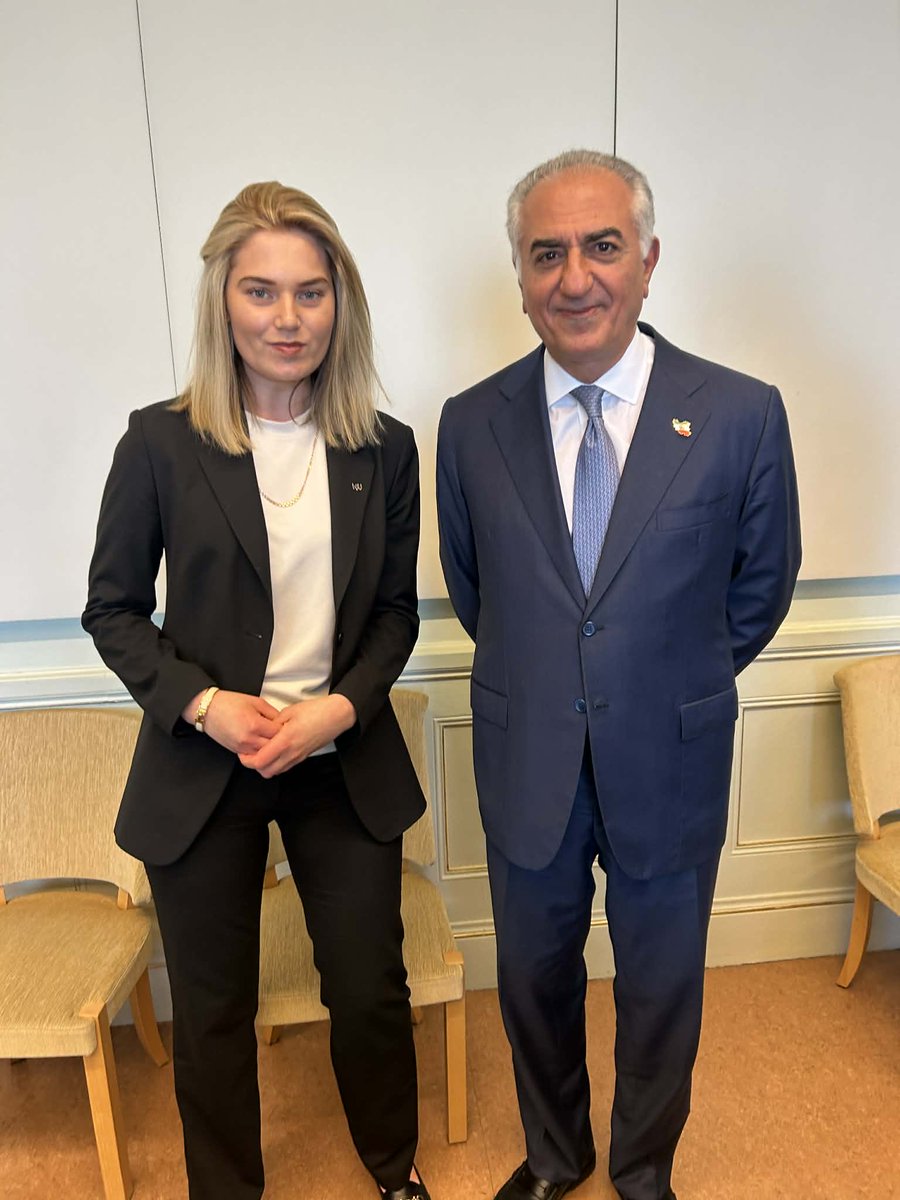
Javid shah! Fick förmånen att träffa kronprins Reza Pahlavi. Jag och KDU står med Pahlavi och det iranska folket i deras frihetskamp!
Louise Hammargren tweet media
Svenska
1.7K
4.9K
16.8K
249.7K
Ardavan M. Khoshnood retweetledi
Douglas Thor
Douglas Thor@Douglasthoor·
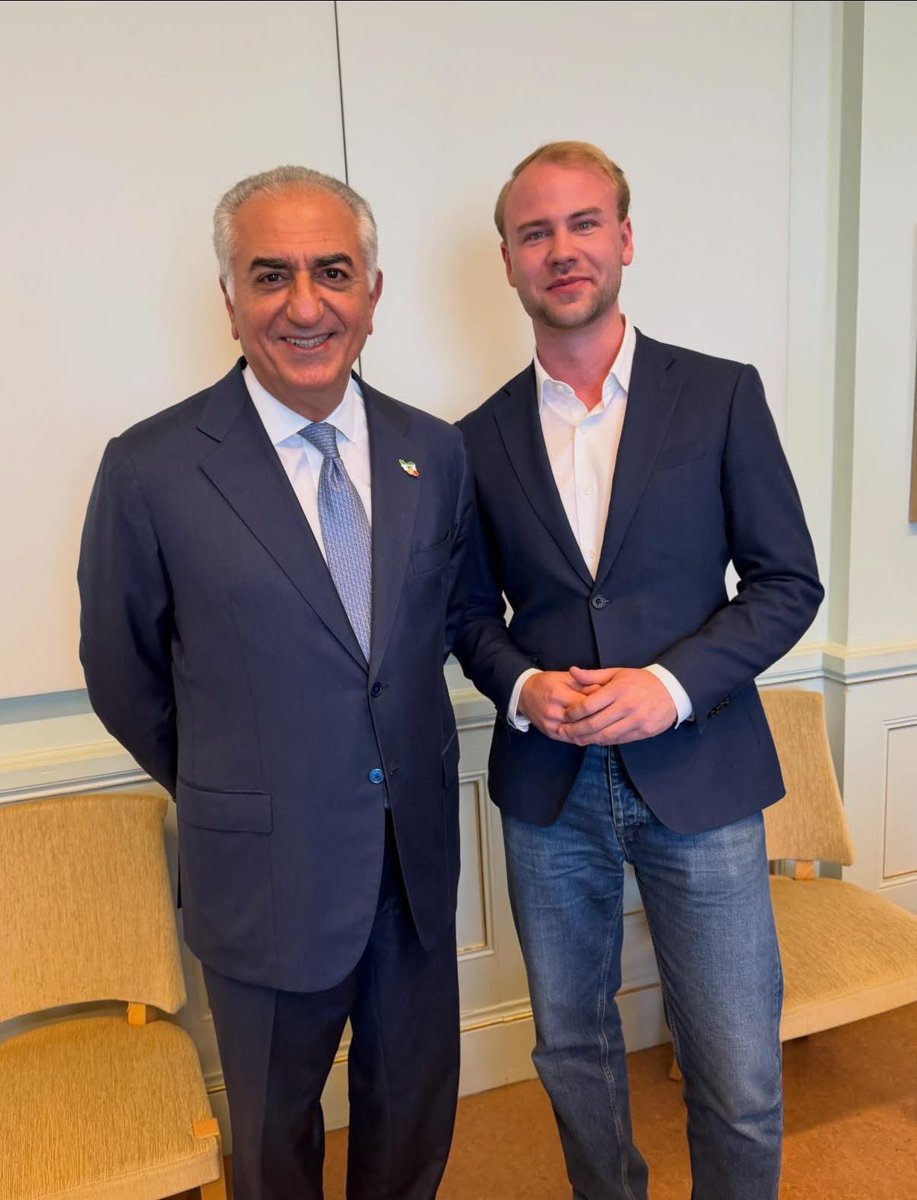
Javid shah! ☀️ Idag träffat kronprins Reza Pahlavi. Jag framförde MUFs och svenska ungas stöd för hans plan för ett fritt Iran. Han ville ödmjukt tacka för stödet, förstå ungdomsförbundens roll i svensk demokrati och uppmanade till fortsatt kamp. Ett fritt Iran är viktigt för hela världen, men särskilt viktigt för Sverige. Vi är en av de mest utsatta länderna för den iranska regimens terrorism och islamisering. Faller regimen blir även vi friare. Vägen dit är inte självklar, men den självklart mest realistiska vägen dit är via Reza Pahlavis plan att leda en övergångsregering till demokrati. Uppslutningen bakom Pahlavi är inte ett rop på en kung, utan ett rop på den nuvarande bästa vägen till ett fritt, sekulärt och demokratiskt Iran. Därför säger vi i MUF: Javid shah!
Douglas Thor tweet media
Svenska
756
2.7K
7.9K
63.3K
Ardavan M. Khoshnood retweetledi
Richard Herrey
Richard Herrey@RichardHerrey·
Skamligt, men talande om de som stödjer Irans terrorregim. I morse larmades polisen om en aktion på Sergels torg. Det hängde tre dockor föreställande Pahlavi, Jimmie Åkesson och Ebba Busch. ”Folkmördare, bödlar och lakejer”, stod det på en skylt.
Richard Herrey tweet media
Svenska
142
329
1.9K
21.7K
Ardavan M. Khoshnood retweetledi
Johan Ingerö Alias 🇺🇦🇮🇱
Lyssnar just nu till Reza Pahlavi i riksdagen. ”Irans folk ber er inte att utkämpa deras revolution. De ber er bara att inte legitimera och stärka deras förtryckare.”
Johan Ingerö Alias 🇺🇦🇮🇱 tweet media
Svenska
126
424
1.4K
9K
Ardavan M. Khoshnood retweetledi
ايران اينترنشنال
شاهزاده رضا پهلوی در پارلمان سوئد گفت: «نتیجه عملیات نظامی هر چه که باشد، سرنوشت ایران را نیروهای خارجی رقم نخواهند زد، بلکه این مردم ایران هستند که سرنوشت خود را رقم خواهند زد.»
فارسی
28
93
336
6.1K
Ardavan M. Khoshnood retweetledi
ايران اينترنشنال
شاهزاده رضا پهلوی در پارلمان سوئد گفت: «مبارزه در ایران نه میان اصلاح‌طلبان و تندروها، بلکه میان اشغالگران و نیروهای آزادی‌خواه است.»
فارسی
62
278
1.1K
12.4K
Ardavan M. Khoshnood retweetledi
Arvin Khoshnood | آروین خوشنود
Detta är ett hot mot tre individer, men också mot Sverige och svenska demokratin. Aktionen säger mycket vad kronprins Reza Pahlavi står för: demokrati, sekularism, mänskliga rättigheter. Hans motståndare står för hot och hat.
Christoffer Jonsson@kurrejonsson

Vid Sergels torg har det hängts dockor föreställande Pahlavi, Ebba Busch och Jimmie Åkesson. Islamiska regimens anhängare är så vidriga! aftonbladet.se/nyheter/a/7p7R…

Svenska
14
84
336
4K
Ardavan M. Khoshnood retweetledi
Cameron Khansarinia
Cameron Khansarinia@khansarinia·
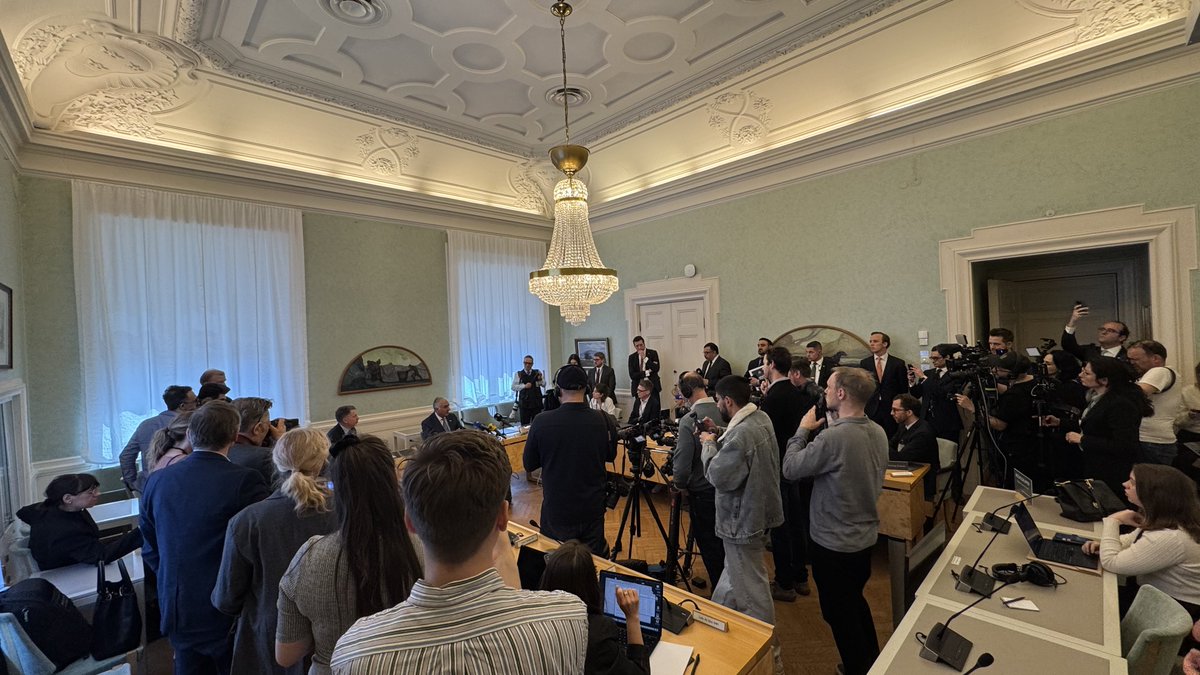
Swedish and other Scandinavian MPs and MEPs from across parties listening to Prince Reza Pahlavi’s remarks at the Swedish Parliament. He is now taking their questions.
Cameron Khansarinia tweet media
English
225
1.3K
3.6K
34.8K
Ardavan M. Khoshnood retweetledi
Charlie Weimers MEP 🇸🇪
Som ung lärde jag känna människor som hade förföljts av den islamiska republiken och tvingats lämna sitt hemland. Deras berättelser om ofrihet, rädsla och förlust gjorde ett djupt och bestående intryck på mig. Det dröjde inte länge innan jag förstod vad mullaregimen egentligen är: en teokratisk diktatur, byggd för att garantera en enda sak – sin egen överlevnad. För att säkra sitt styre är den beredd att använda alla medel, inklusive att mörda sitt eget folk. Som folkvald har man både möjligheter och ansvar. Som ledamot av Europaparlamentet har jag därför arbetat för att ge en röst åt Irans demokratiska opposition. År 2023 bjöd jag in Reza Pahlavi till Europaparlamentet – med syftet att lyfta fram de krafter som verkar för ett fritt, sekulärt och demokratiskt Iran. Sedan dess har stödet för kronprinsen, av allt att döma, vuxit ytterligare. Under demonstrationerna i januari var det hans namn som ekade på gator och torg. När regimen i Teheran stängde ned internet föll samtidigt visningarna av hans budskap på sociala medier – ett tydligt tecken på hans genomslag inne i landet. Jag har fortsatt att driva på för att europeiska ledare ska föra dialog med oppositionen – och för att den islamiska republikens diplomater ska utvisas. Jag har också verkat för att Reza Pahlavi ska bjudas in till nationella parlament. Därför känner jag i dag både glädje och stolthet över att mina kollegor i Sverige nu bjuder in kronprins Reza Pahlavi till Sveriges riksdag. Det är en viktig markering – inte för att Europa ska välja Irans framtid, utan för att visa att vi står på frihetens och folkets sida. Samtidigt kvarstår problemet: många europeiska ledare förstår inte – eller vill inte förstå – den islamiska republikens våldskapital. Iran kan kännas långt bort, men dess inflytande är närmare än många tror. Lobbyister, lakejer och spioner har infiltrerat delar av det svenska samhället. Exiliranier och andra som slår larm utsätts för hot och förföljelse. För egen del befinner jag mig sedan oktober 2022 på den islamiska republikens officiella sanktionslista. Jag ser det som en hedersutmärkelse. På bild: Mitt möte med kronprins Reza Pahlavi i Sveriges riksdag den 13 april 2026.
Charlie Weimers MEP 🇸🇪 tweet media
Svenska
1.1K
4.4K
11.3K
97.4K