

Arif Ahmad
1.4K posts

Arif Ahmad retweetledi

🩺 Community Question
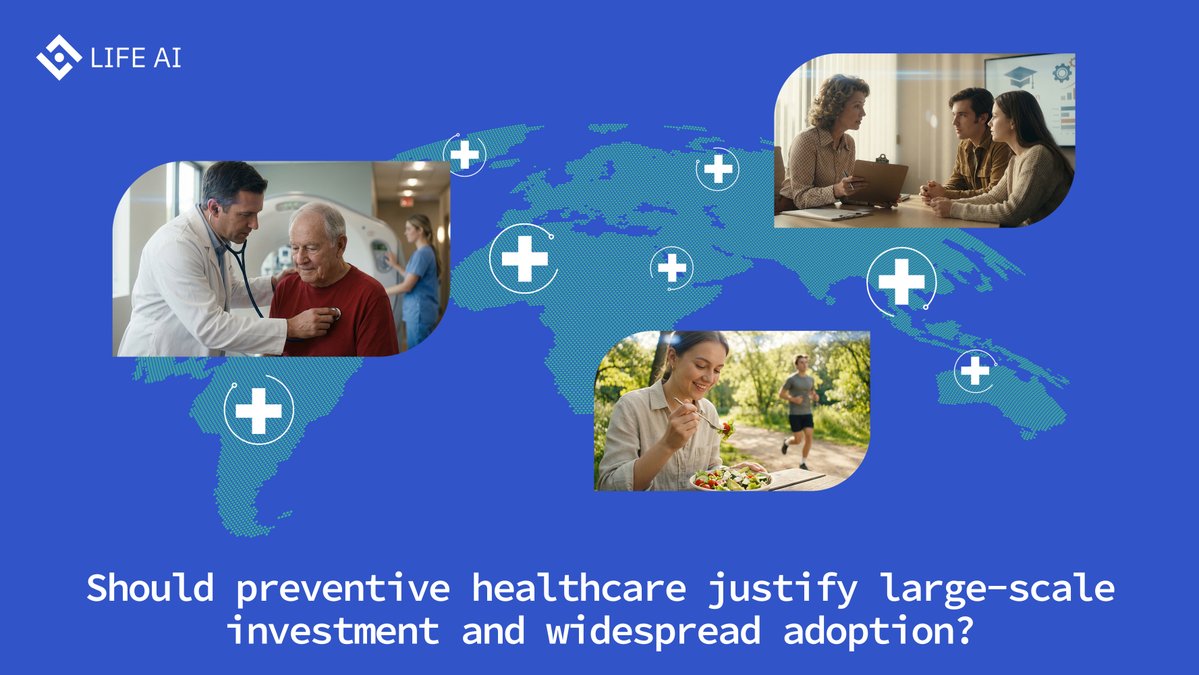
Should preventive healthcare justify large-scale investment and widespread adoption?
Viewpoint A:
Preventive care involves significant upfront costs and carries risks of overdiagnosis and overtreatment, potentially increasing anxiety and spending without clear mortality gains.
Viewpoint B:
Prevention through screening and lifestyle interventions can reduce disease burden, hospitalizations, and long-term costs, while improving life expectancy and quality of life.
Is prevention a cost-effective long-term strategy or an overextended approach with uncertain net benefit?
👇 Drop A, B, or share your perspective.
English
Healthcare innovation is accelerating with @LifeNetwork_AI.
#healthcareAI #LifeAI x.com/LifeNetwork_AI…
LIFE AI@LifeNetwork_AI
🩺 Community Question Should preventive healthcare justify large-scale investment and widespread adoption? Viewpoint A: Preventive care involves significant upfront costs and carries risks of overdiagnosis and overtreatment, potentially increasing anxiety and spending without clear mortality gains. Viewpoint B: Prevention through screening and lifestyle interventions can reduce disease burden, hospitalizations, and long-term costs, while improving life expectancy and quality of life. Is prevention a cost-effective long-term strategy or an overextended approach with uncertain net benefit? 👇 Drop A, B, or share your perspective.
English
Arif Ahmad retweetledi

$WhiteWhale The controller of the moon 🌕🚀🐋
picwon@picwonAI
$WhiteWhale Community Giveaway! 🐋 Round 3: Touch Grass 🍃 Dropping 10 SOL total. 1 SOL each to 10 winners! (≈$80-$90+ each at current prices) Ends in 10 days: February 18, 2026 @ 11:59 PM PST. No need to hold $WhiteWhale to enter. Just show love for the whale! 🌊 To enter:
English
Arif Ahmad retweetledi
Arif Ahmad retweetledi
🩺 Community Question:
Elon Musk recently said that, based on current human constraints, AI-powered robotics could become better surgeons than the best human surgeons within three years at scale.
Do you agree with him?
Viewpoint A:
Agree. With few great surgeons, slow and costly human training, and unavoidable human error, AI and robotics could learn faster and scale surgical skill beyond human limits.
Viewpoint B:
Disagree. Even acknowledging the human constraints Elon Musk points out, surgery is not only about speed, scale, or error reduction. It also depends on judgment, responsibility, and trust in high-stakes situations, which remain difficult to validate and deploy safely at scale.
Is this a near-term breakthrough or a vision that overestimates how quickly surgical autonomy can be safely scaled?
👇 Drop A, B, or share your perspective.
English
Health intelligence that evolves with you-LifeAI.
#healthcareAI @LifeNetwork_AI #LifeAI x.com/LifeNetwork_AI…
LIFE AI@LifeNetwork_AI
🩺 Community Question: Elon Musk recently said that, based on current human constraints, AI-powered robotics could become better surgeons than the best human surgeons within three years at scale. Do you agree with him? Viewpoint A: Agree. With few great surgeons, slow and costly human training, and unavoidable human error, AI and robotics could learn faster and scale surgical skill beyond human limits. Viewpoint B: Disagree. Even acknowledging the human constraints Elon Musk points out, surgery is not only about speed, scale, or error reduction. It also depends on judgment, responsibility, and trust in high-stakes situations, which remain difficult to validate and deploy safely at scale. Is this a near-term breakthrough or a vision that overestimates how quickly surgical autonomy can be safely scaled? 👇 Drop A, B, or share your perspective.
English
Arif Ahmad retweetledi
💊 Community Question:
Can AI help discover and develop new medicines much faster and cheaper than traditional methods?
Viewpoint A:
Yes. AI can rapidly test millions of drug ideas, cut early research time and costs dramatically, and in some cases bring medicines to patients years faster.
Viewpoint B:
Not fully. AI helps at the start, but human trials are still slow, expensive, and unpredictable, keeping overall drug development costly and time-consuming.
If AI is expected to change how medicines are made, is the impact already real or mostly promise?
👇 Drop A, B, or share your perspective.
English
LifeAI brings precision to personal care routines.
@LifeNetwork_AI #LifeAI #healthcareAI x.com/LifeNetwork_AI…
LIFE AI@LifeNetwork_AI
💊 Community Question: Can AI help discover and develop new medicines much faster and cheaper than traditional methods? Viewpoint A: Yes. AI can rapidly test millions of drug ideas, cut early research time and costs dramatically, and in some cases bring medicines to patients years faster. Viewpoint B: Not fully. AI helps at the start, but human trials are still slow, expensive, and unpredictable, keeping overall drug development costly and time-consuming. If AI is expected to change how medicines are made, is the impact already real or mostly promise? 👇 Drop A, B, or share your perspective.
English
Arif Ahmad retweetledi
There is no such thing as a “crash” for a gambler like me.
I can easily double it using whale.io. 🐳
@WhaleGames_en #WhaleNFT
English
@toastpunk 0x04fe00c18bd1829bcedc5b9772b8a7fb03a39692
@yogaalm122
English
Arif Ahmad retweetledi

Trust wallet is being annoying. Looks like I’m forced to do a big airdrop to everyone to just make them know how real $USDDD and digdug.do is.
Just drop as many BEP-20 wallet addresses you own and repost this. Tag friends.
Let’s show them who is boss.

English
Arif Ahmad retweetledi
🩺 Community Question
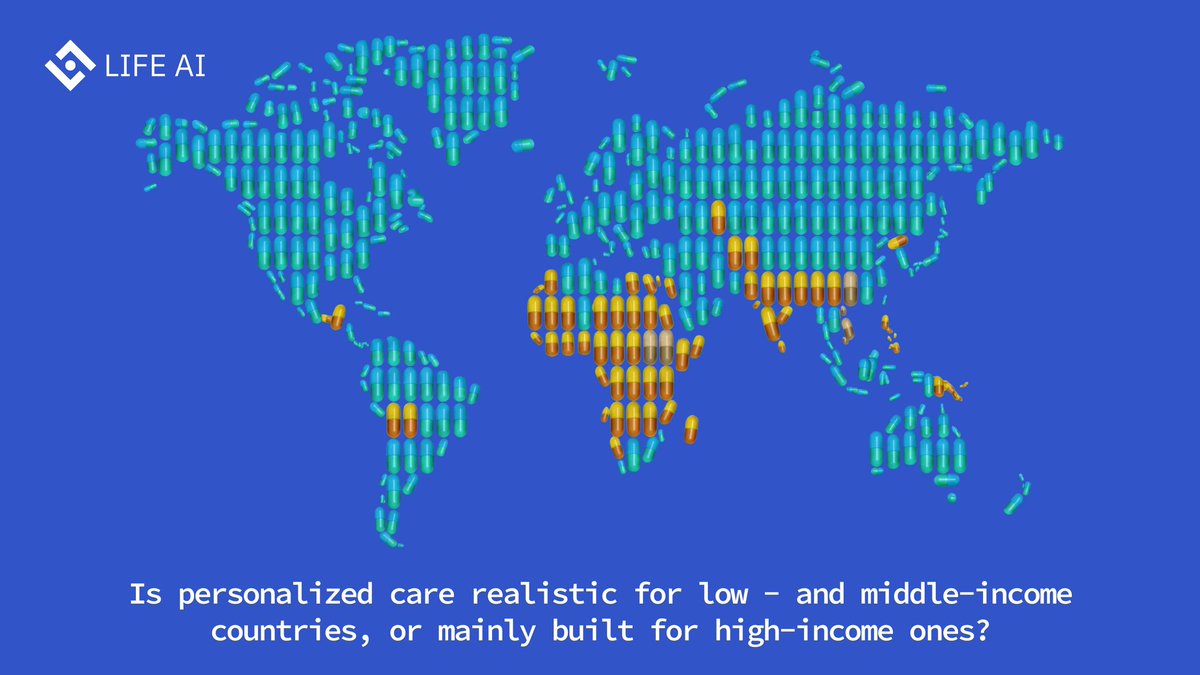
Is personalized care realistic for low- and middle-income countries (LMICs), or is it still a model built mainly for high-income countries (HICs)?
Viewpoint A: Gradually achievable in LMICs
Personalized care can scale over time. Costs of genetic and digital tools are falling, AI-driven insights are becoming more accessible, and hybrid models already work in areas like oncology and chronic care. With the right partnerships and focus, personalization doesn’t have to remain a luxury.
Viewpoint B: Not practical for most LMICs
For many LMICs, personalized care remains unrealistic. High costs, limited infrastructure, workforce gaps, and unequal access make large-scale adoption difficult. Healthcare systems should prioritize proven, low-cost interventions like vaccination, screening, and basic prevention.
Or is the future of healthcare built by combining both approaches?
👇 Drop A, B, or share your perspective.
Tag someone who should weigh in on this.
English
LifeAI supports better health journeys through smart, personalized guidance.
@LifeNetwork_AI #LifeAI #healthcareAI x.com/LifeNetwork_AI…
LIFE AI@LifeNetwork_AI
🩺 Community Question Is personalized care realistic for low- and middle-income countries (LMICs), or is it still a model built mainly for high-income countries (HICs)? Viewpoint A: Gradually achievable in LMICs Personalized care can scale over time. Costs of genetic and digital tools are falling, AI-driven insights are becoming more accessible, and hybrid models already work in areas like oncology and chronic care. With the right partnerships and focus, personalization doesn’t have to remain a luxury. Viewpoint B: Not practical for most LMICs For many LMICs, personalized care remains unrealistic. High costs, limited infrastructure, workforce gaps, and unequal access make large-scale adoption difficult. Healthcare systems should prioritize proven, low-cost interventions like vaccination, screening, and basic prevention. Or is the future of healthcare built by combining both approaches? 👇 Drop A, B, or share your perspective. Tag someone who should weigh in on this.
English
Arif Ahmad retweetledi
Come on, raise your hands, Khong Medusa💃🕺
Medusa@MedusaOnchain
Make us Laugh and Win $100 starting a new video series w/ my fren @Kong408, where we’re paying you for laughs how to play: - Like + RT - reply or quote with something that makes us laugh (meme, video, image, joke) one submission/person 1 laugh = $10 USDC 2 laughs = $100 USDC
English
Arif Ahmad retweetledi
Arif Ahmad retweetledi