Aron van Ammers ⛺⛰🏔
7.5K posts


Aron van Ammers ⛺⛰🏔
@aronvanammers
Building and growing token ecosystems as CTO of @outlierventures | #bitcoin #blockchain #decentralisation | Tech geek | Triathlete | Take a deep breath


New CursorBench results just dropped. Two big takeaways. Composer 2.5 is way better than most people think. 63.2% score at $0.55 per task. Nearly matching Opus 4.7 Max and GPT 5.5 Extra High at 20x less cost. This is insane value. Gemini 3.5 Flash is #10 at 49.8%. Below GPT 5.5 Low. Below Opus 4.7 Low. Google's newest model can't even beat budget tier competition. Composer 2.5 is the sleeper. Gemini 3.5 Flash is the disappointment.


Today, you can build a product in a weekend. You still can't fund it without a lawyer, a cap table, and a decade-long commitment. 🧩We've identified 10 open problems builders of the agentic internet need to solve. We've set aside capital against this thesis and we're opening a Request for Builders today.
6/ Give Claude a way to verify its work Finally, make sure Claude has a way to verify its work. This has always been a way to 2-3x what you get out of Claude, and with 4.7 it's more important than ever. Verification looks different depending on the task. For backend work, make sure Claude knows how to start up your server/service to test it end to end; for frontend work, use the Claude Chromium extension to give Claude a way to control your browser; for desktop apps, use computer use. Personally, many of my prompts these days look like "Claude do blah blah /go". /go is a skill that has Claude 1. Test itself end to end using bash, browser, or computer use 2. Run the /simplify skill 3. Put up a PR For long running work, verification is important because that way when you come back to a task, you know the code works.

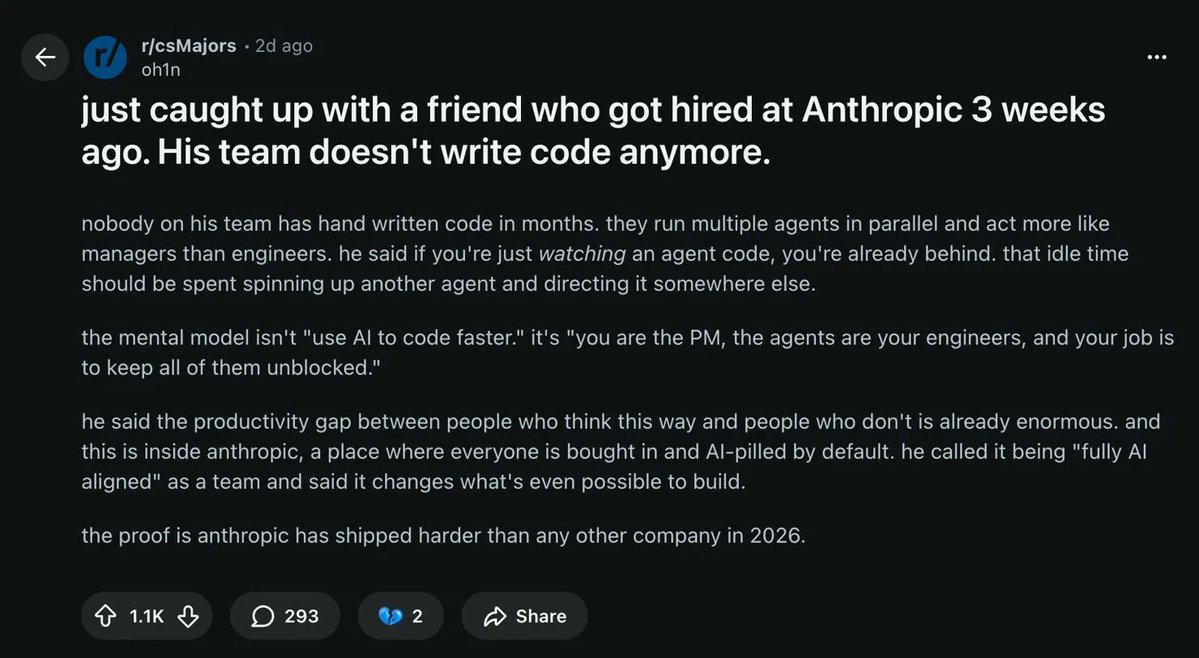
My biggest takeaways from @simonw: 1. November 2025 was an inflection point for AI coding. GPT 5.1 and Claude Opus 4.5 crossed a threshold where coding agents went from “mostly works” to “almost always does what you want it to do.” Software engineers who tinkered over the holidays realized the technology had become genuinely reliable. 2. Mid-career engineers are the most vulnerable—not juniors, not seniors. AI amplifies experienced engineers by letting them leverage decades of pattern recognition. It also dramatically helps new engineers onboard. Cloudflare and Shopify each hired a thousand interns because AI cut ramp-up time from a month to a week. But mid-career engineers who haven’t accumulated deep expertise and have already captured the beginner boost are in the most precarious position. 3. AI exhaustion is real and underestimated. Simon runs four coding agents in parallel and is mentally wiped out by 11 a.m. He’s getting more time back, but his brain is exhausted from the intensity of directing multiple autonomous workers. Some engineers are losing sleep to keep agents running. This may just be a novelty issue, but the underlying dynamic—that managing AI amplifies cognitive load even as it reduces labor—is a real tension. Good companies will manage expectations rather than expecting 5x output indefinitely. 4. Code is cheap now. This simple idea has profound implications. The thing that used to take most of the time—writing code—now takes the least. The bottleneck has shifted to everything else: deciding what to build, proving ideas work, getting user feedback. Since prototyping is nearly free, Simon often builds three versions of every feature when he’s getting started. 5. The “dark factory” is the most radical experiment in AI-assisted development happening right now. A company called StrongDM established a policy: nobody writes code, nobody reads code. Instead, they run a swarm of AI-simulated end users 24/7—thousands of fake employees making requests like “give me access to Jira”—at $10,000 a day in token costs. They even had coding agents build simulated versions of Slack, Jira, and Okta from API documentation so they could test without rate limits. 6. "Red/green TDD" is the single highest-leverage agentic engineering pattern. Having coding agents write tests first, watch them fail, then write the implementation, then watch them pass produces materially better results. The five-word prompt “use red/green TDD” encodes this entire workflow because the agents recognize the jargon. 7. “Hoarding things you know how to do” is one of Simon's other favorite agentic engineering patterns. Simon maintains a GitHub repo of 193 small HTML/JavaScript tools and a separate research repo of coding-agent experiments. Each one captures a technique, a proof of concept, or a library he’s tested. When a new problem arrives, he can point Claude Code at past projects and say “combine these two approaches.” 8. The "lethal trifecta" makes AI agent security fundamentally unsolved. Whenever an AI agent has access to private data, exposure to untrusted content (like incoming emails), and the ability to send data externally (like replying to email), you have a lethal trifecta. Prompt injection—where malicious instructions in untrusted text override the agent’s intended behavior—cannot be reliably prevented. Simon has predicted a “Challenger disaster” for AI security every six months for three years. It hasn’t happened yet, but he’s pretty sure it will. 9. Start every project from a thin template, not a long instructions file. Coding agents are phenomenally good at matching existing patterns. A single test file with your preferred indentation and style is more effective than paragraphs of written instructions. Simon starts every project with a template containing one test (literally testing that 1 + 1 = 2) laid out in his preferred style. The agent picks it up and follows the convention across the entire codebase. This is cheaper and more reliable than maintaining elaborate prompt files. 10. The pelican-on-a-bicycle benchmark accidentally became a real AI benchmark. Simon created it as a joke to mock numeric benchmarks—get each LLM to generate an SVG of a pelican riding a bicycle, and compare the drawings. Unexpectedly, there’s a strong correlation between how good the drawing is and how good the model is at everything else. Nobody can explain why. It’s become a meme: Gemini 3.1’s launch video featured a pelican riding a bicycle. The AI labs are aware of it and quietly competing on it. Don't miss our full conversation: youtube.com/watch?v=wc8FBh…
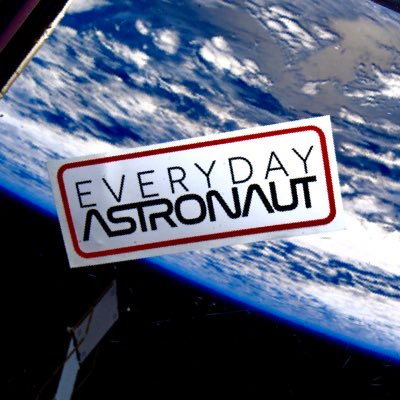


We see our home planet as a whole, lit up in spectacular blues and browns. A green aurora even lights up the atmosphere. That's us, together, watching as our astronauts make their journey to the Moon.



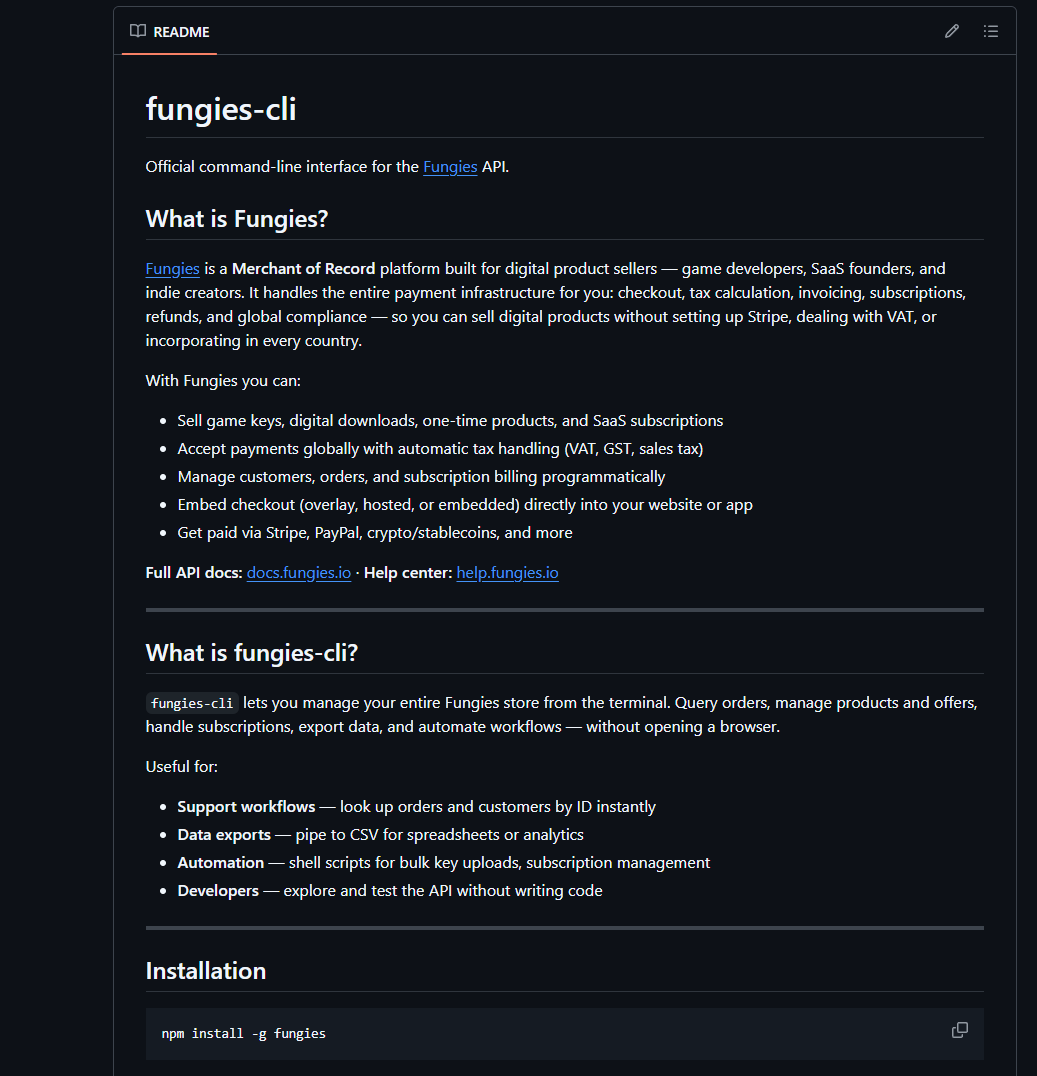
We just released the official Fungies CLI on GitHub. You can now manage your entire Fungies store from the terminal. Query orders, update products, and handle subscriptions without opening a browser. Check out the code here: github.com/dukenukemall/f… #SaaS #Devs #MoR #Payment