ashmit

13 posts

ashmit

ashmit

@ashmitkx

Research @MSFTResearch, Prev. @adobe, BITS Pilani

Katılım Şubat 2019
422 Takip Edilen37 Takipçiler
ashmit
ashmit@ashmitkx·
@_CodeParade_ you might want to try using an LLM's perplexity as a signal for guiding your palindrome creation/search, rather than manually checking through them. lower perplexity -> lower probability of gibberish
English
0
0
0
47
CodeParade
CodeParade@_CodeParade_·
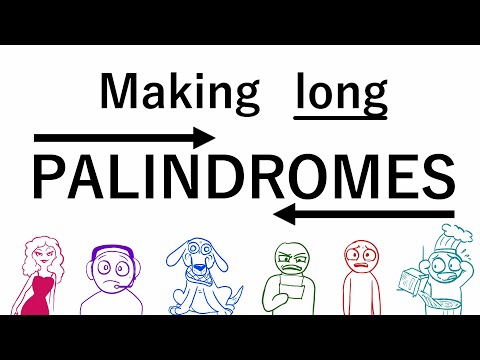
Have you ever wondered how to make your own palindromes? I wrote some software and found some really fun ones. youtu.be/ap08_AGPh8s
YouTube video
YouTube
English
2
1
9
1.2K
ashmit retweetledi
Amit Sharma
Amit Sharma@amt_shrma·
Deep research has emerged as a popular task with many recently released models. But beyond lengthy reports, what exactly defines the task? And how to quantify progress? [New Paper!] We provide an objective defn. centered on claim discovery & a 100-problem benchmark spanning scientific discovery and prior art search. 🧵
English
1
12
38
2.8K
ashmit retweetledi
SAiDL
SAiDL@SforAiDL·
Check out the Spotlight paper by SAiDL members @ashmitkx, @aditya30502, @someshsingh22, Aanisha Bhattacharyya, Yaman K Singla, Uttaran Bhattacharya, Ishita Dasgupta, Stefano Petrangeli, Rajiv Ratn Shah, Changyou Chen, Balaji Krishnamurthy at ICLR 2024! arxiv.org/abs/2309.00359…
Indonesia
2
2
18
842
ashmit retweetledi
Yaman Kumar Singla
Yaman Kumar Singla@YamanKSingla·
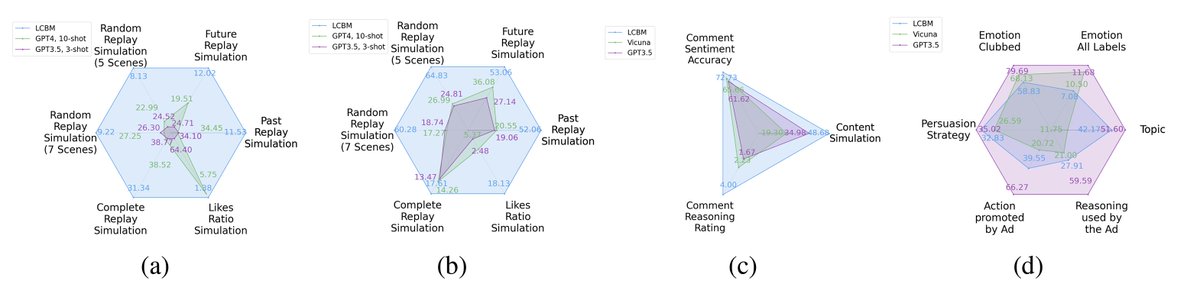
LLMs suck at anything related to behavior (simulation, understanding,...), the reason behind this is the removal of `behavior tokens` from LLM training corpora (likes, shares, retweets, upvotes,...), so the LLM does not know human preferences. 🧵
Yaman Kumar Singla tweet media
AK@_akhaliq

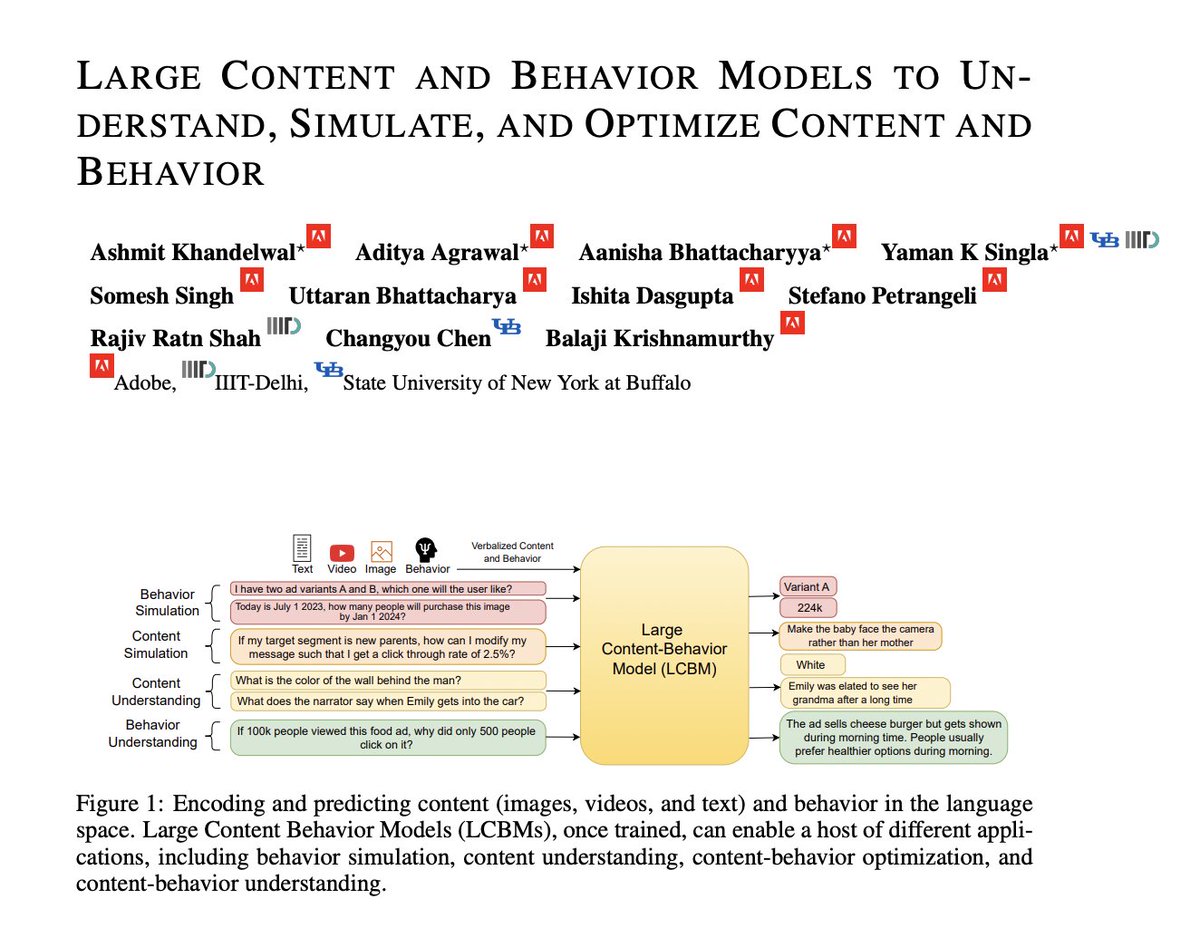
Large Content And Behavior Models To Understand, Simulate, And Optimize Content And Behavior paper page: huggingface.co/papers/2309.00… Shannon, in his seminal paper introducing information theory, divided the communication into three levels: technical, semantic, and effectivenss. While the technical level is concerned with accurate reconstruction of transmitted symbols, the semantic and effectiveness levels deal with the inferred meaning and its effect on the receiver. Thanks to telecommunications, the first level problem has produced great advances like the internet. Large Language Models (LLMs) make some progress towards the second goal, but the third level still remains largely untouched. The third problem deals with predicting and optimizing communication for desired receiver behavior. LLMs, while showing wide generalization capabilities across a wide range of tasks, are unable to solve for this. One reason for the underperformance could be a lack of "behavior tokens" in LLMs' training corpora. Behavior tokens define receiver behavior over a communication, such as shares, likes, clicks, purchases, retweets, etc. While preprocessing data for LLM training, behavior tokens are often removed from the corpora as noise. Therefore, in this paper, we make some initial progress towards reintroducing behavior tokens in LLM training. The trained models, other than showing similar performance to LLMs on content understanding tasks, show generalization capabilities on behavior simulation, content simulation, behavior understanding, and behavior domain adaptation. Using a wide range of tasks on two corpora, we show results on all these capabilities. We call these models Large Content and Behavior Models (LCBMs). Further, to spur more research on LCBMs, we release our new Content Behavior Corpus (CBC), a repository containing communicator, message, and corresponding receiver behavior.


English
2
16
105
47.3K
ashmit retweetledi
AK
AK@_akhaliq·
Large Content And Behavior Models To Understand, Simulate, And Optimize Content And Behavior paper page: huggingface.co/papers/2309.00… Shannon, in his seminal paper introducing information theory, divided the communication into three levels: technical, semantic, and effectivenss. While the technical level is concerned with accurate reconstruction of transmitted symbols, the semantic and effectiveness levels deal with the inferred meaning and its effect on the receiver. Thanks to telecommunications, the first level problem has produced great advances like the internet. Large Language Models (LLMs) make some progress towards the second goal, but the third level still remains largely untouched. The third problem deals with predicting and optimizing communication for desired receiver behavior. LLMs, while showing wide generalization capabilities across a wide range of tasks, are unable to solve for this. One reason for the underperformance could be a lack of "behavior tokens" in LLMs' training corpora. Behavior tokens define receiver behavior over a communication, such as shares, likes, clicks, purchases, retweets, etc. While preprocessing data for LLM training, behavior tokens are often removed from the corpora as noise. Therefore, in this paper, we make some initial progress towards reintroducing behavior tokens in LLM training. The trained models, other than showing similar performance to LLMs on content understanding tasks, show generalization capabilities on behavior simulation, content simulation, behavior understanding, and behavior domain adaptation. Using a wide range of tasks on two corpora, we show results on all these capabilities. We call these models Large Content and Behavior Models (LCBMs). Further, to spur more research on LCBMs, we release our new Content Behavior Corpus (CBC), a repository containing communicator, message, and corresponding receiver behavior.
AK tweet media
English
2
50
201
89.2K
pi.
pi.@_spacepi·
🌊 🌊 🌊 fin.
1
0
2
0
ashmit retweetledi
SAiDL
SAiDL@SforAiDL·
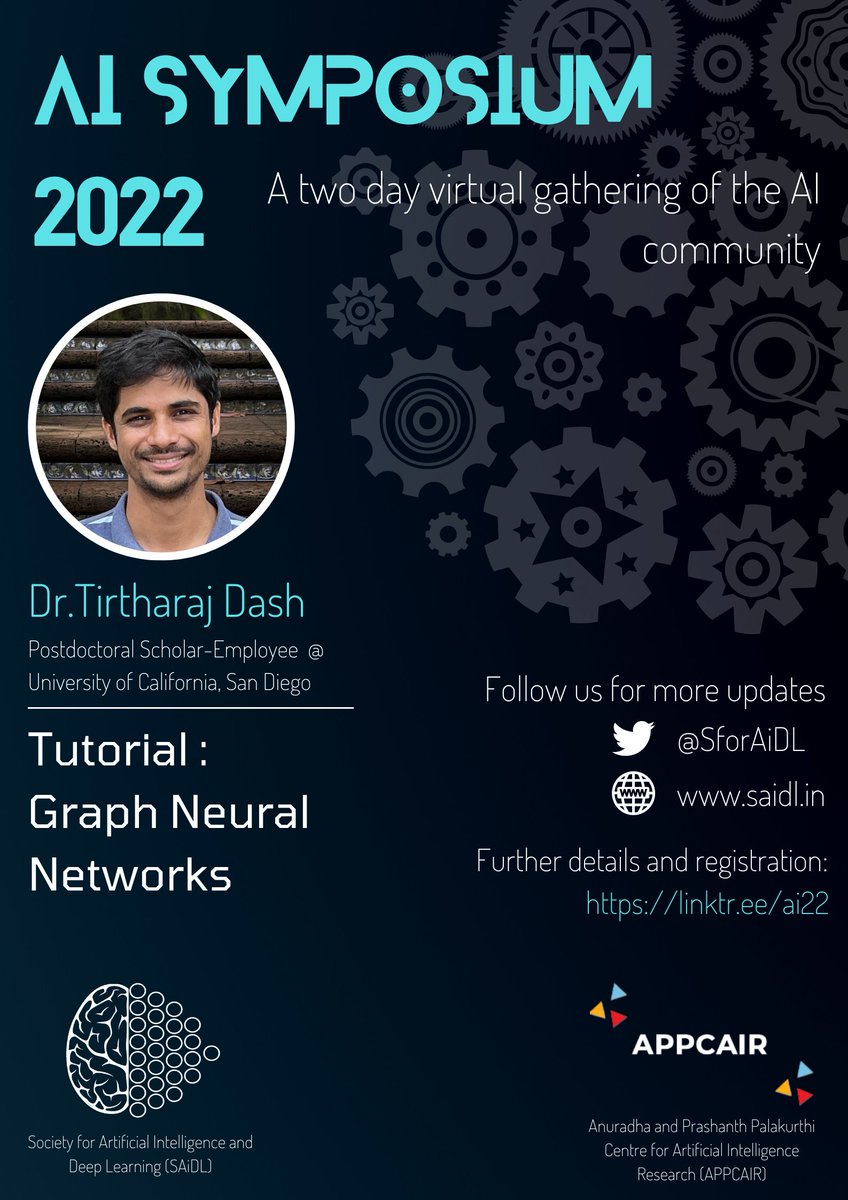
We are excited to present one of the speakers for "AI Symposium 2022", Dr. Tirtharaj Dash, Postdoctoral Scholar-Employee at @UCSanDiego. He will be carrying out a tutorial on Graph Neural Networks.
SAiDL tweet media
English
1
9
25
0
ashmit retweetledi
SAiDL
SAiDL@SforAiDL·
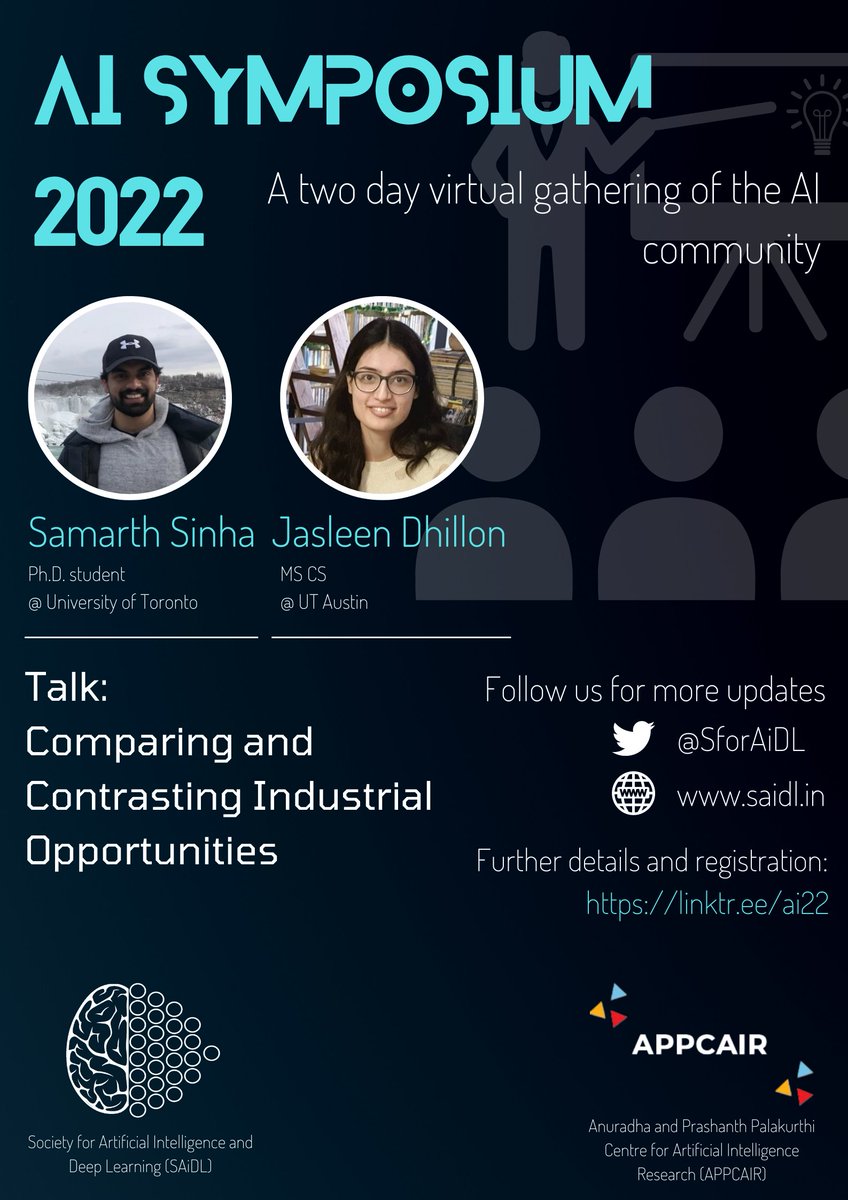
We are excited to present the speakers for "AI Symposium 2022", Samarth Sinha (@_sam_sinha_), Ph.D. Candidate at @UofT and Jasleen Dhillon, MS CS at @UTAustin. They will be comparing & contrasting different industrial opportunities in ML.
SAiDL tweet media
English
1
4
16
0
ashmit retweetledi
SAiDL
SAiDL@SforAiDL·
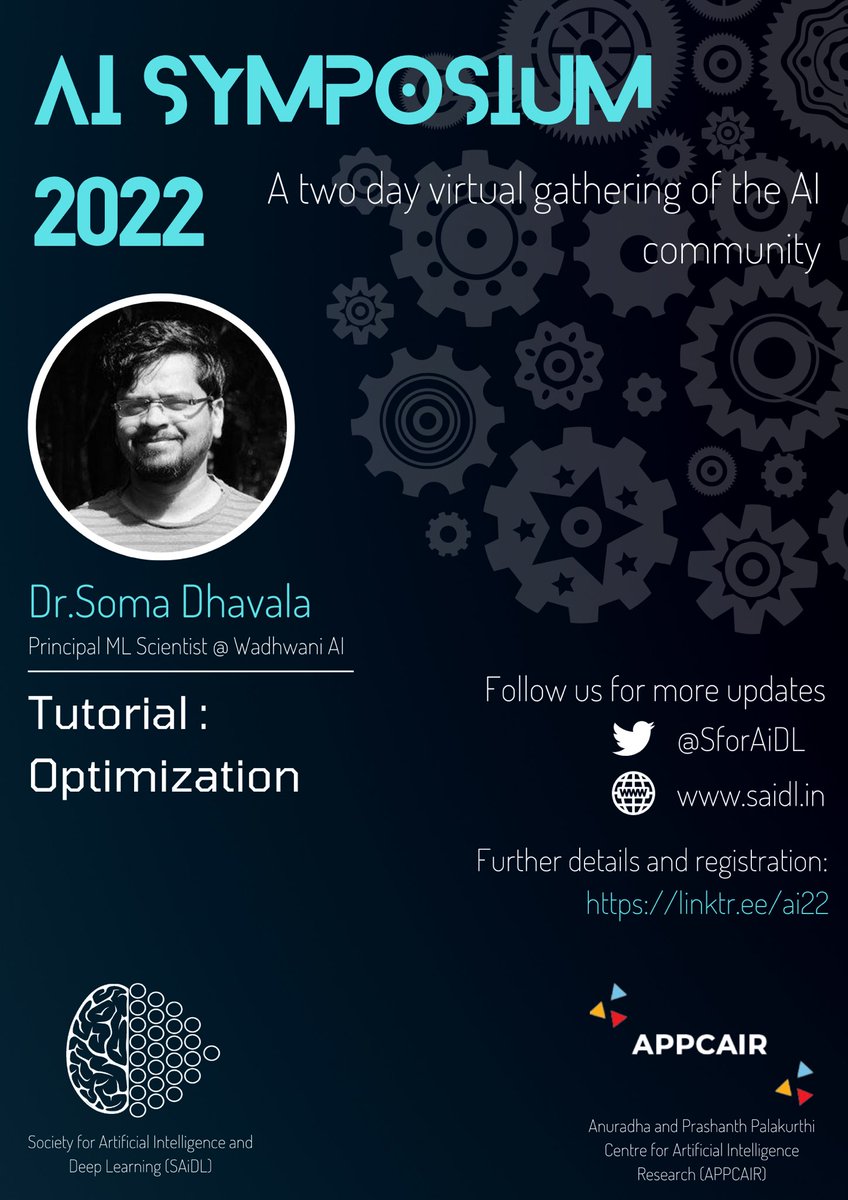
We are excited to present one of the speakers for "AI Symposium 2022", Dr. Soma Dhavala, Principal ML Engineer at @WadhwaniAI. He will be carrying out a tutorial on Optimization.
SAiDL tweet media
English
1
5
8
0
ashmit retweetledi
SAiDL
SAiDL@SforAiDL·
We are excited to present the speakers for "AI Symposium 2022", Sharut Gupta (@sharut_gupta), Ph.D. Candidate at @MIT_CSAIL and Rishab Khincha (@rishabkhincha), MSCS at @UTAustin. They will discuss MS - Ph.D. programs, including the application procedure.
SAiDL tweet media
English
1
11
22
0
ashmit retweetledi
SAiDL
SAiDL@SforAiDL·
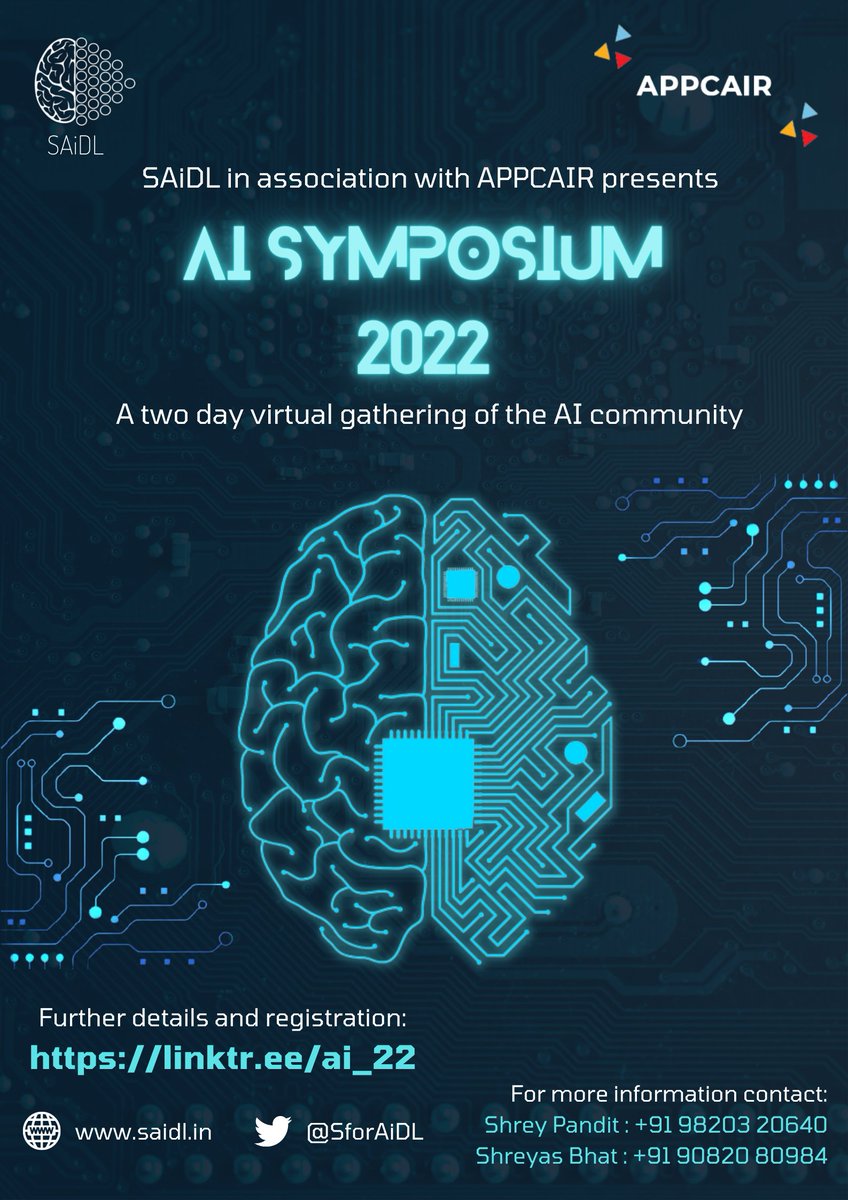
We are excited to present to you the third edition of "AI Symposium," in association with @appcair - the AI Research Lab of @BITSPilaniGoa ! [1/6]
SAiDL tweet media
English
1
15
25
0