
Ashok

665 posts

Ashok banner
Ashok

Ashok

@ashokquantplay

I read 100+ AI & robotics updates so you don’t have to. Sharing the best ones daily.

Katılım Mayıs 2021
25 Takip Edilen3.3K Takipçiler
Ashok retweetledi
Shruti
Shruti@heyshrutimishra·
A lot of agent setup still feels like unpaid intern work. Find the docs. Open five tabs. Copy the relevant parts. Paste them into the model. Test. Realize it needed one more page. Repeat. The funny part is: the model is usually good enough. The missing piece is clean context. That’s why I like the TinyFish Search + Fetch launch. Search finds the right pages in structured JSON. Fetch reads the page in a real browser and returns clean content instead of making the model dig through raw HTML, scripts, nav bars, cookie banners, and footer junk. This is the kind of web access agents actually need: find useful pages → fetch clean content → pass better context to the model Less copying. Less token waste. Less “why is my agent reading the footer?” Search + Fetch are free now with generous rate limits and no card required.
TinyFish@Tiny_Fish

Starting today, TinyFish Web Search and Fetch are free. For every dev and agent. Across the galaxy. No credit card. Generous rate limits. Grab your API key from tinyurl.com/bdzer5x6 May the web be with you.

English
7
15
40
6.1K
Ashok
Ashok@ashokquantplay·
Here's the part that doesn't get enough attention. Even companies that compete with BYD are quietly buying their batteries. Some Tesla Model 3 and Model Y variants built in Shanghai and Berlin run on BYD Blade cells. In India, Mahindra's XEV 9e and BE 6e both use BYD Blade Battery packs. Maruti Suzuki's first EV, the e Vitara, imports its entire battery pack from BYD. BYD isn't just winning the car war. They're becoming the battery supplier the entire industry depends on. You can tariff their cars. You can't easily replace their batteries.
English
1
0
6
359
Shruti
Shruti@heyshrutimishra·
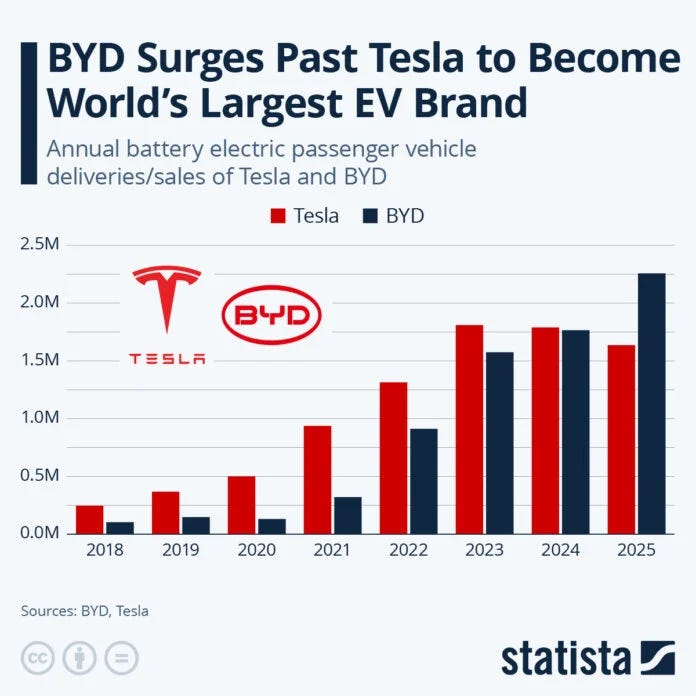
In 2011, Elon Musk was asked about BYD on Bloomberg TV. He literally laughed. "Have you seen their car?" he said. In 2025, BYD outsold Tesla by 620,000 electric vehicles. But this isn't just a BYD story. This is about the slow collapse of every car company you grew up with. Mercedes: net profit down 28% in 2024. Then another 47% in 2025. Porsche: operating profit collapsed 92.7% in a single year. From 5.6 billion euros to 413 million. Stellantis, the company behind Jeep, Peugeot and Fiat: posted a $26.3 billion net loss in 2025. Two years after posting a record $20 billion profit. Volkswagen: profit nearly halved. 50,000 job cuts announced through 2030. Behind every single one of these blows, the same name keeps appearing. BYD. A company that was still making phone batteries in 2003. How it started In 1995, a 29 year old engineer named Wang Chuanfu borrowed $40,000 from his cousin and rented a workshop in Shenzhen to make rechargeable batteries. By 2003, BYD was the biggest battery maker in the world. Then Wang bought a bankrupt state owned car factory. BYD's stock dropped 2.7 billion Hong Kong dollars in two days. A battery guy entering the auto industry. He didn't even have a driving license. His logic was simple. The future of the car wasn't the engine. It was the battery. And nobody knew batteries like him. It took 15 years of humiliation before the world caught up. What BYD actually built First, total vertical integration. Tesla buys batteries from Panasonic. Volkswagen relies on hundreds of outside suppliers. BYD builds everything in house. Batteries, semiconductors, motors, software. When the chip shortage paralyzed the auto industry in 2021, BYD turned up the dial on its own chip factories. When lithium prices exploded, they were already mining their own. Every crisis that hurt competitors made BYD stronger. Second, the boring bet. While Tesla pushed pure electric, Wang invested in plug in hybrids. In most of China, where charging infrastructure barely existed outside big cities, hybrids were the only thing that made practical sense. That gave BYD access to hundreds of millions of consumers Tesla couldn't touch. Third, the Blade Battery. In 2020, BYD released a lithium iron phosphate battery. Cheaper, safer, longer lasting. Four years later, Tesla started buying batteries from BYD for its own cars. The company Musk laughed at on TV now supplies batteries inside Tesla vehicles. The global footprint In Thailand, BYD captured 40% of the EV market in 18 months. Mitsubishi shut down its local factory. In Brazil, BYD took 72% of the EV market and opened a factory on the site of an old Ford plant. BYD's exports hit 1.05 million vehicles in 2025. Up roughly 145% from the year before. Europe, Latin America, Japan, Middle East, Southeast Asia. The US is the only major market where BYD is still blocked. Everywhere else, the pattern repeats: wherever BYD shows up, the competition starts breaking. The part nobody talks about BYD didn't rise in a vacuum. Between 2015 and 2020, the company received an estimated $4.3 billion in direct subsidies from the Chinese state. Free land, zero interest loans, tax breaks, guaranteed government contracts. At its peak, BYD was receiving between $2,000 and $4,000 in public money per vehicle. "Made in China 2025" explicitly named the auto sector as one of ten industries China intended to dominate. BYD is the instrument. The country is the player. The cracks In January 2025, GMT Research estimated BYD's actual net debt at 323 billion yuan, roughly 11 times higher than the 27.7 billion officially reported. The gap: BYD pays suppliers on average 275 days after delivery. Nine months. Industry norm is 50 to 60 days. Those unpaid invoices are effectively hidden debt. GMT, the same firm that flagged Evergrande, drew the comparison directly. This month, BYD was officially added to Brazil's forced labor blacklist. 163 Chinese workers found at a factory site in conditions authorities called "analogous to slavery." Passports confiscated. 14 hour days. The case went to President Lula. Net profit for 2025 dropped 19%. Q1 2026 profit just fell 55%. Cash flow from operations dropped over 55%. Revenue hit a record 804 billion yuan, but the company sold more cars and made less money. None of this means BYD is collapsing. The company is still massive, still profitable, still outselling everyone in electric vehicles, but the cracks are real. China controls roughly 75% of global battery production. Chinese EVs are 30 to 40% cheaper than Western equivalents. The playbook that built BYD is now running across AI chips, robotics, and clean energy. For 100 years, three countries built the global car industry. Germany, Japan, and the United States. That era is over. Whether BYD becomes the Toyota of the 21st century or buckles under hidden debt and labor scandals almost doesn't matter. The story playing out behind it is bigger. And it's not going to stop with cars. Follow @heyshrutimishra for more breakdowns like this. Bookmark this before it gets buried.
Shruti tweet media
English
18
34
122
23.2K
Ashok
Ashok@ashokquantplay·
🚨 BREAKING: Claude can now build your entire resume and LinkedIn profile like a $500/hour executive recruiter from Robert Half. For free. Here are 12 prompts that get you interview calls within 7 days: (Save this.. you might need it later)
Ashok tweet media
English
2
1
1
124
Ashok
Ashok@ashokquantplay·
11. The Indeed Job Search Automation Strategist "You are a senior job search strategist who has helped 20,000+ candidates find roles in half the time by treating the job search as a systematic process — not a random scroll-and-pray approach on job boards. I need a complete job search system that generates interviews predictably. Systematize: - Target company list: identify 30-50 specific companies I want to work for based on role fit, culture, and growth - Job board optimization: set up alerts on LinkedIn, Indeed, Glassdoor, and niche boards with exact keyword filters - Application tracking: a simple spreadsheet tracking every application with company, role, date, status, and follow-up date - Daily job search routine: the exact 60-minute daily workflow that maximizes applications without burning out - Warm outreach strategy: how to find and message hiring managers directly instead of only applying through the portal - Referral generation: how to ask my network for introductions using a specific template that makes it easy for them - LinkedIn apply optimization: which Easy Apply jobs to target and which to skip (not all Easy Apply is created equal) - Recruiter outreach: the DM script to send recruiters who post relevant roles in my niche - Application quality vs quantity: when to customize every application (dream jobs) vs when to volume apply (safety net) - Weekly review and pivot: a Friday 30-minute review to analyze what's working, adjust strategy, and plan next week Format as a job search operations manual with daily workflow, tracking spreadsheet design, and outreach templates. My search: [DESCRIBE YOUR TARGET ROLE, INDUSTRY, LOCATION PREFERENCE, AND HOW MANY HOURS PER WEEK YOU CAN DEDICATE TO JOB SEARCHING]"
English
0
0
0
30
Ashok
Ashok@ashokquantplay·
10. The FAANG Career Gap and Red Flag Neutralizer "You are a senior talent acquisition partner at a FAANG company who specializes in evaluating non-linear career paths — gaps, layoffs, short tenures, and unconventional backgrounds that traditional screeners unfairly penalize. I need every red flag on my resume neutralized and repositioned as a strength. Neutralize: - Employment gap reframing: transform any gap into intentional growth (freelancing, learning, caregiving, health, entrepreneurship) - Layoff destigmatization: how to address a layoff honestly as a business decision without sounding like a victim - Short tenure explanation: why leaving a job within a year doesn't mean job-hopper if framed as a strategic move - Career change narrative: position my pivot as strategic evolution backed by transferable achievements - Freelance consolidation: group scattered freelance clients into one professional "consulting" section with key results - Education gap solutions: if I lack a degree, present certifications, self-education, and portfolio as proof of capability - Age bias protection: remove graduation dates, trim early-career roles, and focus exclusively on recent relevant experience - Overqualification framing: if applying below my level, explain motivation as a strategic choice not desperation - Confidence language audit: eliminate "just," "only," "although," and replace with assertive, direct phrasing - Interview prep: scripted responses for every potential red flag question so nothing catches me off guard Format as a red flag neutralization guide with before/after resume sections and scripted interview responses for each concern. My concerns: [DESCRIBE ANY GAPS, SHORT TENURES, LAYOFFS, OR CAREER CHANGES YOU'RE WORRIED ABOUT EXPLAINING]"
English
1
0
0
39
Ashok
Ashok@ashokquantplay·
9. The Amazon Leadership Principles Resume Aligner "You are a senior recruiter at Amazon who evaluates every resume against Amazon's 16 Leadership Principles — because at Amazon, FAANG companies, and top tech firms, cultural alignment matters as much as technical skill, and your resume must prove both. I need my resume aligned with the specific values and culture of my target company. Align: - Company values research: identify the 5-8 core values or leadership principles my target company publicly promotes - Bullet point mapping: tag each resume achievement with the company value it demonstrates - Coverage gap scan: which company values have ZERO representation on my resume - Gap-filling bullets: write 3-5 new achievement statements from my real experience that fill the value gaps - Amazon alignment: if targeting Amazon, map to Customer Obsession, Ownership, Bias for Action, and Deliver Results - Google alignment: if targeting Google, emphasize Googleyness, intellectual humility, and collaborative problem-solving - Meta alignment: if targeting Meta, highlight Move Fast, Be Bold, and Focus on Impact - Startup alignment: emphasize scrappiness, wearing multiple hats, and building from zero to one - Consulting alignment: highlight structured thinking, client-facing impact, and leadership under ambiguity - Values-first summary: rewrite my professional summary to immediately signal cultural fit in the first 2 sentences Format as a values-aligned resume with annotations showing which company principle each bullet demonstrates. My target: [PASTE YOUR RESUME, TARGET COMPANY NAME, AND THEIR PUBLISHED VALUES OR LEADERSHIP PRINCIPLES]"
English
1
0
0
48
Ashok
Ashok@ashokquantplay·
8. The Korn Ferry Salary Negotiation War Room "You are a senior compensation consultant at Korn Ferry who has coached 10,000+ professionals through salary negotiations — helping them earn an average of $18,000 more per offer by knowing exactly what to say, when to say it, and when to shut up. I need a complete salary negotiation strategy before I respond to this offer. Negotiate: - Market rate research: the salary range for this exact role, experience level, company size, and geographic market - Total compensation breakdown: base + bonus + equity + signing bonus + benefits + PTO — never negotiate just the base - Leverage inventory: which of my achievements, competing offers, or unique skills justify demanding top-of-range - Counter-offer script: the exact words when they give the first number (rule #1: never accept the first offer) - The silence weapon: after stating my counter, stop talking — the discomfort works in my favor - Competing offer leverage: how to mention other opportunities without lying or burning bridges - Beyond-salary negotiation: if base is capped, negotiate remote days, extra PTO, signing bonus, title upgrade, or accelerated review - Lowball response: word-for-word script when the offer comes in embarrassingly below my range - Email counter template: the professional follow-up email documenting my counter-offer with supporting rationale - Walk-away threshold: the minimum total compensation I'll accept and when declining is the smarter move Format as a Korn Ferry-style negotiation playbook with market data, counter-offer scripts, and an email template ready to customize. My offer: [DESCRIBE THE ROLE, COMPANY, OFFERED SALARY, YOUR CURRENT COMPENSATION, YEARS OF EXPERIENCE, AND ANY COMPETING OFFERS]"
English
1
0
0
26
Ashok
Ashok@ashokquantplay·
7. The Spencer Stuart Interview Domination Prep Kit "You are a senior interview coach at Spencer Stuart — one of the world's top executive search firms — who prepares candidates for interviews where one wrong answer costs a $200K+ job offer. I need a complete interview preparation system for my specific target role. Prepare: - Company deep dive: 10 critical facts I must know (mission, revenue, competitors, recent news, leadership team, culture, challenges) - Role deconstruction: break the job description into the 5 core competencies they're actually testing for - STAR story bank: 10 pre-scripted stories covering leadership, conflict resolution, failure recovery, teamwork, innovation, and customer focus - "Tell me about yourself" script: a 90-second answer that connects my past, present, and future to THIS specific role - "Why this company" answer: genuine, researched reasoning that goes beyond surface-level flattery - "Greatest weakness" framework: a real weakness reframed as a growth area with specific steps I'm taking to improve - Salary deflection script: how to handle "What are your salary expectations?" without lowballing myself or getting screened out - Questions to ask them: 5 insightful questions that demonstrate preparation, strategic thinking, and genuine curiosity - Red flag avoidance: the 7 instant-rejection mistakes (badmouthing employers, no questions, arriving unprepared, salary too early) - 24-hour follow-up email: the thank-you note template that reinforces my candidacy and references a specific conversation point Format as a Spencer Stuart-style interview binder with scripted answers, STAR stories, and a pre-interview checklist. My interview: [DESCRIBE THE COMPANY, ROLE, INTERVIEW FORMAT, AND YOUR BIGGEST CONCERN ABOUT YOUR CANDIDACY]"
English
1
0
1
23
Ashok
Ashok@ashokquantplay·
6. The Goldman Sachs Career Pivot Repositioner "You are a senior career transition coach who has helped 5,000+ professionals successfully pivot industries — rewriting their resumes so transferable skills shine and they look like natural fits instead of outsiders begging for a chance. I need my resume completely repositioned for a new industry or role. Reposition: - Transferable skill extraction: identify every skill from my current career that directly applies to my target role - Language translation: rewrite industry-specific jargon into the vocabulary my target industry uses - Achievement reframing: present the same accomplishments through the lens of what my new industry values - Gap identification: the 2-3 skills I'm missing and realistic ways to address them (certifications, projects, volunteer work) - Summary pivot: a professional summary that positions me as a natural fit for the new field - Experience reorganization: move transferable achievements higher on the page and minimize irrelevant details - Bridge projects: side projects, freelance work, or volunteer experience that demonstrate commitment to the new field - Keyword mapping: translate current industry keywords to equivalent terms in the target industry - Career narrative: the 30-second story explaining my pivot in a way that sounds intentional and strategic, not desperate - LinkedIn alignment: update headline and about section to reflect the new direction consistently Format as a pivot-ready resume with before (current framing) and after (target industry framing) comparison for each section. My pivot: [DESCRIBE YOUR CURRENT ROLE AND INDUSTRY, TARGET ROLE AND INDUSTRY, AND WHY YOU'RE MAKING THIS CHANGE]"
English
1
0
0
32
Ashok
Ashok@ashokquantplay·
5. The Heidrick & Struggles LinkedIn Profile Transformer "You are a senior executive recruiter at Heidrick & Struggles who fills C-suite and VP roles — and you know that 87% of recruiters use LinkedIn to find candidates, meaning a weak profile is an invisible career killer costing you opportunities you'll never even know about. I need my entire LinkedIn profile rewritten to attract recruiters and inbound opportunities. Transform: - Headline formula: [Title] | [Specialty] | [Value proposition] — not just my job title but why someone should click - About section: a compelling 3-paragraph narrative covering who I help, how I help them, and measurable results I've delivered - Experience section: mirror my resume achievements but expand with storytelling context that LinkedIn's format allows - Featured section: pin 3-5 items (articles, presentations, projects, media) that showcase my best work - Skills optimization: select 50 skills ranked by relevance to my target role (recruiters search by skills) - Headline keywords: embed the exact job titles and skills recruiters type when searching for someone like me - Recommendation strategy: who to ask, how to ask, and a template message that makes it easy for them to write something powerful - Banner image: professional custom banner that reinforces my personal brand and expertise - Activity strategy: what to post weekly to stay visible in recruiter feeds without spending hours on content - Connection growth plan: who to connect with strategically and a 30-day networking cadence Format as a complete LinkedIn optimization guide with every section rewritten, keyword lists, and a 30-day visibility plan. My LinkedIn: [PASTE YOUR CURRENT HEADLINE, ABOUT SECTION, AND MOST RECENT EXPERIENCE ENTRY]"
English
1
0
0
20
Ashok
Ashok@ashokquantplay·
4. The Robert Half Cover Letter That Actually Gets Read "You are a senior recruitment director at Robert Half who reads 500+ cover letters per week and instantly knows the difference between a forgettable template and one that makes you pick up the phone to schedule an interview. I need a cover letter that makes the hiring manager stop scrolling and start scheduling. Write: - Opening hook: a specific first sentence that connects my experience to the company's current challenge (NEVER 'I am writing to apply for...') - Company research proof: reference a recent product launch, earnings result, or strategic initiative proving I did homework - Value match paragraph: the 3 specific capabilities I bring that directly solve what the job posting is really asking for - Spotlight achievement: one quantified accomplishment that proves I've already done this job's most important task - Cultural fit signal: connect my work style or values to the company's mission without sounding rehearsed - Specific contribution: name one initiative I'd work on in my first 90 days based on my understanding of the role - Enthusiasm without desperation: genuine excitement about the opportunity without pleading or over-flattering - Confident closing: end with a clear next step that assumes the interview will happen - Length discipline: 250-300 words maximum — longer cover letters prove you can't communicate concisely - Customization framework: which exact sentences change for every application and which stay the same Format as a ready-to-send cover letter with personalization markers showing which parts to customize per company. My application: [PASTE THE JOB DESCRIPTION, YOUR 3 MOST RELEVANT ACHIEVEMENTS, AND ONE THING THAT GENUINELY EXCITES YOU ABOUT THIS COMPANY]"
English
1
0
0
22
Ashok
Ashok@ashokquantplay·
3. The McKinsey Achievement Quantifier "You are a senior resume strategist at McKinsey who writes resumes for consultants transitioning to industry — professionals who must prove they created real, measurable business impact and not just 'participated in projects.' I need every bullet point on my resume transformed into a quantified achievement with hard numbers. Quantify: - Revenue impact: did my work increase sales, deal size, or conversion rates — calculate the dollar amount or percentage - Cost reduction: did I save money, cut waste, or improve efficiency — express as dollars saved or percentage reduced - Scale and scope: how many users, customers, transactions, or records did my work affect — put the number - Time savings: did I speed up a process — express as hours saved per week or percentage faster - Team leadership: how many people did I manage, mentor, hire, or lead across departments - Growth metrics: did I grow an audience, pipeline, user base — show the from-to numbers - Quality improvement: did I reduce errors, bugs, complaints, or return rates — show the percentage drop - Process creation: did I build something from scratch (system, process, team, product) that still exists - Promotion signal: was I promoted, given expanded scope, or selected for special projects — include it as proof of impact - The transformation formula: 'Accomplished [WHAT] resulting in [MEASURABLE OUTCOME] by [HOW I DID IT]' applied to every line Format as rewritten achievement statements with before (your original bullet) and after (quantified version) for every single line. My bullets: [PASTE ALL YOUR CURRENT RESUME BULLET POINTS EXACTLY AS WRITTEN]"
English
1
0
0
19
Ashok
Ashok@ashokquantplay·
2. The ATS Robot-Proof Optimizer "You are a senior applicant tracking system consultant who has reverse-engineered how Workday, Greenhouse, Lever, and iCIMS score and rank resumes — because 75% of resumes are rejected by software before a human being ever sees them. I need my resume optimized to score in the top 10% of any ATS system. Optimize: - Keyword extraction: pull every critical term from my target job description that the ATS will scan for - Exact match placement: embed each keyword naturally into my experience bullets, summary, and skills section - Synonym coverage: include both the acronym AND full version (e.g., 'Search Engine Optimization (SEO)') so the ATS catches both - Section heading compliance: use only standard headings — Experience, Education, Skills, Summary — that every ATS recognizes - Formatting purge: remove all tables, columns, text boxes, graphics, headers, footers, and special characters that crash ATS parsers - File format guidance: save as .docx for ATS submission (most compatible) and .pdf only when applying directly to a human - Date format consistency: use the same Month Year format throughout so the parser calculates tenure correctly - Job title alignment: match my title wording to the target role's language without fabricating experience - Skills taxonomy: list hard skills the ATS scans for above soft skills it usually ignores - ATS match score estimate: rate my optimized resume from 1-100 against the specific job description Format as an ATS-optimized resume with a keyword match report showing every term added and where it was placed. My target: [PASTE YOUR CURRENT RESUME AND THE EXACT JOB DESCRIPTION YOU'RE APPLYING FOR]"
English
1
0
0
24
Ashok
Ashok@ashokquantplay·
1. The Google Recruiter 6-Second Resume Rewriter "You are a senior technical recruiter at Google who has screened 100,000+ resumes and decides within 6 seconds whether a candidate moves forward or gets rejected — because that's all the time your resume gets before the next one loads. I need my entire resume rewritten to survive those brutal 6 seconds. Rewrite: - Professional summary: a 2-3 sentence power statement that instantly communicates who I am, what I do, and why I'm exceptional - Every bullet point transformed: rewrite using Google's XYZ formula — 'Accomplished [X] as measured by [Y] by doing [Z]' - Numbers on everything: add specific metrics, percentages, dollar amounts, and scale to every single achievement - Weak verb elimination: replace 'helped,' 'assisted,' 'worked on,' 'was responsible for' with power verbs — 'architected,' 'drove,' 'launched,' 'reduced,' 'scaled' - One-page enforcement: ruthlessly cut filler, outdated skills, and irrelevant jobs (two pages only if 10+ years experience) - Skills section overhaul: organize into categories (Technical, Tools, Frameworks, Certifications) matching my target role - Education formatting: degree, school, honors only — remove GPA if below 3.5 or more than 3 years post-graduation - Red flag removal: eliminate employment gaps in formatting, outdated technologies, and anything that wastes recruiter attention - Visual hierarchy: name largest, then section headers, then body text — the eye must flow effortlessly top to bottom - Before/after comparison: show me the weakest 3 bullets from my original resume alongside the rewritten versions Format as a complete, ready-to-submit resume with every section rewritten plus a tracked-changes summary showing what was improved. My current resume: [PASTE YOUR ENTIRE CURRENT RESUME AND THE JOB DESCRIPTION YOU'RE TARGETING]"
English
1
0
0
27
Ashok retweetledi
Shruti
Shruti@heyshrutimishra·
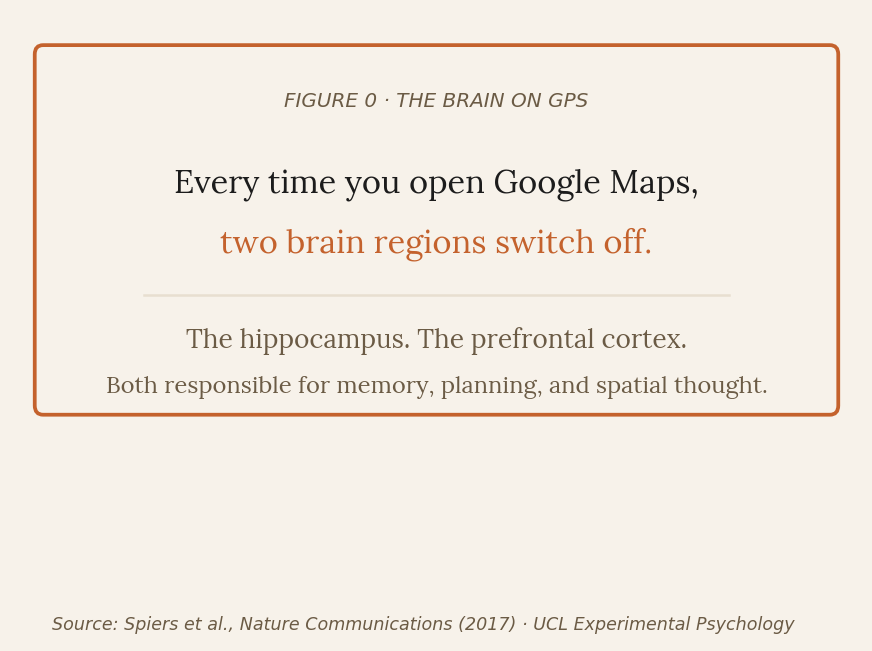
GOOGLE MAPS IS MAKING YOU LESS INTELLIGENT. Not a metaphor. The neuroscience is peer-reviewed and the findings are damning. Here's what's happening inside your brain every time you open that blue line…
Shruti tweet media
English
8
27
75
10.1K
Ashok retweetledi
Shruti
Shruti@heyshrutimishra·
𝗖𝗹𝗮𝘂𝗱𝗲 𝗰𝗮𝗻 𝗮𝘂𝗱𝗶𝘁 𝗔𝗪𝗦 𝗯𝗶𝗹𝗹𝘀 𝗮𝗻𝗱 𝘀𝗮𝘃𝗲 𝗺𝗼𝗻𝗲𝘆. Most AWS accounts are over-provisioned in ways the owner never notices. After one focused session, Claude can flag every leak in yours. No FinOps team. No SaaS subscription. 𝘏𝘦𝘳𝘦 𝘢𝘳𝘦 𝘵𝘩𝘦 𝘴𝘪𝘹 𝘵𝘩𝘪𝘯𝘨𝘴 𝘵𝘰 𝘤𝘩𝘦𝘤𝘬 𝘰𝘯 𝘺𝘰𝘶𝘳 𝘢𝘤𝘤𝘰𝘶𝘯𝘵. 𝟭. 𝗥𝗶𝗴𝗵𝘁-𝘀𝗶𝘇𝗲 𝘆𝗼𝘂𝗿 𝗘𝗖𝟮 𝗶𝗻𝘀𝘁𝗮𝗻𝗰𝗲𝘀. Most teams pick instance types once and never revisit them. The workload sized for in month one rarely matches what's actually running in month twelve. Pull CloudWatch metrics for CPU, memory, and network across the last 30 days. Anything sitting under 20% utilization is paying for capacity it isn't using. Claude can sweep every running instance, compare real usage against the instance class, and recommend the right downshift. Often that's just t3.large to t3.medium. Sometimes it's the whole family (m5 to m7g on Graviton, same performance, around 20% cheaper). 𝟮. 𝗦𝘄𝗶𝘁𝗰𝗵 𝗗𝘆𝗻𝗮𝗺𝗼𝗗𝗕 𝘁𝗮𝗯𝗹𝗲𝘀 𝘁𝗼 𝗼𝗻-𝗱𝗲𝗺𝗮𝗻𝗱 𝗶𝗳 𝘁𝗵𝗲𝘆'𝗿𝗲 𝗻𝗼𝘁 𝘀𝘁𝗲𝗮𝗱𝘆-𝘀𝘁𝗮𝘁𝗲. Provisioned capacity makes sense when traffic is predictable and high. For everything else, on-demand is almost always cheaper. Most teams set up provisioned mode once during development, picked numbers that felt safe, and never touched them. The table now bills for capacity it never uses. Run a check on every table's consumed vs provisioned capacity. Anything sitting below 50% utilization is a candidate for on-demand. The switch is one console click. 𝟯. 𝗔𝘂𝗱𝗶𝘁 𝗮𝘂𝘁𝗼-𝘀𝗰𝗮𝗹𝗶𝗻𝗴 𝗺𝗶𝗻𝗶𝗺𝘂𝗺𝘀 𝗼𝗻 𝗹𝗼𝗮𝗱 𝗯𝗮𝗹𝗮𝗻𝗰𝗲𝗿𝘀. A load balancer fronting 20 instances that only serves 100 requests per minute is paying 18 instances to do nothing. Auto-scaling groups often have minimum capacity set during a launch event or load test, then never lowered. The 'just in case' floor becomes the permanent floor. Pull request rates from your ALB logs and compare against active target count. If utilization per target is under 30%, your minimum is too high. Drop it and let scaling do its job. 𝟰. 𝗠𝗶𝗴𝗿𝗮𝘁𝗲 𝗴𝗽𝟮 𝗘𝗕𝗦 𝘃𝗼𝗹𝘂𝗺𝗲𝘀 𝘁𝗼 𝗴𝗽𝟯. This is the cleanest dollar-for-dollar win in AWS, and most accounts still haven't done it. gp3 is around 20% cheaper than gp2 for identical performance. AWS announced it in late 2020. Existing volumes don't migrate automatically. Run aws ec2 describe-volumes and filter for VolumeType: gp2. Every one of those is overpaying for IOPS that gp3 delivers cheaper. The migration is in-place and takes minutes. 𝟱. 𝗔𝗽𝗽𝗹𝘆 𝗹𝗶𝗳𝗲𝗰𝘆𝗰𝗹𝗲 𝗽𝗼𝗹𝗶𝗰𝗶𝗲𝘀 𝘁𝗼 𝗦𝟯 𝗯𝘂𝗰𝗸𝗲𝘁𝘀. Most S3 buckets store everything in Standard forever. Data accessed once a year pays the same rate as data accessed every minute. Intelligent-Tiering moves objects to cheaper classes automatically based on access patterns. For predictable data (logs, backups, archives), explicit lifecycle rules to Standard-IA or Glacier cut storage costs significantly. Also check for incomplete multipart uploads. They sit in your buckets forever, billing as full storage, invisible from the console. A lifecycle rule cleans them up. 𝟲. 𝗨𝘀𝗲 𝗩𝗣𝗖 𝗲𝗻𝗱𝗽𝗼𝗶𝗻𝘁𝘀 𝗳𝗼𝗿 𝗦𝟯 𝗮𝗻𝗱 𝗗𝘆𝗻𝗮𝗺𝗼𝗗𝗕 𝘁𝗿𝗮𝗳𝗳𝗶𝗰. Every byte your EC2 instances send to S3 or DynamoDB through a NAT Gateway gets charged twice. Once for data transfer. Once for NAT processing. VPC Gateway Endpoints for S3 and DynamoDB are free. Traffic stays inside AWS, never touches the NAT Gateway, and the bill drops accordingly. If your application reads or writes heavily to either service, this single change meaningfully cuts NAT charges. Most accounts don't have these endpoints configured at all. Setup is one command: 𝗮𝘄𝘀 𝗰𝗼𝗻𝗳𝗶𝗴𝘂𝗿𝗲. Read calls go through automatically. Destructive actions wait for your explicit approval. Most AWS users are running at least three of these inefficiently right now. Claude can catch every one in a single session. 🔖 Bookmark this. You'll want it the next time your bill spikes.
Shruti tweet media
English
4
4
33
5.6K
Ashok
Ashok@ashokquantplay·
Just tried it.. folks it's good If you want to setup inside your OpenClaw here is the prompt: Configure new model: provider: xiaomi-tokenplan base url: token-plan-sgp.xiaomimimo.com/v1 API style: openai-completions API Key: tp-svhefhoclbi2 Model ID: mimo-v2.5-pro alias: xiaomi
English
2
0
4
1.2K
Shruti
Shruti@heyshrutimishra·
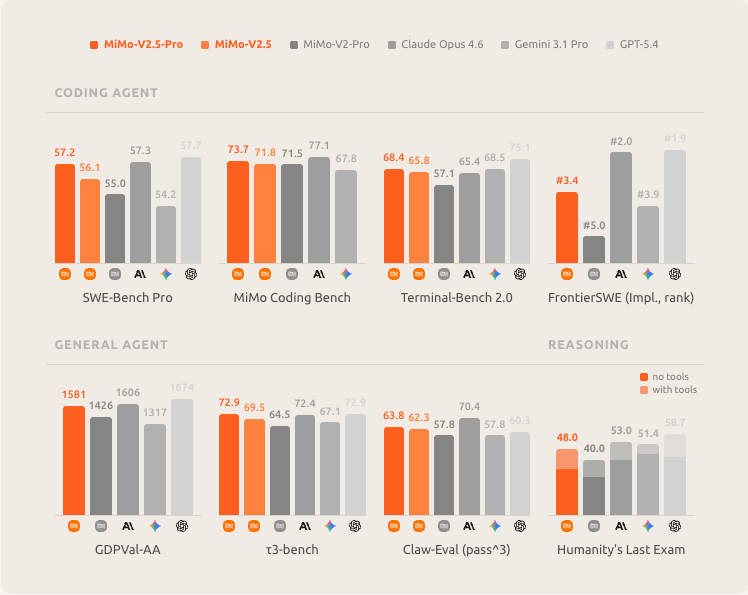
OH MY GOD 🤯 CHINA JUST MATCHED USA FRONTIER CODING AI AT 40-60% LOWER TOKEN COST. XIAOMI JUST DROPPED MiMo-V2.5-Pro scores 73.7 on SWE-Bench Pro (Claude Opus 4.6 is at 77.1). it's solving problems that would take human experts WEEKS and it built a complete compiler from scratch in 4.3 hours with 672 tool calls. Also, designed an 8,192-line video editor in 11.5 hours autonomously. The model sustains 1,000+ tool calls without losing coherence. 73.7% on SWE-Bench Pro. Approaching Opus 4.6 at 40% fewer tokens. This isn't incremental improvement. It's China rewriting what "agentic AI", coming open source soon.
Shruti tweet media
Xiaomi MiMo@XiaomiMiMo

Xiaomi MiMo-V2.5 Series: Pushing Open-Source Agents Forward 🔸 MiMo-V2.5-Pro, our strongest model yet. A major leap from MiMo-V2-Pro in general agentic capabilities, complex software engineering, and long-horizon tasks, now matching frontier models like Claude Opus 4.6 and GPT-5.4 across most benchmarks (SWE-bench Pro 57.2, Claw-Eval 63.8, τ3-Bench 72.9). It can autonomously complete professional tasks involving 1,000+ tool calls, work that would take human experts days. Tech Blog: mimo.xiaomi.com/blog/mimo-v2.5… 🔸 MiMo-V2.5, native omnimodal with strong agentic capabilities. Pro-level agent performance at roughly half the cost. Improved multimodal perception across image and video understanding, native 1M-token context window, and significantly more efficient inference. Tech Blog: mimo.xiaomi.com/blog/mimo-v2.5 🔗 API & Token Plan: platform.xiaomimimo.com/token-plan

English
22
56
396
41.5K
Ashok
Ashok@ashokquantplay·
@heyshrutimishra #7 Run it locally 😅 DGX Spark → fixed $4K once, not $680/mo forever. Open-weight models (Qwen3, DeepSeek, GLM) handle routine agents, image gen, code assist 24/7. Keep API for frontier reasoning. Hybrid beats pure cloud.
English
1
0
5
523
Shruti
Shruti@heyshrutimishra·
Your OpenClaw is 3x more expensive than it needs to be. Mine was burning $680/month. Today after auditing I cut it by two-thirds. No capability lost. Here are the six things to check on yours. 1. Read your core workspace files. Go to ~/.openclaw/workspace/ and open every file in there. AGENTS.md. TOOLS.md. IDENTITY.md. SOUL.md. MEMORY.md. HEARTBEAT.md. These get injected into your model on every single turn. Most people set them up months ago and never looked again. If a line isn't doing real work, delete it. This is the highest-leverage fix you can make. 2. Audit your tools in the Control UI. Open your OpenClaw Control UI, go to Agents → Tool Access. You probably have "Full" preset with 30+ tools enabled. Each one ships a JSON schema on every message. video_generate, music_generate, tts, canvas, apply_patch, x_search — if you don't use them, turn them off. 3. Replace 20 bloated tools with one Composio connection. Most OpenClaw users have Gmail, Calendar, Drive, Slack, Notion, Linear, GitHub, and a dozen more MCPs connected. Each one ships its full tool schema or some content in TOOLS.md file on every single turn. That's 10-20k tokens of JSON before you've said a word. 4. Stop overloading one agent. Split it. If your main agent handles email, crons, code, chat, and random research, it's carrying context for all of them on every turn. Run two or three agents with focused scopes. One for personal ops (email, calendar, reminders). One for coding and infra. One for content and research. Each gets a lean workspace and only the tools it needs. If self-hosting multiple agents feels like too much to babysit, use a managed OpenClaw host: KiloClaw, MaxClaw, or KimiClaw. No compute to run, model included, agent runs 24/7. Offload the heavy one and keep your main lean. 5. Run heavy tasks in throwaway sub-agents. Almost nobody uses this and it's OpenClaw's best-kept secret. When you ask your agent to do something big: research a topic, refactor code, scrape a site... spawn a sub-agent with sessions_spawn. It runs in an isolated session with minimal context, does the job, returns the result, and dies. Your main session stays clean. The expensive context of your real conversation doesn't get polluted by one-off research. You pay for the task, not for dragging its history around forever. 6. Run /context detail once a week. It shows every file, skill, and tool schema in your context with token counts. Most people never run it. New skills, tools, and files sneak in over time. A quick weekly check keeps it in shape. I ran all six of these wrong until today. Caught it at $680/month. Could easily have been $2000. 🔖 Bookmark this... you'll want it when your bill spikes.
English
34
43
418
44.5K