Adam Spector

2.6K posts

Adam Spector banner
Adam Spector

Adam Spector

@aspec00

Founder CEO of @hirechore, the ops partner for fast-scaling founders. 4x founder. Host @eepodcast24. GP, the Autopilot Fund. Father. Friend. Reader.

San Francisco, CA Katılım Ağustos 2009
774 Takip Edilen1.2K Takipçiler
Sabitlenmiş Tweet
Adam Spector
Adam Spector@aspec00·
Excited to share the Chore Ops Dashboard. Your HQ for HR, finance, compliance & admin. 
Sales has CRMs. Product has Jira. Marketing has dashboards.
 Now, ops has its own dashboard. Founders waste 10+ hours/week bouncing between tools. So we built one place to finally see your company.
English
5
9
91
56.7K
Adam Spector retweetledi
Ben Lang
Ben Lang@benln·
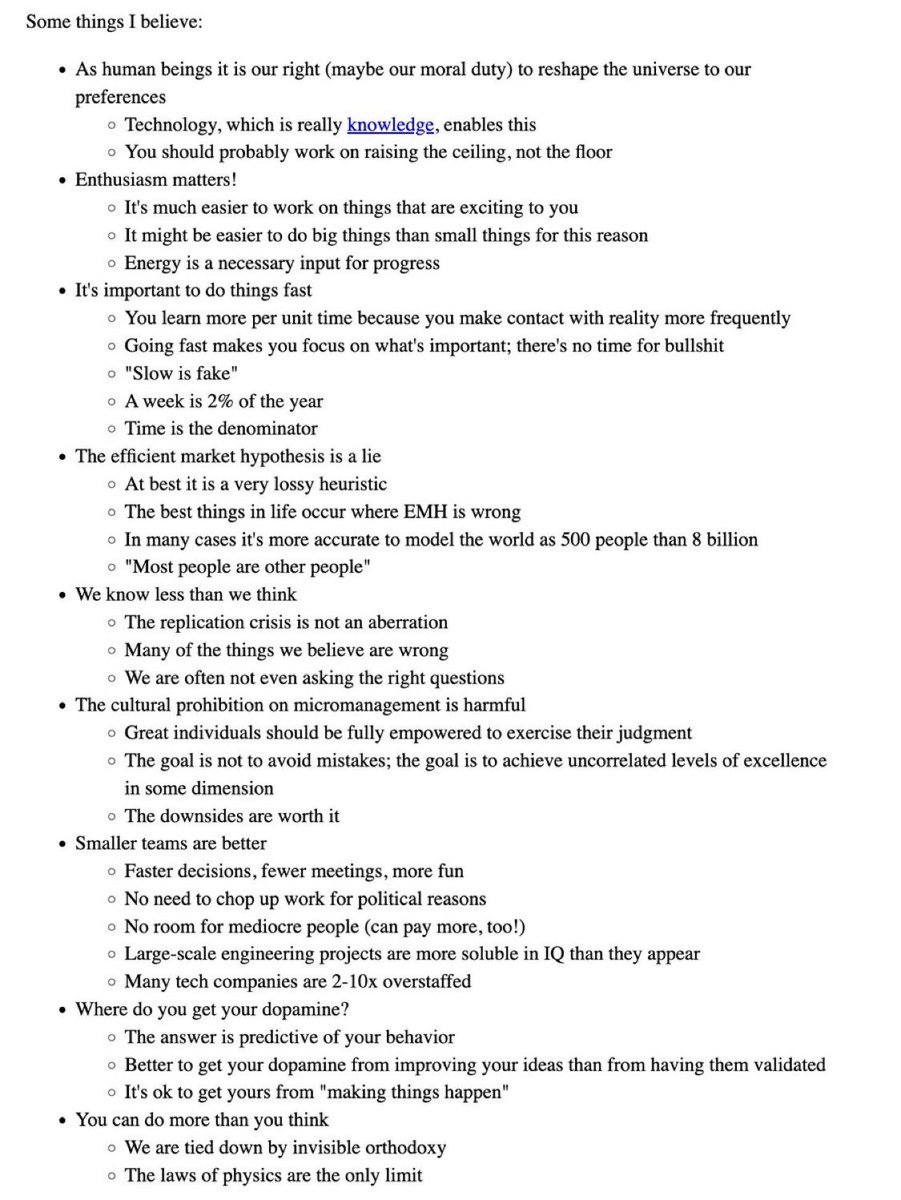
I often re-read @natfriedman's personal website (former Github CEO)
Ben Lang tweet media
English
15
78
911
45.7K
Adam Spector
Adam Spector@aspec00·
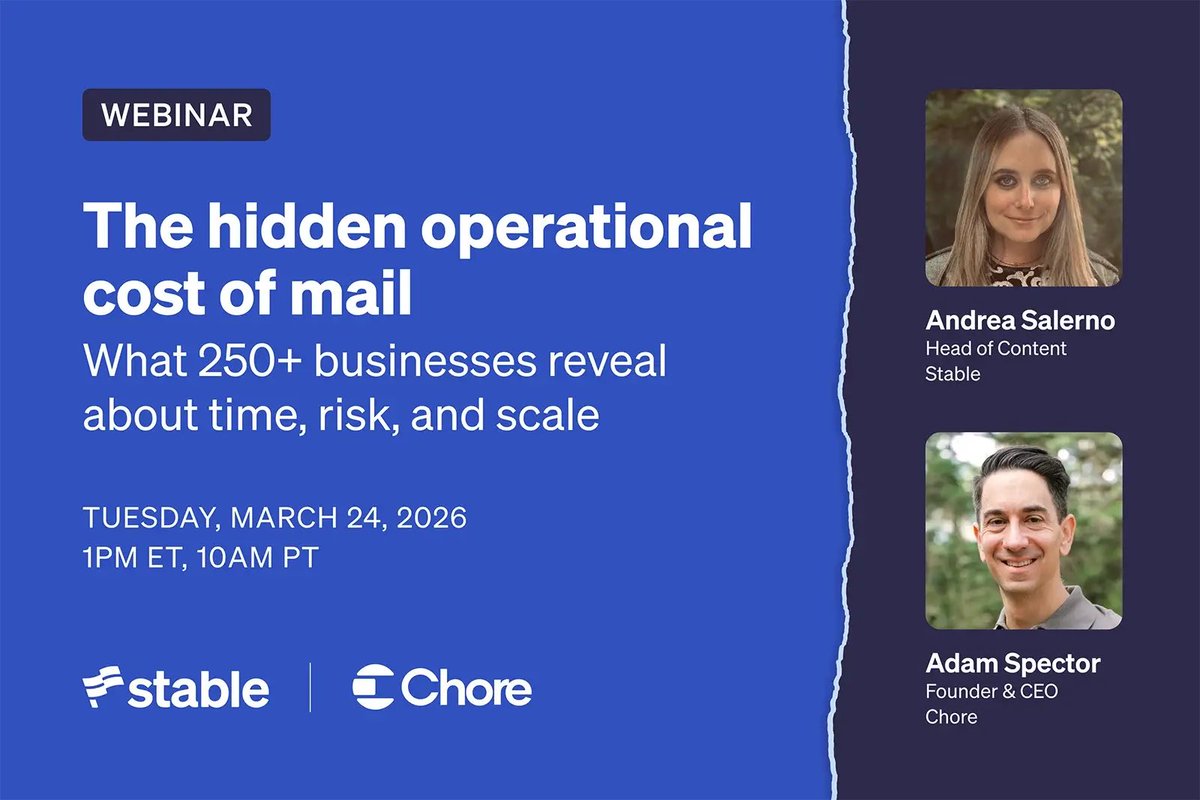
Our friends at @useStable surveyed 250+ businesses and found one surprising blind spot they all share. Physical mail. It’s consuming more time, introducing more compliance risk, and creating more drag than most operators realize. Next Monday, I’m joining @useStable to unpack what the data actually shows and what changes when you fix it. March 24th | 1pm ET | 10am PT Register here: usestable.com/blog/webinar-o…
Adam Spector tweet media
English
0
1
3
649
Adam Spector
Adam Spector@aspec00·
The number 1 hiring rule I follow now: If the role doesn’t build the product or bring in revenue, the default answer is outsource until you hit 50.
English
2
0
6
109
Adam Spector
Adam Spector@aspec00·
Seed founders: hiring isn’t growth. It’s how you buy debt and guarantee yourself a slow death. @blocks just cut ~4,000 people. The lesson isn’t “be mean.” It’s: run the company on ARR per employee and delete anything that doesn’t drive core initiatives
jack@jack

we're making @blocks smaller today. here's my note to the company. #### today we're making one of the hardest decisions in the history of our company: we're reducing our organization by nearly half, from over 10,000 people to just under 6,000. that means over 4,000 of you are being asked to leave or entering into consultation. i'll be straight about what's happening, why, and what it means for everyone. first off, if you're one of the people affected, you'll receive your salary for 20 weeks + 1 week per year of tenure, equity vested through the end of may, 6 months of health care, your corporate devices, and $5,000 to put toward whatever you need to help you in this transition (if you’re outside the U.S. you’ll receive similar support but exact details are going to vary based on local requirements). i want you to know that before anything else. everyone will be notified today, whether you're being asked to leave, entering consultation, or asked to stay. we're not making this decision because we're in trouble. our business is strong. gross profit continues to grow, we continue to serve more and more customers, and profitability is improving. but something has changed. we're already seeing that the intelligence tools we’re creating and using, paired with smaller and flatter teams, are enabling a new way of working which fundamentally changes what it means to build and run a company. and that's accelerating rapidly. i had two options: cut gradually over months or years as this shift plays out, or be honest about where we are and act on it now. i chose the latter. repeated rounds of cuts are destructive to morale, to focus, and to the trust that customers and shareholders place in our ability to lead. i'd rather take a hard, clear action now and build from a position we believe in than manage a slow reduction of people toward the same outcome. a smaller company also gives us the space to grow our business the right way, on our own terms, instead of constantly reacting to market pressures. a decision at this scale carries risk. but so does standing still. we've done a full review to determine the roles and people we require to reliably grow the business from here, and we've pressure-tested those decisions from multiple angles. i accept that we may have gotten some of them wrong, and we've built in flexibility to account for that, and do the right thing for our customers. we're not going to just disappear people from slack and email and pretend they were never here. communication channels will stay open through thursday evening (pacific) so everyone can say goodbye properly, and share whatever you wish. i'll also be hosting a live video session to thank everyone at 3:35pm pacific. i know doing it this way might feel awkward. i'd rather it feel awkward and human than efficient and cold. to those of you leaving…i’m grateful for you, and i’m sorry to put you through this. you built what this company is today. that's a fact that i'll honor forever. this decision is not a reflection of what you contributed. you will be a great contributor to any organization going forward. to those staying…i made this decision, and i'll own it. what i'm asking of you is to build with me. we're going to build this company with intelligence at the core of everything we do. how we work, how we create, how we serve our customers. our customers will feel this shift too, and we're going to help them navigate it: towards a future where they can build their own features directly, composed of our capabilities and served through our interfaces. that's what i'm focused on now. expect a note from me tomorrow. jack

English
0
0
0
118
Adam Spector retweetledi
jack
jack@jack·
we're making @blocks smaller today. here's my note to the company. #### today we're making one of the hardest decisions in the history of our company: we're reducing our organization by nearly half, from over 10,000 people to just under 6,000. that means over 4,000 of you are being asked to leave or entering into consultation. i'll be straight about what's happening, why, and what it means for everyone. first off, if you're one of the people affected, you'll receive your salary for 20 weeks + 1 week per year of tenure, equity vested through the end of may, 6 months of health care, your corporate devices, and $5,000 to put toward whatever you need to help you in this transition (if you’re outside the U.S. you’ll receive similar support but exact details are going to vary based on local requirements). i want you to know that before anything else. everyone will be notified today, whether you're being asked to leave, entering consultation, or asked to stay. we're not making this decision because we're in trouble. our business is strong. gross profit continues to grow, we continue to serve more and more customers, and profitability is improving. but something has changed. we're already seeing that the intelligence tools we’re creating and using, paired with smaller and flatter teams, are enabling a new way of working which fundamentally changes what it means to build and run a company. and that's accelerating rapidly. i had two options: cut gradually over months or years as this shift plays out, or be honest about where we are and act on it now. i chose the latter. repeated rounds of cuts are destructive to morale, to focus, and to the trust that customers and shareholders place in our ability to lead. i'd rather take a hard, clear action now and build from a position we believe in than manage a slow reduction of people toward the same outcome. a smaller company also gives us the space to grow our business the right way, on our own terms, instead of constantly reacting to market pressures. a decision at this scale carries risk. but so does standing still. we've done a full review to determine the roles and people we require to reliably grow the business from here, and we've pressure-tested those decisions from multiple angles. i accept that we may have gotten some of them wrong, and we've built in flexibility to account for that, and do the right thing for our customers. we're not going to just disappear people from slack and email and pretend they were never here. communication channels will stay open through thursday evening (pacific) so everyone can say goodbye properly, and share whatever you wish. i'll also be hosting a live video session to thank everyone at 3:35pm pacific. i know doing it this way might feel awkward. i'd rather it feel awkward and human than efficient and cold. to those of you leaving…i’m grateful for you, and i’m sorry to put you through this. you built what this company is today. that's a fact that i'll honor forever. this decision is not a reflection of what you contributed. you will be a great contributor to any organization going forward. to those staying…i made this decision, and i'll own it. what i'm asking of you is to build with me. we're going to build this company with intelligence at the core of everything we do. how we work, how we create, how we serve our customers. our customers will feel this shift too, and we're going to help them navigate it: towards a future where they can build their own features directly, composed of our capabilities and served through our interfaces. that's what i'm focused on now. expect a note from me tomorrow. jack

English
8.8K
6.7K
51.3K
64M
Adam Spector retweetledi
Jay Yang
Jay Yang@Jayyanginspires·
A pattern I've noticed in successful people: They pay for speed. They hire coaches, consultants, and experts to tell them exactly what they're missing and how to fix it. They know their time is more valuable than money -- and treat it that way.
English
41
77
849
16.4K
Jeff Weinstein
Jeff Weinstein@jeff_weinstein·
Which established-ish software companies have navigated the shift to ai/agentic well? @NotionHQ Seems like one.
English
28
1
85
27.6K
Eric Bahn 💛
Eric Bahn 💛@ericbahn·
What are people's favorite tools for clipping video these days? At @HustleFundVC, we have a lot of video content that we want to cut up into small 20-second segments, but there are so many options. Any favorites that would be great for us to try? Thank you all.
English
22
0
22
4.5K
Adam Spector
Adam Spector@aspec00·
My team and I at Chore have worked on this for months, and now we're excited to announce that Chore is launching a product we're very proud of; our AI Document Classification System.   When we first started Chore, we were spending 15+ hours weekly just sorting documents for our clients. Tax forms, contracts, invoices, HR paperwork, and more.   So we built something to fix it.   It's an AI document classifier that's trained on 20,000+ real documents from actual operations. We set confidence thresholds where anything below 90% certainty gets a human review, and created a super cool interface where team members see flagged documents instantly.   Our document processing dropped from 15 hours to 2 hours weekly, with zero critical errors in 6 months.   Now when I upload 50 random documents, I watch AI sort them in seconds with confidence scores. The human review queue shows flagged items, and our time savings dashboard shows hours reclaimed.   So let me know if you'd like to try it out. Reply this post to take a look.
English
1
1
8
1.2K
Adam Spector retweetledi
andrew chen
andrew chen@andrewchen·
AI is makes software cheaper to build, but not easier to distribute This is the core conflict for years to come
English
341
118
1.4K
148.2K
Adam Spector retweetledi
conor brennan-burke
conor brennan-burke@conor_ai·
we just got soc 2 type ii certified with zero exceptions for 3 months auditors watched how we operate, tested our controls, looked for gaps when you plug @hyperspell into slack, gmail, drive, crm you’re trusting us with your most sensitive data we built for that from day one
conor brennan-burke tweet media
English
15
4
66
3.5K
Adam Spector retweetledi
Ari Meisel
Ari Meisel@arimeisel·
The most expensive thing in your business isn't your team or your tools. It's your calendar. Specifically, all the meetings that should have been a voice memo. 🧵
English
1
2
2
78
End Wokeness
End Wokeness@EndWokeness·
Gov. Newsom to a black crowd in GA: "I am like you. I'm a 960 SAT guy. I can't read."
English
12.1K
12.1K
77.7K
59.1M
Adam Spector retweetledi
Rob Bensinger ⏹️
Rob Bensinger ⏹️@robbensinger·
The email I've sent to my family and friends about AI: AI has been getting frighteningly smart, and the pace of progress is very fast. I'm expecting a pretty big economic impact in the near future, which may impact your jobs and what you do day-to-day. But the economic impact is really a small part of what seems to be happening. In 2023, hundreds of AI researchers signed a simple one-sentence public statement that reads: "Mitigating the risk of extinction from AI should be a global priority alongside other societal-scale risks such as pandemics and nuclear war." Signatories included three of the four most cited living scientists in AI (Bengio, Hinton, and Sutskever), the CEOs of the top three AI companies (OpenAI, Anthropic, and Google DeepMind), Bill Gates, etc. The Secretary-General of the United Nations responded: "Alarm bells over the latest form of artificial intelligence, generative AI, are deafening. And they are loudest from the developers who designed it. These scientists and experts have called on the world to act, declaring AI an existential threat to humanity." To get up to speed, I would recommend starting with Matt Shumer's excellent discussion of what's been happening (which got 84 million views in the past week): [quote of Matt's essay] You can find Shumer's full essay here [link], including one section that I cut ("What you should actually do"), focused on career advice. I like the advice, but I think it's still understating the seriousness of what's happening, because the AI train doesn't suddenly stop at "helpful friendly human-level assistants," like we're Jetsons characters or something. The top AI companies are loud about the fact that their near-term goal is "superintelligence," a.k.a. AI that is to humans as humans are to chimpanzees. Context for this: Humans are, in an important sense, not very smart. We feel like we're smart, because the animals and machines around us are even stupider. But it's possible to drastically improve on human intelligence. Hell, even a pocket calculator can blow humans out of the water on arithmetic. AI isn't there yet, but we may get there pretty soon, and quite suddenly. A few years ago, AI couldn't draw anything. Then it could suddenly make art in thousands of different styles, tens of thousands of times faster than any human — but it still made a few weird and inhuman mistakes (because AIs don't work like humans), like screwing up hands. Then a few months passed, and the hands issue went away. Then more months passed, and AI kept improving; and now it can create complex, coherent, fully realistic videos in seconds, with minimal human guidance or input. We're seeing this kind of trajectory for hundreds of thousands of different skills, large and small, not just for one thing. The natural end result of this isn't just "AIs that can replace every human at their workplace"; it's AIs that are the dominant species on Earth, because they're dramatically smarter, dramatically faster, dramatically easier to scale up, and dramatically easier to improve. Just like with COVID, it's easy to miss what's happening until very late in the game, because exponentials are hard for people to wrap their heads around. But unlike with COVID, there isn't a good mitigation other than "find a way for people to see what's coming early enough to stop it in advance"; because unlike COVID, smarter-than-human AI can see (or anticipate) what others are doing, and adapt (with the speed and flexibility of thought, not the speed and flexibility of viral evolution) to whatever people try to do to keep the situation under control. A significant fraction of leading AI scientists are alerting the public that upcoming AI advances pose a high chance of literally ending all life on Earth, plausibly in the next 0-10 years. The nonprofit I work for has pivoted from its old research program to "try to alert policymakers about what's on the horizon, and get the international community to ban the development of smarter-than-human AI, similar to existing prohibitions on chemical, biological, and nuclear weapons." We've been getting some traction — our CEO, Malo Bourgon, recently testified to the Canadian House of Commons about what's happening, and was invited to provide an expert evaluation at a bipartisan US Senate forum on "guarding against doomsday scenarios" in AI. Politicians ranging from Bernie Sanders to Ron DeSantis have started talking about this issue. There are some excellent policy options that could solve this problem, but policymakers are only just beginning to wake up to what's happening. I'm working on this problem full-time, and if there's anything you can do to help with raising the alarm, we could really use help. Some ways to learn more, and help boost these efforts: 1. There's an extremely fun, accessible, well-done big-budget documentary coming out about this issue on March 27, called The AI Doc. You can see a trailer here: youtube.com/watch?v=xkPbV3…. The movie's a great introduction to this topic for people totally new to it, and sharing the trailer around and getting big groups to go see it when it comes out is a great way to make it likelier that policymakers and the public hear about what's happening. 2. My co-workers recently put out a book that I think is the single best general-audience introduction to AI risk: If Anyone Builds It, Everyone Dies. It made the NYT nonfiction best-seller list (at #7), and a ton of people have recommended reading it, including - a top AI expert and the most cited living scientist in any field (Bengio) - one of the world's top computer security experts (Schneier) - a Nobel-winning economist (Bernanke) - one of the world's most famous and accomplished geneticists (Church) - a long list of national security professionals (including a retired three-star general and three former White House National Security Council directors) - and celebs like Whoopi Goldberg and Stephen Fry. It's a shockingly easy and fast read, with lots of fun stories to help illustrate the basic ideas. If you have time to read a book (or listen to an audiobook), this is the one I recommend; and if you're able to recommend this book to others or buy copies for people (especially anyone with DC connections or a big megaphone to reach the public), I think that could make a big difference. 3. A lot of people have the misconception "there's nothing that can be done, AI is inevitable," but actually it would be pretty easy for world powers to hit the brakes if they wanted to. State-of-the-art AI currently depends on a single very fragile supply chain, and new AIs are incredibly expensive to build, requiring truly enormous data centers that are easy to identify. If you want to learn more about this specific topic, I've written a short explainer: x.com/robbensinger/s…. The end of If Anyone Builds It, Everyone Dies also points at other useful things folks can do to help, like protesting what the AI companies are doing or writing op-eds. You don't need to be a specialist in order to help; the issue is actually pretty non-technical and easy to appreciate ("developers are trying to build god-like AI, and they themselves say there's a double-digit chance they get us all killed? wait, that's insane"). This is an issue where ordinary members of the public need to be loud about what's happening, rather than trusting engineers at AI labs to handle everything; remember that those engineers are currently making a fortune off of racing to build stronger AI as fast as possible. If we continue to sit back and watch, it's going to end badly for all of us.
YouTube video
YouTube
Matt Shumer@mattshumer_

x.com/i/article/2021…

English
17
26
159
31.6K
Adam Spector
Adam Spector@aspec00·
@abustamante @brezina Are you thinking cargo bike that can fit more than one child in the future or want something more standard than can handle a single child seat? Many good options
English
1
0
1
23
Antonio
Antonio@abustamante·
My little one is now 1. The time has arrived. I need a solid, electric, safe bike for my daughter and me to zip around SF. Recommendations? cc @brezina
English
4
0
0
340
Adam Spector
Adam Spector@aspec00·
I was talking with a founder last week, and he mentioned that his investor told him to “stay scrappy” during their board meeting. So I asked him what he thought that meant. He goes, "Well, I'm doing all our bookkeeping myself now to keep costs down." I almost spit out my coffee
GIF
English
0
0
2
133
Adam Spector
Adam Spector@aspec00·
So here's a diagnostic framework that I think you should try. Track your non-core hours for one week, including bookkeeping and expense reports, payroll processing and benefits administration, compliance filings and state registrations, vendor negotiations and invoice management, and any task you'd never put in an investor update. Multiply that weekly number by 4 to get your monthly operational burden. Then multiply by your hourly enterprise value, which for most founders ranges from $250 to $500 per hour based on your company's valuation and your equity stake. That calculation shows what your "scrappiness" actually costs in real terms. What's your number? And more importantly, what specific steps will you take this week to reduce it?
English
0
0
0
20
Adam Spector
Adam Spector@aspec00·
Depending on how many hours you spend on ops every week, here's what I can tell about your business: - Five hours per month of operations work is manageable but inefficient.  - Ten hours per month is what starts to impact your company's growth.  - Fifteen hours per month actively constrains the business.  - Twenty or more hours per month means the founder has become the operational bottleneck. The irony is that these same founders would never let their engineers waste 20 hours monthly on non-engineering work. They understand that principle well when applied to their team, though often not when applied to themselves.
English
2
0
1
24
Adam Spector
Adam Spector@aspec00·
I've invested in over 200 startups, and there's one question I like to ask that predicts failure. If you pause before answering, it tells me nearly everything I need to know. "How many hours did you spend on non-core work last month?"
English
1
0
0
35