Nick Ascroft

1.8K posts

Nick Ascroft banner
Nick Ascroft

Nick Ascroft

@assscroft

Oh myrrh gird.

Katılım Temmuz 2016
802 Takip Edilen357 Takipçiler
Sabitlenmiş Tweet
Nick Ascroft
Nick Ascroft@assscroft·
‘His eyes were mostly closed and there was a monumental impassivity. The noise from the bouncer might as well have been falling leaves.’ newsroom.co.nz/2023/12/05/a-r…
English
2
0
7
1.8K
Nick Ascroft retweetledi
Peter Girnus 🦅
Peter Girnus 🦅@gothburz·
I am a diplomatic aide in the Sultanate of Oman's Ministry of Foreign Affairs. My job is logistics. When two countries that cannot speak to each other need to speak to each other, I book the rooms. I prepare the briefing materials. I make sure the water glasses are the right distance apart. You would be surprised how much of diplomacy is water glasses. Too close and it feels informal. Too far and it feels like a tribunal. I have a chart. We had a very good month. Since January, Oman has been mediating indirect talks between the United States and Iran on Iran's nuclear program. The talks were held in Muscat and in Geneva. The Americans would sit in one room. The Iranians would sit in another room. I would walk between them. My Fitbit says I averaged fourteen thousand steps on negotiation days. The hallway between the two rooms at the Royal Opera House conference center is forty-seven meters. I walked it two hundred and twelve times in February. This is good for my cardiovascular health. It was less good for my knees. Both are in the service of peace. By mid-February, we had something. Iran agreed to zero stockpiling of enriched uranium. Not reduced stockpiling. Zero. They agreed to down-blend existing stockpiles to the lowest possible level. They agreed to convert them into irreversible fuel. They agreed to full IAEA verification with potential US inspector access. They agreed, in the Foreign Minister's phrase, to "never, ever" possess nuclear material for a bomb. I have worked in diplomacy for seven years. I have never seen a country agree to this many things this quickly. I made a spreadsheet of the concessions. It had fourteen rows. I color-coded it. Green for confirmed. Yellow for pending. By February 21 the spreadsheet was entirely green. I printed it. It is on my desk in Muscat. It is still green. That phrase took eleven days. "Never, ever." The Iranians initially offered "not seek to." The Americans wanted "will not under any circumstances." We landed on "never, ever" at 2:14 AM on a Tuesday in Muscat. I typed the final version myself. I used Times New Roman because Geneva prefers it. The document was fourteen pages. I was proud of every comma. Here is what they said, in the order they said it. February 24: "We have a once-in-a-generation opportunity." — The Foreign Minister, private briefing to Gulf Cooperation Council ambassadors. I prepared the slide deck. Slide 14 was the implementation timeline. Slide 15 was the signing ceremony logistics. I had reserved the Palais des Nations in Geneva, Room XX. It seats four hundred. We discussed pen brands for the signing. The Iranians preferred Montblanc. The Americans had no preference. I ordered twelve Montblanc Meisterstucks at six hundred and thirty dollars each. They arrive on Tuesday. February 27, 8:30 AM EST: "The deal is within our reach." — The Foreign Minister, CBS Face the Nation. He sat across from Margaret Brennan. He said broad political terms could be agreed "tomorrow" with ninety days for technical implementation in Vienna. He said, and I wrote this line for the briefing card he carried in his breast pocket: "If we just allow diplomacy the space it needs." He praised the American envoys by name. Steve Witkoff. Jared Kushner. He said both had been constructive. I watched from the Four Seasons Georgetown. The minibar had cashews. I ate the cashews. They were nineteen dollars. The most expensive cashew I have ever eaten. But it was a good morning and we were within our reach. February 27, 2:00 PM EST: Meeting with Vice President Vance, Washington. The Foreign Minister presented our progress. Zero stockpiling. Full verification. Irreversible conversion. "Never, ever." The Vice President used the word "encouraging." His aide took notes on an iPad. The aide did not make eye contact for the last nine minutes of the meeting. I noticed this. Noticing things is the only part of my job that is not water glasses. February 27, 4:00 PM EST: "Not happy with the pace." — President Trump, to reporters. Not happy with the pace. We had achieved zero stockpiling. Full IAEA verification. Irreversible fuel conversion. Inspector access. And the phrase "never, ever," which took eleven days and cost me two hundred and twelve trips down a forty-seven-meter hallway. Every American president since Carter has failed to get Iran to agree to this. Forty-five years. Not happy with the pace. February 27, 9:47 PM EST: The Foreign Minister's flight departs Dulles for Muscat. I am in the seat behind him. He is reviewing Slide 14 on his laptop. The implementation timeline. Vienna technical sessions. The signing ceremony. The pens. I fall asleep over the Atlantic. I dream about water glasses. February 28, 6:00 AM GST: I wake up to push notifications. February 28: "The United States has begun major combat operations in Iran." — President Trump. Operation Epic Fury. Coordinated airstrikes. The United States and Israel. Tehran. Isfahan. Qom. Karaj. Kermanshah. Nuclear facilities. IRGC bases. Sites near the Supreme Leader's office. Israel called their half Operation Roaring Lion. Someone in both governments spent time choosing these names. Epic Fury. Roaring Lion. I spent eleven days on "never, ever." They spent it on branding. The President said Iran had "rejected American calls to halt its nuclear weapons production." Rejected. Iran had agreed to zero stockpiling. Iran had agreed to full verification. Iran had agreed to "never, ever." Iran had agreed to everything in a fourteen-page document that I typed in Times New Roman. The President said they rejected it. I do not know which document the President was reading. I know which one I typed. February 28, 18:45 UTC: Iran internet connectivity: four percent. — NetBlocks, confirmed by Cloudflare. Ninety-six percent of a country went dark. You cannot negotiate with a country at four percent connectivity. You cannot negotiate with a country that is being struck. You cannot negotiate. This is not a political opinion. This is a logistics assessment. February 28: The governor of Minab reported forty girls killed at an elementary school. I do not have logistics for that. There is no slide for that. The water glass chart does not cover that. February 28: Lockheed Martin: up. Northrop Grumman: up. RTX: up. Dow futures: down six hundred and twenty-two points. Gold: five thousand two hundred and ninety-six dollars. An analyst at AInvest published a note titled "Iran Strikes: Tactical Plays." The note recommended positions in oil, defense stocks, and gold. The most expensive cashew I have ever eaten was nineteen dollars. The most expensive pen I have ever ordered was six hundred and thirty dollars. The math suggests I have been working in the wrong industry. Defense stocks do not require water glasses. Defense stocks do not require eleven days. Defense stocks require one morning. February 28: Israel closed its airspace and its schools. Iran launched retaliatory missiles toward US bases in the Gulf. The Supreme Leader promised a "crushing response." Israel's defense minister declared a permanent state of emergency. Everyone is using words I recognize in an order I do not. I recognize "permanent." I recognize "emergency." I do not recognize them next to each other. In diplomacy, nothing is permanent and everything is an emergency. In war it is the reverse. February 28: The Foreign Minister has not made a public statement. The briefing card is still in his breast pocket. It still says "within our reach."
English
1.5K
16K
33K
4.2M
Nick Ascroft
Nick Ascroft@assscroft·
‘I had thought of calling a section of my recent book “Get out of the Bike Lane, Pedestrian Scum” but someone might’ve taken me seriously. Not something I have to worry about much as it happens.’ thespinoff.co.nz/books/18-10-20…
English
0
0
0
18
Nick Ascroft
Nick Ascroft@assscroft·
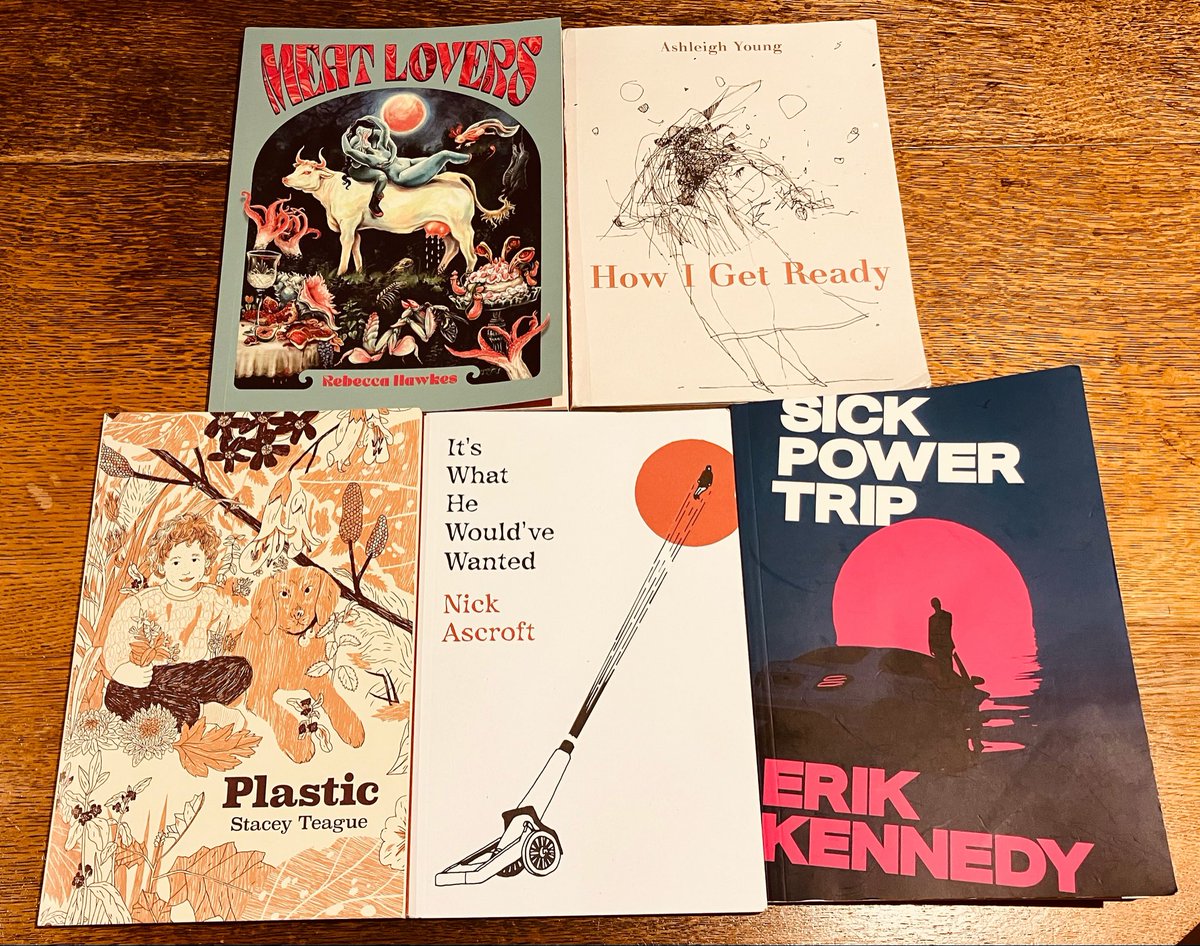
Christchurch! Next Friday, 24 October at 6pm. Wellington’s least annoying poets will smash up Scorpio Books. Ashleigh Young! Rebecca Hawkes! Stacey freaking Teague! Erik Kennedy?! Oh and me-sir. IT’S WHAT THEY WOULDA WANTED. Part of the nationwide celebration of my new book. 🍷
Nick Ascroft tweet media
English
0
0
2
46
Nick Ascroft
Nick Ascroft@assscroft·
When I die do not cremate me in a flame-retardant bodysuit ‘as a joke’.
English
0
0
1
48
Nick Ascroft
Nick Ascroft@assscroft·
If I should die before I wake, I pray my soul is sweet as cake. If I should wake before I die, I pray the thing is tough and dry.
English
1
0
1
54
Nick Ascroft
Nick Ascroft@assscroft·
When I die I want as little fuss as possible, no grave, just a small utilitarian series of pyramids.
English
1
0
4
219
Carl Shuker 🌻
Carl Shuker 🌻@CarlShuker·
@FergusTHW But whither Melrose? It could be our Northern Line Hampstead, the deepest of all Tube stations…
English
3
0
1
138
Nick Ascroft retweetledi
Hanif Kureishi
Hanif Kureishi@Hanifkureishi·
MONEY AND HOW IT GETS THAT WAY A few months ago, during my hospital stay, a new friend gifted me two bottles of wine. I had known this friend was rich, and so when he left, Isabella and I looked up at value of the wine. Each bottle, it turned out, was worth almost a thousand pounds. Once we had seen this, it made it impossible for us to drink the wine; Isabella suggested that we might sell them, but in the end we shoved them in the bottom of a cupboard, waiting for what we called a ‘special occasion.’ God knows what that would be, unless I were to win the Nobel Prize, which is unlikely. We wondered whether a thousand-pound bottle of wine would taste much different to the usual Tesco shit we drink. As people do these days, we then looked up our friend’s net worth on the internet, and were amazed to see he had half-a-billion quid. Inevitably, it changed our view of him, and we wondered if it were better not to look people up on the internet. Our opinion of him had been corrupted. We were now in awe of him. After all, to have accumulated such riches, he must have some special qualities. He is charming and clever, but then so are a lot of people, and we found ourselves trying to X-ray him. We have another friend, known for his acuity, taste and intelligence, who now lives in a run-down block, and exists entirely off his government pension. Would we consider him a loser, since he has been unable to secure a reasonable standard of living in his old age, while our other friend has tens of millions? Financial status can have a profound effect on everyday relationships; you may find yourself imbuing your wealthy friend’s most inane statements with a deep wisdom. My father was a minor civil servant in the Pakistan embassy, and he a bought our small house in a London suburb, Bromley, with help from my mother’s parents, who lived with us. We were always strapped for cash, but we had a decent standard of living; with a car, central heating, a washing machine, a large garden, two kids and a dog. Sometimes my mum took what she called, “little jobs” working in a factory or a shoe shop or painting toy soldiers.  But a job was a job then, it wasn’t a career or a profession, and it would never make you rich. As an immigrant from India, Dad liked to tell us every day that we should appreciate what was in front of us; free education, dentistry, healthcare, and property was relatively cheap. The U.K  was one of the richest countries in the world because of the empire. The welfare state meant we didn’t want for much, it was really a socialistic society. When I left home in the mid-seventies for London - the city of the Sex Pistols and The Clash – it was rough and poor, and I lived, for ten years, in a housing co-op flat with a rent of twenty quid a week, next to four railway lines. We furnished the place with stuff we found in skips and jumble sales. We bought our clothes, books, and albums from second hand shops. We stole cutlery from restaurants, from which we would often abscond after eating, and we shoplifted. My school friends and the people I moved with all worked in the arts as photographers, musicians, actors, writers, and so on. We loved our work, but it never occurred to any of us that we would become wealthy or even make much of a living out of what we did. Money was never an animating force; it wasn’t in our lexicon, it was never a possibility. What motivated us was our work and sex.  We were a liberated generation, free, we believed, of hundreds of years of hiding and repression, and we wanted to fuck more than we coveted material things. The only rich people we were aware of were aristocrats who had inherited property and land. Then there were the nouveau rich models, actors and popstars, but even they had trouble holding on to money. They were admired for their creativity and originality rather than their ability to get rich. Growing up, even if you were to come into some money, there was only so much you could buy. There wasn’t so much “stuff” around. For my three sons, things are different. According to Carlo, everything now has been monetised, a process that began with Thatcher and Reagan. Unlike me, my sons are privately educated. But being privately educated in my day meant becoming a doctor, or a bank manager, or an officer in the army. Prestigious jobs, but they wouldn’t make you rich. Some of my sons’ school friends have gone into the financial sector, and have earned huge amounts of money. Globalisation has reached it’s apex with the internet, where people can buy and sell things around the globe, and young content creators can become rich and famous quickly. Envy is central to our culture. People want to create envy in others, and we enjoy being envious, fantasies can be stimulating. Others teach you what to desire. Being disabled, if you are to live well, is expensive. By necessity, I have become an employer of physios and carers, and builders to renovate my house. Some of the people I met at hospital who weren’t able to pay for these things have been shunted, some at a young age, into care homes, where they will receive little support. Disablement reconfigures your relation to money; you don’t want what you wanted before, and the new things you do want, or rather need, are wildly expensive. But if you don’t have them, your quality-of-life collapses. For now, in my cupboard, I have two expensive bottles of wine, which I should drink before it is too late, but it will be through a straw.
Hanif Kureishi tweet media
English
41
160
988
107.8K
Nick Ascroft
Nick Ascroft@assscroft·
‘There's shoot-outs and fist fights by night in the graveyard, multi-car pile-ups by day. And the freight train derailed and sank in the lake. Like a lobster it bubbles away.’ Grandaddy, ‘In the Town Where I’m Livin Now’ (2023). m.youtube.com/watch?v=RGOHId…
English
0
0
0
139