AstroForge
1.2K posts
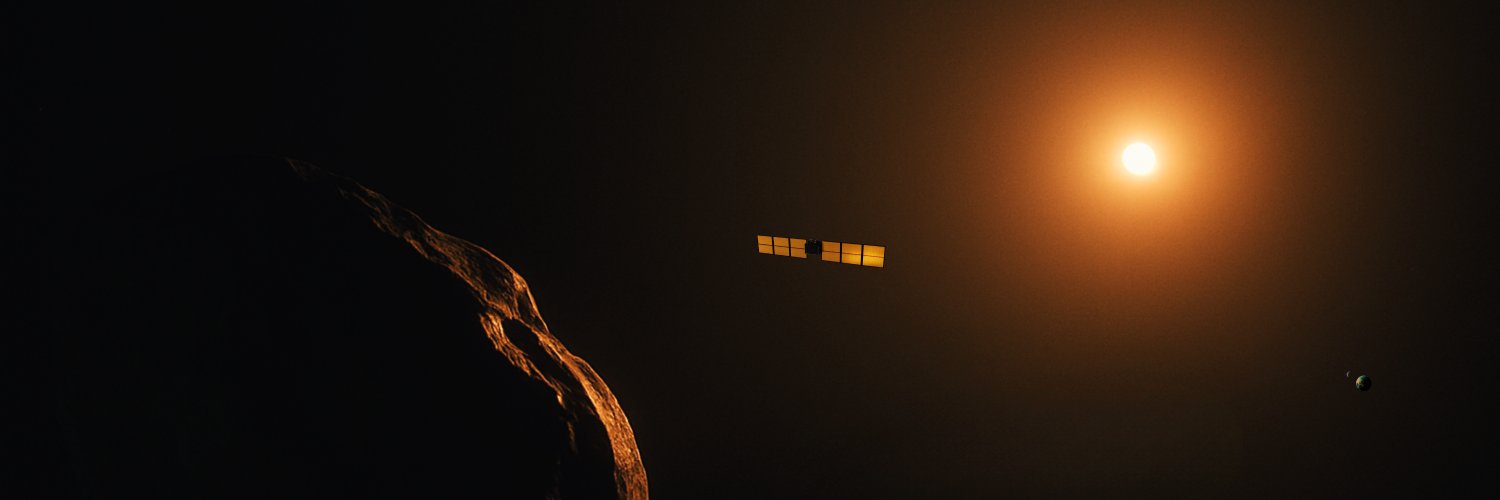

By the end of the decade, we're bringing asteroid material back to Earth.
Here's AstroForge President Robyn Ringuette speaking to @NASASpaceflight on our timeline and plan to make that happen:
English
Flight software is an entirely different beast from the software most people interact with everyday.
On this week's Roid Rage, @MattGialich and Kieran, one of our flight software engineers, explain what it means to write software that directly interacts with hardware.
English
"You never know if the doors are going to be locked on any given Monday."
AstroForge President Robyn Ringuette reflected on his time at SpaceX during the Falcon 1 era while joining @NASASpaceflight's Starship Flight 12 livestream last week: "
English
AstroForge retweetledi

The difficultly of building an interplanetary spacecraft:
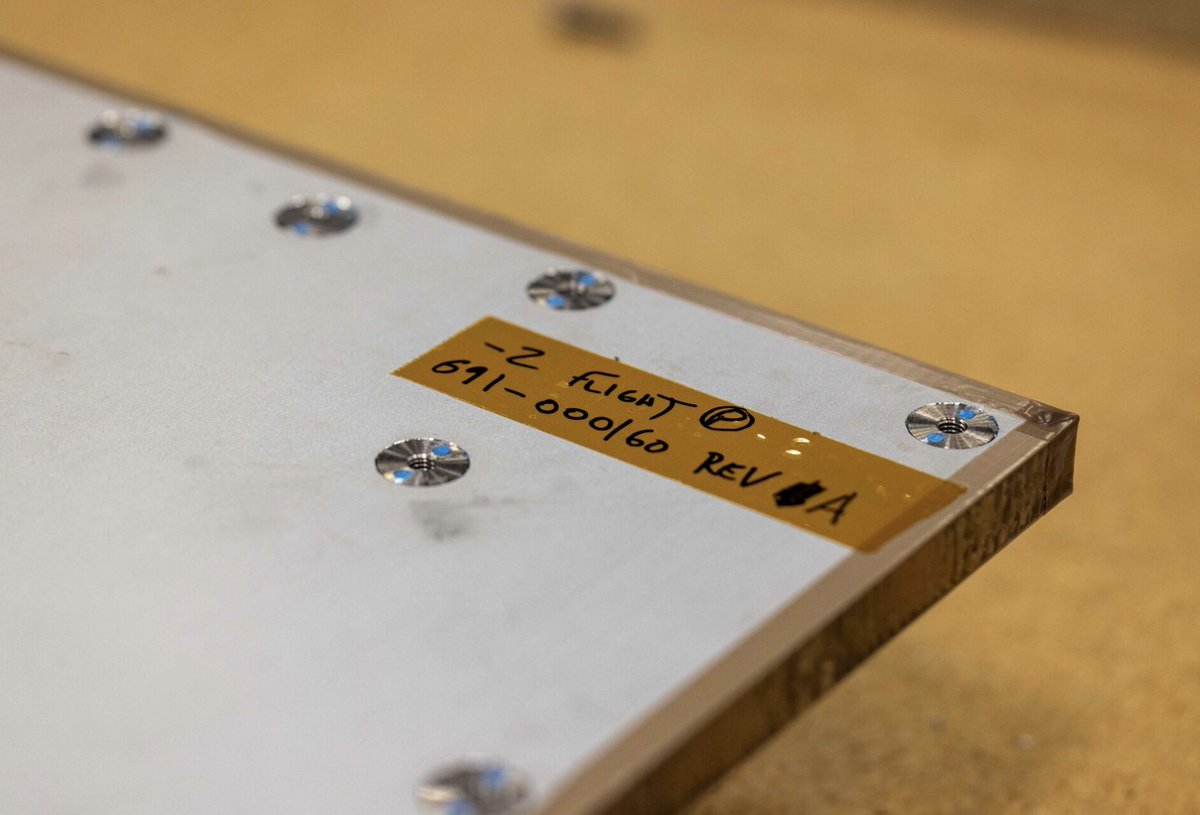
Here are all six flight solar panels for DeepSpace-2. These are the panels that will give us just over 2 kW of power to the craft.
As always in spacecraft manufacturing, there have been some bumps along the way. You might notice the silver electrical leads hanging over the side. Eventually, those will be soldered to the copper rails, or bus bars, which collect and transport electricity to the spacecraft. We make the rails in-house from a copper sheet and apply an adhesive to the back of them to bond them to the panel.
The issue is that it is almost impossible to get those copper bus bars perfectly straight. Once they were applied to the panel, we noticed some lifting. More than likely, this would be fine for flight, but because we identified it early, we can easily fix it.
Over the last 48 hours, we have tested a few repair options. The winner, epoxying them down in spots before covering them with Kapton, a space-rated adhesive film. We are running a few more thermal cycles to confirm everything is good before the fix is implemented on the flight panels. Then we'll be able to solder the silver leads to the bus bars.

English
Our President Robyn Ringuette will be on NSF's livestream during Starship's coast phase, check it out below 👇
NSF - NASASpaceflight.com@NASASpaceflight
SpaceX Starship Flight 12 Attempt 2 - LAUNCH STREAM twitter.com/i/broadcasts/1…
English
AstroForge retweetledi
The amount of detail needed to test an entire avionics system is never-ending. Think about it this way: all of our avionics are placed in a small chamber that creates a vacuum, then heats and cools the avionics so we can test them over a temperature range. For deep space, this changes a bit. Normally, in a thermal vacuum test, you run a bunch of cycles to simulate the spacecraft orbiting a planet. For us, the soaking is still important, but the number of cycles is less so.
In order to do this testing, we need to simulate both the inputs and the loads. For example, we need to accurately simulate the power coming from the solar panels. This isn’t as simple as just hooking up a power supply, because we have to make sure we test as close as possible to what we expect to happen on our way to the asteroid.
Then we need to create the loads. The avionics power a bunch of heaters. We could install a bunch of flight-rated heaters on a table, or we could put a bunch of resistors in a box; we chose the latter. This applies to every powered device: the reaction wheels, the IMU, and the thrusters.
So what you end up with is a really complicated but really important test. This is all flight-like hardware, and most of it has already been tested at the individual level. This is when it gets hard. Fully integrated testing is the most important and most time-consuming part of what we do.


English
That is how we will win at AstroForge: by iterating quickly on the full technical stack – prospecting, rendezvous, landing, extracting, processing, and material return – for the benefit of Earth.
English
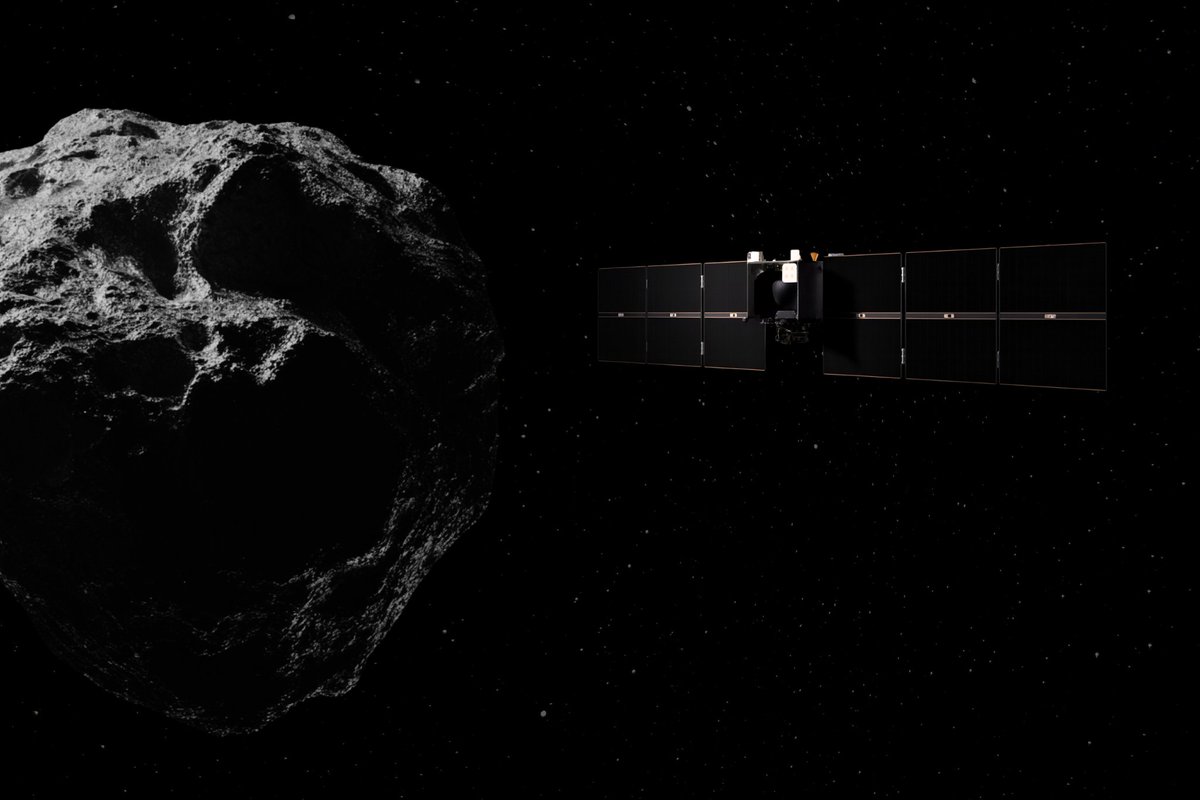
Instead, we will get there this decade, with rapidly iterated lower-cost systems that we fly and learn from, and fly again.
English
One day and 350+ pages later, we have some more thoughts on the SpaceX S-1.
A thread.
English
SpaceX told the public markets that asteroid mining is part of the space economy.
Good. We agree.
They revolutionized the transportation layer. We're revolutionizing extraction, processing, and material return. The next industrial revolution won't be limited to Earth.

English
We agree with Nicky Fox: the United States needs more science in space, delivered at lower cost and on faster timelines than before.
Low-cost, mass-produced spacecraft are how we will open up the Solar System.
Ars Technica@arstechnica
"I'll buy 10 of those"—NASA science chief yearns for mass-produced satellites arstechnica.com/space/2026/05/…
English
AstroForge retweetledi
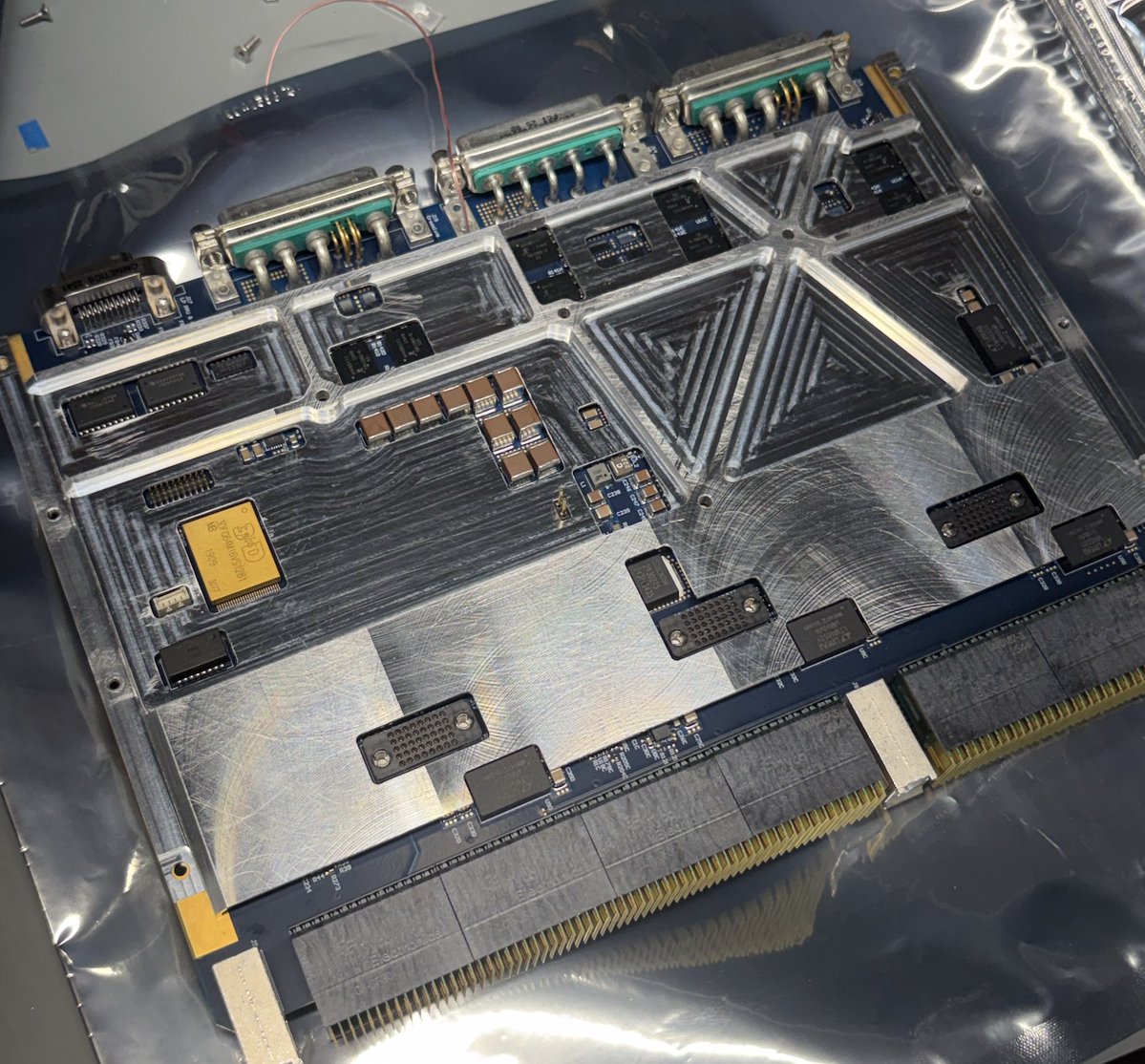
The level of detail required to fly any computer into deep space is insane.
This is the card that controls the solar panels. What you can’t see are all the chips underneath the heatsink, each of which requires thermal pads to make a solid connection to the piece of aluminum on top. That aluminum is what lets us pull heat out of the card and keep everything operating as intended.
Those connections? Those are some big-ass wires that help us handle the current flowing into this beast. The small wire hanging off the board is simply an added thermocouple as we get ready to put this thing through its paces in qualification testing.
This is one of six cards that make up an avionics box - the brain of the spaceship. The only difference between a spaceship and a human is the spacecraft has two brains, and the average human only has one.
We will never hide the details of this work from anyone. Deep space is the final frontier of exploration, and I hope that, if nothing else, we can help write the book on the future of space exploration.
More to come.
English
AstroForge retweetledi