Attorney@Code

115 posts

Attorney@Code banner
Attorney@Code

Attorney@Code

@attorneyatcode

Legal Innovation Blog by @BaruObracajova

Prague, Czech Republic Katılım Temmuz 2021
86 Takip Edilen57 Takipçiler
Attorney@Code
Attorney@Code@attorneyatcode·
Any fellow #languagelearning nerds and #programming enthusiasts out here? Do you think that learning languages helps your process of learning to code and vice versa? I am inclined to think so, but interested to hear your thoughts! #computerscience
English
0
0
0
52
Attorney@Code
Attorney@Code@attorneyatcode·
@OpenAI announces new data policy: 1⃣ you can turn off chat history and thus control what data is used for training and 2⃣ there will be ChatGPT Business subscription with better data control 👉 openai.com/blog/new-ways-… #lawyer
English
0
0
0
20
Attorney@Code
Attorney@Code@attorneyatcode·
@jkubicki I know, I've subscribed 😊 (17 referrals and counting 😁) I think that this debate should be all about what learning objectives we want to achieve and how to get there - in any case, good to stir the debate! 🙌
English
1
0
1
13
Josh Kubicki
Josh Kubicki@jkubicki·
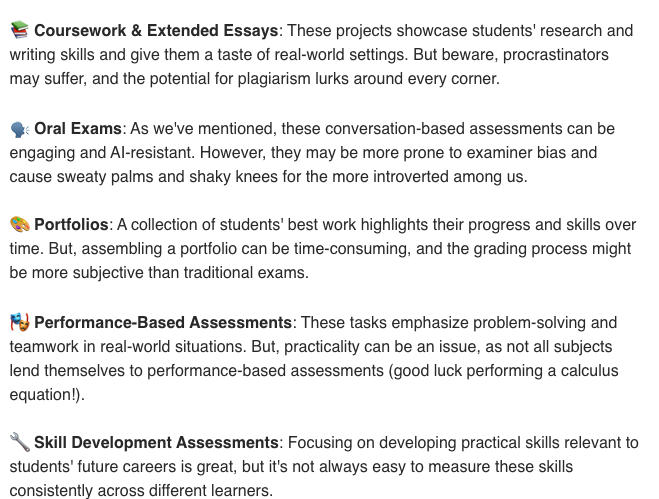
Top 8 reasons to normalize oral exams in law school: Oral exams can be a more effective method of assessment compared to written exams for several reasons: 1. Develop Communication Skills: Law practice relies heavily on strong communication and persuasion skills. Oral exams can help students develop and demonstrate these abilities, better preparing them for their future careers. 2. Encourage Critical Thinking: Oral exams require students to think on their feet and respond to questions spontaneously → critical thinking and analytical skills. 3. Reduce Anxiety: Written exams can often cause high levels of stress and anxiety for students. Oral exams, on the other hand, allow for a more conversational and interactive approach, which can help alleviate test-related stress. 4. More Engaging: Oral exams offer a dynamic, interactive format that encourages active participation and deeper understanding of the subject matter. This can lead to a more engaging learning experience for students. 5. AI-Resistant: As AI technology advances, the risk of students using AI chatbots to cheat on written exams increases. Oral exams are less susceptible to AI interference. Unless @joshuabrowder gives you an earpiece 😉 6. Minimize Cheating: Oral exams make it difficult for students to use pre-prepared answers or plagiarized content, ensuring a fair evaluation of their knowledge and understanding of the law. 7. Personalized Feedback: Oral exams allow for immediate feedback from examiners, which can help students identify areas for improvement and develop a better understanding of the subject matter. 8. Real-World Relevance: In legal practice, lawyers frequently engage in oral arguments and questioning. By incorporating oral exams into law school assessments, students gain experience in the type of communication that is relevant to their future careers.
English
4
2
7
1.6K
Attorney@Code
Attorney@Code@attorneyatcode·
@jkubicki So cannot bring myself to agree with this @jkubicki - more kudos to alternative ways of grading the students (or maybe think why we need grading in the first place 🧐)
English
1
0
1
19
Attorney@Code
Attorney@Code@attorneyatcode·
@jkubicki (I am saying this while I graduated with honours with some of the best grades, and as I performed generally very well, because I was a very experienced public speaker)
English
1
0
1
12
Attorney@Code
Attorney@Code@attorneyatcode·
VPN downloads in Italy shoot up by 400% after ChatGPT was banned in the country due to privacy concerns. Adding this to the list of reasons why teaching people (and especially students) about safe and sound usage of AI. Ban is not the answer. #GPT #lawyers #legaltech
English
0
0
1
122
Attorney@Code
Attorney@Code@attorneyatcode·
🤖👨‍⚖️ Wondering how AI is impacting the legal profession? Here are the top 10 predictions, hacks, and debunked myths you need to know as a lawyer or law student 🧵
English
1
0
0
88