

Augusto
3K posts
Augusto
@augustoink
Sentido común, contexto para opinar 🥰
Nuevo León, México Katılım Mart 2012
55 Takip Edilen87 Takipçiler

If marching in parades is your goal that's great. Lol.
China Now@ChinaNow24
Watch the training of new recruits in the People’s Liberation Army… this is day four.
English
Augusto retweetledi

Por culpa del ventilador eléctrico esta gente perdió su empleo.
Pomeryan@pomeryan
İngilterenin sömürgesi altındayken Britanyalı yetkilileri ve ailelerini serinletmek için Pankha denilen dev kumaş yelpazeleri gece gündüz çalıştırmakla görevli Hintli hizmetkârlar ‘Pankawallahlar’ 👇
Español
Augusto retweetledi

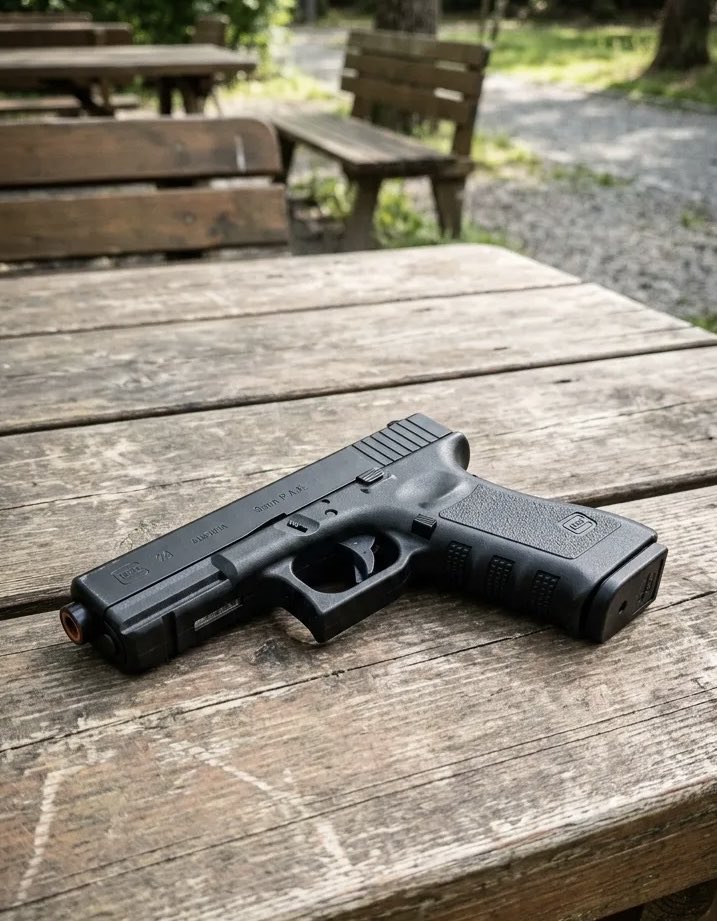
The gun is the most misunderstood object in Western civilization. Not a weapon. A technology. The technology that made the idea of equality physically real.
1. The longbow democratized warfare – a peasant could kill a knight with a stick and a string, and Agincourt proved it. The gun completed the process. The armored warrior class whose claim to social dominance rested on physical superiority became obsolete. The aristocratic monopoly on violence ended not with a philosophy but with a mechanism. The gun is the physical enforcement of the idea that all men are created equal. Which is why the American founders put it in the second amendment – not as an afterthought, but as the guarantee of everything else.
2. The Roman citizen had the right to bear arms. The Greek citizen had it. The English yeoman had it. The Swiss canton built its entire civilization on it. The disarming of the population has always been, in every civilization, in every century, the first act of the government that intends to stop being answerable to that population. Show me a disarmed population and I will show you a population that lost something else shortly after.
3. The Second Amendment is not about hunting. It is not about sport. It is about the relationship between the armed citizen and the state – the explicit constitutional acknowledgment that the citizen’s right to defend himself, his family, and his civilization against any threat, including the government itself, is not granted by the state and cannot be revoked by it. Power flows upward from the armed citizen, not downward from the armed state.
4. The gun defends the family. The woman alone with her children. The farmer on the edge of civilization. The shopkeeper in the neighborhood the police no longer patrol. The gun is the equalizer – the technology that makes the physical difference between a large man and a small woman irrelevant. Every argument for disarmament is, at its core, an argument that the state will protect you better than you can protect yourself. The evidence for this proposition is not encouraging.
5. In Europe, the disarmament is now nearly complete – and it happened precisely as the state’s ability and willingness to protect its citizens began to decline. The timing is not coincidental. A population that cannot defend itself must trust the state to defend it – which is a population that cannot effectively question whether the state is doing so. The dependency is the design.
6. The gun is a civilizational technology in the deepest sense: it requires responsibility, judgment, and the willingness to accept the consequences of your decisions. You cannot outsource it. You cannot have a committee fire it. It is the most anti-bureaucratic object ever invented – a direct, personal, consequential instrument that puts the full weight of the decision on the individual holding it. Which is precisely why the administrative state finds it intolerable. Not because it is dangerous. Because it is sovereign.
7. The family that can defend itself does not depend on the state for its most fundamental security. The civilization that can defend itself has not yet outsourced its survival to an institution that will negotiate the terms of that survival on its own behalf. The gun determines who controls violence – and therefore who controls everything that violence can threaten. Which is everything. The Sobieski who rode down the hill had a sword and sixty thousand horsemen. The equivalent today is the armed citizen who understands what he is defending and why. Every civilization that forgot this discovered it the hard way. The ones that remembered it are still here.
Krzysztof Szczawinski 🇵🇱@Kristof_Poland
The French knights at Crécy and Agincourt were full of honor and panache. Beautiful horses, beautiful armor, beautiful feathers – formidable. Magnificent. The English were efficient. Guess who won? The longbowman was a peasant. No noble blood, no chivalric code, no magnificent plumes. He trained every Sunday by royal decree until he could put an arrow through armor at two hundred yards. He was not impressive to look at. He was devastating to face. The French knights found it offensive. To be killed by a commoner with a stick and a string – it violated the entire aesthetic of war. They charged anyway, because the code demanded it, because the horses were magnificent, because retreating was unthinkable for a man of honor. The arrows didn’t care about the code. This is the oldest story in Western civilization, told every century in a different costume. The beautiful system versus the efficient one. The one that looks right versus the one that works. The French had the better uniforms at Crécy, at Agincourt, at Waterloo, and in 1940. The pattern is not a coincidence. It is a civilizational tendency – the preference for the magnificent gesture over the effective one, for the noble form over the brutal function. The market is the longbow. Unglamorous, democratic, slightly disreputable in polite company – and devastating to any system that faces it while still believing that looking correct is the same as being right. The arrow doesn’t care about your panache. It never did.
English
Augusto retweetledi

El exagente de la KGB, Yuri Bezmenov, advertía que un país no se destruye con bombas. Se lo desmoraliza. Se reescribe su historia y se enseña a su pueblo a avergonzarse de su propio país. Cuando eso ocurre, las personas dejan de defenderlo.
Ahora escuchen lo que dice Zohran Mamdani en la ciudad de Nueva York.
Español
Augusto retweetledi

This is how water powers entire cities. Hydroelectric power plants use the energy of flowing or falling water to spin massive turbines connected to generators.
English
Augusto retweetledi

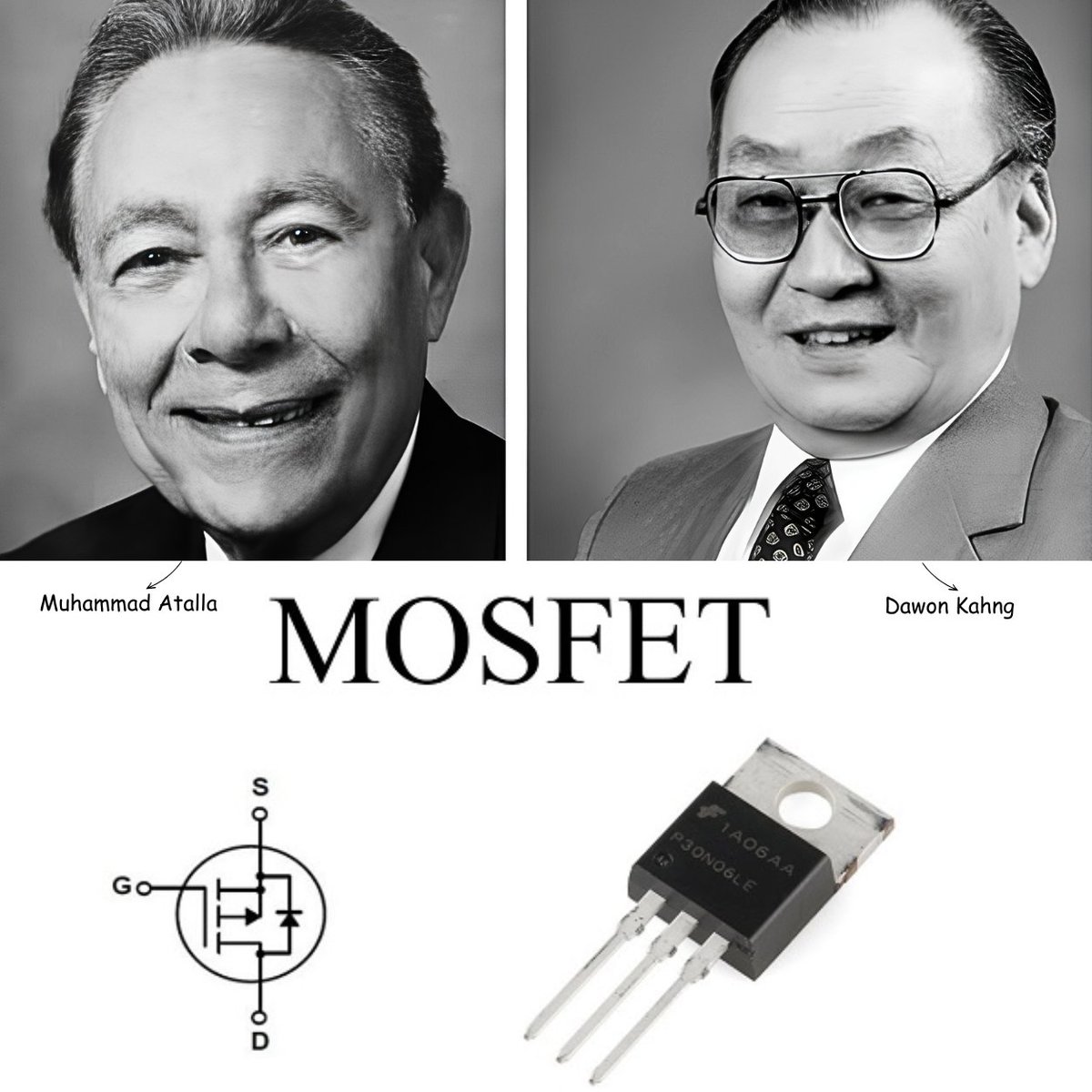
The most manufactured device in human history was not invented by Edison, Tesla, or Steve Jobs. It came from Mohamed Atalla and Dawon Kahng, two scientists whose own employer failed to see what they had created.
Atalla was born in Port Said, Egypt.
He moved to the United States, earned his PhD, and joined Bell Labs in 1949.
At the time, scientists were trying to make smaller and more reliable electronic switches from silicon.
But they kept running into the same problem.
The surface of silicon trapped electrical charges. This made it difficult to control the electricity flowing through it.
Atalla spent years studying that surface.
He eventually discovered that growing a thin layer of silicon dioxide over silicon could protect it and allow electricity to be controlled properly.
It sounded like a small improvement.
It became the foundation of modern electronics.
In 1959, a young Korean scientist named Dawon Kahng joined Bell Labs after completing his doctorate at Ohio State University.
Atalla asked him to use this new method to build a type of transistor scientists had imagined for decades but had never managed to make work.
Kahng succeeded.
The device had three simple layers: metal, oxide, and silicon.
That is where its name came from.
The metal-oxide-semiconductor field-effect transistor.
Or MOSFET.
Think of it as a microscopic switch.
It can turn electricity on and off. Put enough of these switches together, and they can store information, perform calculations, display images, run software, and process almost everything a computer does.
Atalla and Kahng had found a way to make these switches small, cheap, and easy to place together on a chip.
They showed their invention to Bell Labs.
The company saw a slow device that solved no urgent problem in its telephone network. It decided not to pursue it.
Kahng tried to explain what they were missing.
In a 1961 memo, he pointed out that the device was easy to manufacture and could be packed into integrated circuits.
Bell Labs still placed it on the shelf.
Researchers at RCA and Fairchild Semiconductor understood its potential and continued developing it.
By 1964, the first commercial MOS devices had arrived.
Then the entire industry began to change.
MOSFETs required less power and took up less space than the transistors used before them. Manufacturers could place thousands on one chip, then millions, and eventually billions.
They entered calculators, memory chips, personal computers, digital cameras, phones, cars, satellites, medical equipment, and almost every other electronic machine.
Modern AI chips contain billions of them.
Every time you unlock your phone, start your car, open a website, send a message, or ask an AI a question, huge numbers of MOSFETs switch on and off to make it happen.
By 2018, the Computer History Museum estimated that humanity had manufactured 13 sextillion MOS transistors.
That is 13 followed by 21 zeros.
No other human-made device has been copied more often.
Atalla and Kahng never became household names.
Their invention became so common that it disappeared inside everything.
The next time your phone turns on or an AI answers you in seconds, remember the two scientists who made it possible.
Mohamed Atalla and Dawon Kahng.
English
Augusto retweetledi



@augustoink @maps_ve Y que dijo bolivar cuando le dijieron que le iban poner su apellido como honor?
Español

@complexnaga2 @maps_ve Dijo:
"Mi desesperación se aumenta al contemplar la inmensidad de vuestro premio, porque después de haber agotado los talentos, las virtudes, el genio mismo del más grande de los héroes, todavía sería yo indigno de merecer el nombre que habéis querido daros, ¡el mío!"
Español
Augusto retweetledi

Una presentadora multimillonaria exige a Elon Musk que done su fortuna... Quedo destrozada con la respuesta que le dieron.
«¿Qué hace Elon Musk con su dinero? Va a ser trillonario. Podría salvar países enteros. ¿Lo va a hacer? No. ¿Es que crees que vas a vivir para siempre, Elon?
—Un par de apuntes, Joy. Menos del 0,1% del patrimonio de Elon es dinero en el banco. El 99,9% restante son acciones y propiedad de sus empresas: SpaceX, Tesla y otras.
Esas empresas han creado más de 160.000 empleos directos, 600.000 indirectos y 500.000 más inducidos. Al menos 1 millón de personas en el mundo ponen pan en su mesa gracias a ellas.
Tú, en cambio, tienes 30 millones de dólares. No has creado empleos. Y casi todo tu dinero está listo para gastarse.
¿Vas a vivir para siempre, Joy? ¿Por qué no regalas TÚ tu dinero? Con un tercio podrías alimentar a 3.000 personas un año entero.
¿Cuándo empieza tu donación?»
Español

@wilmerorellana @maps_ve literal el maldito se las cogia a todas el enano ese 😂
Español

@maps_ve En bolivia no, nuestro libertador es en realidad juana azurduy, bolivar solo fue apoyo nuestra liberación de charcas que al final reconoció como independencia de bolivia, además nosotros fuimos el primer grito de independencia de España no Venezuela
Español

Besides airplanes being too slow, what are the things you hate most about flying commercially?
(We'll fix as many of these as we can on Overture!)
English

Augusto retweetledi
Augusto retweetledi
Things that should not need to be said
The White House@WhiteHouse
The United States of America will NEVER be a communist country.
English
Augusto retweetledi
