

Aura Point Capital Management
52 posts

Aura Point Capital Management
@aurapointcap
AI-centered fund management and organizational development. Learn more at https://t.co/lbJKX6HDIj
USA Katılım Eylül 2025
109 Takip Edilen98 Takipçiler
Aura Point Capital Management retweetledi


WSJ: The Securities and Exchange Commission is preparing a proposal to eliminate the quarterly earnings report requirement and instead give companies the option to share results twice a year, according to people familiar with the matter.
English
Everyone’s pricing this like Hormuz is basically broken for a long time. If it ends up being messy but still partially open (some tankers get through, reroutes ramp), a lot of that fear premium can unwind fast in the front month and front-end vol. Not saying “oil must crash,” just that the market might be overpaying for worst case.
English
Why do markets suddenly stop following the rules?
In quantitative finance, most models are built on the assumption that the future will look somewhat like the past. However, markets are not static. They go through distinct periods known as regimes. A strategy that performs perfectly in one environment can fail completely when a regime change occurs.
What is a market regime?
A regime is a specific set of market conditions that persists for a period of time. Common regimes include:
-Low inflation and high growth: Often a bull market for stocks.
-High volatility and rising interest rates: Usually a period of stress for bonds and growth companies.
-Low volatility and flat interest rates: A period where trend following strategies often struggle.
When a market is in a specific regime, certain mathematical patterns are very reliable. But when the environment shifts, those patterns can vanish instantly.
What is a black swan?
A black swan is an unpredictable event that has a massive impact on the global economy. Examples include the 2008 financial crisis or the sudden onset of a global pandemic. These events cause a violent regime change. Because they are so rare, they are often not represented in the historical data used to train models.
The map and the territory:
Think of a market model like a map of a city. If the city is hit by an earthquake and the streets shift, the old map is no longer useful. If you continue to follow it you will end up in a dead end. In finance, a model that cannot recognize it is in a new environment is a liability.
The core principle:
The greatest risk to a systematic strategy is not a small loss on a single trade. It is the failure to recognize that the rules of the game have changed. A robust investment process must include tools for regime detection. The goal is to understand when the current environment no longer matches the historical data and to adjust the risk accordingly.
English
Execution Alpha and Slippage: Why the Best Ideas Can Still Lose Money
In the world of investing, having a profitable idea is only half the battle. The other half is actually getting that idea into the market without destroying its value. This is where the concept of execution alpha and slippage becomes critical. Even a perfect mathematical strategy can fail if the cost of entering and exiting trades is too high.
What is Slippage?
Slippage is the difference between the price you expect to pay for an asset and the price at which the trade actually executes. It is often caused by factors such as market impact. When a large order is placed, it can physically move the market price against the investor before the entire order is filled.
Latency is another example of slippage. The delay between a signal being generated and the order reaching the exchange. In that fraction of a second, the price can change. Adding to latency is the bid-ask spread which is the gap between what a seller wants and what a buyer is willing to pay. This is a hidden tax on every transaction. Many funds have built their entire strategy leveraging infrastructure to exploit these factors.
The Hidden Cost of Trading
Think of it like buying a car. The sticker price might be 30,000 dollars, but by the time you add taxes, registration, and dealer fees, you might actually pay 33,000 dollars. In quantitative finance, if your strategy expects a 2 percent profit but you lose 1 percent to slippage and fees, half of your potential gain is gone before you even start.
What is Execution Alpha
Execution alpha is the skill of minimizing these hidden costs. Instead of simply hitting a buy button, sophisticated systems use algorithms to break large orders into thousands of tiny pieces. These pieces are then fed into the market at specific times and across different exchanges to avoid alerting other participants or moving the price. Infrastructure builds also exploit slippage allowing some funds to leverage arbitrage in high-frequency trading.
The Core Principle
A successful investment process must account for the friction of the real world. A strategy that looks profitable on a computer screen is only viable if it can survive the costs of the marketplace. In high level finance, the winner is often not the one with the best idea, but the one who can execute that idea with the least amount of waste.
English
Our current fund is now open to external capital investors!
We'd love to have you join the AuraPoint Capital limited partnership!
If you or your organization is interested in more details, please contact us directly or email ir@aurapointcapital.com
@sheentrades @0xSynced
English
Why Past Performance Can Be a Mathematical Trap
In quantitative finance, a backtest is a simulation of how an investment strategy would have performed in the past. While it is a vital tool for research, it is also one of the most dangerous. If a model is built incorrectly, it can create a perfect historical track record that has zero chance of working in the future. This is known as the backtest mirage.
What is Overfitting?
Overfitting occurs when a mathematical model is too complex. Instead of finding a broad, repeatable rule, the model memorizes the specific noise and random events of a historical period.
Think of it like a student who memorizes the exact answers to a practice test instead of learning the underlying math. They will get a 100% on the practice test, but they will fail the actual exam because they do not understand the principles.
Common Pitfalls in Backtesting:
Data Snooping: Testing thousands of different variables until one happens to work by pure luck.
Look Ahead Bias: Accidentally using information in the simulation that would not have been available at the time of the trade.
Ignoring Transaction Costs: Failing to account for the real world fees and price impacts that eat away at theoretical profits.
The Reality of Curve Fitting
If you adjust enough parameters, you can make any set of random data look like a genius investment strategy. This is called curve fitting. A curve fitted model is extremely fragile. It is designed for a world that no longer exists, making it likely to fail the moment the market environment shifts even slightly.
The Core Principle
A robust strategy should be simple enough to work across different time periods and market conditions. In quantitative research, the goal is not to find the strategy that performed best in the past. The goal is to find the strategy that is most likely to be resilient in the future.
English
Why 99% of Market Data is a Distraction
In quantitative finance, the biggest challenge is not a lack of information. It is an overabundance of it. Every day, the global economy generates trillions of bytes of data. To most this looks like opportunity. To a systematic trader most of it is noise.
Noise is random price movement that has no predictive power. It is the static caused by high frequency emotional reactions to breaking news.
Social media sentiment spikes.
Short term liquidity gaps.
If you trade the noise you are essentially gambling on randomness. This is where most discretionary traders lose their edge.
Underneath is the mathematical truth. It is the repeatable, statistically significant pattern hidden beneath the static.
Trying to distinguish the separation between noise and signal is the hard part. Emotion usually gets in the way. Try to focus on dimensionality reduction. Look to strip away the variables that do not correlate with future returns and focus only the high probability drivers of price.
The goal of a structured investment process is not to see more components, it is to see clearer. The ultimate competitive advantage is the ability to ignore the static and follow the math.
Otherwise you are essentially betting on a coin flip. This is where many investors lose their edge because they are reacting to randomness rather than reality.
English
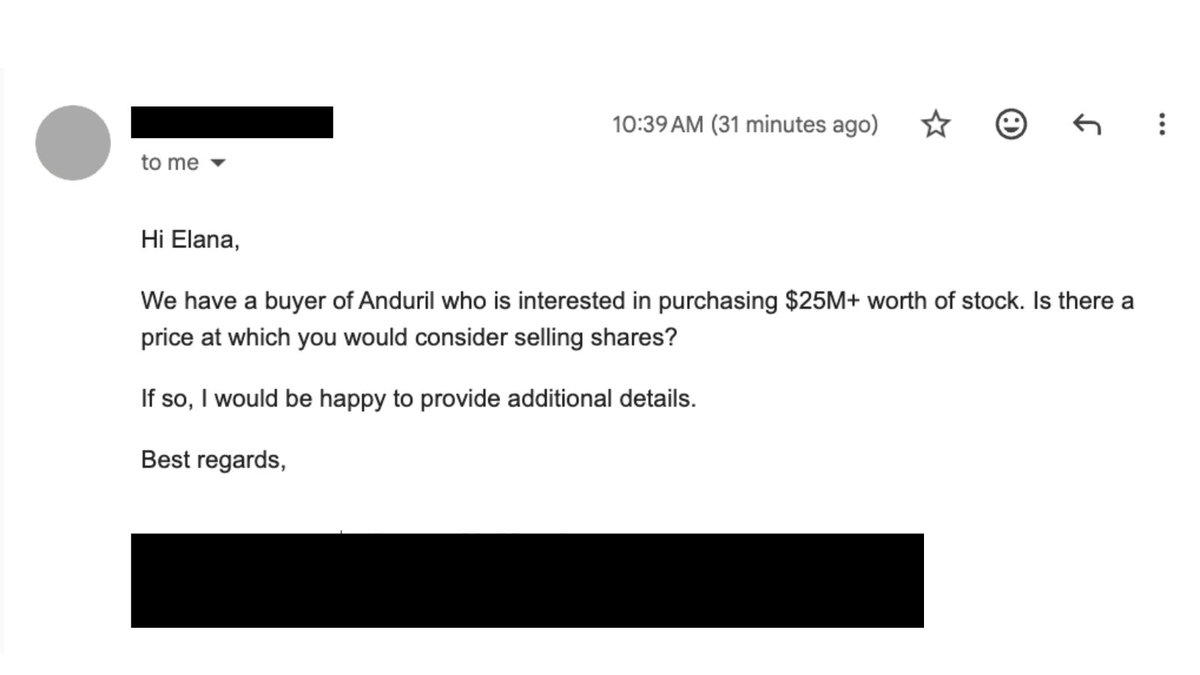
@ItsElanaGold So can you actually supply access or are you just getting spam email with no access to the cap table? 😍
English

@StoneX_Official hey good morning! How do we get you all to respond to inquiries? We’d love to hear back from you ❤️
English