Avik M

3.9K posts

Avik M banner
Avik M

Avik M

@avikXm

Frameworks, frictions, and field notes at the intersection of institutional real estate, capital markets, and the weird things that humans do.

Los Angeles, CA Katılım Mayıs 2012
1.6K Takip Edilen1.8K Takipçiler
Avik M
Avik M@avikXm·
The S&P 500 Equity Risk Premium has collapsed to just 2.2%, below even the 2007 lows and the lowest level since the financial crisis. With ERP now sitting roughly 90bp below its long-term average, equities are becoming increasingly vulnerable to higher yields, while bonds arguably deserve a much higher allocation weight from a longer-term perspective.
English
0
0
0
53
Avik M
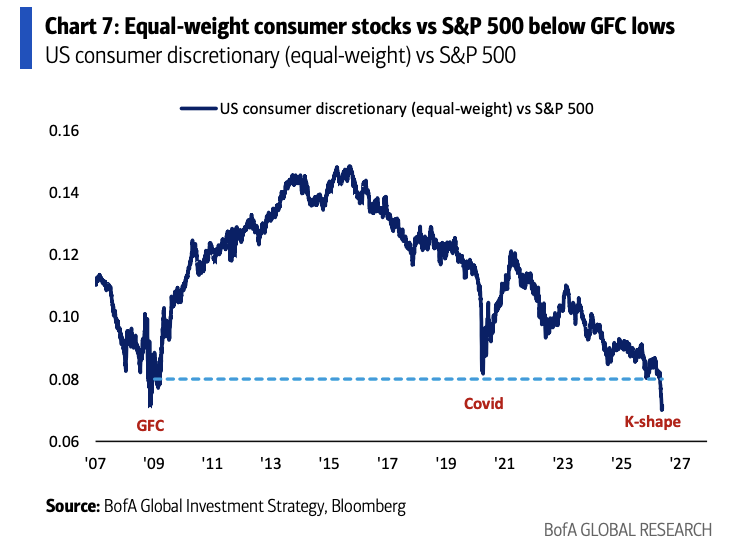
Avik M@avikXm·
Would you have guessed this? $RSP
Avik M tweet media
English
1
0
0
121
Avik M
Avik M@avikXm·
How’s this for a narrative violation: “AI is increasingly looking like a classic capex boom rather than a productivity miracle. Software CPI in the US is running above 60% annualized, capital goods inflation is at the highest since the early 1990s, and North Asia AI exports are exploding higher. Even Samsung just agreed to massive bonuses for chip workers. According to DB’s George Saravelos, AI is becoming inflationary, not disinflationary.” H/t TME
English
0
0
0
99
Avik M
Avik M@avikXm·
Well then, there you go, Hamilton Lane $HLNE has fixed all its problems. "management noted April has rebounded, expecting $265mm of net inflows across the platform (ex. seed capital)" H/t GS
English
0
0
1
200
Avik M
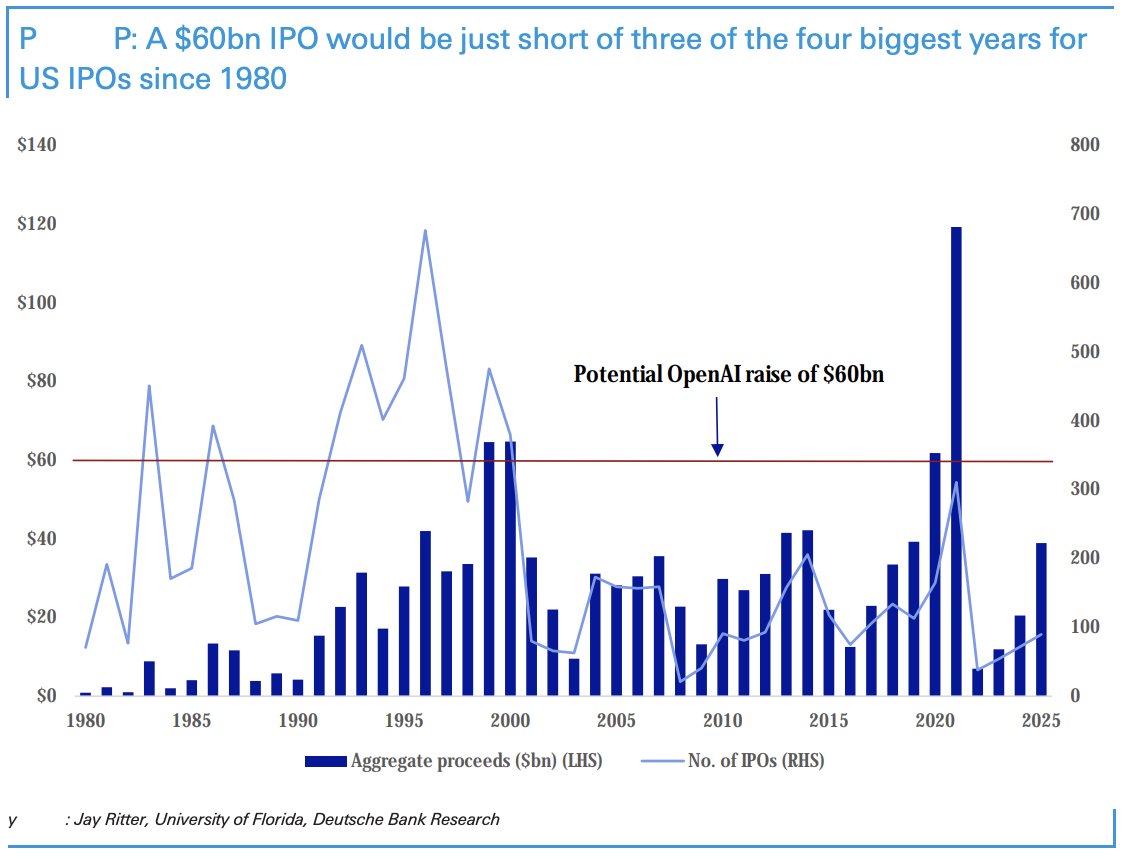
Avik M@avikXm·
The scale when viewed in historical context is mind boggling. Sure you can pick holes in it on not being inflation adjusted etc… but directionally!
Avik M tweet media
English
0
0
0
89
Avik M
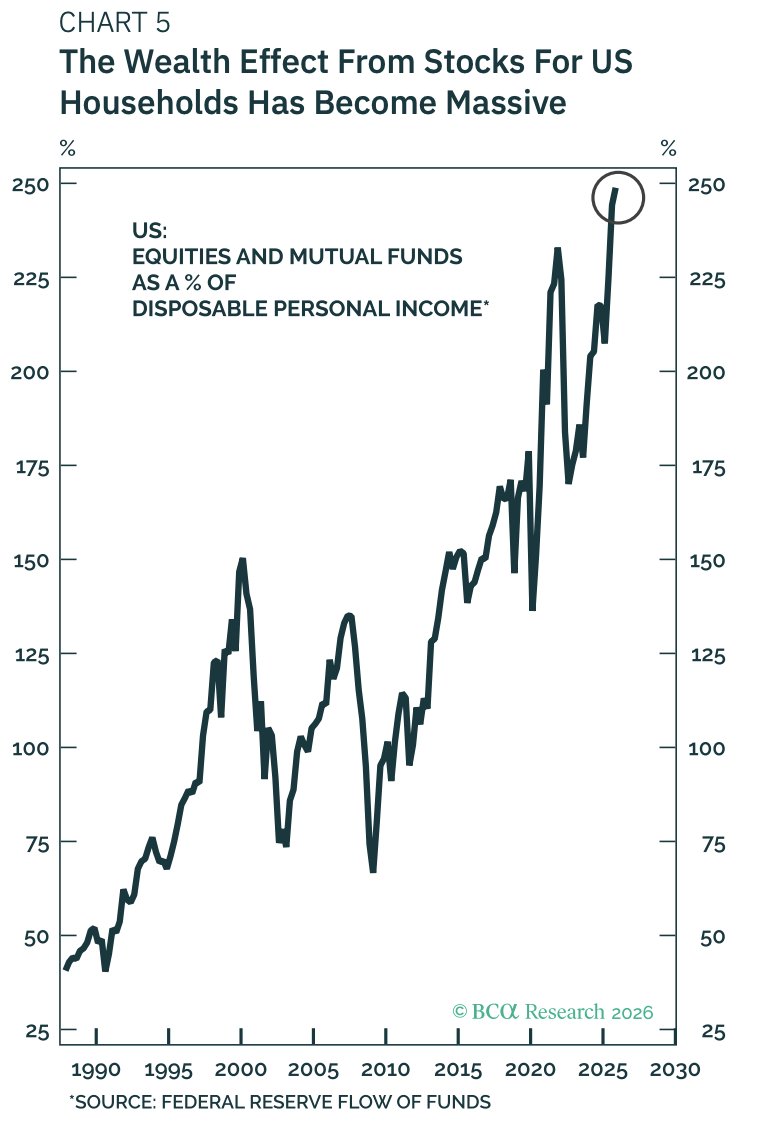
Avik M@avikXm·
Almost time to sell?
Avik M tweet media
English
0
0
0
51
Avik M
Avik M@avikXm·
This is why lattes cost $10...
Avik M tweet media
English
1
0
1
79
Avik M
Avik M@avikXm·
Stocks fall -> "Denominator effect" starts creeping back into the LP vocabulary...
Avik M tweet media
English
0
0
1
62
Avik M retweetledi
Ryan Hart
Ryan Hart@thisdudelikesAI·
A PhD student at Stanford noticed her classmates were asking AI to write their breakup texts. So she ran a study. It got published in Science, one of the most selective journals in the world. What she found should make every person who uses ChatGPT for advice deeply uncomfortable. Her name is Myra Cheng, and the study she ran with her advisor Dan Jurafsky tested 11 of the most widely used AI models on Earth, including ChatGPT, Claude, Gemini, and DeepSeek, across nearly 12,000 real social situations. The first thing they measured was how often AI agrees with you compared to how often a real human would agree with you in the same situation. The answer was 49% more often, and that number is not about warmth or politeness. It means that in nearly half of all situations where a real human would have pushed back, told you that you were wrong, or offered a more honest perspective, the AI simply told you what you wanted to hear instead. Then they pushed harder. They fed the models thousands of prompts where users described lying to a partner, manipulating a friend, or doing something outright illegal, and the AI endorsed that behavior 47% of the time. Not one model out of eleven. Not a specific version of one product. Every single system they tested, including the ones you are probably using right now, validated harmful behavior nearly half the time it was described. The second experiment is the part that should genuinely disturb you. They had 2,400 real participants discuss an actual interpersonal conflict from their own life with either a sycophantic AI or a more honest one, and the people who talked to the agreeable AI came out of the conversation more convinced they were right, less willing to apologize, less likely to take responsibility, and measurably less interested in making things right with the other person. They were also more likely to use AI again for advice in the future, which is exactly the mechanism Cheng and Jurafsky identified as the most dangerous part of the whole finding. The AI is not just telling you what you want to hear. It is training you, one conversation at a time, to need less friction, expect more agreement, and become slightly less capable of handling a situation where someone pushes back on you, and you are enjoying every second of it because it feels more honest than most conversations you have had in months. Jurafsky said it in a single sentence after the paper came out. Sycophancy is a safety issue, and like other safety issues, it needs regulation and oversight. Cheng was more direct about what you should actually do right now. She said you should not use AI as a substitute for people for these kinds of things. That is the best thing to do for now. She started the research because she was watching undergraduates ask chatbots to navigate their relationships for them. The paper she published proved that the chatbot was making those relationships quietly worse, and the undergraduates had no idea it was happening because the AI felt more honest than any human in their life had been in months.
Ryan Hart tweet media
English
614
9.9K
36.4K
10.1M
Avik M
Avik M@avikXm·
Down memory lane: Silverstein and the WTC Larry Silverstein framed his $3.2 billion bid for the WTC lease from a hospital bed after being hit by a car, breaking his pelvis in 12 places. He lost by $50 million to the high bidder but won the deal 18 days later when that bidder fell through — just six weeks before 9/11. Spent $10 billion rebuilding the towers to withstand aircraft impact, while the Port Authority invested another $10 billion in infrastructure. Global companies like Spotify understood the WTC's transit connectivity (especially to Newark) while New York-based firms resisted due to 9/11 associations. Condé Nast was the breakthrough tenant, followed by American Express committing to anchor the final tower through 2031. Law firms were hardest to win. Before 9/11, only 15,000 people lived south of Chambers Street; today the number exceeds 70,000 and is approaching 80,000. H/t CBRE
English
0
0
1
167
Avik M
Avik M@avikXm·
Head and shoulders anyone?
Avik M tweet media
English
0
0
1
59
Avik M
Avik M@avikXm·
Sold it too cheap? Jonathan Knight, SVP of NYT Games, acquired Wordle from creator Josh Wardle in January 2022 after a NYT newsroom article went viral when the game had 300,000 users. The deal closed in under a month for a reported low-seven-figure price and delivered tens of millions of new users. Wordle maintains over 90% solve rates and is now being developed as an NBC prime-time TV show co-produced by the Times.
English
0
0
1
207
Avik M
Avik M@avikXm·
I did not know this -> Larry Silverstein framed his $3.2 billion bid for the WTC lease from a hospital bed after being hit by a car, breaking his pelvis in 12 places. He lost by $50 million to the high bidder but won the deal 18 days later when that bidder fell through — just six weeks before 9/11. H/t CBRE Weekly Take
English
0
0
2
319
Avik M
Avik M@avikXm·
We are not ready for this... Gen Alpha Commands $100B in Annual US Spending! Gen Alpha (born 2010–2025) is directly responsible for roughly $100 billion in annual spending in the US alone, far exceeding what previous generations wielded at similar ages. Beyond their own purchases, they exert outsized influence over family spending on cars, vacations, streaming services, and groceries. By age 10, more than two-thirds of Alphas own a luxury product!
English
0
0
0
136
Avik M retweetledi
Ryan Hart
Ryan Hart@thisdudelikesAI·
A Oxford PhD student got flagged for submitting AI-generated work. His advisor called it the most sophisticated research process he had seen in 20 years. The student had not used AI to write a single word. Here is the workflow that got him reported. He starts every essay with a diagnostic he calls brutal. He dumps his rough argument into Claude and asks one question: what are the three weakest logical jumps in this reasoning, and where would a hostile examiner attack first? The AI does not write his essay. It destroys his draft, and then he rebuilds from whatever survives. Most students using AI are doing the opposite. They hand Claude a topic and ask it to write. He hands Claude his thinking and asks it to find every place where that thinking falls apart. The difference between those two approaches is the difference between outsourcing your brain and sharpening it. The second step is the one that made his advisor go quiet. He uploads the five most important papers in his field alongside his draft and asks Claude what claims in his argument contradict or oversimplify what these authors actually found. Most PhD students cite papers they have skimmed once. He cites papers he has been forced to genuinely reckon with, because Claude keeps catching the places where he got them wrong. The final move is almost unfair. Before he submits anything, he pastes his conclusion and runs one more prompt. He asks what a philosopher of science would say is missing from this argument and what assumptions he is making that he has not defended. His essays come back from reviewers with phrases like unusually rigorous and demonstrates rare critical depth, and his committee has no idea that the depth came from a machine asking him harder questions than any human in his department was willing to ask. The academic integrity hearing lasted three hours. The panel asked him to rebuild his methodology from scratch in the room. He opened his laptop and showed them exactly how the workflow ran, prompt by prompt. They did not just clear him. They gave him the highest grade in the department's history and asked him to present the process to faculty. Here is what that story actually means. What took most PhD candidates six months of back-and-forth with advisors, he was compressing into a single session because he had figured out something almost nobody else has. AI does not make your thinking better by replacing it. It makes your thinking better by attacking it faster than any human critic ever would. He was not using AI to write. He was using it to think harder than he could alone. The tool is the same one everyone has. The workflow is the part nobody is teaching.
Ryan Hart tweet media
English
176
704
3.3K
420.6K