
Jeske Eenink
2K posts

@ayajeske
Fintech & DLT Strategy • Privacy-Preserving Compliance • The next era of regulated digital finance and RWA • over 8 years at DUSK


De toekomst van mobiliteit is aangebroken FSD Supervised has been approved in the Netherlands 🇳🇱 & will begin rolling out in the country shortly! Trained on billions of kilometers of real-world driving data, it can drive you almost anywhere under your supervision – from residential roads to city streets & highways No other vehicle can do this. We're excited to bring FSD Supervised to more European countries soon


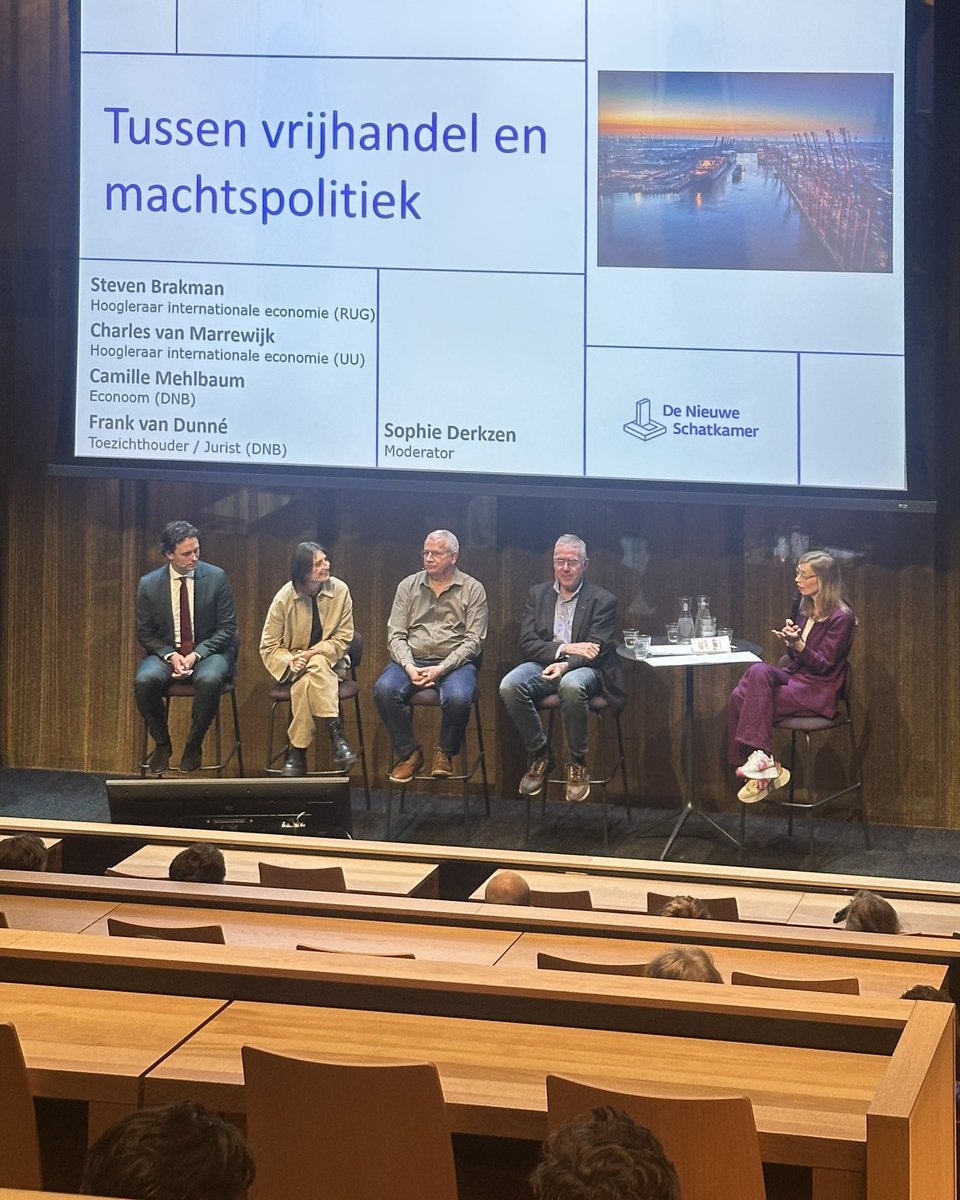
📈 Another major step for the Savings and Investments Union! Today, we are launching a comprehensive package designed to remove barriers in the European financial markets and unlock their full potential. 🗞️ Learn more: link.europa.eu/ykTQVk

I'm happy to share that my recent work "Homomorphic Encryption-based Vaults for Anonymous Balances on VM-enabled Blockchains" is now available on arXiv: arxiv.org/pdf/2511.17842


Completely agree with you @ZeusRWA. If the token doesn't sit in the value path, it's essentially worthless. The $DUSK token is designed differently: 1) Infrastructure fees accrue to the network DuskDS is our data-availability + settlement layer. DuskEVM is the EVM app layer. Gas is paid in DUSK, and fees are part of consensus rewards. Infra usage directly benefits stakers. 2) Fees from the market layer We're building a financial market infrastructure for tokenized securities (issuance, trading, corporate actions on-chain). Venues and listing fees are policy-gated so a share can flow to stakers or a buyback/burn module. The point is to connect venue growth to token value, not leave it off-chain. 3) Fee capture across layers DuskEVM runs on the OP stack but settles to DuskDS. That lets us retain fee capture on both sides under the same token, while giving builders familiar EVM tooling. 4) Gas sponsoring Institutions and venues can sponsor user transactions in DUSK and offer fee discounts, without removing the token from the equation. This keeps the economic link between holders and the protocol strong, rather than getting away from it. The whole idea behind @DuskFoundation is to remove intermediaries and return earnings to the people operating the network. Whether it's settlement, issuance or trading. Value creation flows back to participants.

The more time you spend in the casino, the more likely you are to get liquidated Not surprisingly, the number of active users in crypto hasn’t grown much over the years. That’s our industry’s biggest problem. We need to grow the active user base, but it won’t happen in the casino. That’s why I started Inversion: to bring real economic activity on-chain. Infrastructure should be invisible Users don’t need to understand how the tech works, but they should feel the impact when businesses become crypto-enabled. As an industry, we’re selling ourselves short by building for, and catering only to, speculation

When someone says "tokenize it" and "RWAs" it can be very broad. Tokenization isn't a single process, it's a design choice. The term tokenization is new and blurry. There is no standard definition or process. Let's break it down to what that actually means 🧵