
adebanjo

614 posts

adebanjo banner
adebanjo

adebanjo

@banjoc2rw

Katılım Mayıs 2010
543 Takip Edilen127 Takipçiler
adebanjo
adebanjo@banjoc2rw·
@RealAdeshina Thou it’s funny but that’s how presiding official count vote in direct primary when opponents has zero or insignificant queue on the line. Naija for show…
English
0
0
1
3.4K
Prince Adeshina
Prince Adeshina@RealAdeshina·
I warned you guys…. Direct Primary Election is Brutal. Now see ham😂😂😂😂😂
English
381
671
2.2K
249.2K
adebanjo
adebanjo@banjoc2rw·
@Morris_Monye I will be forced to believe u all acting opposition,in intellectual discuss u need thinking cap. Ques is indirectly pointing at Tax reform and uprisings in Kenya whc the President sarcastically point out why Kenyan resistd and how he was able to overcome with non ambiguity.
English
1
0
0
1.1K
Morris Monye
Morris Monye@Morris_Monye·
What is Tinubu talking about here FGS!!! The moderator was like WTF!
English
1.5K
3.6K
8.7K
966.8K
Abdool Moh.
Abdool Moh.@abdool_moh·
Today I purchased the first car to be included in the first batch of the test shipment of the business. Toyota Yaris 2011 Mileage 183km After factoring all costs related to shipping, customs etc. This car will be offered for 1m less than the market price as per the purpose of the business. The car has had only 2 owners since 2011 and was driven by an old dutch woman for 10 years from 2016 - 2026, so you can have an idea of how well it was taken care of. In the coming days, I will be targeting other Toyota Yaris models 2008, 2009, 2010 and 2012, both automatic & manual. I am open to suggestions on other cars to include. May the Almighty guide us.
Abdool Moh. tweet mediaAbdool Moh. tweet media
Abdool Moh.@abdool_moh

I am working on a business plan to start shipping small cars direct Belgium in bulk to Nigeria. 206, 307, Toyota Yaris different models, etc. We will ship like 10-20 cars and sell each with up to 1million naira discount compared to Nigerian price. Just like PlayStation, this is an opportunity for people who want to buy cheaper from us and make profit. For marketers who want to advertise the cars, the commission we will pay you will be double what Nigerian car sellers give you. Stay tuned!

English
201
411
1.5K
235.8K
adebanjo retweetledi
Kosasi Nakamoto
Kosasi Nakamoto@KOSASI_NAKAMOTO·
Now let me show you who holds the debt. The answer is four categories of creditors. Central banks, institutional investors, foreign governments, and wealthy individuals. First category, central banks. The Federal Reserve holds $5 trillion in US government debt. The Bank of Japan holds $5 trillion in Japanese government debt. The European Central Bank holds $5 trillion in European government debt. The People's Bank of China holds $3 trillion in Chinese government debt. Central banks globally hold approximately $25 trillion in government bonds. This is 8% of the $317 trillion total debt. But it's the foundation because central banks create money to buy government bonds, enabling governments to spend beyond tax revenue. But who owns the central banks? The Federal Reserve is not government-owned. It's a private institution owned by member banks. The 12 regional Federal Reserve banks issue shares to member commercial banks. JPMorgan Chase, Bank of America, Citigroup, Wells Fargo receive a 6% annual dividend on their Federal Reserve shares. When the Federal Reserve holds $5 trillion in government bonds and receives interest, that interest ultimately flows to the private banks that own the Federal Reserve. The public believes the Federal Reserve is part of the government. It's not. It's a private banking cartel created in 1913 to allow private banks to profit from government debt. The Bank of England, created in 1694, was explicitly created as a private institution to lend money to the government. The government needed to finance war with France. Parliament authorized the creation of the Bank of England as a private company. The bank lent $1.2 million to the government, and in exchange received the exclusive right to issue currency. From the beginning, central banks existed to profit private bankers by creating government debt. The ownership structures are more complex now, but the mechanism is identical. Central banks create money, lend it to governments through bond purchases, and receive interest paid by taxpayers. Second category, institutional investors This includes pension funds, insurance companies, mutual funds, and sovereign wealth funds. These institutions hold approximately $120 trillion in global debt. Pension funds hold $50 trillion. Insurance companies hold $35 trillion. Mutual funds hold $25 trillion. Sovereign wealth funds hold $10 trillion. But who owns these institutions? Pension funds are theoretically owned by workers whose pensions they manage, but the workers don't control the institutions. The fund managers control them, and fund managers are paid based on assets under management. Insurance companies are owned by shareholders. MetLife, Prudential, AIG are publicly traded corporations. But share ownership is concentrated. The top 10% of households own 89% of stocks and bonds. The insurance companies are effectively owned by the wealthy. Mutual funds like Vanguard, BlackRock, and State Street manage $20 trillion in assets. Vanguard is theoretically owned by fund investors, but control rests with management.
Kosasi Nakamoto@KOSASI_NAKAMOTO

The United States owes 36 trillion. China owes 15 trillion. Japan owes 10 trillion. Germany owes 3 trillion. The UK owes 3 trillion. France owes 3.5 trillion. Every major nation on earth is in debt. Total global debt is 317 trillion dollars. That's 330 percent of global GDP. Every dollar of production on earth doesn't equal the total debt. We need three years of global output with zero consumption to pay it off. But here's the question nobody asks. If everyone is in debt, who is the creditor? Who holds 317 trillion dollars in assets? If the rest of the world holds 317 trillion in liabilities, debt is a zero-sum game. For every borrower, there's a lender. If the United States owes 36 trillion dollars, someone owns 36 trillion dollars in claims on the United States. If global debt is 317 trillion, someone owns 317 trillion dollars in global assets. Who? The answer reveals the largest wealth concentration mechanism in human history, not through conquest, not through theft, through a system where the many borrow and the few lend, where interest compounds forever, and where debt mathematically cannot be repaid, so it grows perpetually while funneling wealth upward. Here's who actually holds the 317 trillion dollars in global debt, how the system creates debt without creating money to repay it, why this is intentional design, not accidental crisis, which specific institutions and individuals profit from perpetual debt, and why the system must eventually collapse, but only after maximum extraction. Understanding this isn't about economics. It's about seeing that the global debt system is the mechanism by which wealth concentrates in fewer hands, while making that concentration appear natural and inevitable. Before we identify who holds the debt, you need to understand what debt actually is in the modern system. Most people think debt works like personal borrowing. You borrow $10,000 from a bank. The bank had $10,000 and lent it to you. When you repay, the bank gets its $10,000 back plus interest. This is not how modern debt works. When a government borrows money by issuing bonds, the money doesn't exist before the borrowing. The act of borrowing creates the money. The central bank or commercial banks buy the government bonds by creating money from nothing through ledger entries. The US government needs one trillion dollars. It issues treasury bonds. The Federal Reserve announces it will buy $500 billion of those bonds. Commercial banks buy the other $500 billion. Where does the Federal Reserve get $500 billion? It doesn't have it. It creates the money by typing numbers into a computer. The Federal Reserve's balance sheet increases by $500 billion in assets and $500 billion in liabilities. The commercial banks do something similar through fractional reserve banking. The money didn't exist before. It exists now because of the bond purchase. When the US government borrows $1 trillion, that $1 trillion is created through the borrowing process. But here's the critical part. Only the principle is created. The interest is not created. If the government borrows $1 trillion at 5% interest, it must repay $1 trillion plus $50 billion interest per year. But only $1 trillion was created. The $50 billion to pay interest must come from somewhere else. Where? From future borrowing or from taxing the existing money supply? This creates a mathematical trap. Total debt always exceeds total money supply because interest is owed on debt but was never created. The system requires perpetual growth in debt just to service existing debt. This is not a bug. This is the design.

English
7
23
91
9.5K
adebanjo retweetledi
Kosasi Nakamoto
Kosasi Nakamoto@KOSASI_NAKAMOTO·
The United States owes 36 trillion. China owes 15 trillion. Japan owes 10 trillion. Germany owes 3 trillion. The UK owes 3 trillion. France owes 3.5 trillion. Every major nation on earth is in debt. Total global debt is 317 trillion dollars. That's 330 percent of global GDP. Every dollar of production on earth doesn't equal the total debt. We need three years of global output with zero consumption to pay it off. But here's the question nobody asks. If everyone is in debt, who is the creditor? Who holds 317 trillion dollars in assets? If the rest of the world holds 317 trillion in liabilities, debt is a zero-sum game. For every borrower, there's a lender. If the United States owes 36 trillion dollars, someone owns 36 trillion dollars in claims on the United States. If global debt is 317 trillion, someone owns 317 trillion dollars in global assets. Who? The answer reveals the largest wealth concentration mechanism in human history, not through conquest, not through theft, through a system where the many borrow and the few lend, where interest compounds forever, and where debt mathematically cannot be repaid, so it grows perpetually while funneling wealth upward. Here's who actually holds the 317 trillion dollars in global debt, how the system creates debt without creating money to repay it, why this is intentional design, not accidental crisis, which specific institutions and individuals profit from perpetual debt, and why the system must eventually collapse, but only after maximum extraction. Understanding this isn't about economics. It's about seeing that the global debt system is the mechanism by which wealth concentrates in fewer hands, while making that concentration appear natural and inevitable. Before we identify who holds the debt, you need to understand what debt actually is in the modern system. Most people think debt works like personal borrowing. You borrow $10,000 from a bank. The bank had $10,000 and lent it to you. When you repay, the bank gets its $10,000 back plus interest. This is not how modern debt works. When a government borrows money by issuing bonds, the money doesn't exist before the borrowing. The act of borrowing creates the money. The central bank or commercial banks buy the government bonds by creating money from nothing through ledger entries. The US government needs one trillion dollars. It issues treasury bonds. The Federal Reserve announces it will buy $500 billion of those bonds. Commercial banks buy the other $500 billion. Where does the Federal Reserve get $500 billion? It doesn't have it. It creates the money by typing numbers into a computer. The Federal Reserve's balance sheet increases by $500 billion in assets and $500 billion in liabilities. The commercial banks do something similar through fractional reserve banking. The money didn't exist before. It exists now because of the bond purchase. When the US government borrows $1 trillion, that $1 trillion is created through the borrowing process. But here's the critical part. Only the principle is created. The interest is not created. If the government borrows $1 trillion at 5% interest, it must repay $1 trillion plus $50 billion interest per year. But only $1 trillion was created. The $50 billion to pay interest must come from somewhere else. Where? From future borrowing or from taxing the existing money supply? This creates a mathematical trap. Total debt always exceeds total money supply because interest is owed on debt but was never created. The system requires perpetual growth in debt just to service existing debt. This is not a bug. This is the design.
English
41
95
351
29.9K
adebanjo retweetledi
Elon Musk
Elon Musk@elonmusk·
Universal HIGH INCOME via checks issued by the Federal government is the best way to deal with unemployment caused by AI. AI/robotics will produce goods & services far in excess of the increase in the money supply, so there will not be inflation.
English
46.4K
22.4K
194.6K
69.3M
adebanjo retweetledi
Ayesha Tabassum
Ayesha Tabassum@ayesha3920·
GEMINI can trade stocks like a pro. But 99% of users aren’t tapping its real potential. Here are 7 prompts to put your trading on autopilot:
English
18
27
67
5.7K
adebanjo
adebanjo@banjoc2rw·
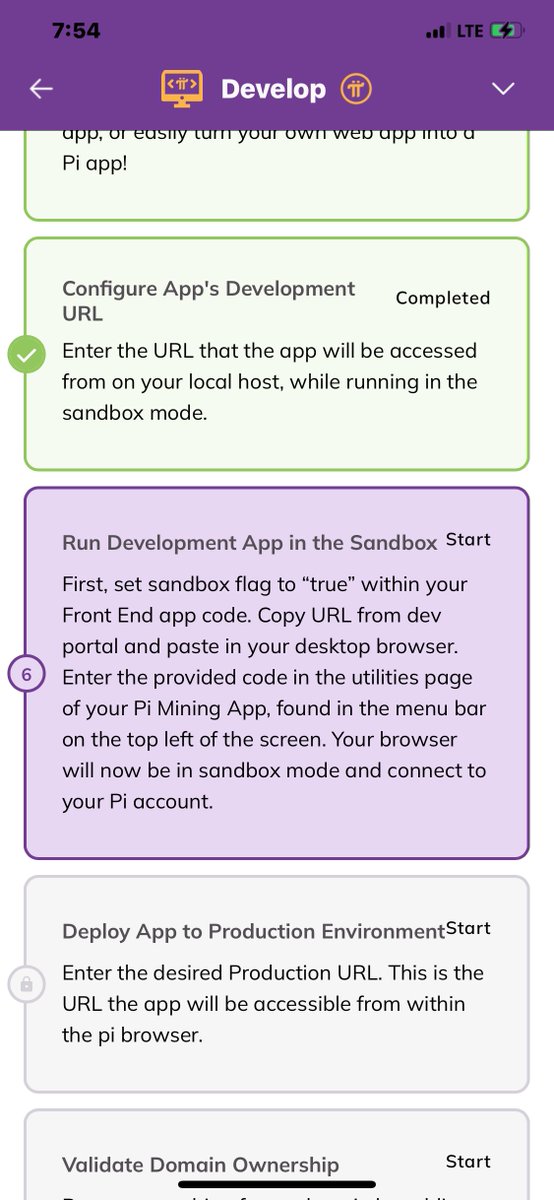
@Kosasihg8 I need assistance to claim my domain, while been stalk on stage 6 of app checklist
adebanjo tweet media
English
0
0
0
21
adebanjo
adebanjo@banjoc2rw·
@Kosasihg8 Hello pioneers, I m a pi pioneer frm Nigeria and being mining since 2019. It has been a good experience actively following the growth of the project while I m participating in KYC as validator while anticipating the reward and also won domain auction 👇
English
1
0
1
221
KOSASIH Coding Gate
KOSASIH Coding Gate@Kosasihg8·
Welcome to PiX-Pay-Integration Discussions! 🌟 This is a dedicated space to connect, discuss, and collaborate on integrating Pi with payment systems (PiX-Pay integration), whether you're a developer, merchant, user, blockchain enthusiast, or just curious about using #PiNetwork
KOSASIH Coding Gate tweet media
English
11
41
499
26.1K
shipz ✧
shipz ✧@heyshipz·
NO account should be under 1k !! Say hi and we follow you
shipz ✧ tweet media
English
2.7K
87
3.3K
312.8K
Prince Jdot
Prince Jdot@princejdott·
Night gain? Who’s active, me and my mutuals no Dey sleep, drop Hi let’s follow you
Prince Jdot tweet media
English
48
4
37
1.3K
Prince Jdot
Prince Jdot@princejdott·
No big account coming to engage you, we small account have to engage each other and grow together, drop your username, connect to my mutuals, don’t forget to retweet
Prince Jdot tweet media
English
174
43
145
5.3K
Ayo
Ayo@mariolexxx·
Imagine 500 people comment under this tweet and we all follow each other, that means you are gaining 500 followers be that. Oya let’s go!, i will follow everybody
English
1.4K
211
1.3K
59.2K