Bastian Herre

1.3K posts

Bastian Herre banner
Bastian Herre

Bastian Herre

@bbherre

Researcher @OurWorldInData. I make research on democracy, human rights, armed conflict, and violence easier to access and understand. he/him

Katılım Ekim 2015
479 Takip Edilen1.8K Takipçiler
Trish Silkin
Trish Silkin@SilkinTrish·
@OurWorldInData @bbherre Is there a chart that provides information on the rate of death? Global figures may inadvertently minimise the significant impact of a high death rate in countries with small populations. @martinplaut
English
1
0
0
95
Our World in Data
Our World in Data@OurWorldInData·
How many people died in large famines over the past 150 years? 📊 We've updated the data in many of our charts on famine, including a big update from the World Peace Foundation. This update was led on our team by @bbherre and Veronika Samborska.
Our World in Data tweet media
English
10
98
257
33.9K
Bastian Herre retweetledi
Our World in Data
Our World in Data@OurWorldInData·
Global average life expectancy has more than doubled since 1900— We can expect to live more than twice as long as our ancestors in 1900. As the chart shows, global average life expectancy was just 32 years at the beginning of the 20th century. This was a short life by today’s standards: in 2023, the average life expectancy had increased to 73 years. That’s 41 years longer. This remarkable increase is due to improved living standards, like better nutrition and sanitation, and advances in healthcare, such as antibiotics and vaccines. While large declines in child mortality have been crucial, they have not been the only reason for the increase in life expectancy; it has increased across all ages. (This Daily Data Insight was written by @bbherre.)
Our World in Data tweet media
English
19
114
362
48.1K
Bastian Herre retweetledi
Our World in Data
Our World in Data@OurWorldInData·
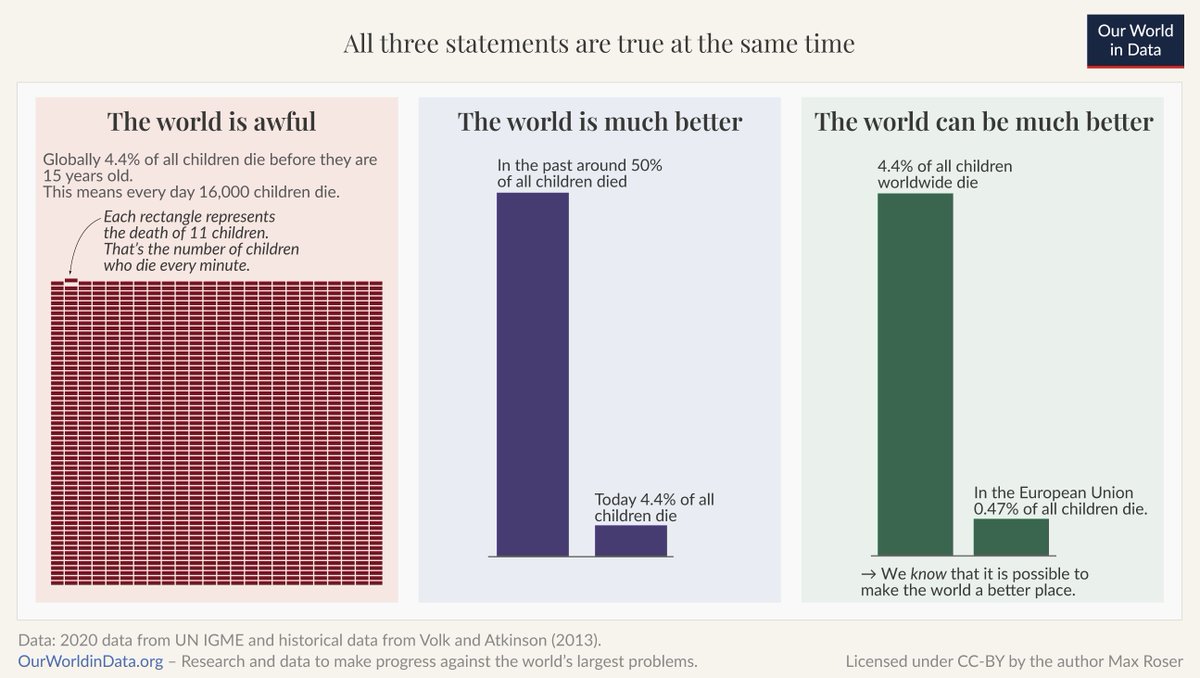
The world is awful. The world is much better. The world can be much better. All three statements are true at the same time. Understanding this is key to solving big global problems. At OWID, we believe data & research can help us understand both the problems we face & the progress that’s possible. 🧵
Our World in Data tweet media
English
24
329
1.1K
162.6K
Bastian Herre retweetledi
Charles Kenny
Charles Kenny@charlesjkenny·
Blog: The Tenth Recipient Test. The median size for a bilateral aid country relationship (US aid to Vanuatu, UK aid to Cameroon for eg) is about $1.5 million. Only 7% of bilateral relationships are >$100m. 'Country programs' make little sense below that level.
Charles Kenny tweet media
English
1
5
10
4.1K
Bastian Herre retweetledi
Our World in Data
Our World in Data@OurWorldInData·
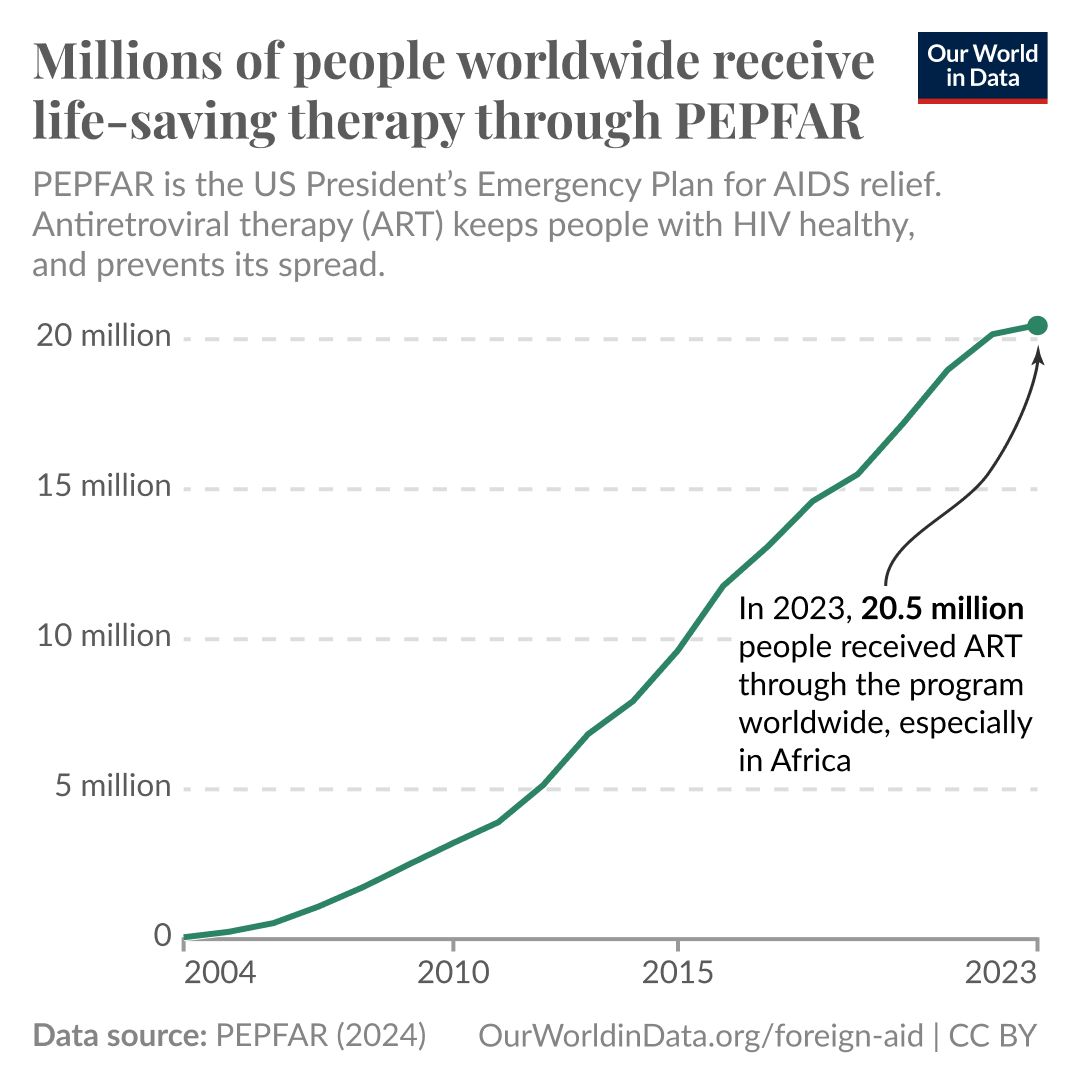
In 2023, PEPFAR provided life-saving therapy against HIV to 20.5 million people— The US President’s Emergency Plan for AIDS Relief, known as PEPFAR, was established in 2003 to fight the global HIV epidemic. Since its launch, PEPFAR has provided millions of people with antiretroviral therapy (ART) worldwide, especially in Africa. The chart shows the number of people who received therapy through PEPFAR in a given year. In 2023, it was 20.5 million people. ART is highly effective: it helps keep people with HIV healthy and reduces the risk of spreading the virus to others, saving more than one million lives each year. But, after months of legislative delay, PEPFAR was recently renewed for only one year, raising concerns about the program's future after March 2025. (This Daily Data Insight was written by Bastian Herre.)
Our World in Data tweet media
English
3
8
47
11K
Bastian Herre retweetledi
Our World in Data
Our World in Data@OurWorldInData·
The US military spends much more per service member than other major powers— Relative to its personnel, the United States spends much more on its military than other major countries. The chart shows data on military spending per service member, sometimes called a military’s “capital intensity”. We calculated this metric by dividing spending data from the Stockholm International Peace Research Institute (SIPRI) by data on personnel from multiple sources via the World Bank. This indicator reflects differences in salaries and benefits for military personnel and more advanced and costly weaponry. In 2020, the United States spent well over half a million dollars per service member. This was 50% more than the United Kingdom, more than double Germany’s spending per personnel, about six times China’s, and more than twenty times that of Brazil or India. (This Daily Data Insight was written by Bastian Herre and Pablo Arriagada.)
Our World in Data tweet media
English
4
27
80
11.2K
Bastian Herre retweetledi
Our World in Data
Our World in Data@OurWorldInData·
The UK spends about £74 per person on overseas aid— When asked where public spending should be reduced most, around 60% of people in the UK suggest cutting foreign aid. However, people overestimate how much the UK spends on aid: last year’s UK Public Expenditure Statistical Analyses show that overseas aid amounted to £5.1 billion — just about £74 per person. As the chart shows, this is a tiny part of public spending, making up only 0.5% of the total budget. To put this in perspective, the UK spends much more on other areas: over eight times as much on public order and safety, ten times more on defense, and forty times more on each of the two biggest expenses: health and welfare. Spending is not much higher if we also consider funds dedicated to supporting refugees in the UK itself. This situation is not specific to 2023: the UK’s foreign aid spending has been at similar levels for decades and is in line with what other wealthy countries spend. Compared to the size of its budget and economy, foreign aid is a relatively small expense. (This Daily Data Insight was written by Bastian Herre.)
Our World in Data tweet media
English
3
21
117
12.9K
Bastian Herre
Bastian Herre@bbherre·
@kopalo Thank you very much, both for your kind words and the suggestion! We may have to leave it for a later update, but we will take a look!
English
0
0
0
19
Ken Opalo
Ken Opalo@kopalo·
@bbherre This is great! Could you also add a tied-aid graph?
English
1
0
0
15
Bastian Herre
Bastian Herre@bbherre·
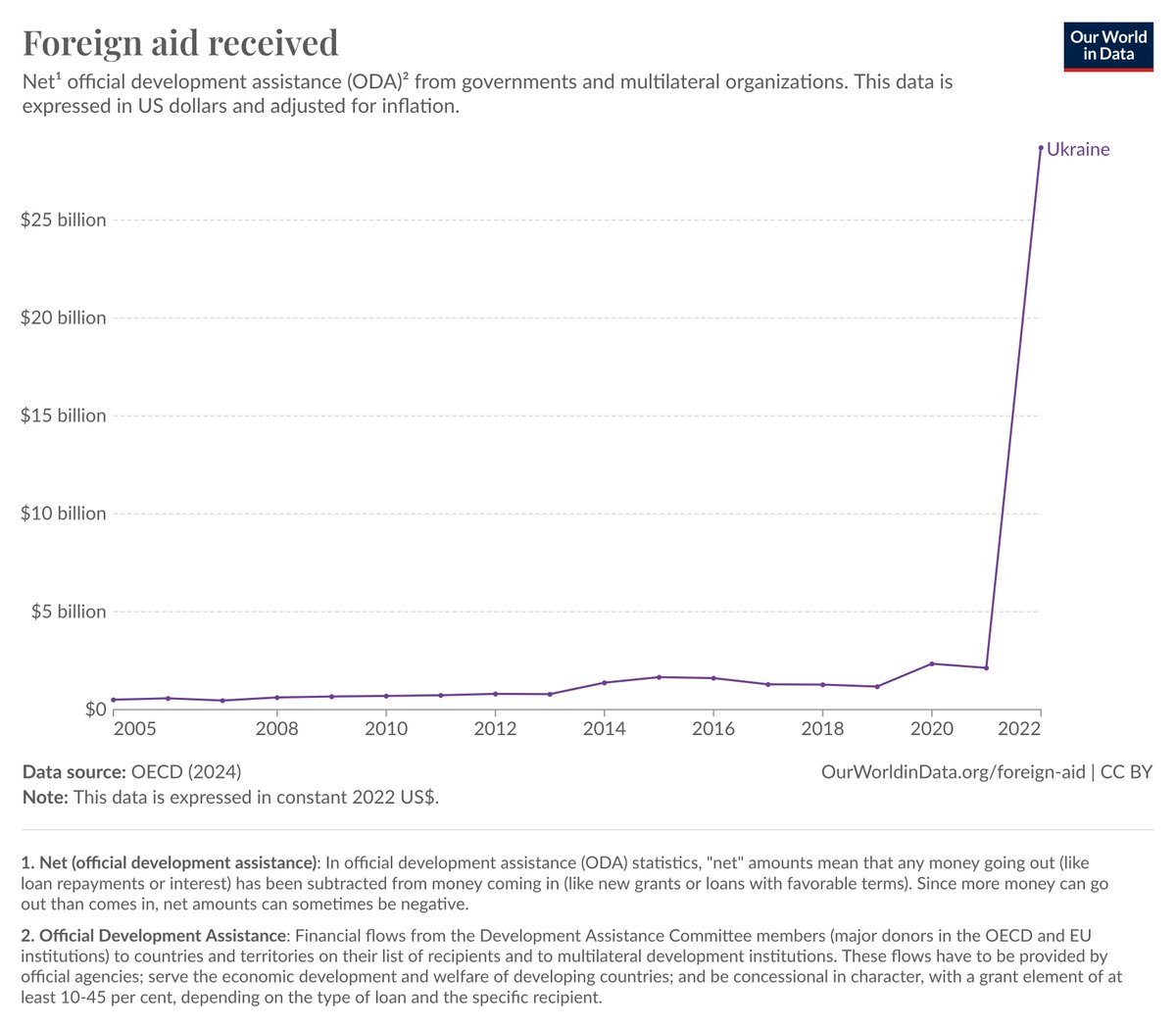
We @OurWorldinData now have a topic page on foreign aid! It allows you to explore data on who gives and receives foreign aid, the different types of assistance, and a few examples of when it has been successful. A thread on what the page has in store:
Bastian Herre tweet media
English
4
59
170
28.8K
Bastian Herre
Bastian Herre@bbherre·
@Prashant_Garg_ @OurWorldInData We don't have dyadic data (yet), but you can find more information in the OECD's Development Cooperation profiles, such as here for the United States: #chapter-d1e48107-45eb14f98d" target="_blank" rel="nofollow noopener">oecd.org/en/publication…
English
0
0
1
37
Bastian Herre
Bastian Herre@bbherre·
If you spot any errors or have any suggestions, please respond to this thread or email me at bastian@ourworldindata.org. I look forward to hearing from you! If you think the page could be interesting to others: like this thread, share it, or tell them about it! Thanks a lot!
English
1
1
2
469