Beau Sievers

95 posts

Beau Sievers banner
Beau Sievers

Beau Sievers

@beausievers

scientist and composer https://t.co/WoBxD1N063 https://t.co/ARW8ldPX97

SF bay area Katılım Eylül 2009
962 Takip Edilen2K Takipçiler
Beau Sievers
Beau Sievers@beausievers·
Please enjoy a new video by MILM and Alexander Dupuis. Every year we get together and make a record in a week. This song is from our first record, MILM I. youtu.be/lKGMV2998fA?si…

YouTube video
YouTube
English
0
0
0
437
Beau Sievers
Beau Sievers@beausievers·
@Nick__Bentley If one recipe for market success is to be 80% familiar and 20% novel, a strict "study the canon" strategy might fall short on novelty. Might be better to balance exploring the fringe with exploiting the canon when foraging for ideas
English
1
0
1
169
Nick Bentley 🎲
Nick Bentley 🎲@Nick__Bentley·
Contrarian opinion: I often see advice to aspiring board game designers to "play as many games as possible" or "play a ton of games" I think it's poor advice. Two reasons: time management, and an analogy from sports. Time management: the more time you spend playing, the less time you spend designing. Because the most important activity is to design, you must hence limit time playing. Sports analogy: let's say I'm a basketball player trying to get better at rebounding. I have the choice of spending my time at the local high school studying the techniques of the best rebounder on the team, OR I can study the techniques of Dennis Rodman, the greatest rebounder in basketball history. Which choice gives me more bang for my time-buck? With limited time, I should study the masters and ignore everyone else. There may be one caveat: sometimes the gulf between what we know, and what the masters know, is so great that we can't understand what they're doing until we learn other things first. However, for board game design, I think those prerequisites are game theory, psychology, UX design, and things like that. You'll acquire this knowledge more rapidly through book study combined with attempts at implementation, rather than playing random games. Fight me!
Nick Bentley 🎲 tweet media
English
12
0
3
1.2K
kasey
kasey@kaseyklimes·
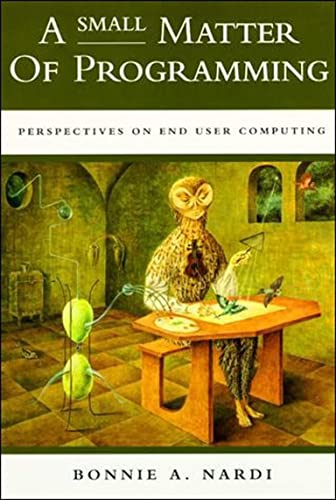
I think this is mostly because we're missing one other element that nardi called out here in the early 90's: deterministic actions. end-user programming needs dependable, predictable, deterministic actions. x.com/MashTunTimmy/s…
kasey tweet media
mash tun@MashTunTimmy

@kaseyklimes Please post examples of good natural language interfaces, I haven't found them yet (for business apps)

English
4
0
5
434
kasey
kasey@kaseyklimes·
the lego brick metaphor we all love so much in end-user programming is becoming obsolete. the underlying ideas (composability, ergonomics, etc) are more relevant than ever, but natural language interfaces have outpaced the 'block' primitive.
English
4
2
31
5.7K
Beau Sievers retweetledi
Indexical
Indexical@anindexofmusic·
RIP Larry Polansky - a major influence, mentor, and friend to Indexical. Huge loss for the Santa Cruz music scene and greater experimental music community.
Indexical tweet media
English
0
2
17
1.9K
Nick Bentley 🎲
Nick Bentley 🎲@Nick__Bentley·
I heard someone say this about board game crowdfunding: "People back art with games attached" I think the claim is directionally true. If I saw a game like the one below, I'd predict a huge campaign for it without knowing anything about it beyond the picture: It leads people to sometimes back bad games with great art, which is bad for everyone: Creators and Kickstarter lose credibility, and backers waste money on games they don’t play. I think there’s a two-fold problem: 1. It's hard for creators to credibly convey gameplay quality, and they’re incentivized to be overoptimistic about it. That leaves backers guessing. Creators do put 3rd-party reviews and testimonials on their pages, but backers (wisely) doubt them. 2. Visuals are trivial to evaluate so they play an outsize role in backers' experience of campaigns. I’m thinking about this because we're launching on Kickstarter in early June and I'd love to improve this situation. A bunch of our testers have said our new game, Trekking the World 2nd Edition, is their favorite of ours, and we think there’s a fair chance that will be true for many, especially Kickstarter backers who lean heavier (the game is a bit heavier for us). I’d love to think of some way to convey the quality of gameplay more credibly. But how? I’d love your suggestions. For context, here’s a project overview: bit.ly/ttw-2e-overview More info in our pre-campaign offer: get.underdoggames.com/?v=B All suggestions will be met with unremitting wails of gratitude.
Nick Bentley 🎲 tweet mediaNick Bentley 🎲 tweet media
English
11
4
39
6.3K
Beau Sievers retweetledi
Mark Thornton
Mark Thornton@Mark_A_Thornton·
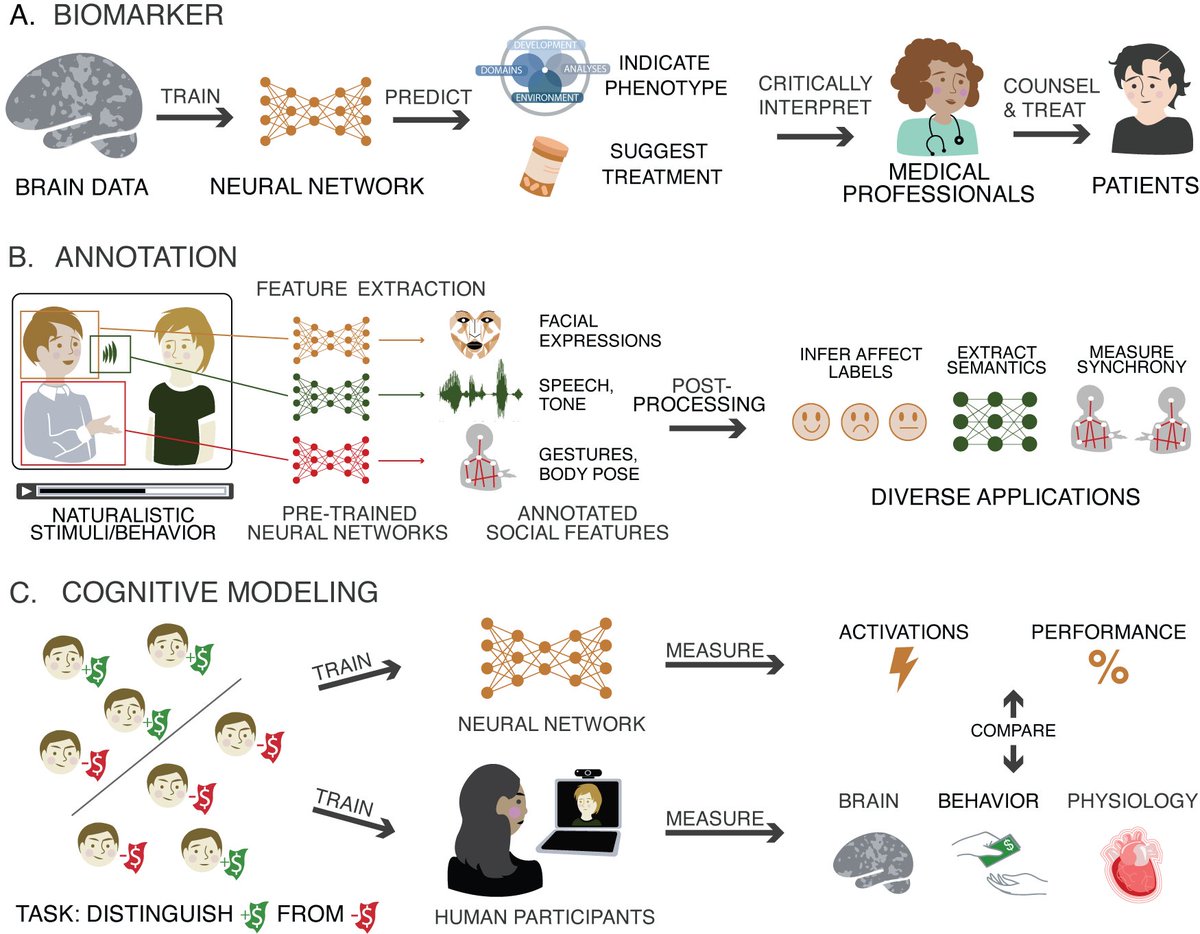
New paper from @beausievers & me, now out in SCAN! "Deep social neuroscience: The promise and peril of using artificial neural networks to study the social brain" Open access link🔓: doi.org/10.1093/scan/n…
Mark Thornton tweet mediaMark Thornton tweet media
English
2
40
109
13.4K
Beau Sievers retweetledi
Jamil Zaki
Jamil Zaki@zakijam·
My lab is on the lookout for a new full-time RA to join our team! Please spread the word, esp to folks who might be a good fit. More info and application link: acrobat.adobe.com/link/track?uri…
Jamil Zaki tweet media
English
3
59
103
20.8K
Beau Sievers retweetledi
Mark Thornton
Mark Thornton@Mark_A_Thornton·
This year I am particularly looking for prospective graduate students who are interested in studying social cognition by using deep neural networks as cognitive models to explain the computations performed by social brain circuits.
Mark Thornton@Mark_A_Thornton

Planning to apply to PhD programs this fall? I'm looking to recruit a new student to @SCRAP_Lab! If you're interested, please check out the @DartmouthPBS departmental FAQ here: pbs.dartmouth.edu/menufeature/gr… & my lab policy doc, which you can find on this page: scraplab.org/people/


English
0
30
54
11.6K
Beau Sievers retweetledi
Sam Gershman
Sam Gershman@gershbrain·
It is widely believed that the planarian memory transfer experiments from the 1960s were flawed and non-replicable. They're now discussed only as a scientific cautionary tale. But the critiques themselves were flawed. This is actually a meta-scientific cautionary tale.
English
8
22
99
32.3K