Nathan Beer 📸

29.5K posts

Nathan Beer 📸 banner
Nathan Beer 📸

Nathan Beer 📸

@beercandid

Senior Creative Producer // vires in numeris Ξ // 🎞📸 🎥// beercandid.eth // prev @yugalabs @nftnow @SuperRareLabs @ConsenSys @NESTHQ @TheFreeGC @NeurosciBU

Florida, USA Katılım Ağustos 2010
1.7K Takip Edilen5.1K Takipçiler
Sabitlenmiş Tweet
Nathan Beer 📸
Nathan Beer 📸@beercandid·
At long last... Story #1: Manila & Thailand 2018 It would be a fool's errand to tell this using Twitter threads. It's a complex, nuanced story that deserves its own book, as many ConsenSys alumni can attest. But let's give it a shot... 🧵
Nathan Beer 📸@beercandid

I find myself at a crossroads, my art—photography—no longer an extension of my being but a distant satellite to my soul. So, I stand resolved to bridge this expanse. Allow me to unravel the spool…🧵

English
20
10
106
19.9K
Paul S. Conyngham
Paul S. Conyngham@paul_conyngham·
A lot of people have been asking if this can be done for their dogs and for people. I'm speaking with everyone involved to see what is possible here. If you would like to be involved, please complete the following Google form: bit.ly/4bkaowg
Paul S. Conyngham tweet media
English
272
701
5.9K
273.3K
Nathan Beer 📸 retweetledi
m
m@skitzocat·
fake ass chiller i saw u worried about a task
English
13
967
9.2K
213.7K
Nathan Beer 📸 retweetledi
NO CONTEXT HUMANS
NO CONTEXT HUMANS@HumansNoContext·
NO CONTEXT HUMANS tweet media
ZXX
119
6.7K
135.4K
1.9M
Nathan Beer 📸 retweetledi
sophie
sophie@netcapgirl·
it’s on slack bro. it’s in the drive. i just put it in the notion bro i literally sent it to you on teams. did you check the airtable bro? it’s in the box bro. it’s single sign on, it’s on okta bro. no you need the yubikey. check your deel bro, it’s on gusto. check outlook bro
English
245
4.4K
44.2K
1M
J//G0Ξ
J//G0Ξ@JagoeCapital·
@CoinDesk yes, you guessed it! Penguin apparel is owned by Perry Ellis International, founded by George Feldenkreis, a Ukrainian jew (born in Cuba) that served as a board member of the Greater Miami Jewish Federation for more than 40 years
English
14
6
186
15.1K
CoinDesk
CoinDesk@CoinDesk·
LEGAL: Original Penguin parent company PEI Licensing has filed a trademark infringement lawsuit against Pudgy Penguins, alleging the crypto brand's apparel marks "mislead and deceive" consumers. PEI has been using a penguin mark since 1956 and first sent a cease-and-desist in Oct. 2023.
CoinDesk tweet mediaCoinDesk tweet media
English
558
153
1.3K
1M
Nathan Beer 📸
Nathan Beer 📸@beercandid·
Like moths (IRGC officials) to a flame (in-person gatherings)
English
1
0
1
73
Nathan Beer 📸 retweetledi
doomer
doomer@uncledoomer·
I didn't even know he was sick
Insider Wire@InsiderWire

#BREAKING: Iran’s Supreme Leader confirmed dead, after his body was found.

English
84
327
14.6K
635.5K
Nathan Beer 📸 retweetledi
is khamenei alive?
is khamenei alive?@iskhameneialive·
Dead as fuck
English
117
3K
60.5K
781K
kmoney
kmoney@kmoney·
khamenei is dead?
Eesti
42
1
82
20K
Nathan Beer 📸
Nathan Beer 📸@beercandid·
Cool, but if you're going to post an AI diatribe on this app please do us the courtesy of removing the em dashes beforehand.
The Curious Tales@thecurioustales

The double slit experiment has haunted physicists for over 200 years. When you shoot a single photon through two slits in a barrier, it doesn't choose one hole. It goes through both simultaneously, interferes with itself, and lands on the screen as a wave pattern, as if the particle somehow knew both paths existed and took all of them at once. The moment you place a detector to watch which slit it goes through? The wave pattern vanishes. The photon suddenly behaves like a solid particle. The act of observation collapses the quantum superposition into a single definite reality. Physicists called this "wave-particle duality" and for generations, we treated it as a quirk of space. A particle's relationship with physical barriers, physical gaps, physical measurement. What just happened changes the entire frame. Researchers didn't use slits carved into a material. They used slits carved into time itself — ultra-short switching windows in the electrical properties of a material, flickering on and off at trillionths of a second. Light passed through these temporal gaps the way it would normally pass through spatial gaps. And the interference pattern still appeared. Not across space. Across frequency. Sit with that for a moment. The wave behavior of light, the phenomenon we always associated with light spreading through physical space, reproduced itself in the time dimension. The photon interfered with its own past and future states the way it normally interferes across left and right positions. What this quietly confirms is something theoretical physicists suspected but had never demonstrated: space and time are not just mathematically symmetric in quantum mechanics. They are physically interchangeable in ways that produce identical quantum behavior. The "slits" are interchangeable coordinates. The universe doesn't distinguish between a gap in space and a gap in time when it decides how reality should unfold. The implications of that sentence are almost impossible to absorb without stopping completely. We built our entire intuition about quantum mechanics around the geometry of space — particles passing through openings, waves spreading outward, interference happening across a physical screen. Every textbook, every lecture, every thought experiment uses spatial metaphors because that's the dimension we experience as "real" and navigable. Time, by contrast, we experience as a river we're trapped inside — always moving forward, never able to go sideways in it. We don't experience temporal gaps the way we experience physical ones. A door has two holes, you can walk through either one. A moment in time doesn't seem to have "holes." Except for a photon, apparently, it does. The temporal slit experiment forces a deeply uncomfortable update to how we model light, matter, and information. If wave-particle duality operates across time the same way it operates across space, it means quantum superposition — that strange state of "being in multiple states simultaneously until observed" — is not just a spatial phenomenon. A particle can exist in multiple temporal states simultaneously. Its wave function doesn't just spread left and right. It spreads forward and backward in time. This connects to something that's been sitting at the edge of quantum mechanics for decades: the block universe theory. In Einstein's relativity, past, present, and future all exist simultaneously as coordinates in a four-dimensional spacetime fabric. "Now" is just the slice of that fabric you happen to occupy. Physicists who take this seriously argue that the reason quantum mechanics is so strange is that particles already operate in the full four-dimensional block — they're not choosing a path through space, they're tracing a path through spacetime, and what we call "probability" is our limited three-dimensional perception failing to see the complete trajectory. The temporal slit experiment edges us closer to that picture being literally, physically, measurably true. And then there's the measurement problem. The original spatial double slit experiment breaks your brain because the act of looking destroys the wave behavior. Nobody has fully agreed on why. Some say the observer collapses the wave function. Some say the detector entangles with the photon and creates decoherence. Some say the universe splits. The temporal version of the experiment opens a new front in that war. When you measure a temporal slit — when you try to determine which moment the photon passed through — does the interference across frequency collapse the same way interference across space does when you watch it? That experiment hasn't been done yet. The answer will either confirm that time and space are truly symmetric at the quantum level, or it will break the symmetry and reveal that time has a fundamentally different relationship with observation than space does. Either outcome rewrites something important. We think of physics experiments as things that happen in laboratories, relevant to scientists with particle accelerators and cryogenic equipment. But every foundational shift in quantum mechanics eventually rewires technology. The photoelectric effect sounded like a curiosity in 1905. It built every solar panel and digital camera in existence. Quantum tunneling sounded abstract. It gave us the transistor, and therefore every computer. Wave-particle duality operating across time opens the door to temporal interference as an engineering tool. Controlling how light and matter interfere across time gaps — not space gaps — could produce entirely new forms of signal processing, photonic computing, and quantum communication that don't currently exist even theoretically. The universe keeps revealing that the constraints we assumed were fundamental were just the limits of our instruments. Time always looked like a wall. Turns out it was a slit all along.

English
0
0
2
101
Nathan Beer 📸
Nathan Beer 📸@beercandid·
@KeithGrossman Respectfully, it becomes a real issue when privacy no longer remains a choice. Anonymity protects abuse survivors, dissidents, and marginalized users.. Korea’s real-name law curbed free speech w/out fixing toxicity. Unmasking for $1 doesn’t restore civility, it empowers stalkers.
English
0
0
0
24
Keith A. Grossman
Keith A. Grossman@KeithGrossman·
If this is true - and, I can very much see it being true - it will greatly improve the Internet as we know it, IMO, and hopefully will also restore civility amongst people as there will be no more “hiding.”
Alex Prompter@alex_prompter

Holy shit… Your anonymous internet identity can now be unmasked for $1 😳 Not by the FBI. By anyone with access to Claude or ChatGPT and a few of your Reddit comments. ETH Zurich and Anthropic just dropped a paper called “Large-Scale Online Deanonymization with LLMs” and the results are the most alarming privacy research I’ve read this year. They built an automated pipeline that takes your anonymous posts, extracts identity signals, searches the web, and figures out who you are. No human investigator needed. Fully autonomous. Works on Hacker News, Reddit, LinkedIn, even redacted interview transcripts. Here’s how bad the numbers are. On Hacker News users: 67% identified correctly. When the system made a guess, it was right 90% of the time. On Reddit academics posting under pseudonyms: 52%. On scientists whose interview transcripts were explicitly redacted for privacy: 9 out of 33 still got unmasked. The pipeline works in four steps they call ESRC. Extract identity signals from your posts using LLMs. Search for candidate matches using embeddings across thousands of profiles. Reason over top candidates with models like GPT-5.2. Calibrate confidence so when it does guess, it’s almost never wrong. The classical deanonymization method from the famous Netflix Prize attack? Nearly 0% recall across every test. LLMs didn’t just improve on old techniques. They made old techniques look like toys. When they scaled to temporally split Reddit profiles, matching a user’s old posts to their newer ones across a full year gap, the pipeline hit 67% recall at 90% precision and 38% recall at 99% precision. Meaning even a year of changed interests and different conversations wasn’t enough to hide. More reasoning compute = better deanonymization. High reasoning effort doubled recall at 99% precision in some tests. As frontier models get smarter, this attack strengthens automatically. Every model upgrade is a privacy downgrade. What makes it nearly impossible to defend against: the pipeline splits into subtasks that all look benign. Summarize a profile. Compute embeddings. Rank candidates. No single API call screams “deanonymization.” The researchers themselves say they’re pessimistic that safety guardrails or rate limits can stop it. Their conclusion is blunt: “Users who post under persistent usernames should assume that adversaries can link their accounts to real identities.” And it extrapolates. Log-linear projections suggest roughly 35% recall at 90% precision even at one million candidates. Every throwaway account. Every anonymous forum post. Every “nobody will connect this to me” comment. It’s all searchable micro-data now. And the cost to run the full agent on one target is less than a cup of coffee. Practical anonymity on the internet just died. The paper killed it with math.

English
6
0
14
2.9K
Nathan Beer 📸
Nathan Beer 📸@beercandid·
Vaugeposting on this app is, well... IYKYK
English
1
0
2
78
Nathan Beer 📸 retweetledi
𝗗𝗘𝗔𝗗𝗦𝗢𝗨𝗡𝗗 💀
If I text someone who’s in Do Not Disturb I’m smashing that “Notify Anyway” button instantly. If you’re too busy with your family or whatever to hear my thoughts on Jerry Garcia Band’s 1990 “Harder They Come” featuring Bela Fleck (“it’s good!”) then just lose my number already.
English
16
48
948
50.7K
gaga💌
gaga💌@gagab33·
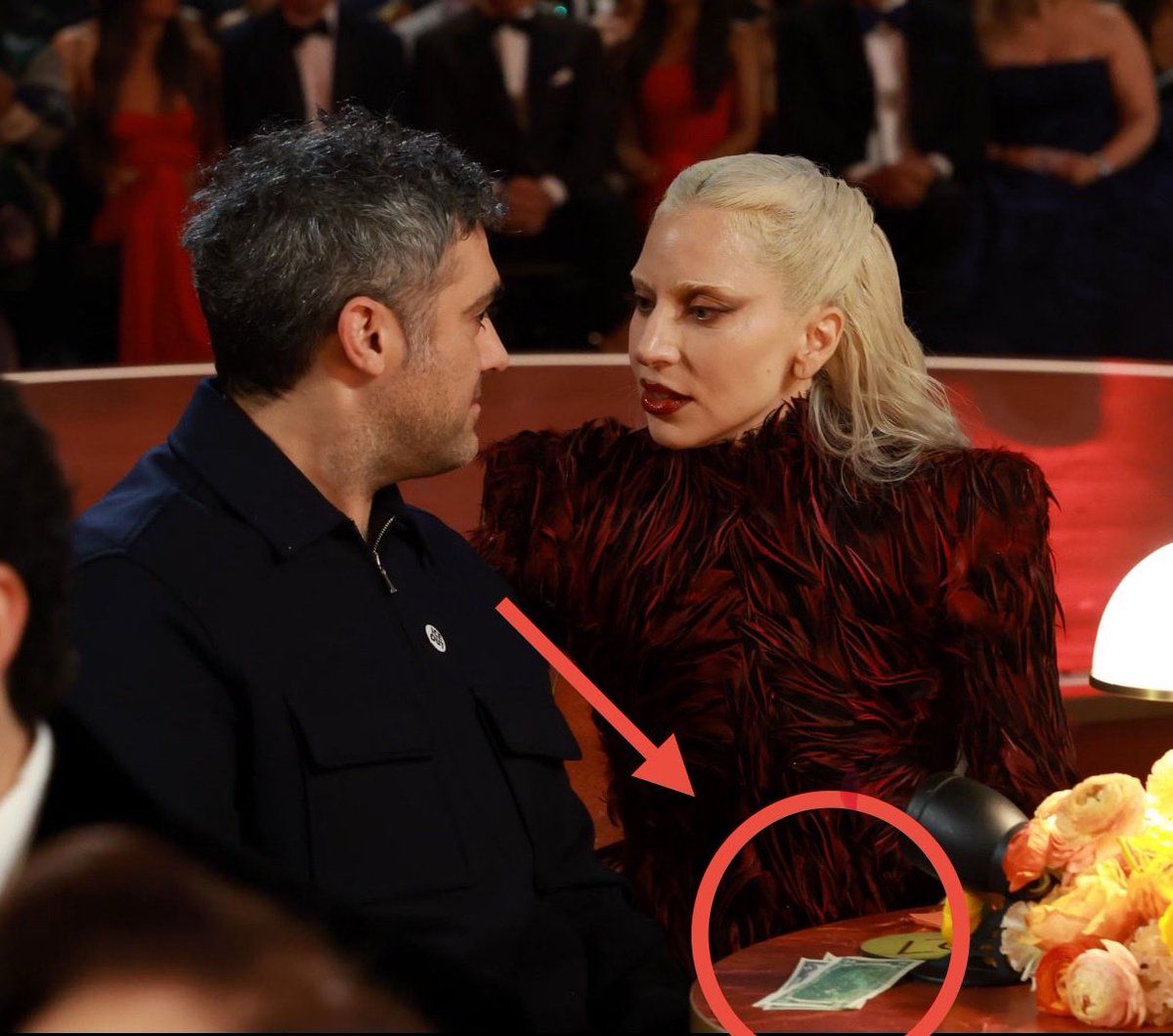
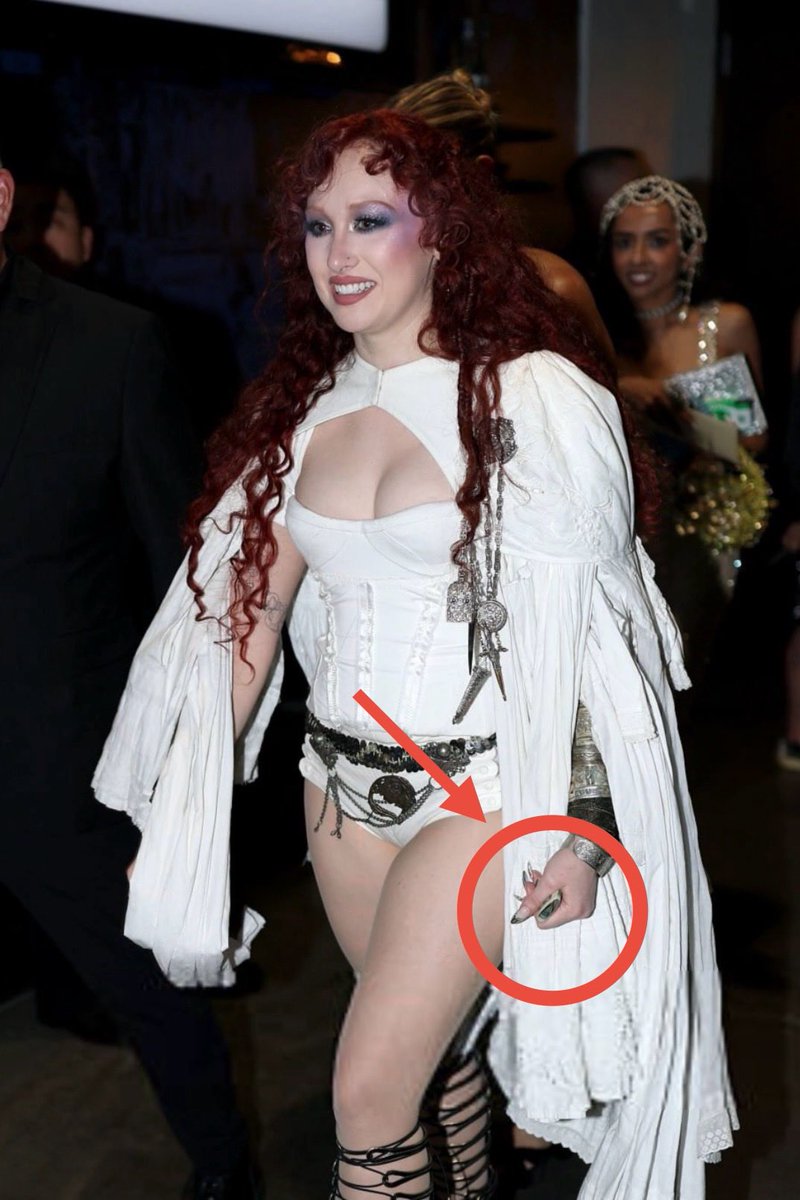
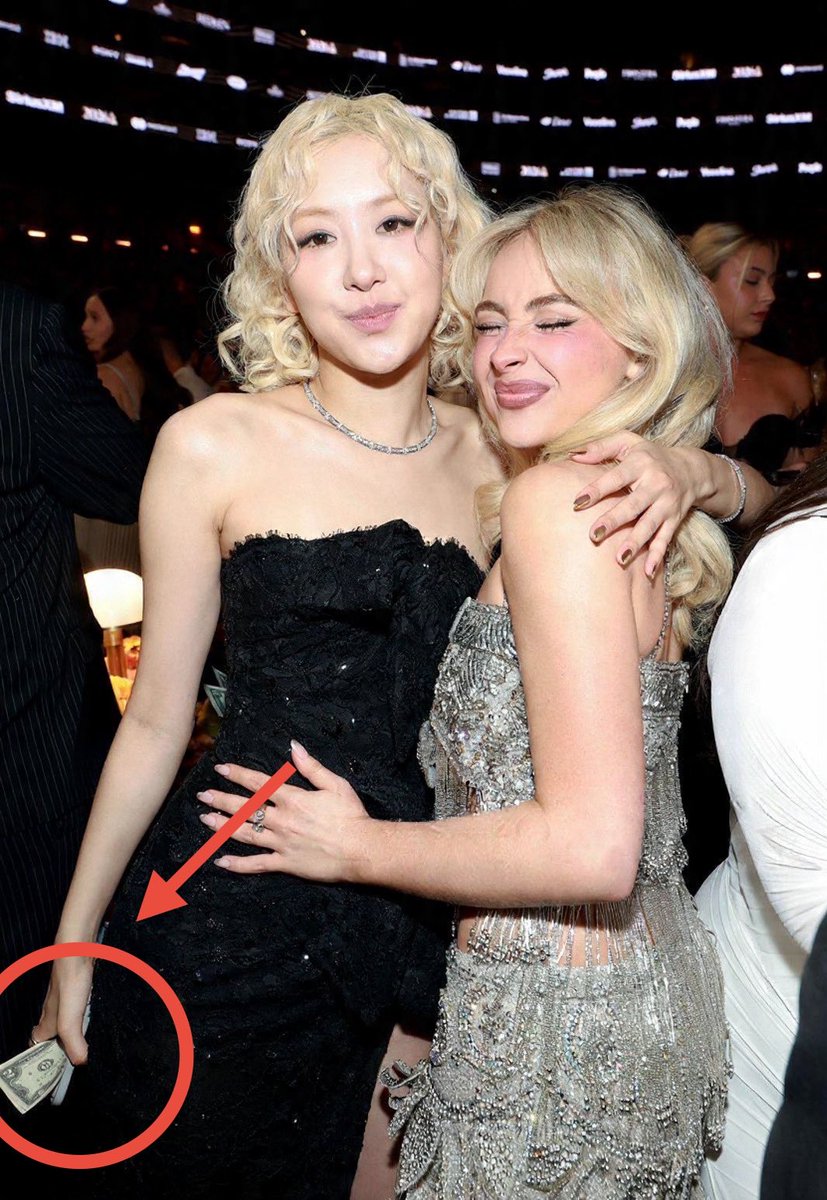
now wtf was going on with the dollar bills at the Grammys?💀
gaga💌 tweet mediagaga💌 tweet mediagaga💌 tweet media
English
660
1.2K
100.3K
10.6M
Nathan Beer 📸
Nathan Beer 📸@beercandid·
Do me a favor and listen to my INCREDIBLE WIFE’S rendition of Samson & Delilah at our wedding last Sunday
Nathan Beer 📸 tweet media
English
4
1
12
583