Roman Behma

15 posts

Roman Behma

Roman Behma

@behmarom

Ex @0xPolygon | @chainlink | @SlingshotCrypto | @ssv_network | @NerifNetwork

Lisbon Katılım Nisan 2021
430 Takip Edilen251 Takipçiler
heystas
heystas@heyystasiia·
@RevolutApp Your support told me for weeks my verification was fine and I could send the document later. I trusted you, traveled abroad, and now my account is permanently closed. 5 years as a customer and this is the result of following your own support’s advice.
heystas tweet mediaheystas tweet media
English
3
1
2
87
Roman Behma retweetledi
Kolo💚
Kolo💚@KoloHub·
The moment has arrived! We are launching the biggest cashback in BTC for all Kolo Card users. You get 5% BTC cashback on every purchase! Pay for anything with our card and get cashback instantly in BTC Open Kolo Card - tinyurl.com/yc5c2t3v
English
49
43
123
29K
Mislav Javor
Mislav Javor@ox_shaman·
1. MEE only does transaction/intent sequencing and execution. It doesn't pass message around, but it can trigger things like LayerZero, Chainlink CCIP or other XCM protocols. 2. Both work, initially it will be a more centralized solution where one of the master nodes add you - but we're actively working on a decentralization roadmap - so in the future the execution will be collaborative. 3. Please reach out to us. The MEE stack is still in development, so no automated way of adding exists yet - but we'd be happy to support business wise. My DMs are open!
English
1
0
1
88
Mislav Javor
Mislav Javor@ox_shaman·
Sooo. Yesterday, together with @biconomy we announced Modular Execution Environments! Today, let's go a bit deeper into what a Modular Execution Environment is! Reader beware - this will be a bit more of a technical post. Beyond Chain Abstraction At Klaster, we have been pioneering work on Chain Abstraction and, while CA is a very, very important part of the development of the blockchain developer experience, Modular Execution Environments go far beyond pure Chain Abstraction! Onchain execution environments are becoming increasingly complex - it used to be that you had your trusty RPC node which pointed to Ethereum and you'd just sign your transactions and push it there. But today, the situation is different: → Bundlers provide account abstraction and gas sponsorship → Solvers provide liquidity fronting and finding optimal paths to execution → Cross-chain messaging protocols provide the ability to pass information around between multiple blockchains → Session Keys provide the ability for nodes to execute transactions at a later date or have repeat transactions A developer building a modern onchain app needs to install multiple SDKs and handle multiple execution environments and all of their peculiarities. But that's not even the hard part - a lot of the times, these providers are incompatible with each other and the work of composing between them becomes a game of fitting square pegs into round holes. Multiple user approvals and signatures for multiple providers are the norm - not the exception. For providers offering bundling and solving services - life isn't much easier either. For every new blockchain that's deployed, they need to support a new environment. In a world where we have thousands of rollups and AppChains, this approach is far from scalable. With MEE - This all changes! Supertransactions The core new primitive of MEE is the Supertransaction. It's a single data model, signed only once by the user - permitting any number of participants in MEE to start executing the multi-chain flow. A Supertransaction can contain any number of instructions - a transaction execution instruction for the bundler, a liquidity fronting instruction for the solver and an off-chain data proof request from a protocol like zkTLS can all be a part of a single Supertransaction flow. How does it work? A Supertransaction is encoded into a recursive Merkle Tree - where each leaf is an instruction to the participants in the Modular Execution Environment. Why recursive? Because this enables the leaf of one Supertransaction to be the root of another! Meaning, essentially that one node can request the other node to commit itself to execute a section of the request. While seemingly inconsequential, it's one of the biggest features of MEE. Recursive commitments enable collaborative execution! Meaning any node in the Modular Execution Environment can specialize itself to execute just a subset of available actions on a subset of available chains and count on other nodes to pick up the rest of the work. This offers MEE an unparalleled amount of horizontal scalability, making it able to easily handle hundreds or thousands of app-chains and rollups. Trustless MEE - The Biconomy Protocol The Biconomy protocol is the first Modular Execution Environment. It's a permisionless P2P gossip network, which is able to propagate requests for quotes from bundlers, solvers, etc... When a user communicates their Supertransaction to the network, they get multiple quotes for execution. They select the best quote for their case (e.g. fastest, most reputable or cheapest). In order to create a quote, a node must sign the Supertransaction hash with their private key. This obligates the node to the execution of the instructions within that hash. After receiving the quotes, the user signs the already signed hash and this permits the node to start executing all of the actions in the Supertransaction. If the node doesn't execute - they'll get slashed. The validation is done by smart contracts, onchain. This means that MEE inherits the security and decentralization guarantees of every blockchain they interact with. The node cannot grift the user or execute any action which the user didn't explicitly permit. The MEE approach solves most of the major issues of blockchain interoperability in an elegant manner, while preserving trustlessness, permissionlessness and decentralization ✌️
Mislav Javor tweet mediaMislav Javor tweet mediaMislav Javor tweet media
English
2
10
55
3.6K
Roman Behma
Roman Behma@behmarom·
Thank you for a quick reply. For more clarifications: 1. By cross-chain messaging provider you mean any AMB which is integrated with our appchain? 2. Should I run my own MEE node or use an existing one? Or both options works? 3. Could you please share a link to add an RPC of our custom appchain?
English
1
0
0
88
Mislav Javor
Mislav Javor@ox_shaman·
@behmarom @klaster_io @biconomy i) Add AppChain RPC to an MEE node ii) Fund the node with AppChain gas iii) Find a cross-chain messaging provider which supports the AppChain iv) ...? v) Profit
English
1
0
4
215
Mia
Mia@miaferrariii·
watching him in the arena trying things
Mia tweet media
English
2
2
38
3.8K
Crypto Nomads ✈️
Crypto Nomads ✈️@CryptoNomads_gm·
We run a community with founders and builders who work full time in web3. None of them (literally zero) talk about token prices.
English
6
1
28
2K
Crypto Nomads ✈️
Crypto Nomads ✈️@CryptoNomads_gm·
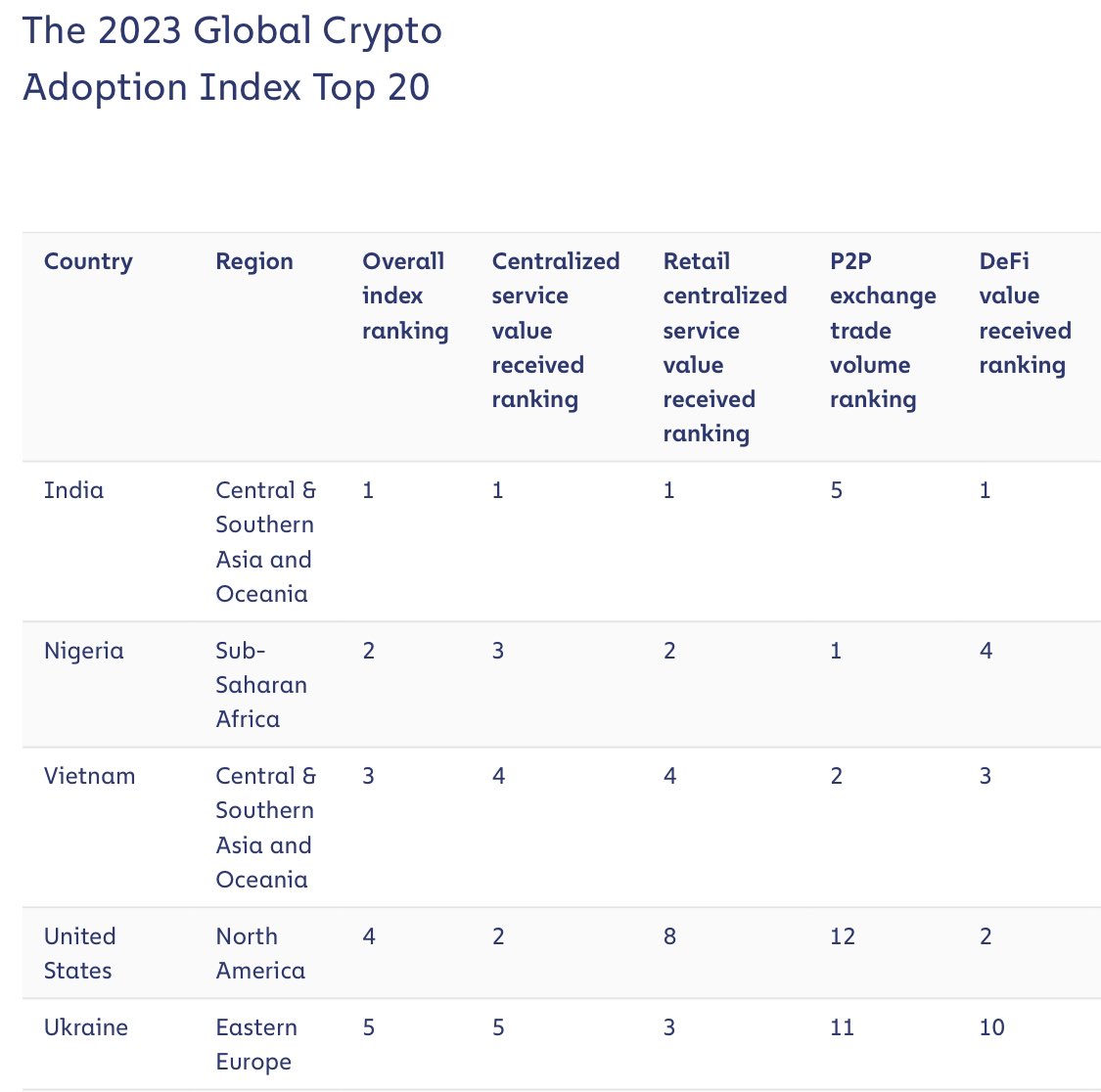
What country are you currently in? If you’re building in crypto, chances are it’s one of these: 🇺🇸 🇮🇳 🇰🇪 🇭🇰 🇵🇹 🇯🇵 Or stil in 🇸🇬 recovering from @token2049 😉
English
16
0
12
2K