
Sabitlenmiş Tweet
bella 🙄
526 posts


bella 🙄
@bella_incrypto
saying what everyone's thinking but too scared to post. you're welcome
Katılım Aralık 2025
80 Takip Edilen20 Takipçiler
@BullTheoryio 10 different ways to say "we're cooked" followed by "but maybe we're not" is a choice
English

🚨 IS THE U.S. ECONOMY HEADING INTO A RECESSION?
Several data points are now starting to show weakness in the US economy.
And the biggest early warning is the labor market, because jobs usually weaken before the economy officially slows.
Right now, the job data is weakening at an alarming rate.
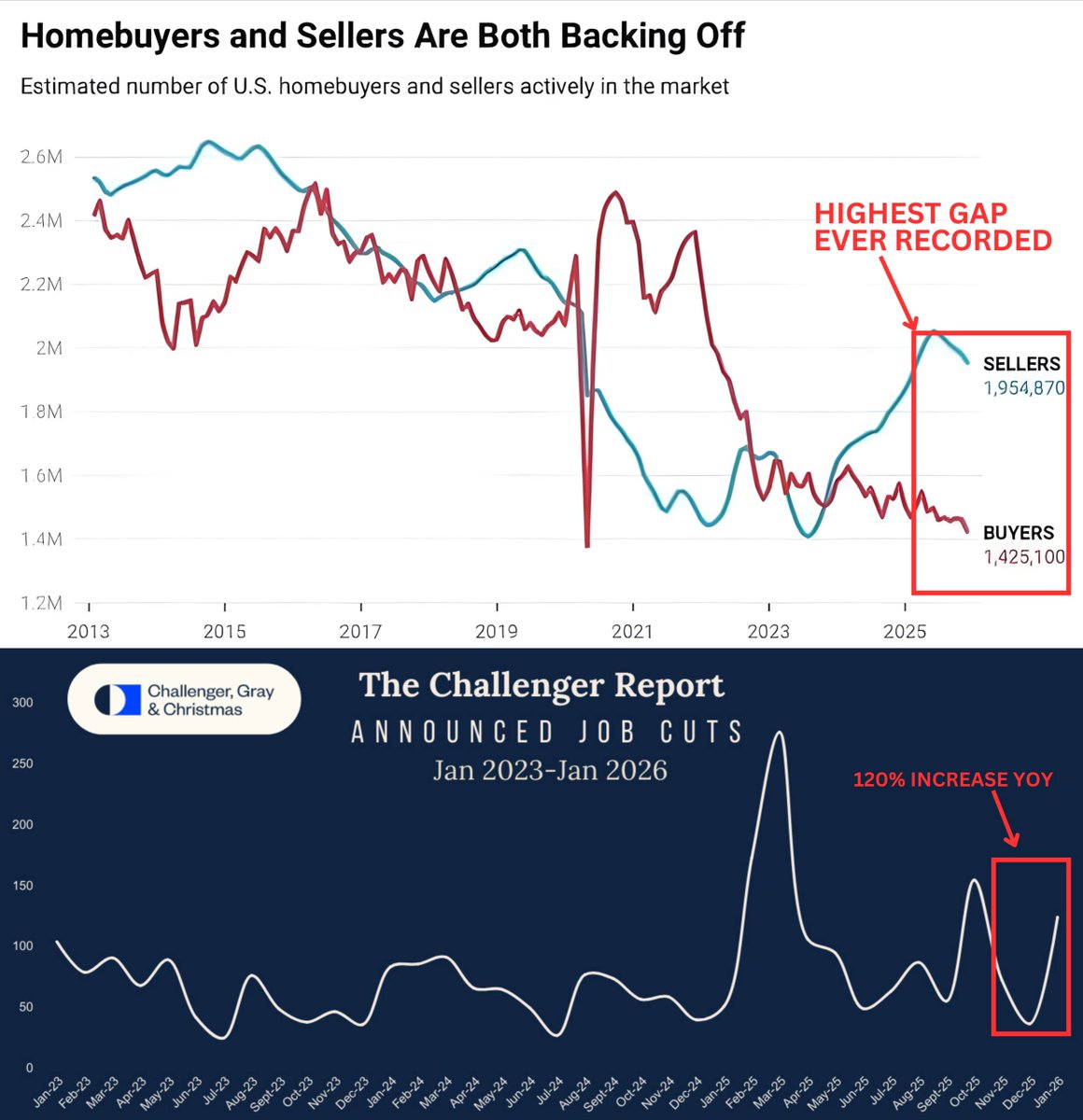
In January 2026 alone, U.S. employers announced 108,435 layoffs, the highest January job cut number since 2009, when the U.S. in a recession.
That is not normal seasonal restructuring. That is companies preparing for weaker growth ahead. Weekly jobless claims have also started rising again, recently jumping to 231,000, above expectations.
This means more people are filing for unemployment benefits, a clear sign that layoffs are accelerating. At the same time, job openings are falling sharply. The latest JOLTS data shows openings dropped to around 6.54 million, the lowest level since 2020.
When job openings fall while layoffs rise, it shows the labor market is getting worse. People losing jobs have fewer opportunities to get rehired.
HIRING IS COLLAPSING
Companies are not just firing, they are also freezing hiring. Hiring plans announced in January came in at just 5,306, the lowest level ever recorded for that month.
This tells us businesses are preparing to slow expansion, not grow. When hiring stops, unemployment rises faster during downturns. And when unemployment rises, consumer spending falls, which directly hits GDP growth.
CONSUMER CONFIDENCE IS FALLING
As layoffs rise and hiring slows, consumer sentiment weakens. Confidence surveys are already showing multi year lows. When consumers feel uncertain about jobs, they reduce spending on homes, cars, travel, and discretionary items.
Since U.S. GDP is heavily consumption driven, weaker spending translates directly into weaker economic growth.
HOUSING MARKET IS FLASHING WARNING SIGNS
Housing is another critical recession indicator. Right now, the U.S. housing market has a record imbalance between sellers and buyers.
There are roughly 47% more sellers than buyers, equal to about 630,000+ excess sellers. This is the widest gap ever recorded.
When sellers heavily outnumber buyers, it means people want liquidity. They want cash instead of holding property risk.
Housing slowdowns hit construction, lending, materials, and employment, making the economic slowdown broader.
BOND MARKET IS SIGNALING ANOTHER BIG TROUBLE
The Treasury yield curve is now bear steepening again. This means long term yields are rising faster than short-term yields. In simple terms, investors are demanding higher returns to hold long term U.S. debt because they are getting more worried about:
• Fiscal deficits
• Debt levels
• Long-term growth outlook
Historically, yield curve shifts like this have preceded recessions multiple times. The current steepening trend is near a 4-year high.
CREDIT MARKETS ARE WEAKENING
Stress is also building in corporate credit. Roughly 14%–15% of certain bond segments are either distressed or at high risk of default. When companies face debt pressure, they cut costs aggressively:
• Layoffs increase
• Spending drops
• Expansion stops
That feeds directly back into economic slowdown.
BANKRUPTCIES ARE RISING
Business bankruptcy filings have been climbing steadily. When bankruptcies rise, supply chains get disrupted, jobs get lost, and lending conditions tighten further.
This again removes liquidity from the system.
INFLATION IS FALLING TOO FAST
Another overlooked risk is disinflation moving toward deflation. Real time CPI trackers like Truflation show inflation trending near or below 1%, far under the Fed’s 2% target.
If inflation falls too fast, spending slows because people expect lower prices later. Deflation cycles are historically more damaging than inflation because they freeze economic activity.
FED POLICY DISCONNECT
Despite weakening forward indicators, the Federal Reserve still maintains a relatively hawkish tone. The Fed continues to emphasize inflation risks, while labor, housing, and credit data are softening.
If policy stays tight while the economy weakens, it increases the probability of a policy mistake, tightening into a slowdown.
Now When you combine all of this:
• Layoffs at 2009-style levels
• Hiring collapsing
• Job openings falling
• Consumer confidence weakening
• Housing demand shrinking
• Yield curve steepening
• Credit stress rising
• Bankruptcies increasing
• Inflation cooling toward deflation
You get a macro backdrop that historically aligns with late cycle slowdown phases.
This does not mean recession is officially here yet.
But it does mean the economy is becoming fragile and markets are starting to react to that risk ahead of time.
English
@Borg_Cryptos this tweet gets posted at every local bottom and deleted at every new high. see you at the top
English

@LarkDavis people discover leverage has consequences and suddenly its a "domino effect" and not just bad risk management
English

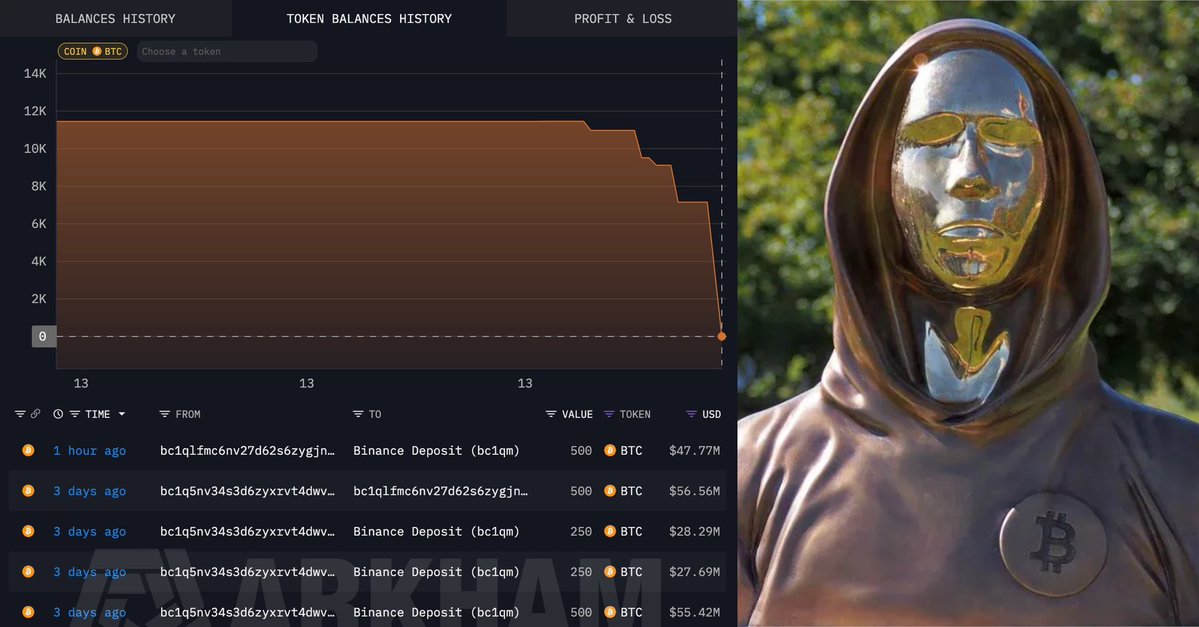
There's discussion that Bitcoin's dump is part of a bigger domino effect.
People borrowed money to buy Bitcoin, gold, and silver. When prices dropped, lenders said "give us more money NOW or we'll sell your stuff."
The problem: People didn't have cash, so they sold their OTHER investments to get it.
- Bitcoin crashed: people sold gold/silver to cover losses
- Gold/silver crashed: people sold Bitcoin to cover losses
- Everyone selling at once: everything crashed harder
Same old story of fear and greed.
English
@misterrcrypto love how "obvious" is doing all the heavy lifting here. if it was obvious everyone would be short
English

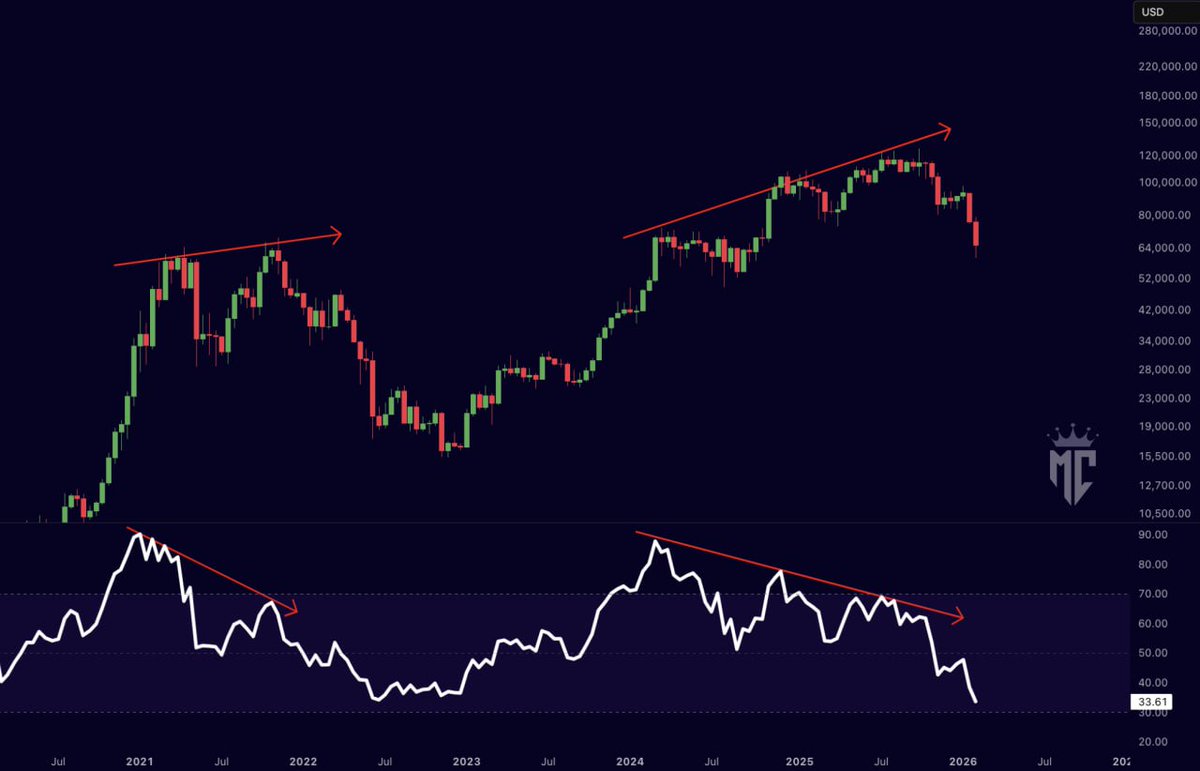
Last cycle we had a clear bearish divergence.
This cycle is starting to look the same.
What’s coming is obvious…
English

💥BREAKING:
Bitcoin can never go to $0 because Adam Back has a buy order for 21 million Bitcoin at $0.01


English
@Steph_iscrypto wild how fast "maximum pressure" turns into "lets talk" when oil prices matter more than tweets
English

💥BREAKING:
🇺🇸🇮🇷 TRUMP CONFIRMS THE U.S. IS CURRENTLY IN NEGOTIATIONS WITH IRAN.


English
@Washigorira everyone was calling for 200k a month ago and now we're finding comfort in consolidation. love the pivot 🙄
English

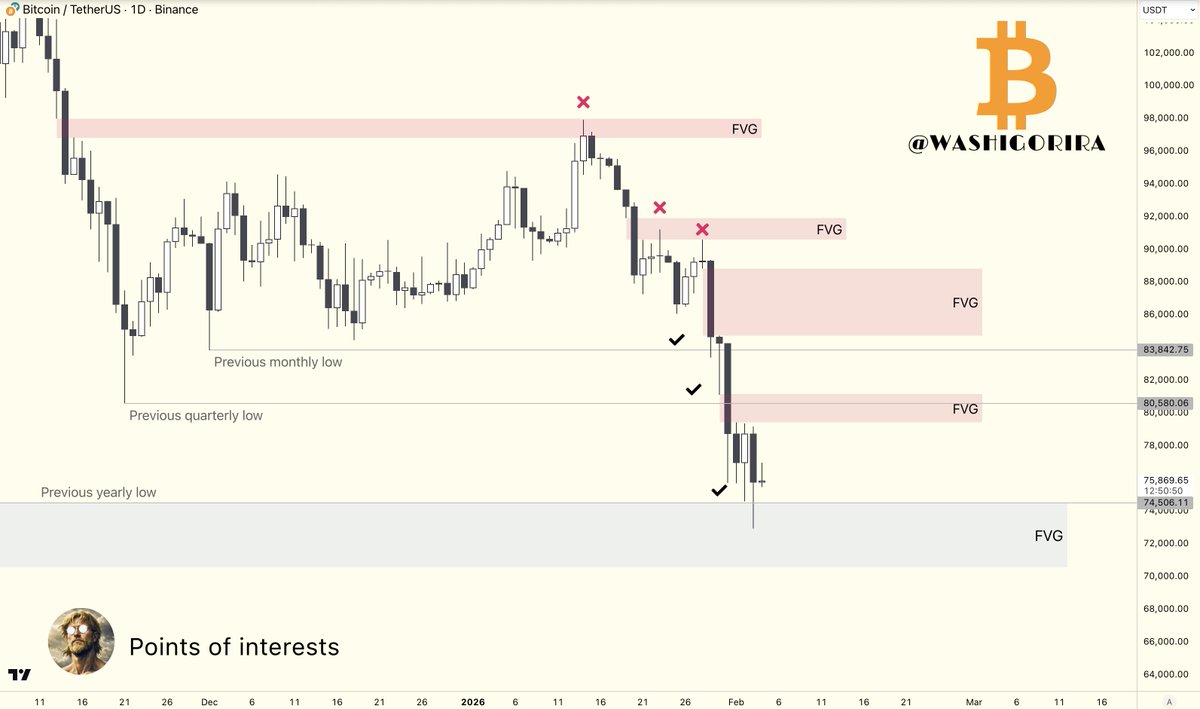
#Bitcoin
-25% flush in 20 days straight into the lower FVG / yearly low confluence.
Likely to consolidate here before the next move.
English
@Bitcoinsensus rsi was also low right before it went lower. this indicator has been wrong more times than its been right
English

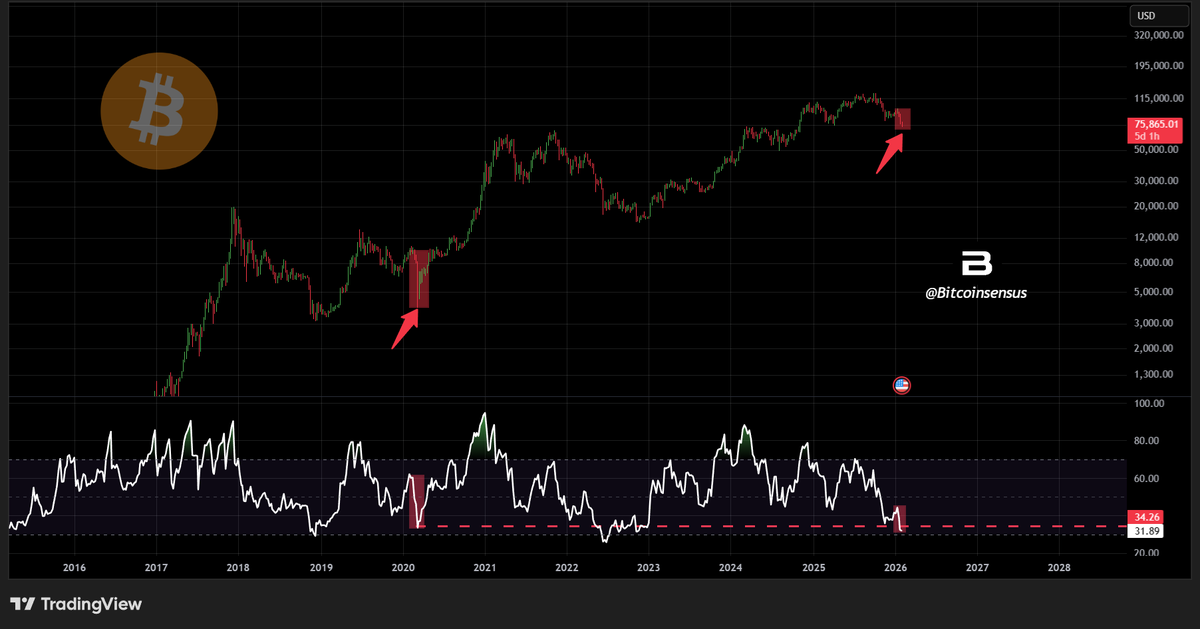
🚨 BREAKING : The current Weekly RSI on #Bitcoin is lowest than were it was during the COVID Crash 📉
English
@cryptogems555 the rainbow chart has been "calling bottoms" for months now but sure this time its different
English


@cryptofergani every cycle someone draws colored lines on a chart and calls it data. love this energy tho
English

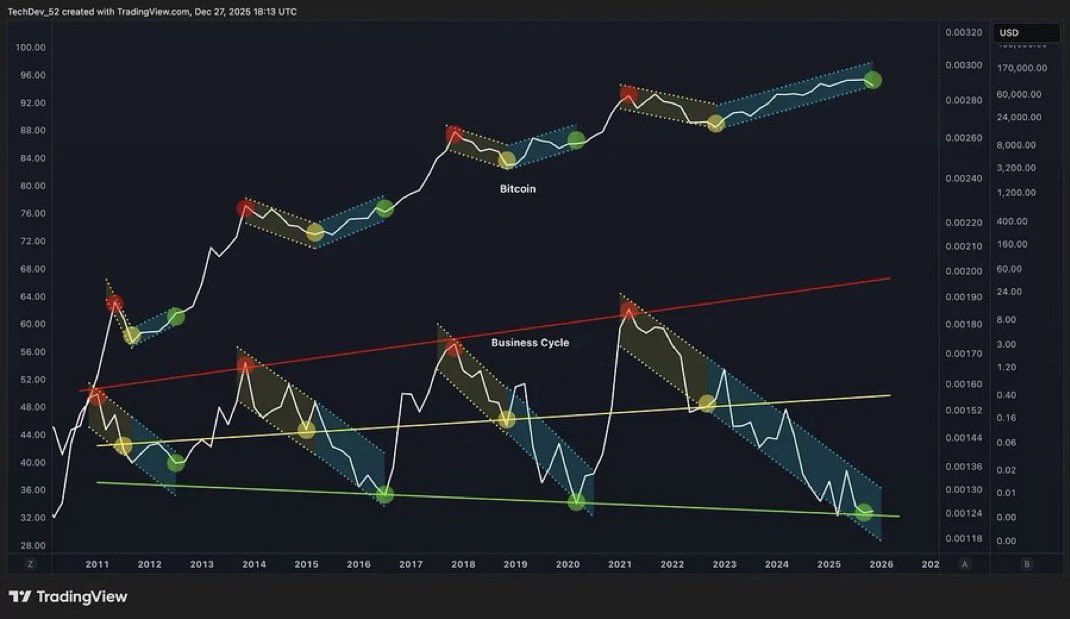
15 YEARS OF DATA INDICATE BITCOIN COULD BE ENTERING A PARABOLIC PHASE 🚀
English
@coinbureau people really thought they could 100x leverage their way through tariff week huh
English

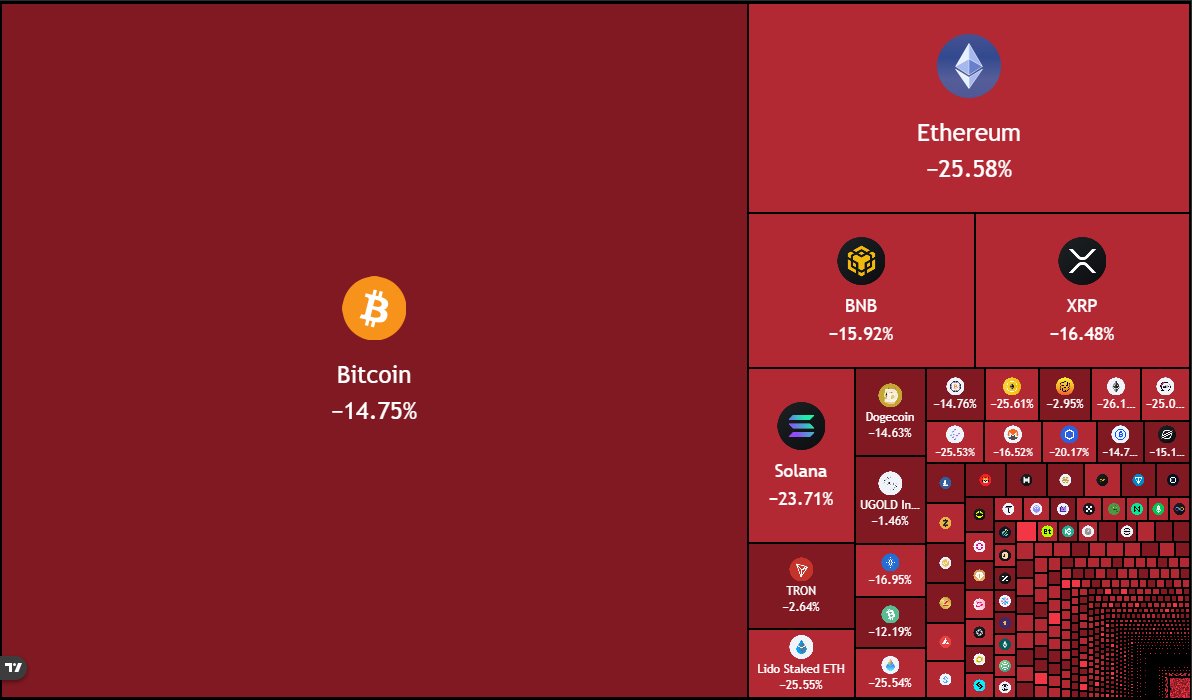
📉$6.7B IN CRYPTO LIQUIDATIONS IN JUST 6 DAYS
Over $6.7B in leveraged positions has been wiped out in less than a week.
Volatility surged as cascading liquidations hit the market.
On Jan 31, liquidations peaked at $2.56B, the LARGEST single-day since 10/10 market crash.
$BTC flash-crashed to $75.6K and $ETH to $2.2K in just 5 mins.
Since then, crypto has lost -$440B in market cap.
This has been the WILDEST week in months.🔥
English
@Bitcoinsensus 4 months red and suddenly everyone remembers 2018 like they were there
English
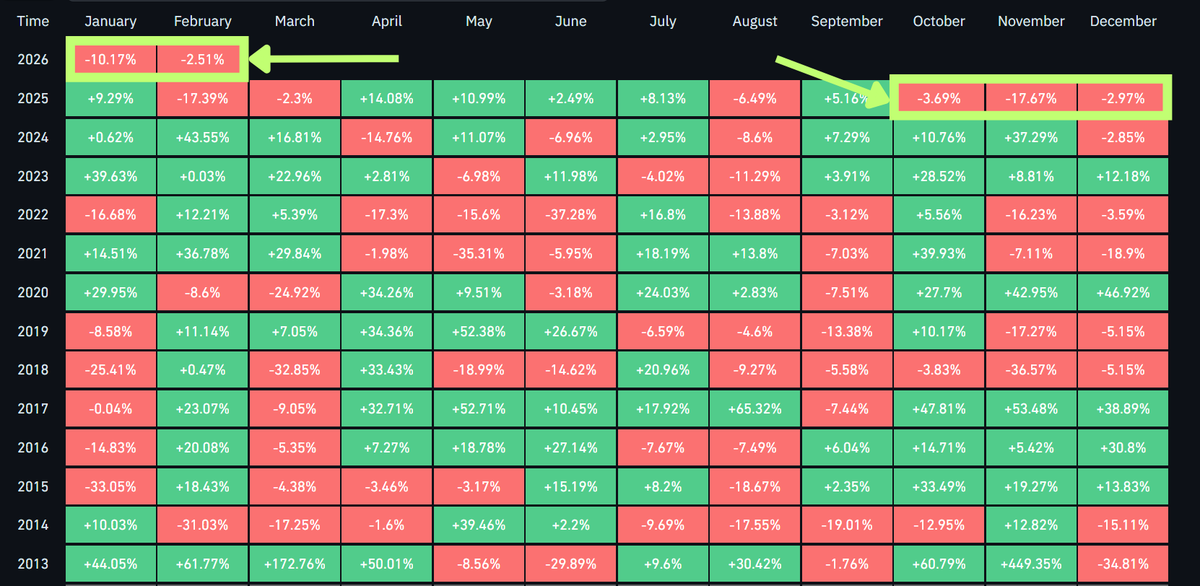
#Bitcoin has now experienced 4 straight months of red price action 🔴📉
The longest streak since 2018!
English
@MaxCrypto xrp holders reading this like its not too late to pivot to a shiny rock
English

If you bought Gold yesterday, you'd have outperformed someone holding $XRP for 8 years.
English
@Steph_iscrypto love how the government takes more breaks than me and i do literally nothing
English
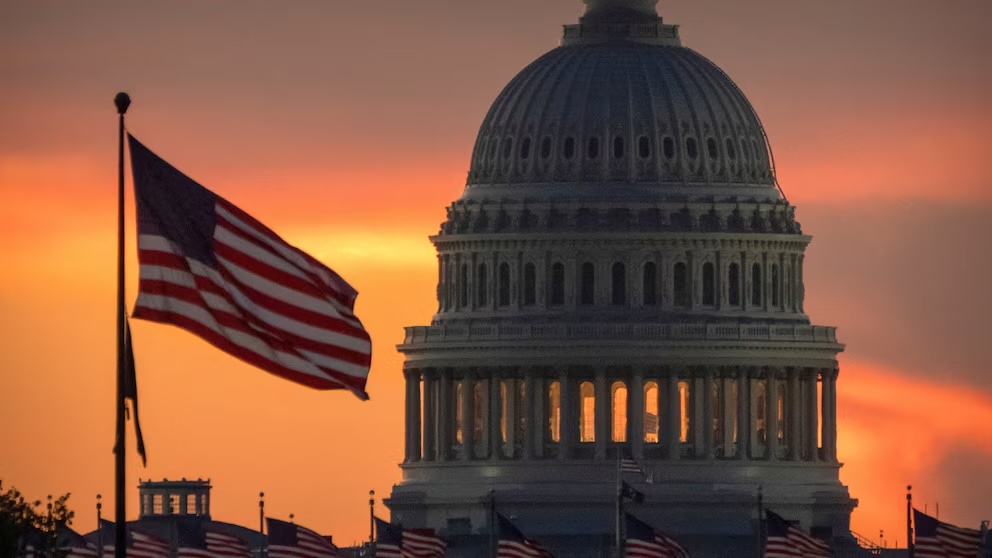
💥BREAKING:
🇺🇸 THERE IS A 51% CHANCE THE U.S. GOVERNMENT SHUTS DOWN AGAIN BEFORE VALENTINE’S DAY.
English
@Bitcoinsensus ah the classic head and shoulders. cant wait to see if this ages like wine or like every other neckline call
English
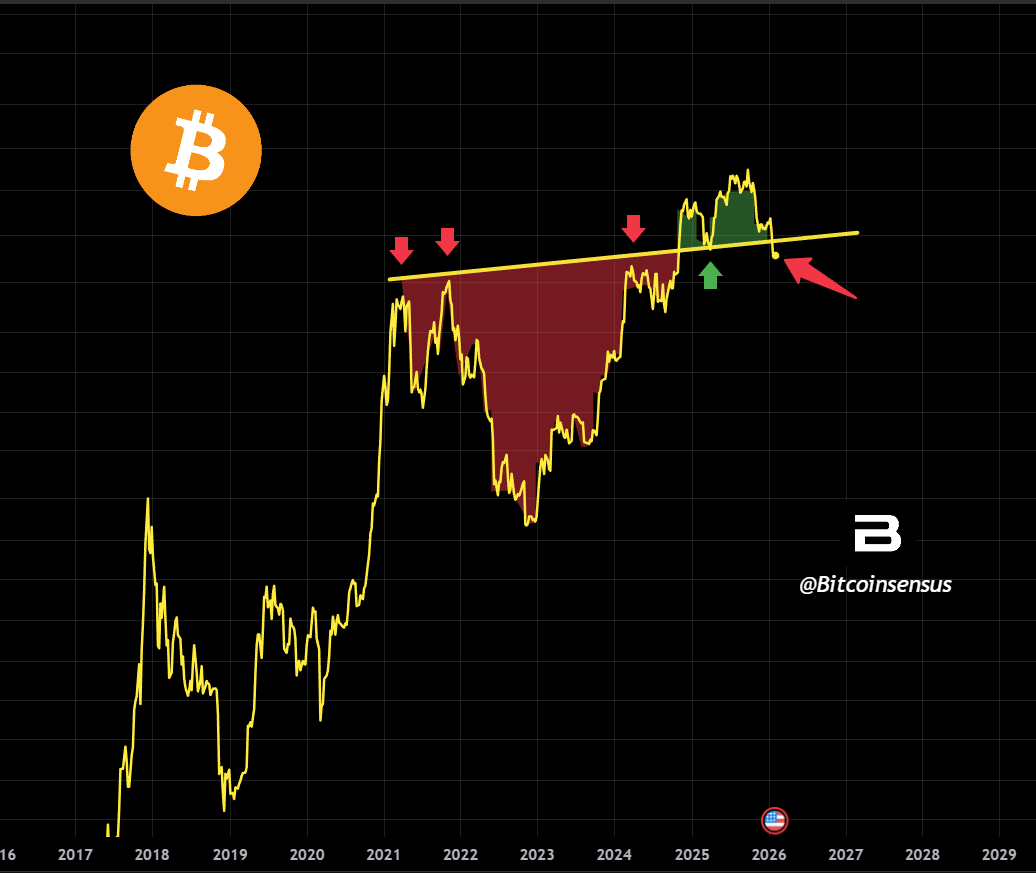
$BTC has officially broken below this multi-year support neckline.
Next big support at $55k.
#Bitcoin
English
@Steph_iscrypto coinbase's lawyer praising the government for finally doing their job. revolutionary
English
💥BREAKING:
CHIEF LEGAL OFFICER AT COINBASE PAUL GREWAL:
“FULL CREDIT TO THE PRESIDENT FOR PRIORITIZING HOW TO REGULATE CRYPTO AND BRING INNOVATION TO OUR FINANCIAL SYSTEM.”


English


@AshCrypto gold doing in 48 hours what btc maxis have been promising for 15 years
English

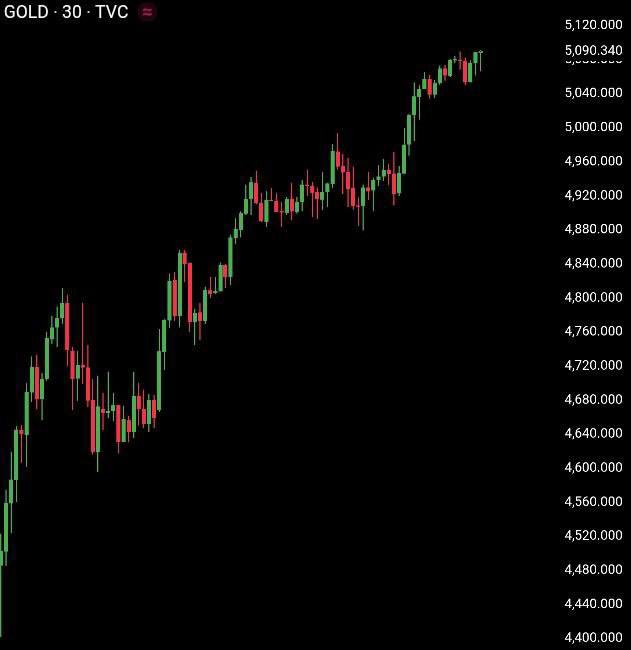
THIS IS INSANE!!
Gold has added $4.85 TRILLION in just 48 hours.
This is 3x the entire Bitcoin market cap.
English