Sabitlenmiş Tweet

Some notes and observations on the urban condition from my recent trip to Delhi.
bhatotia.substack.com/p/one-battle-a…

English
Kartikeya Bhatotia
5.4K posts

@bhatoti
climate transition, public policy, etc. at @Harvard argumentative citizen, hence arguing.


Stock market party is over for the bachcha party My Paisanomics column for the Mumbai Mirror. The BSE 500 – which is a good representation of the overall Indian stock market – has fallen 8 per cent during March. The bachcha party, which has grown up listening to financial influencers and the well-shaved, tie-less, suited-booted types in the business of managing other people’s money (OPM), has found the fall to be out of syllabus. The finfluencers sold them a dream that it was possible to get rich – just before lunch time. The OPM types were like, lunch time is difficult, but we can have you up and running by tomorrow morning. And this felt right, as long as prices went up. But if you buy stocks at very high prices vis-à-vis the earnings of the companies they represent, making money on that investment is going to take time. You might even lose money. The finfluencers and the OPM-wallahs largely specialise in telling people that stock prices will continue to go up because they’ve been going up. This is a sales trick that is as old as the hills. As EB White, my favourite non-fiction writer, wrote in The New Yorker magazine in 1929: “The collapse of the market, over and above the pain, couldn’t help but be amusing… The quake, furthermore, verified our suspicion that our wise and talky friends hadn’t known for months what they were talking about when they were discussing stocks.” The point being the finfluencers and the OPM-wallahs have an incentive to sell what they do, irrespective of the state of the stock market. But it’s the bachcha party’s incentive to figure out what’s right for them. Will they? Julian Barnes in his book ‘Flaubert’s Parrot’ quotes the French writer Gustave Flaubert as saying: “Whatever else happens, we shall remain stupid.” The stock market party was never about investing – it was about belief. The bachcha party bought stories, not stocks. Now the bill has arrived. Markets ultimately punish hope that is dressed up as a certainty. The next cycle will come, with new stories. The only question is: Will the bachcha party pay twice for the same lesson? Their parents clearly did. mumbaimirror.indiatimes.com/opinion/party-…





We need to talk about how to cite AI polls. First image was in an @axios newsletter this morning. You'd think that's a real poll, right? It is not. See the second image. Journalists, PLEASE be responsible and tell people when it's AI. Always include methodology. ALWAYS.



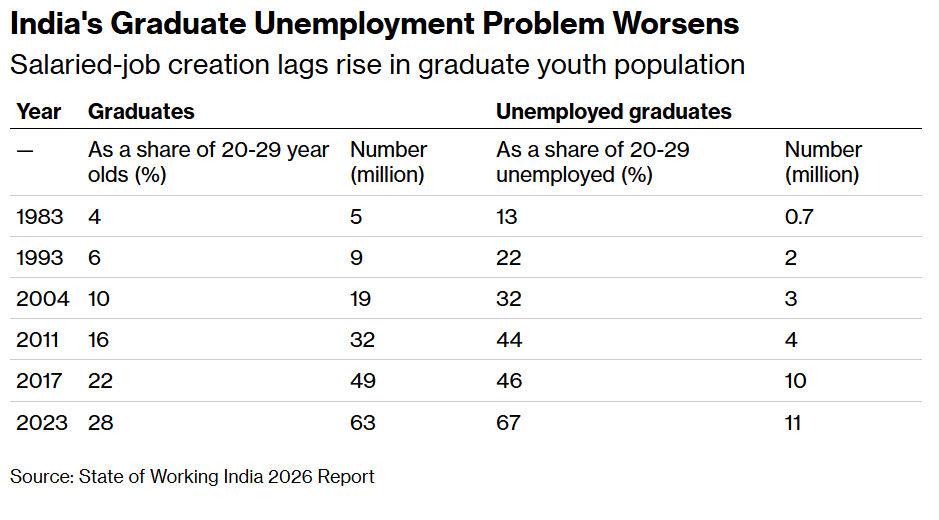

A Story Not Told To Generations.


Citadel Securities published this graph showing a strange phenomenon. Job postings for software engineers are actually seeing a spike. The graph here is short term but still it's super interesting and really strange. Is it Jevons paradox at play. When AI makes coding cheaper, companies actually may need a lot more software engineers, not fewer. When software is cheaper to build, companies naturally want to build a lot more of it. Businesses are now putting software into industries and tools where it was simply too expensive before. --- Chart from citadelsecurities .com/news-and-insights/2026-global-intelligence-crisis/

JUST LAUNCHED! Industrial policy has never been more consequential for the world's developing economies. Our new report reviews 183 national plans & evidence from 60+ countries, showing why targeted inputs outperform blunt tools: wrld.bg/CcCc50YvjeV