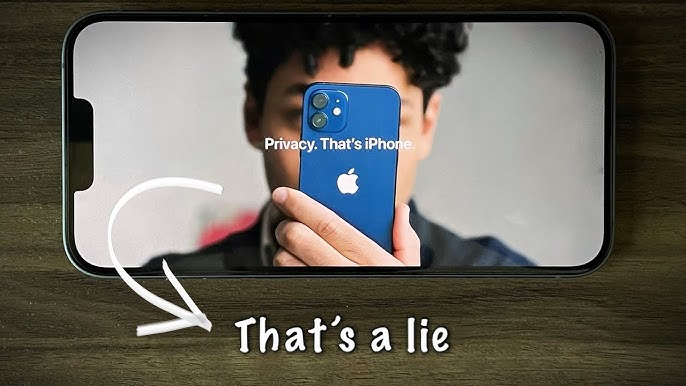
APPLE'S PRIVACY CLAIMS VS. REALITY: The Side-By-Side Comparison They Don't Want You To See
You know what's wild? Apple has convinced the world they're the privacy company. The champions of user rights. The ones who stand between you and the surveillance capitalism nightmare.
They've spent billions on this narrative. Billboards in every major city. Super Bowl ads. Tim Cook giving passionate speeches about privacy being a fundamental human right.
And people believe it. Mention Apple's privacy issues and watch the defenders come out: "But Apple doesn't sell your data!" "At least they're better than Google!"
Here's the thing. I've spent months digging through lawsuits, security research, and Apple's actual practices. The gap between what Apple claims and what Apple does is absolutely massive.
Let's do this properly. No speculation. Just a direct comparison between Apple's marketing claims and documented reality. Side by side. Claim by claim.
THE BIG PROMISE VS. THE INCONVENIENT TRUTH
APPLE CLAIMS:"What happens on your iPhone, stays on your iPhone."
That simple, powerful statement plastered on billboards across America. It suggests complete privacy. Total security.
THE REALITY:
Your iPhone sends data to Apple's servers constantly. Location data when you insert a SIM card. App usage information even when analytics are disabled. Siri recordings that went to human contractors. iCloud backups that Apple can access. Safari browsing data through their servers.
Trinity College Dublin research from 2021 documented iOS sending data to Apple during the first 10 minutes after startup before you've even opened any apps. The 2022 security research by Tommy Mysk and Talal Haj Bakry proved that turning off analytics doesn't stop data collection from Apple's own apps.
So what actually stays on your iPhone? Your local browsing history if you don't use iCloud. That's about it.
THE PRIVACY SETTINGS PROMISE
APPLE CLAIMS:"Share iPhone Analytics: Disable the sharing of Device Analytics altogether."
Clear language. Unambiguous promise.
THE REALITY:Security researchers proved this setting does absolutely nothing to stop Apple's data collection from first-party apps. When they monitored network traffic with this setting disabled:
The App Store still tracked every tap, search, and ad viewed. Apple Music still logged listening habits. Stocks still recorded watchlists. Books still monitored reading patterns.
Zero difference in data collection.
This is documented in the ongoing class action lawsuit (Libman v. Apple Inc.). A federal judge let the case proceed, saying there's enough evidence to suggest Apple misled users.
So what does "disable altogether" actually mean? Apparently, "disable some analytics, but not the ones Apple's own apps collect."
THE TRACKING PROMISE
APPLE CLAIMS:"Ask App Not to Track: Control which apps can track your activity across other companies' apps and websites."
App Tracking Transparency (ATT) was Apple's big privacy feature. Tim Cook presented it as empowering users.
THE REALITY:ATT only applies to third-party apps. Apple's own apps are completely exempt.
Facebook has to ask. Google has to ask. Every small app developer has to ask. But Apple Music, App Store, Apple TV, Safari they get a free pass.
And here's where it gets cynical: ATT devastated Apple's competitors. Facebook's advertising took a massive hit. But Apple's own advertising platform? It grew by 4 percentage points to reach 94.8% adoption, while Facebook dropped 3%.
Apple used "privacy" as a competitive weapon. They made rules that crippled competitors while exempting themselves.
THE DATA SELLING PROMISE
APPLE CLAIMS:"We don't sell your data. Period."
Tim Cook's go-to response for any privacy criticism.
THE REALITY:Apple doesn't technically "sell" your data. But here's what they do instead:
They monetize your data through their own $5+ billion advertising platform. They sell access to you through the $15+ billion Google search deal. They "share" your data with partners and service providers. They use your data to lock you into their ecosystem, generating $85+ billion in services revenue.
If Apple is making over $100 billion annually from your data, does it really matter whether they technically "sell" it?
Google and Facebook don't "sell" your data either. They keep it proprietary and sell targeted advertising access exactly what Apple does. But Apple gets credit for "not selling data" while doing the same thing.
THE SIRI PRIVACY PROMISE
APPLE CLAIMS:"Your requests are not associated with your Apple ID. Siri is designed to protect your information."
For years, Siri was recbording conversations through acbcidental activations and sending them to human contractors who listened to medical discussions, drug deals, business secrets, and intimate moments.
THE REALITY
Contractors reported being able to identify users through location data and context, contradicting Apple's "not associated" claim.
When whistleblowers exposed this in 2019, Apple first defended it, then suspended it, then modified it. In 2025, they paid $95 million to settle a class action lawsuit their largest privacy settlement ever.
But remember: Apple admits no wrongdoing. They paid $95 million while insisting they did nothing wrong.
If the practice was legitimate, why pay nearly $100 million to make the lawsuit go away?
THE PRIVATE BROWSING PROMISE
APPLE CLAIMS:Safari's Private Browsing mode suggests your browsing is private and protected.
THE REALITY:Private Browsing only prevents Safari from saving your history locally. That's it.
Your ISP still sees everything. Websites can still fingerprint you. Apple's servers still process your browsing. Your employer can still monitor everything. Advertisers can still track you using fingerprinting.
Remember the Google Safari scandal? Google bypassed Safari's cookie protections for years, tracking millions of users. Google paid $39.5 million in settlements. Safari's protections failed for years before anyone caught it.
Private Browsing gives you the feeling of privacy without the reality.
THE LOCATION PRIVACY PROMISE
APPLE CLAIMS:Location Services can be disabled to prevent location tracking.
THE REALITY:Even with Location Services disabled, iOS still tracks your location through Wi-Fi scanning, Bluetooth scanning, cell tower triangulation, and MAC addresses of nearby devices sent to Apple when you insert a SIM card.
The 2011 scandal revealed iOS was storing up to a year of location history in a hidden file. Apple claimed it was a "bug," but that "bug" persisted across multiple iOS updates.
Then there's "Significant Locations," which secretly maps everywhere you regularly go. It's stored unencrypted, meaning anyone with physical access can see every place you frequent.
THE ENCRYPTION PROMISE
APPLE CLAIMS:"iCloud protects your data with end-to-end encryption."
THE REALITY:Most iCloud data is NOT end-to-end encrypted. Apple holds the encryption keys, which means Apple can decrypt and access your data, comply with government requests, and if breached, your data is vulnerable.
Apple has complied with thousands of government data requests. They've handed over iCloud data to law enforcement worldwide. They've stored Chinese users' data on servers controlled by the Chinese government.
If your data was truly end-to-end encrypted, Apple couldn't access it even if they wanted to. But they can. And they do.
THE APP STORE PRIVACY PROMISE
APPLE CLAIMS:"Privacy Nutrition Labels show you what data apps collect before you download them."
THE REALITY:Apple's own apps were initially exempt from showing Privacy Nutrition Labels. When they finally added labels months later, they were misleadingly minimal.
There's no verification system. Apps can lie with little consequence. And the labels don't capture how data is used, shared, or retained.
The App Store itself which has a label claiming minimal collection was proven by researchers to collect comprehensive tracking data on every user action.
THE "WE'RE DIFFERENT" PROMISE
APPLE CLAIMS:Apple is fundamentally different from Google and Facebook in privacy practices.
THE REALITY:Let's compare what these companies actually do:
Data Collection: Google ✓ | Facebook ✓ | Apple ✓
Monetization Through Advertising: Google ✓ | Facebook ✓ | Apple ✓
Data Sharing With Partners: Google ✓ | Facebook ✓ | Apple ✓
Privacy Settings That Work: Google ✓ | Facebook (Partial) | Apple ✗
When researchers tested whether privacy settings actually stop data collection, Chrome and Edge respected analytics toggles. Safari ignored privacy settings for first-party apps.
The Real Differences:
Google and Facebook are honest about being advertising companies. They offer free services funded by ads. They're transparent about their business model.
Apple charges premium prices while doing similar data collection, then markets themselves as privacy-focused. They're less transparent, more expensive, and their privacy settings provably don't work as advertised.
THE CHINA EXCEPTION
APPLE CLAIMS:"Privacy is a fundamental human right."
THE REALITY:Unless you're in China. Then privacy isn't quite so fundamental.
In China, Apple stores user data on servers controlled by the Chinese government, removed VPN apps, removed Hong Kong protest apps, and complies with censorship demands.
So "privacy is a fundamental human right" has an asterisk: *except in markets where protecting privacy would cost us money.
THE LAWSUIT PATTERN
Here's Apple's response pattern to privacy violations:
Get caught violating privacy
Deny wrongdoing
Claim it was accidental/a bug
Fight the lawsuit aggressively
Eventually settle without admitting fault
Continue similar practices
Keep running "Privacy. That's iPhone" ads
The Lawsuits:
2011: Location Tracking - Dismissed on technicality, paid nothing
2019-2025: Siri Eavesdropping - Settled for $95M, admits nothing
2022-Present: App Analytics - Judge allowed it to proceed
2022-Present: AirTag Stalking - Partially survived dismissal
THE FINANCIAL REALITY
Revenue Dependent on User Data:
Apple Search Ads: $5+ billion/year
Google search deal: $15+ billion/year
Services (enabled by data): $85+ billion/year
Total: $100+ billion annually
Privacy Settlements Paid:
Siri eavesdropping: $95 million
Everything else: $0
Total: $95 million
When the business case for collecting data is 1,000 times stronger than the penalty for getting caught, what do you think a company will do?
WHAT THE COMPARISON REVEALS
Pattern 1: Technical Truth, Practical Lie
Apple's claims are technically accurate while being practically misleading. "We don't sell your data" is true they monetize it differently. They've mastered saying true things that create false impressions.
Pattern 2: Rules For Thee, Not For Me
ATT forces other apps to ask permission. Apple's apps don't. Privacy Labels required for all apps except Apple's initially. Privacy settings that should work except for Apple's data collection.
Pattern 3: Privacy Until It Costs Money
Apple claims privacy is a fundamental right. But in China, those rights disappear. True end-to-end encryption would protect privacy, but Apple won't implement it because it would prevent features and limit law enforcement access.
Pattern 4: Opacity Over Transparency
Google and Facebook are transparent about what data they collect. Apple is opaque. Vague privacy policies. Settings that don't work as described. Aggressive legal fights to prevent discovery.
Pattern 5: Marketing Over Reality
Apple has spent billions on privacy marketing. But when researchers test actual practices, they find settings that don't work, data collection despite opt-outs, and less transparency than competitors.
THE UNCOMFORTABLE TRUTH
Apple is not a privacy company. They're a consumer electronics company that uses privacy as marketing while collecting comprehensive data, monetizing it extensively, and fighting transparency.
They've convinced millions that paying premium prices means getting premium privacy. But the evidence shows Apple's privacy practices are similar to and sometimes worse than competitors who don't charge premium prices.
The Real Genius:
Apple's innovation isn't privacy protection. It's privacy marketing. They've convinced people that "not selling data" means respecting privacy, restricting competitors protects users, and premium prices buy premium privacy.
None of these are true.
WHY THIS MATTERS
1. The Premium Price
Google and Facebook offer free services. You know the deal.
Apple charges $1,200 for an iPhone, $120/year for iCloud, and takes 30% of app purchases. They charge premium prices while collecting similar data as free alternatives.
If you're paying more for privacy promises that are false, that's fraud.
2. The Broken Promises
Apple built their brand on privacy. They made explicit promises. They attacked competitors. They positioned themselves as the ethical alternative.
Breaking those promises while maintaining the marketing is worse than never promising privacy at all.
3. The Competitive Impact
Apple's "privacy" moves like ATT devastated competitors while exempting Apple. If Apple's practices are no better or worse than competitors', these moves were anticompetitive actions disguised as privacy protection.
4. The Precedent
If Apple can collect data, ignore settings, fight transparency, and still market as privacy-focused, it means "privacy" is just marketing. Users have no recourse when promises are broken.
WHAT YOU CAN DO
1. Recognize The Reality
Stop believing marketing over evidence. They're not a privacy company.
2. Adjust Your Behavior
If you want actual privacy, you need VPNs, Tor Browser, end-to-end encrypted services, and careful security practices. Apple products alone don't provide privacy.
3. Demand Better
File complaints. Join lawsuits. Support regulatory action. Vote with your wallet.
4. Spread The Truth
Share this information. Most people don't know about the gap between claims and reality.
5. Support Alternatives
If privacy matters, support open source software, privacy-focused services, and companies that don't rely on data monetization.
THE BOTTOM LINE
What Apple Claims:They're the privacy company. They don't sell your data. They protect your information. Privacy is a fundamental human right.
The Documented Reality:They collect comprehensive data even when you opt out. They monetize it through advertising and the Google deal. Privacy settings don't work. They've paid $95 million in settlements while admitting nothing. They exempt their own apps from privacy rules. Privacy disappears in China.
The comparison is damning. Not isolated incidents, but a systematic pattern of privacy marketing that contradicts documented practices.
This isn't about mistakes. This is about a business model where privacy claims drive sales while actual practices maximize data collection and monetization.
And honestly? It's working brilliantly. Apple is the most valuable company in the world. Their privacy marketing is so effective that people defend them even when presented with evidence.
But effectiveness doesn't make it right. Success doesn't make it honest.
The real comparison isn't between Apple and Google.
It's between what Apple says and what Apple does. Between their billion-dollar marketing and their documented practices. Between the privacy they promise and the privacy they provide.
And when you make that comparison, the gap is absolutely massive.
That gap is the truth they don't want you to see. The comparison they hope you'll never make.
So next time you see a "Privacy. That's iPhone." billboard, remember: What they claim and what they do are two very different things.
And the $95 million settlement? That's just what it costs to keep pretending otherwise.
Sources:
Trinity College Dublin Research (2021) - "Mobile Handset Privacy" by Professor Douglas J. Leith
scss.tcd.ie/doug.leith/app…
Security Research by Tommy Mysk and Talal Haj Bakry (2022)
phonearena.com/news/apple-sue…
Libman v. Apple Inc. (2022) - Ongoing class action lawsuit
classaction.org/media/libman-v…
Lopez v. Apple Inc. (2019-2025) - Siri lawsuit, $95M settlement
digitalcommons.law.scu.edu/cgi/viewconten…
Google Safari Cookie Bypass - FTC and State settlements
ftc.gov/news-events/ne…
The Guardian whistleblower reports on Siri (2019)
theguardian.com/technology/201…
iOS location tracking lawsuits (2011-2013)
Various court documents and security research papers
#Apple#Privacy#iPhone17#iPhone17Pro
@iHateApplee@RoszykAdam hhi do you want to colllab on an app . big swoops x i hate applee garatest app of all time . we. can kick this apps a*** stupid F*******ing paiainting app LMK
Dear algo show this Apple Vision Pro owners:
aMUSEed
I'm happy to announce that the new Muse support is ready in the Coloring Book app :)
Update will be ready to download momentarily :]
So happy with the new M5 Apple Vision Pro. I was personally very underwhelmed with the Galaxy XR. I was looking forward to it but decided after seeing it to get the new M5 Thank you @justinryanio for your informative videos on your YT Channel #AppleVisionPro#apple
The Samsung Galaxy XR is not only cheaper then the Vision Pro but also have better specs.
$3500 for WiFi 6, Apple Intelligence and 300 grams heavier? No thanks 🤮🤮