Changes in 24 hours from taking Ivermectin.
Two Doctors. Researching the same drug.
One doing lab experiments on cells. The other observing patients in real time.
Lab based cell observations meets microbiome research.
And a real world case study.
Dr. Sabine Hazan: “Once you change something.. you give someone Vitamin C.. you give someone Ivermectin... you see the changes... our data showed that Ivermectin increases the Bifidobacteria within 24 hours”
Dr. Kylie Wagstaff: “It does exactly that.. in cells growing in a dish, in the laboratory... we’re able to stop the virus from replicating within about 24-48 hours”
Those two research ideas collide in a real world case study Dr. Hazan witnessed:
“One of my patients crashed... he’s on his way to the hospital... this was the rise of oxygen with giving Ivermectin”
Interestingly... Ivermectin is a fermented product of a bacteria “in the same group of microbes that share one thing in common as Bifidobacteria.”... which means that several mechanistic ideas give extra perspective on this Nobel Prize winning anti parasitic drug.
Is the microbiome or other pharmacokinetics at play here?
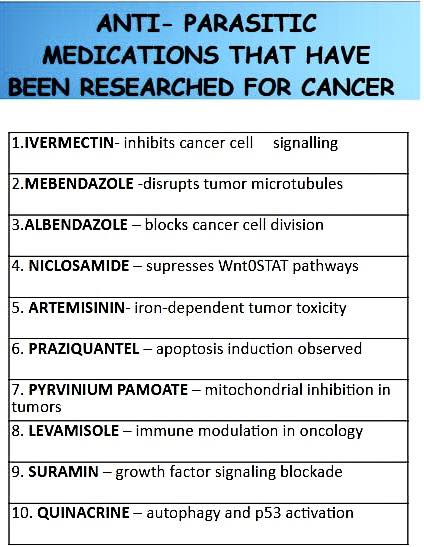
🚨 Anti-Parasitic Human Medications Researched for Potential Roles in Cancer Treatment
1️⃣ Ivermectin
Ivermectin is an antiparasitic medication that works by increasing chloride ion permeability in parasite cell membranes, leading to paralysis and death. In research settings, it has also demonstrated anti-inflammatory effects through inhibition of certain cytokines and has been investigated in preclinical studies for potential anticancer mechanisms.
2️⃣ Mebendazole
Mebendazole is commonly used to treat intestinal parasitic infections such as roundworms, hookworms, and whipworms. It acts by disrupting glucose uptake in parasites, leading to energy depletion and death. Laboratory studies have explored its ability to interfere with microtubule function, a process relevant to cancer cell division.
3️⃣ Albendazole
Albendazole is an FDA-approved anthelmintic drug used to treat parasitic infections, including hydatid disease caused by Echinococcus granulosus. Research has examined its effects on cell division and metabolic pathways, leading to interest in its possible anticancer activity in experimental models.
4️⃣ Niclosamide
Niclosamide is an FDA-approved drug used to treat tapeworm infections. In preclinical cancer research, it has been shown to inhibit several signaling pathways involved in tumor growth, including STAT3, Wnt/β-catenin, mTOR, and Notch. Studies suggest it may suppress cancer stem cell activity and tumor progression in laboratory models.
5️⃣ Artemisinin
Artemisinin is a natural compound derived from Artemisia annua and is widely used in antimalarial therapy. Beyond its antiparasitic activity, it has demonstrated anti-inflammatory and antiviral properties. Research has explored its iron-dependent cytotoxic effects on cancer cells in experimental studies.
6️⃣ Praziquantel
Praziquantel is primarily used to treat schistosomiasis. In laboratory studies, it has been investigated in combination with chemotherapeutic agents, where it appeared to enhance growth-inhibitory effects and activate apoptotic pathways in certain cancer cell models.
7️⃣ Pyrvinium pamoate
Pyrvinium pamoate is traditionally used to treat pinworm infections. Research suggests potential anticancer effects, particularly in pancreatic cancer models, largely attributed to its ability to disrupt mitochondrial function in cancer cells.
8️⃣ Levamisole
Levamisole is an antiparasitic and immunomodulatory agent. Historically, it has been studied as an adjuvant therapy in certain cancers, including melanoma and colorectal cancer, particularly in combination with fluorouracil (5-FU), to enhance immune-mediated anticancer responses.
9️⃣ Suramin
Suramin has demonstrated activity against various cancer cell types in research studies, including prostate and breast cancer models. However, its clinical use is limited because of significant toxicity, particularly neurotoxicity, requiring careful dose consideration.
🔟 Quinacrine
Quinacrine has shown anticancer effects in both cell culture and animal studies. Research indicates it may suppress NF-κB signaling while activating p53 pathways, leading to apoptosis in cancer cells under experimental conditions.
This ex-flight attendant just dropped the top hacks she uses to save big on flights.
She says book on a Tuesday, Wednesday, or Saturday, and always late at night or super early in the morning.
Use incognito mode or a VPN so the airlines can’t track your location and jack up the price. And the game-changer? Forward your confirmation to JetBacks — they’ll automatically track your flight and refund you the difference if the price drops before takeoff.
I also heard that booking on a computer instead of your phone can sometimes save you money too (the algorithms treat desktop traffic a little differently).
Just a few smart moves can turn “expensive travel” into “we actually got this done affordably” — and that feels so amazing.
Have you tried any of these hacks, or do you have your own secret for scoring cheaper flights?
🚨🇪🇺Dutch lawyer Meike Terhorst just shattered the EU’s illegal plans for mass control.
"The EU cannot impose anything on member states. EU is not a state and it is not a sovereign country - member states can therefore reject the DIGITAL IDENTITY."
🌿 Castor Oil is AMAZING!
One of the simplest and most powerful natural remedies out there — used for centuries to support the body inside and out.
Here’s what it can do:
✅Relieves constipation & supports healthy digestion (apply over the abdomen)
✅Helps break up fibroids, cysts, adhesions, endometriosis & scar tissue
✅Supports liver health & may assist with gallstones Soothes chest/breast scarring
✅Deeply penetrates tissues — even through bone — for targeted support
Barbara Oneill explains it perfectly in this video👇
The Truth About Sunglasses & Skin Cancer
When sunglasses were first introduced, skin cancer rates began to skyrocket. Here’s why: Sunglasses block the full spectrum of sunlight that your eyes are supposed to receive. Those specific rays signal your pineal gland. When they’re blocked, your brain thinks it’s nighttime… so it doesn’t produce the hormone responsible for melanin — your skin’s natural sun protection.
Result?
Your skin becomes far more vulnerable to even normal sunlight. Your body needs that light for basic metabolic processes. Every cell communicates and regenerates through sunlight. No full-spectrum light to the eyes = no proper melanin production = higher risk of damage and cancer. Natural sunlight isn’t the enemy — blocking it might be.
What do you think?
Do you wear sunglasses often, or do you let your eyes get safe morning light?
Buckingham Palace has attempted to ban this video.
His Majesty King Charles III is trying to lecture the British to abandon Western values and Christianity in favor of 'the wisdom of Islam'. If he likes it so much, let him abdicate and go live in Iran.
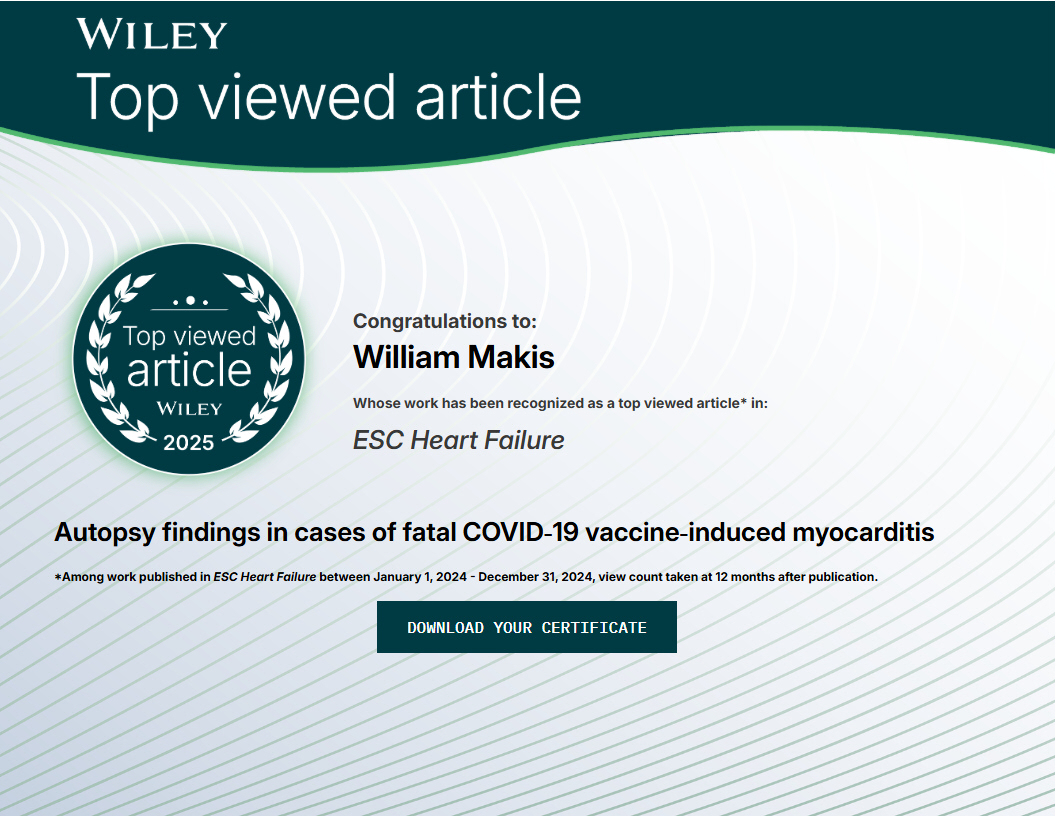
BREAKING NEWS: Our paper: "Autopsy findings in cases of fatal COVID-19 Vaccine-Induced Myocarditis"
just won the Award for "Top Viewed Article!" 😃
I am shocked but honored! 🙏
Congratulations to my amazing co-authors:
Dr.Peter McCullough: @P_McCulloughMD
Nicolas Hulscher: @NicHulscher
Dr.Roger Hodkinson
Using my Ivermectin and fenbendazole protocol plus other supplements
I have 6 new amazing testimonies.
Breast cancer, lungs cancer, Glioblastoma cancer and bladder cancer
@joerogan
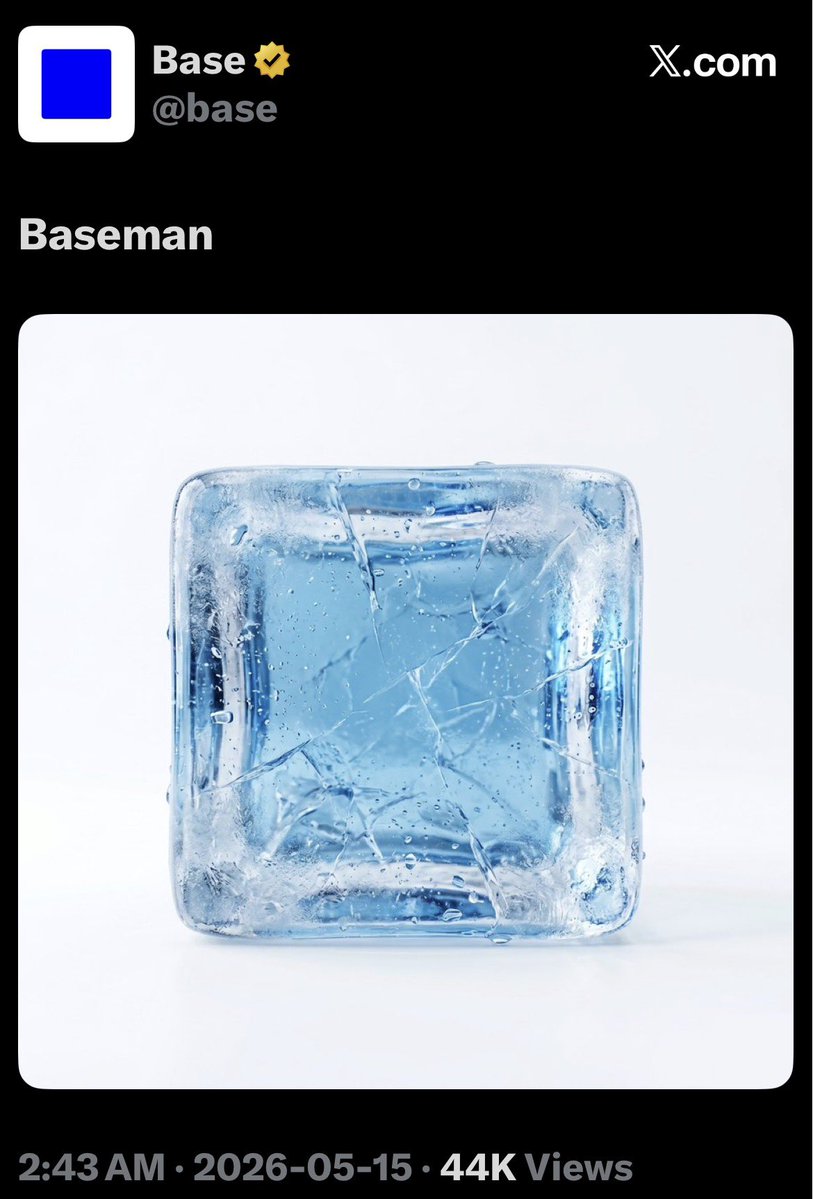
Ice Ice baby!
Ice seems to be the secret word lately.
Ice-9 anyone?
Never heard of it before.. let Jim Rickards explain.
I’ve included Jim’s bio.
carnegiecouncil.org/people/james-r…
🍌 I love this banana peel hack!
Amazing for bee stings, mosquito bites, and other bugs too — total summer game-changer!
Rub the inside (flesh side) of a banana peel right on the sting or bite — the itch fades fast. It works so well because the peel is packed with natural enzymes, anti-inflammatory compounds, soothing oils, and potassium that help neutralize the irritants in the venom, reduce swelling, and calm the skin quickly.
Natural relief at its best.
The secret to living to 100?
HIGH CHOLESTEROL
A massive Swedish study tracking over 800,000 people for 35 years just revealed: Every single centenarian had HIGH total cholesterol. The higher your LDL, the longer you live.