Bill Haus
8K posts


Bill Haus
@bill_haus
Given ships or sails adapted to the breezes of heaven, there will be those who will not shrink from even that vast expanse. – Kepler Letter to Galileo, 1610





John Quincy Adams stood before the Supreme Court on February 24, 1841, arguing for a group of Africans who had taken control of a slave ship, even though he was a former U.S. president risking his reputation to defend people most of the political establishment wanted returned to slavery. The case was United States v. The Amistad. Two years earlier, in July 1839, 53 captive Africans led by a man known as Cinqué had revolted aboard the Spanish schooner La Amistad off the coast of Cuba. They ordered the crew to sail them back to Africa, but the ship was secretly steered north and seized by a U.S. naval vessel near Long Island. Spain demanded the captives be returned as property. The Van Buren administration supported the request, fearing diplomatic conflict. Federal courts became the battleground. If the Africans were ruled slaves, they would be sent back. If they were recognized as free people who had been kidnapped illegally, they could return home. That is when Adams stepped in. He was 73 years old, nearly two decades removed from the presidency he held from 1825 to 1829, and serving as a Massachusetts congressman. He was not paid for the case. He prepared for weeks, studying ship logs, international law, and the details of the revolt. His argument lasted nearly eight hours across two days. Standing before the justices, Adams framed the case not as a diplomatic dispute but as a question of natural rights. He pointed to the Declaration of Independence and told the Court that the Africans were not cargo but human beings who had fought for their freedom after being kidnapped. The political risk was real. Southern newspapers accused him of attacking property rights and undermining the slave system. President Martin Van Buren had already positioned the government against the captives. A loss would damage Adams publicly and strengthen the administration’s stance. The decision came on March 9, 1841. The Supreme Court ruled 7–1 that the Africans had been illegally enslaved and were free to return home. Within a year, 35 survivors sailed back to Sierra Leone with the help of abolitionist groups. Adams returned to Congress the next day. He would serve there until collapsing at his desk in the House chamber on February 21, 1848, after 17 years as a representative following his presidency, the only former president to do so. To most Americans, John Quincy Adams had already lived his legacy in the White House. The defining moment came later. John Quincy Adams did not end his career protecting his status. He spent his final years using it to argue that freedom, once claimed, could not legally be taken back. © Reddit #drthehistories
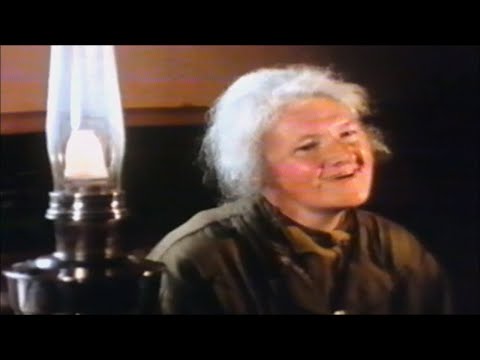
In the winter of 1972, a television crew climbed the high ground of the Yorkshire Pennines to film what they believed would be a story about rural decline. Instead, they found Hannah Hauxwell. She lived alone at Low Birk Hatt Farm, a stone farmhouse exposed to wind and long winters. There was no electricity, no running water, and no modern heating. Light came from daylight and a single coal fire. Water had to be carried by bucket from a distant spring. In cold weather, it froze indoors. Hannah was in her mid-forties when the cameras arrived. To her, nothing about her life seemed unusual. Born in 1926, she had been raised on the same 80-acre hill farm. As a child, she rose before dawn to help with cattle and sheep. Winters were harsh, and the work never stopped. At first, she lived with her parents and an uncle. One by one, they died. By 1958, after her mother’s death, Hannah was alone. She continued running the farm. The income was small. Hill farming in the Pennines offered little profit even in good years. Selling the land would have meant abandoning the only world she had ever known. So she stayed, tending cattle, cutting hay, breaking ice in troughs, and walking through snowdrifts to reach barns in storms. Her home remained unchanged well into the twentieth century. Without refrigeration, food was basic and limited. Bathing required heating water on the stove. If the coal fire went out, relighting it in freezing conditions could take an hour. Some nights she slept in her coat. Isolation was constant. Weeks could pass without seeing another person. Snow often blocked roads. There was no telephone and no radio. Silence settled heavily over the hills. In 1973, the documentary Too Long a Winter, produced by Barry Cockcroft, aired on British television. Around 20 million viewers watched. The film did not exaggerate. It showed Hannah rising in darkness, carrying water, feeding animals, and eating at a bare wooden table. She spoke calmly about her routine. She did not complain. The reaction was immediate. Letters arrived in large numbers. Donations were sent. Viewers were shocked that such conditions still existed in modern Britain. Within months, electricity was installed at the farm. For the first time, Hannah had electric light and basic heating. The improvements eased daily hardship but did not transform her character. She remained practical and reserved. The animals still required care every morning and evening. The land still dictated the rhythm of her life. Additional documentaries followed over the years, tracing her gradual transition. By the late 1980s, decades of physical labor had taken a toll on her health. In 1988, she left Low Birk Hatt and moved to a cottage in the village of Cotherstone. There she experienced central heating, indoor plumbing, and consistent human company. She adapted cautiously to these changes. Though she became a familiar public figure and wrote books about her life, she resisted being portrayed as heroic. She often said she had simply done what was necessary. Hannah Hauxwell died in 2018 at age 91. Her story resonated because it revealed something many had not seen. Modern Britain contained lives still shaped by pre-industrial hardship. Her endurance was not theatrical. It was daily and repetitive. It came from duty rather than ambition. The documentary did not create her strength. It revealed it. For years, she carried water through snow and kept a farm alive on a windswept hill because there was no one else to do it. When the public finally saw her, they recognized a form of resilience that rarely appears in headlines. She had not changed history. She had simply endured it. #drthehistories