Hugo 🗝️ 2 of 3

2.6K posts

Hugo 🗝️ 2 of 3 banner
Hugo 🗝️ 2 of 3

Hugo 🗝️ 2 of 3

@blockbanzai

/krɪptoʊ ɛkəˈnɒmɪks/ | 🇿🇦 Head of Research: @lemma_gov Founding member: @JustCryptoecon

Katılım Ağustos 2018
1K Takip Edilen477 Takipçiler
Hugo 🗝️ 2 of 3 retweetledi
Fundamentals
Fundamentals@JustCryptoecon·
Most analysts struggle to see the difference between @graphprotocol and @POKTnetwork, since they both deal with data access. Here's how to use the Fundamentals framework to compare their similarities and differences. ethereum:0xc944e90c64b2c07662a292be6244bdf05cda44a7 $POKT
Fundamentals tweet media
English
1
1
2
38
Hugo 🗝️ 2 of 3 retweetledi
Fundamentals
Fundamentals@JustCryptoecon·
Privacy tokens had seen a resurgence in the last twelve months. But what does privacy token even mean? Now that the mania has passed, here's how to analyze these assets beyond the narrative. We looked at three "privacy tokens" to break down their similarities and differences.
Fundamentals tweet media
English
1
2
2
142
Hugo 🗝️ 2 of 3 retweetledi
Fundamentals
Fundamentals@JustCryptoecon·
New Token: cosmos:native ATOM set the precedent in the Cosmos ecosystem for how its network tokens are designed. Understanding ATOM’s set of token functionalities provides a benchmark for the other tokens in the interchain. ✅ Right to participate in Cosmos Hub block production: bonded ATOM is required to join the active validator set; stake determines eligibility and voting power ✅ Staked ATOM is a performance bond: slashable on double-signing and downtime. ✅ Right to vote on Cosmos Hub governance: economic parameters, community pool allocation, protocol upgrades, and validator set changes are all ATOM-gated ✅ With Replicated Security live, bonded ATOM validators also secure consumer chains. The ownership that runs the Hub extends its cryptoeconomic reach outward. But… 🧑‍⚖️ Cosmos ecosystem growth doesn't automatically accrue to ATOM unless it rents security from the Cosmos Hub.
Fundamentals tweet media
English
1
1
2
59
Hugo 🗝️ 2 of 3 retweetledi
Fundamentals
Fundamentals@JustCryptoecon·
New token: solana:hntyVP6YFm1Hg25TN9WGLqM12b8TQmcknKrdu1oxWux ✅ Real-world value creation via wireless infrastructure (hotspots providing coverage + data transfer) ✅ Transparent usage measured via Data Credits spend ✅ Data Credits acquired by irreversibly burning HNT ✅ Emissions paid to the operators who make that usage possible Infrastructure usage creates value, burns capture it, emissions redistribute it.
Fundamentals tweet media
English
1
2
2
55
Hugo 🗝️ 2 of 3 retweetledi
Fundamentals
Fundamentals@JustCryptoecon·
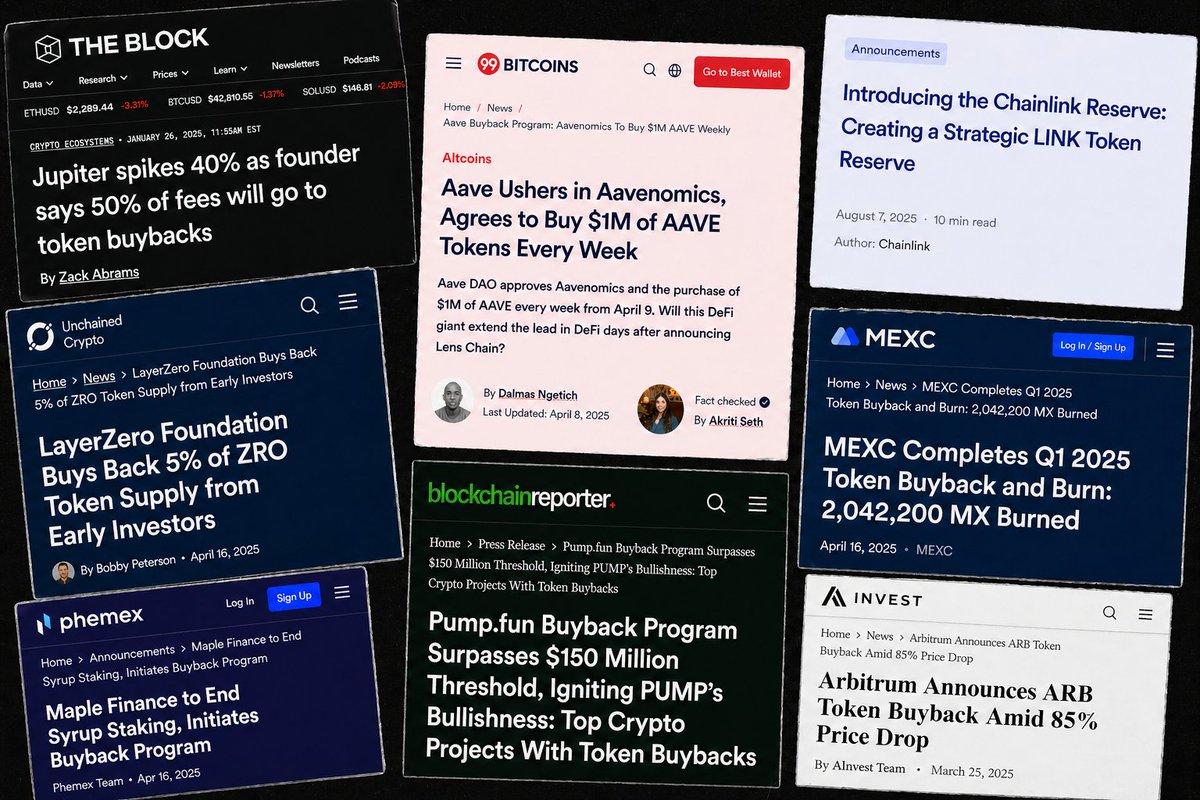
2025 taught us that systems need to generate value. Then it taught us that value needs to go somewhere the token can actually capture it. But should systems really be shoveling their runway into non-descript treasuries?
Fundamentals tweet media
English
4
2
6
141
Hugo 🗝️ 2 of 3 retweetledi
Fundamentals
Fundamentals@JustCryptoecon·
New Token: HYPE ✅No off-chain matching engine. No privileged operator controlling fee routing. ✅Every order, match, liquidation, and settlement is an on-chain state transition. ✅One of the most profitable businesses. ✅Driving value back to its holders. 🧵
Fundamentals tweet media
English
8
3
9
135
Hugo 🗝️ 2 of 3 retweetledi
Justin
Justin@W3bonomics·
Especially important to consider given all the happenings regarding the Security Council's $71M ETH freeze linked to the rsETH hack. Interestingly, those funds are now in a wallet controlled by the ARB DAO, such is the ebbs and flows of control across the various stakeholders.
Fundamentals@JustCryptoecon

Arbitrum has on-chain rollup contracts enforcing settlement, a single centrally operated sequencer, a DAO, a foundation, and a security council with emergency multisig power. So which part governs the system? • The rollup contracts govern state validity, where validators submit assertions about Arbitrum's state to Ethereum • The sequencer decides transaction ordering, and is operated by the Foundation • ARB token governance covers product decisions, economic parameters, treasury, actor set permissioning, technical parameters. BUT, decisions go through multi-stage timelocks and, critically, can be canceled by the Security Council. • The Security Council can execute any software upgrade with no delay in a security emergency. • The Arbitrum Foundation gates Security Council election eligibility and enforces compliance requirements. The implication: Whilst it’s true that the DAO has a broad set of rights across the system, it is also a meaningfully smaller claim than "ARB governs Arbitrum." Each stakeholder in the system have both distinct and overlapping responsibilities within the system. This is why Arbitrum has a hybrid operating model, and hybrid governance. Every label is doing real analytical work here, and each is visible on the profile. And which part governs the system? The answer depends entirely on where you draw the boundary. Learn more about how we draw those boundaries and about ARB’s role in its system at fundamentals.fyi/token/arbitrum

English
0
2
2
219
goodalexander
goodalexander@goodalexander·
Ukraine is basically Anduril but in prod
English
47
109
2.5K
107.8K
Hugo 🗝️ 2 of 3
Hugo 🗝️ 2 of 3@blockbanzai·
Breakage in DeFi is part of how we get the antifragile system we want. A lot of steps backwards to go forward.
English
0
0
0
16
aadvark
aadvark@aadvark89·
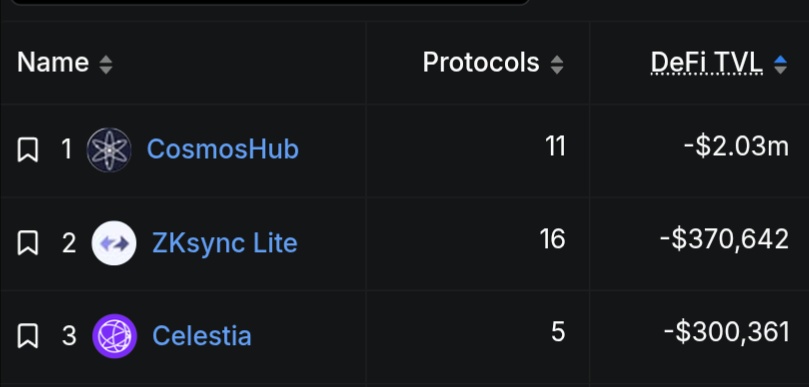
DeFi down so bad that chains have achieved negative TVL
aadvark tweet media
English
30
14
469
32.4K
Hugo 🗝️ 2 of 3 retweetledi
Fundamentals
Fundamentals@JustCryptoecon·
New token: JTO @jito_sol is simultaneously: ✅ A block engine (MEV infrastructure) ✅ A liquid staking protocol (jitoSOL) ✅ A restaking engine (NCNs) ✅ A DAO controlling billions in fee flows So what sector is it?
Fundamentals tweet media
English
1
3
3
116
Hugo 🗝️ 2 of 3 retweetledi
Fundamentals
Fundamentals@JustCryptoecon·
Most people benchmark Bitcoin against Ethereum, Solana, and Cardano. This peer group is incomplete, which leads to poor comparative analysis. Those systems are primarily blockspace businesses. Developers and applications are the core buyer, purchasing execution capacity. Monetary demand is incidental. Bitcoin produces blockspace too. But that's the secondary service.
English
1
2
2
83
Hugo 🗝️ 2 of 3
Hugo 🗝️ 2 of 3@blockbanzai·
AI tool that automatically creates emojis in messages that changes suggested when you click on the emoji. Over time learns what you emotion you want to express and your attitude to emojis.
English
0
0
0
30
Hugo 🗝️ 2 of 3
Hugo 🗝️ 2 of 3@blockbanzai·
@MikeIppolito_ agree. Even with a lot growth pains as we go from primarily changing people's net worth to changing the world.
English
0
0
0
33
Mippo 🟪
Mippo 🟪@MikeIppolito_·
I have never been more excited to work in crypto
English
29
6
125
6.6K
Hugo 🗝️ 2 of 3
Hugo 🗝️ 2 of 3@blockbanzai·
Once I become a father I will write none stop.
English
0
0
0
32
Hugo 🗝️ 2 of 3 retweetledi
Fundamentals
Fundamentals@JustCryptoecon·
Sector labels in crypto mostly describe how a system is talked about, not what it sells. That's a problem. Because sector sets your peer group. Peer group sets your benchmarks. Benchmarks set your valuations. The error compounds. This is how Fundamentals approaches sectors 🧵
Fundamentals tweet media
English
1
3
3
85
Hugo 🗝️ 2 of 3 retweetledi
Fundamentals
Fundamentals@JustCryptoecon·
A token can be staked, burned, locked, and used as collateral, and still confer no genuine claim on the value the system produces. The gap between how tokens are described and what they actually do is wider than most investors appreciate.
English
1
1
2
52
Artem Chystiakov
Artem Chystiakov@Arvolear·
Is there anything exciting left in crypto?
English
153
4
146
102.2K
Angeliki
Angeliki@Angeliki_BTC·
If you know a South African on CT. Introduce me please.
English
113
8
180
18K