
Sabitlenmiş Tweet
Jorge Zaccaro · 张豪
2.5K posts


Jorge Zaccaro · 张豪
@boolpath
blazing trails in search for the memex · writing #Clojure @griffinbank · native 🇨🇴 speak 🇺🇸🇨🇳 learn #elixirlang 🇮🇹🇰🇷
London Katılım Aralık 2010
1.5K Takip Edilen515 Takipçiler
Jorge Zaccaro · 张豪 retweetledi

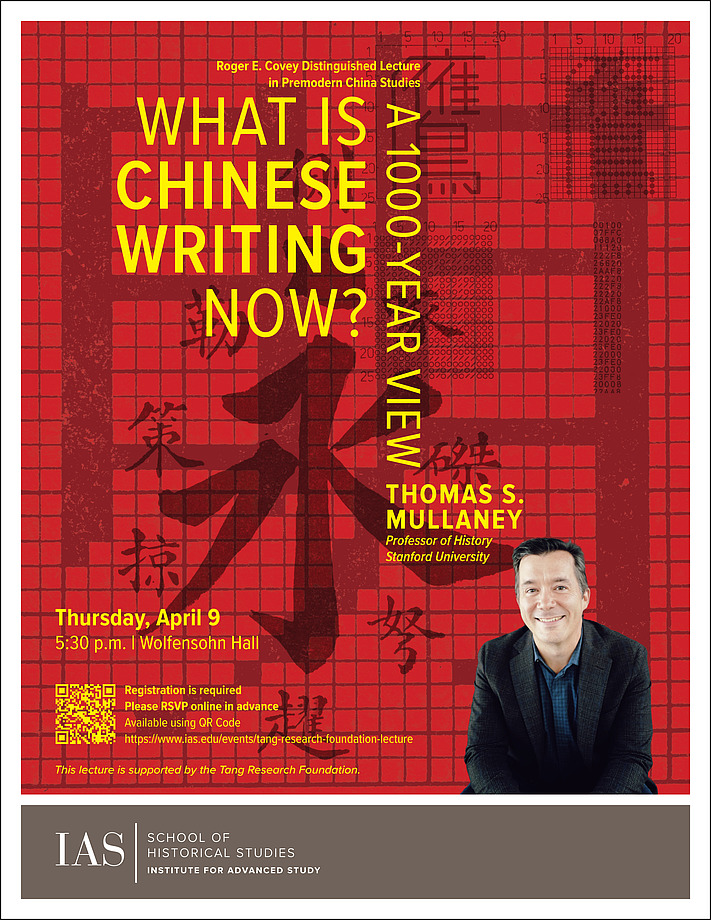
Join @tsmullaney, author of "The Chinese Typewriter" & "The Chinese Computer," for a mind-bending 1000-year journey through the evolution of Chinese characters.
Thursday, April 9 | 5:30 p.m. | Wolfensohn Hall. Register: ias.edu/events/roger-e… @the_IAS
English
This is SO GOOD. @oo_kk_aa Okazaki Tomohiro vibes. Imagine such a playful app…
Orange(互fo)@yuany7777
一个人怎么能和汉字熟成这样,好想知道正在学中文的外国朋友看完是什么心情?
English
Jorge Zaccaro · 张豪 retweetledi

Can confirm. One of my best memories from 2019 was discussing the idea of “伟大复兴的世纪” with a driver on my way to the airport in Beijing, i.e. whether this is the century of China, or India, or else.
Eivor@Eivor_Koy
Beijing taxi drivers are famous for chatting up passengers about pretty much anything—especially international politics. On my way to the airport, my driver got really curious and started talking. “I think the Americans were just trying to pull the same playbook they used in Venezuela on Iran—figuring if they took out the leader, the whole country would just give in.” “Do you think that actually worked?” “No way, definitely not. The U.S. just wants to control Iran and install someone who’ll do whatever they’re told. But Israel? They want to wipe Iran out once and for all to feel ‘secure’ in the region. Their goals were never aligned to begin with. Trump’s pretty simple, but Bibi was evil. I reckon Trump got played and must be regretting it now.” Then I stopped at a little street restaurant for breakfast, and right nearby two older ladies were chatting about the U.S. midterms. “If Trump loses this fight in Iran, he’s going to tank in the midterms,” one of them said. “If he can’t keep oil prices down and the American economy starts hurting, he’s done for.” Her friend nodded. “Exactly. That’s why China pushing so hard on electric vehicles and cutting energy dependence is such a smart move.” It’s always fascinating hearing what everyday people think about global affairs.
English
Jorge Zaccaro · 张豪 retweetledi

This is what an EXCEPTIONAL mindset thinks like and sounds like.
So impressive from a 22 years old.
Not only you CAN control what you think, and how you think it and why, but you SHOULD.
See your mind as a skill and practice it as such.
English
Jorge Zaccaro · 张豪 retweetledi

🇨🇳Pure Chinese aesthetics. A Chinese photographer spent 5 years capturing these top moments across China. Hope you like it.
English
🎯! Personalized tutorials, customized documentation, self-paced walkthroughs, and progressively unfolding learning paths.
“Help me learn [some language] by building an application that [does something]” is a useful prompt in plan mode. Adjust the plan and learn as you go.
Geoffrey Litt@geoffreylitt
"AI code review" should be about teaching people how the code works, not just verifying that it's correct We can now generate essays, diagrams, and explorable explanations on demand!! Why are we still reading raw code diffs as the primary UI?
English
I’m very much enjoying this book. Thank you for writing it 💙
Tomas Petricek (find me on BlueSky)@tomaspetricek
A new web page for my book! tomasp.net/cultures/ It has all the links you need to get the open access PDF, buy a hardcopy or an ebook, as well as some older talks. If you run a podcast, conference or a user group, I'm always hapy to join & talk about something from the book!
English
Jorge Zaccaro · 张豪 retweetledi
This is genius! 😍
The sentence 不想上班那就別上 ("if you don't want to go to work, then just don't go")
is mashed up into four written characters, each comprising two spoken syllables:
⿱⿰不目心⿲上丿王⿰𭃂尤⿰另上
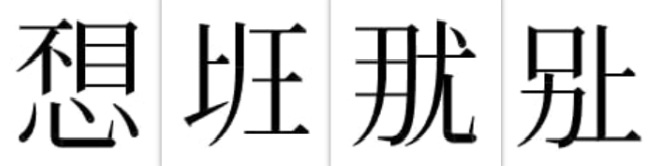
你法我笑的Dictator Yang🌻🍉🏳️🌈📄🐚 #pray4jade@Y_Wenli
秒懂了哈哈
日本語
Graphy theory 💙
Md Ismail Šojal 🕷️@0x0SojalSec
Chinese scientists have developed, The best shortest-path algorithm in 41 years! A team from Tsinghua University has broken Dijkstra's "sorting barrier" - the first improvement since 1984. Just use for a world-map 🤯 Paper - arxiv.org/pdf/2504.17033 x.com/0x0SojalSec/st…
English

The US military strikes on Venezuela and extraction of Maduro seem to have stunned China, especially if you compare it to Beijing's reaction to last July's Iran strike.
MOFA today says Beijing is "deeply shocked" (深表震惊), which per a quick search is a very rare term used only for assassinations, terrorism, and mass casualty events.
MOFA also says the US has seriously violated Venezuela’s sovereignty and threatened peace and security in Latin America and the Caribbean.
And I think there's no way Beijing knew about the attacks if it sent its LatAm special representative to Caracas just before it happened—too risk-averse!
The MOFA reaction after the US strike on Iran last June was more muted: standard language (for Beijing!) of "strong condemnation" (强烈谴责) and no mention of Iranian sovereignty or a broader US regional threat.
We'll see how Beijing's reaction evolves. This US action seems to be registering in a big way, and will resonate with Xi's well-known suspicion of Western-backed "color revolutions" around the world, feeding into his heightened national security focus.
That said, I doubt Beijing will respond militarily or make a sudden move involving Taiwan, especially as Xi still wants a deal with Trump to reduce US economic threats and buy time for tech self-reliance. And Beijing will want a clear contrast with Washington to trumpet its claims to stand for peace, development, and moral leadership.
Xi does not care about Venezuela more than he cares about China. He'll be hoping that it turns into a quagmire for the United States.


English
Really good read.
Mike Lawler@mikeandallie
1/3 3 books from 2025 Looking back on books I read in 2025, I think my favorite was @EmanuelDerman 's My Life as a Quant. After 25 years of doing quantitative stuff in finance, I got a lot more out of it than when I read it the first time ~20 years ago.
English
Jorge Zaccaro · 张豪 retweetledi

This looks good! Want it.
Tomas Petricek (find me on BlueSky)@tomaspetricek
What defines a correct program? What makes a good programmer? The answer depends on what culture of programming you subscribe to! This has been a long time in the making, but my open access book on the history of programming is available for pre-order! cambridge.org/core/books/cul…
English