Al White
5.2K posts

@bootcanyon
Amature cook with a black belt in pie making. Intolerably liberal climate heretic. Pronoun: Generalíssimo. Mature discussions only please. Thank you.


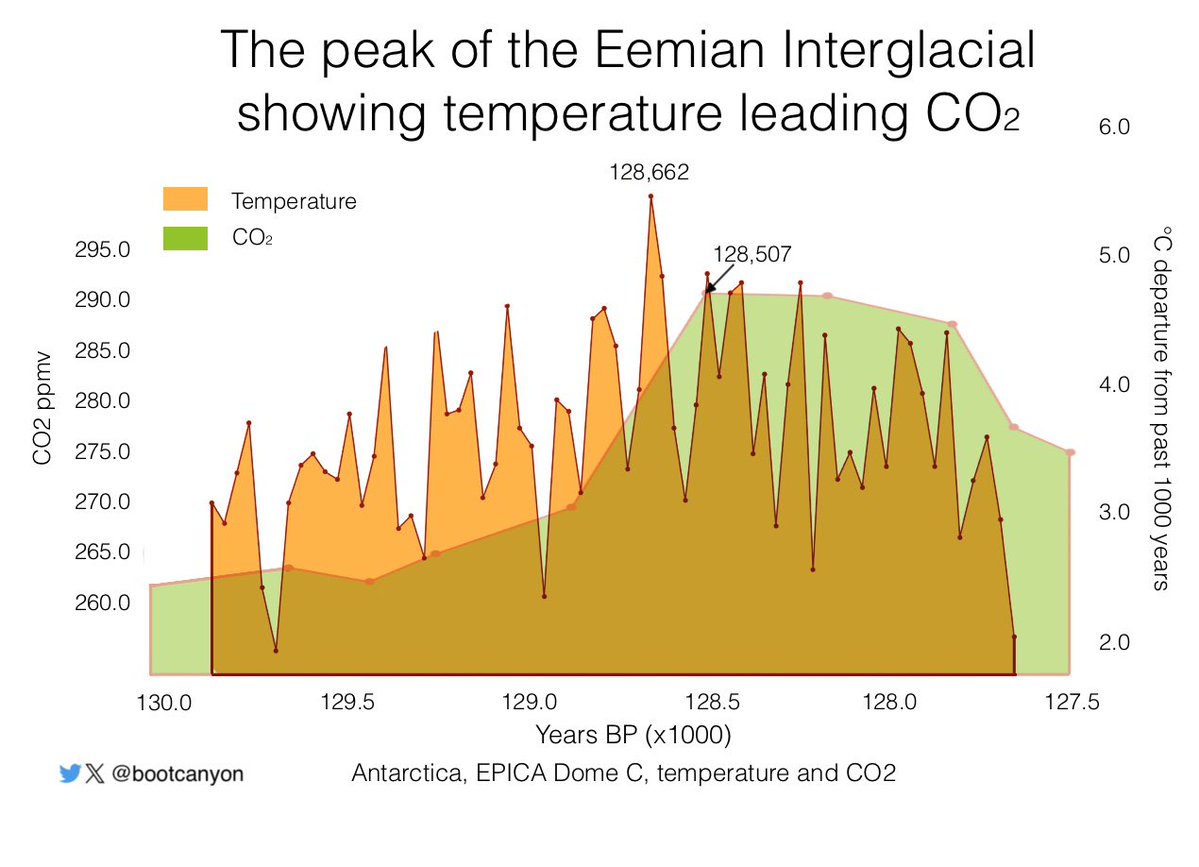
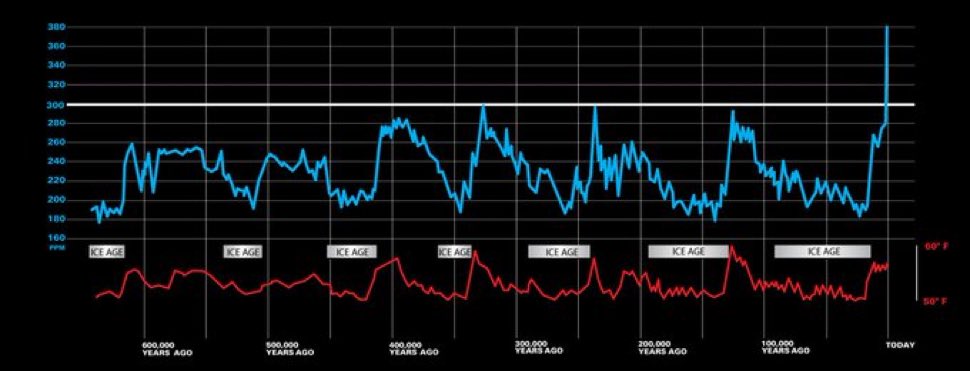
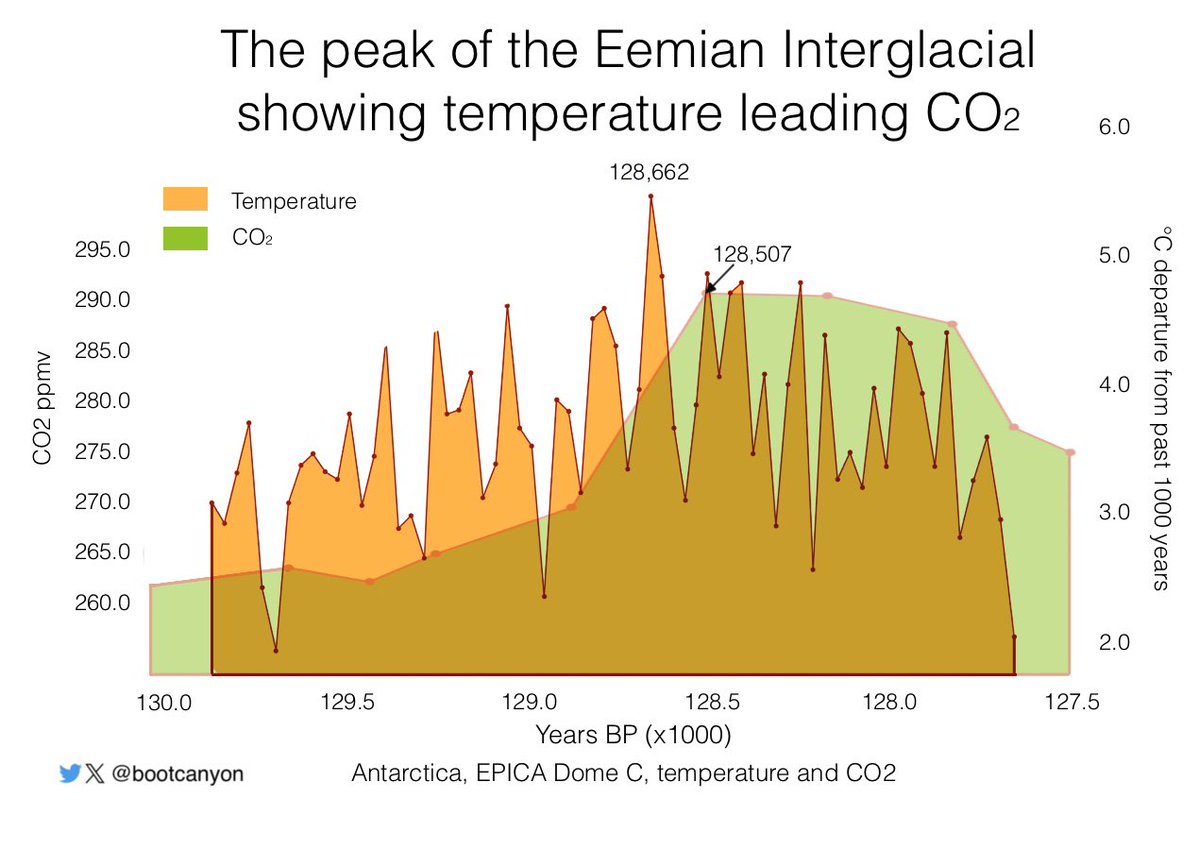
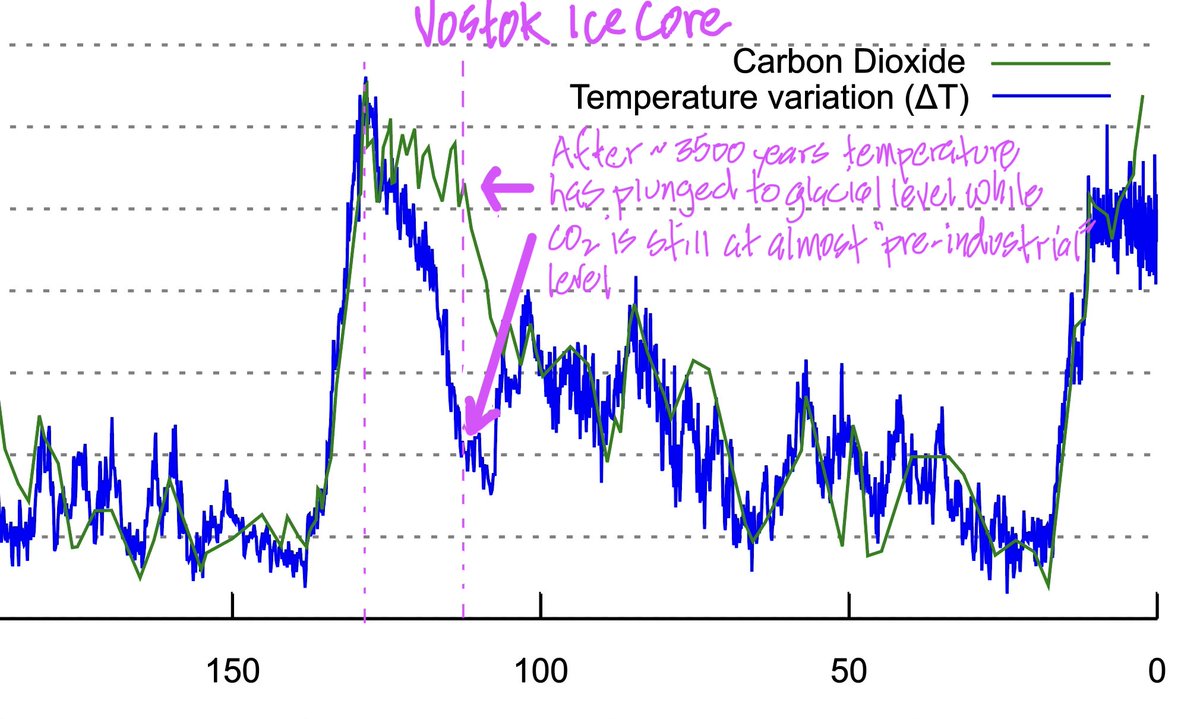
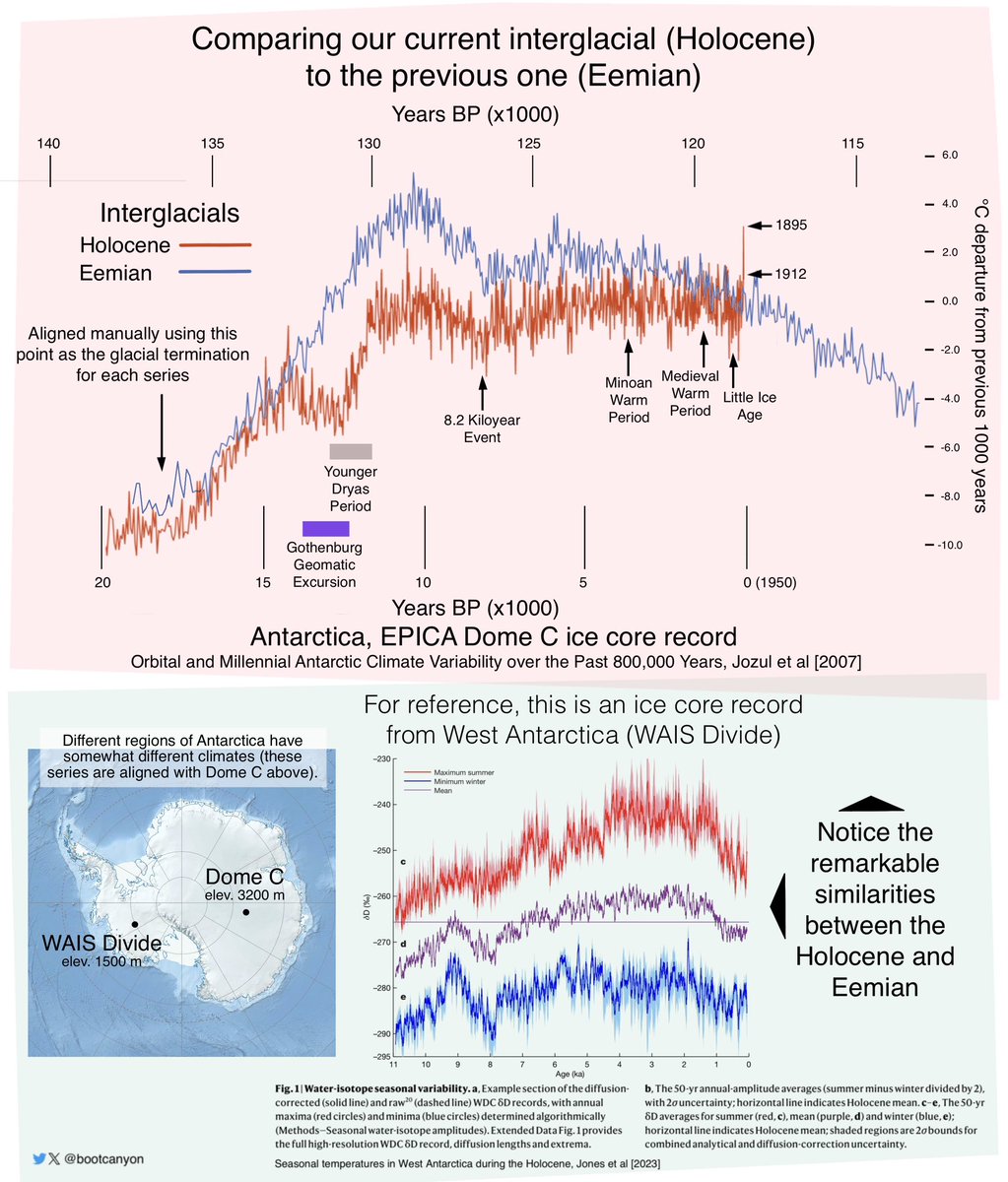
A common climate myth is that modern CO₂ is rising faster than anything in 800,000 years. The truth is, no one can ever know. And this is where the science rubber really hits the road. There's no way to measure the speed of previous warming episodes. This means no one can say modern warming is 'unprecedented'. The truth comes from science, the laws of physics and ice core studies for more than a century. Before snow turns into solid ice, it exists in what is known as the 'firn'. This refers to the porous, packed layer of snow that eventually settles into glacial ice. But this doesn't happen overnight. These ice bubbles are not sealed from the surrounding air. So the air moves freely through this layer for decades or even centuries before the weight of new snow finally crushes the pores shut. This gas-age/ice-age difference is why a single slice of ice contains air that is significantly younger than the ice surrounding it. Because the air can circulate during those 50 to 200 years (depending on the site’s snowfall rate), a single bubble doesn't represent a year. It can represent a rolling average of a century. If a massive CO₂ spike occurred 10,000 years ago but only lasted 40 years, the ice core would smooth it out. The spike would be averaged into the surrounding centuries of lower data, making it appear as a tiny, invisible bump. Comparing a 20-year satellite trend to a 200-year ice core average is like comparing a high-definition photograph to a smudge of charcoal.


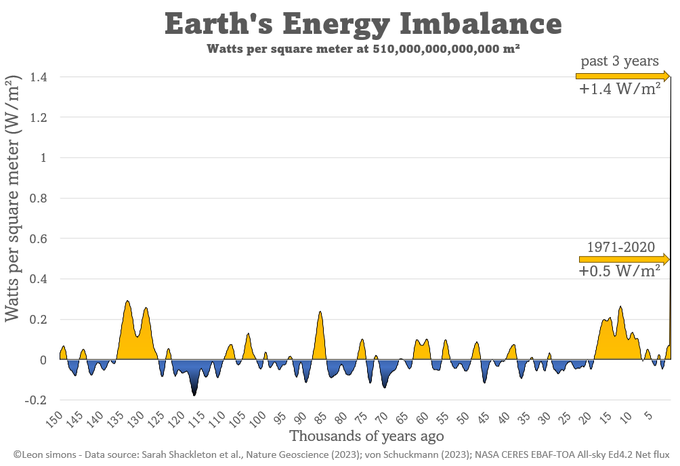
Anyone denying accelerated global warming should start by explaining how +2 W/m² of increased Absorbed Solar Radiation (from decreased Earth reflectivity) doesn't lead to much faster warming. I just had to extend my y-axis again, with a new month of NASA CERES satellite data:

ONE TREE CAN MAKE ENOUGH OXYGEN FOR 4 PEOPLE — EVERY SINGLE DAY! A mature tree produces ~118 kg (260 lbs) of oxygen per year... while absorbing 22 kg of CO₂. That's why ancient forests are literal life-support systems for the planet. We're breathing because trees have been quietly running Earth's air factory for millions of years Nature's MVPs deserve more credit. Mind = blown? Like + RT if you're team trees! #Trees #NatureFacts #Climate


A common climate myth is that modern CO₂ is rising faster than anything in 800,000 years. The truth is, no one can ever know. And this is where the science rubber really hits the road. There's no way to measure the speed of previous warming episodes. This means no one can say modern warming is 'unprecedented'. The truth comes from science, the laws of physics and ice core studies for more than a century. Before snow turns into solid ice, it exists in what is known as the 'firn'. This refers to the porous, packed layer of snow that eventually settles into glacial ice. But this doesn't happen overnight. These ice bubbles are not sealed from the surrounding air. So the air moves freely through this layer for decades or even centuries before the weight of new snow finally crushes the pores shut. This gas-age/ice-age difference is why a single slice of ice contains air that is significantly younger than the ice surrounding it. Because the air can circulate during those 50 to 200 years (depending on the site’s snowfall rate), a single bubble doesn't represent a year. It can represent a rolling average of a century. If a massive CO₂ spike occurred 10,000 years ago but only lasted 40 years, the ice core would smooth it out. The spike would be averaged into the surrounding centuries of lower data, making it appear as a tiny, invisible bump. Comparing a 20-year satellite trend to a 200-year ice core average is like comparing a high-definition photograph to a smudge of charcoal.


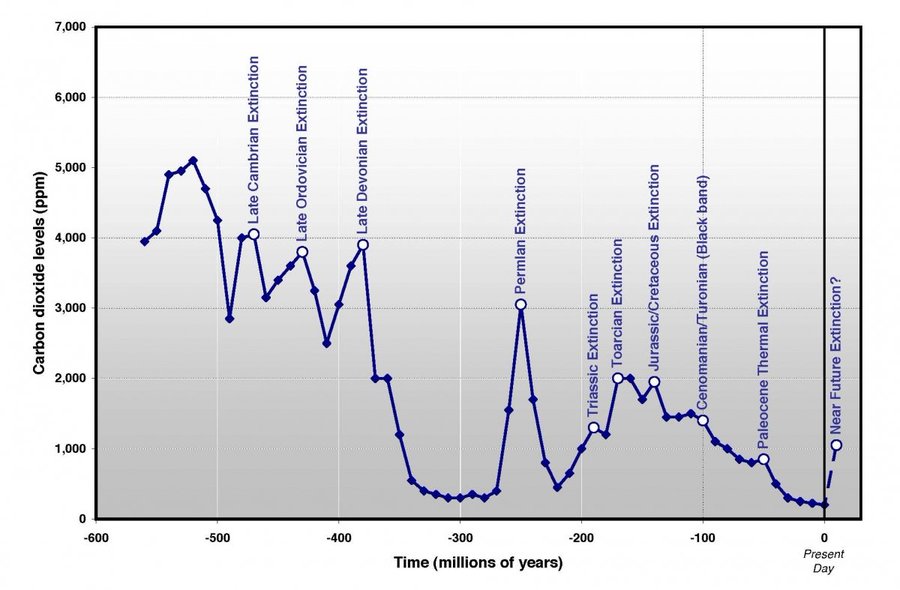
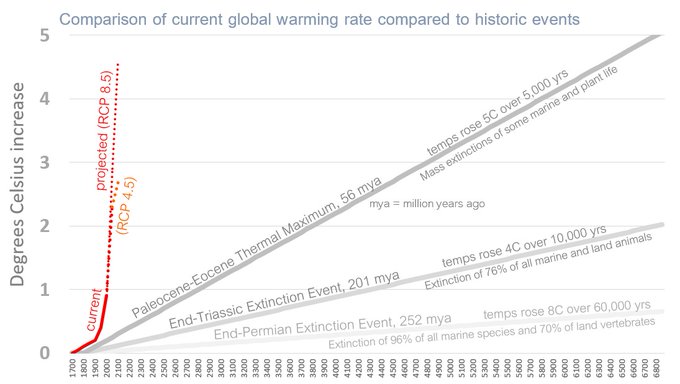
This Nature paper, which is clearly a big hit with the usual suspects in the fossil fool community, finds that over the past ~3 million years, climate shifts weren’t always tightly coupled to CO₂, with oceans and ice sheets doing plenty of the work. Deniers immediately declare CO₂ irrelevant. Scientists note two awkward details: today's CO₂ spike is far faster and higher than anything in that record, and in past cycles temperature often rose first because warming oceans released CO₂, which then amplified and sustained the heat. This time we're doing the outgassing ourselves. Discovering that past climate was complicated is not proof that present climate change is imaginary, just that feedbacks exist, and we're currently pulling the biggest lever. nature.com/articles/s4158…


BREAKING: The world thought Hormuz was an oil story. Then it became an LNG story. If the damage assessment holds, it becomes a civilisation-input story that lasts half a decade. There is a difference between a shipping shock and a capacity shock that the market has not yet priced. A shipping shock traps molecules. The oil exists, the gas exists, the tankers are anchored, and when the strait reopens the molecules flow again. A capacity shock destroys molecules. The liquefaction trains that convert gas into LNG are physically damaged. The molecules cannot be produced even if every ship in the world is available to carry them. QatarEnergy’s CEO Saad al-Kaabi told Reuters that damage to Ras Laffan is severe. Repairs to impaired liquefaction capacity could take three to five years. Force majeure was declared on March 4 and has since escalated as the damage assessment worsened through March 18 and 19. Long-term contract buyers including Italy, Belgium, South Korea, and China face multi-year delivery disruptions. Shell declared force majeure on cargoes it resells from QatarEnergy. The market must now confront a possibility it has refused to model: that roughly 17 percent of Qatar’s 77 million tonne per annum capacity is not delayed but structurally impaired. JERA’s CEO stated that the global LNG market does not have the spare capacity to bridge the gap if Hormuz-linked supply is meaningfully lost. That single sentence reprices everything. If the replacement molecules do not exist in sufficient volume, the adjustment mechanism is not alternative supply. It is fuel switching, demand destruction, and rationing by balance-sheet strength. Rich buyers can pay more. Poor buyers cannot. The poor buyers are already breaking. Vietnam’s diesel is up 40 to 59 percent. Australia’s petrol is up 70 cents per litre. Sri Lanka is rationing fuel with QR codes at 15 litres per car per week, a four-day workweek, and Wednesday school closures. India raised LPG prices while importing 85 percent of its crude through a strait that is 90 percent shut. Gulf air cargo collapsed 79 percent. Jet fuel surged 58 percent. IndiGo and Akasa imposed surcharges. Vietnam Airlines warned of shortages from April. Ninety-five countries have reported petrol price increases since February 28. Ras Laffan is not just LNG. It is helium, urea, methanol, polyethylene, and sulfur. The downstream cascade from a multi-year Qatari impairment runs through semiconductor fabrication, pharmaceutical synthesis, phosphate fertiliser production, food packaging, and desalination. The facility that is damaged produces the molecules that four billion people depend on for chips, medicine, fertiliser, plastic, and drinking water. Europe’s post-2022 gas security was built on Qatari LNG replacing Russian pipelines. A structural impairment does not merely make gas expensive. It makes gas unavailable to industry. That is how an LNG shock becomes a deindustrialisation shock. BASF and Yara are already cutting fertiliser output. Russian LNG fills the gap at 18 to 22 percent of European imports. The country Europe sanctioned is the country Europe now depends on because the country Europe trusted was struck in a war Europe refused to join. Anyone arguing this resolves quickly now carries the burden of proof. They must explain where the replacement molecules come from when the world’s largest LNG hub is physically impaired, the strait is commercially closed, and the CEO of Asia’s biggest power buyer says there is no bridge. The market priced a shipping delay. The evidence demands a capacity repricing. The difference between those two words is measured in years, in trillions of dollars, and in whether the lights stay on. Full analysis: open.substack.com/pub/shanakaans…