Investing Notes

4.5K posts

Investing Notes banner
Investing Notes

Investing Notes

@bplus607

Learning how industries actually work and what that means for investors

Katılım Aralık 2011
313 Takip Edilen376 Takipçiler
Investing Notes
Investing Notes@bplus607·
@PulkitA30298377 In the marketplace model, platforms are limited to commissions (often capped around 15-18%). By owning inventory, they capture the full spread between wholesale purchase price and retail selling price. Dhanda!!
English
0
0
1
366
Think4Tomorrow ®️
Think4Tomorrow ®️@PulkitA30298377·
Blinkit Company planning to shift from market place to inventory led model. After shutting down thousand of general store blinkit going to open own general store 🤣
English
16
23
468
23.7K
Investing Notes
Investing Notes@bplus607·
When markets are quiet, brokerages still make money—from your idle cash. #Brokerage Because users keep uninvested balances, firms earn interest on this “float”—creating steady income even without trades. But it’s not that simple. Regulations limit how much can be earned, and payouts or rate changes can quickly affect this income. As rates rise, this quiet revenue stream becomes more meaningful—often overlooked compared to trading fees. Examples: Zerodha, ICICI Securities (India) | Saxo Bank, Hargreaves Lansdown (Global)
English
0
0
0
32
Investing Notes
Investing Notes@bplus607·
As digital media grows, commercial printing shifts to areas where physical presence adds value, like packaging and labels. E-commerce is driving this shift further. #CommercialPrinting Because pricing is easy to compare, margins stay low. This is a capacity game—idle machines hurt, high utilization drives profits. At the same time, rising paper costs can’t always be passed on quickly, adding pressure on margins.  Examples: Uflex Limited, TCPL Packaging Limited (India) | Amcor plc, CCL Industries (Global)
English
0
0
0
73
Investing Notes
Investing Notes@bplus607·
A tweet is a living, breathing collaboration engine. One spark. Crowd jumps in. Details added. Flaws fixed. Angles multiplied. What starts as a single post becomes a full mini content platform — evolving in public.
English
0
2
4
254
Investing Notes
Investing Notes@bplus607·
@OrevaZSN In software subscription rental economy was born by Salesforce in 1999. They said, "Forget buying expensive licenses. Just pay us a nice monthly fee per user—like Netflix for your CRM!"  Welcome to modern life: own nothing, subscribe to everything 😀
English
1
0
20
1.4K
𐌁𐌉Ᏽ 𐌕𐌉𐌌𐌉
You know what really bugs me these days? We can't own anything anymore. Everything is a subscription. Adobe, Notion, Spotify. You don't just buy things once, you keep paying every month. You literally have to pay for everything forever. Isn't anyone else bothered by this?
English
916
4.9K
27.7K
391.3K
Investing Notes
Investing Notes@bplus607·
Raw lithium ore (like the clay-hosted deposits in J&K) must be refined into battery-grade lithium carbonate or hydroxide. India has almost no commercial-scale domestic refining capacity today, so even if mining starts, the material would likely be exported or require imported processing know-how
English
0
0
2
125
Chenthil
Chenthil@jcrajan00·
India sits on 5.9 million tonnes of lithium reserves. Discovered 2023 in J&K. Extraction underway in 2026: zero. Meanwhile, lithium imports for FY26 are tracking past $2 billion. We are buying back the same metal we discovered we have. The mineral is not the bottleneck. The auction process is. The J&K block was re-tendered three times after the first round failed — bidders cited unclear terrain data and royalty disputes. The fourth auction concluded Q1 2026. First production: 2028, earliest. So a strategic resource sat dormant for five years between discovery and first extraction. In a global race for battery supply chains, that is the price of slow execution. Discovery solves nothing. Extraction does.
English
8
33
229
13K
Investing Notes
Investing Notes@bplus607·
@abhymurarka Similar bottleneck happening in data center buildout with high-voltage switchgear and cooling systems. Companies solving these quietly compounding.
English
0
0
1
99
Abhishek Murarka 💹🐂
Abhishek Murarka 💹🐂@abhymurarka·
One book for the times: The Goal by Eliyahu Goldratt. One key learning: Theory of Constraints. It says: Find the bottleneck/ chokepoint. Then focus energy there. Supply chains are undergoing tectonic shifts. Figure out chokepoints and find companies solving/ gaining from it.
English
6
3
65
6.5K
Investing Notes
Investing Notes@bplus607·
Real money gaming platforms don’t earn from wins or losses, they earn from activity. The more games played, the more stable the revenue. #OnlineGaming Because money circulates within the system, platforms take a small commission on each transaction—making scale and liquidity critical. Without enough active players, even good games fail. Note: growth isn’t about adding more games. It’s about retention and trust. Smooth onboarding, fast withdrawals, and fair play matter more than game variety. It needs to maintain a delicate balance. Bonuses drive activity but hurt margins, while regulation and payment friction can quickly reduce engagement. As the industry evolves, value shifts toward platforms that control user traffic, payments, and ecosystem—not just games. In the end, this isn’t just gaming—it’s managing user behavior at scale. Examples: Dream Sports, Games24x7 (India) | Flutter Entertainment (PokerStars), Evolution Gaming (Global)
English
0
0
0
138
Investing Notes
Investing Notes@bplus607·
@InvestorOfJAMMU Profit stagnation stems from bear market conditions reducing high-margin activities such as IPO processing, transaction charges, and new demat account openings?
English
0
0
0
885
Margin of Safety🇮🇳
Margin of Safety🇮🇳@InvestorOfJAMMU·
CDSL revenue up 17% but Profit down 20% YoY. Margins affected 400 bps. In Bear market, CDSL profit becomes stagnant.
English
20
8
444
99.5K
Investing Notes
Investing Notes@bplus607·
Electricity is cheap at noon and expensive at night—BESS (Battery Energy Storage System) makes money from that gap. #BESS #RenewableEnergy It doesn’t generate power, it monetizes timing—charging when supply is high (like solar) and discharging when demand spikes, acting like a shock absorber for the grid. Apart from returns coming from arbitrage. Fast-response batteries earn from grid services like frequency control—often more stable than energy spreads. But it’s not free money. More usage increases revenue, but also speeds up battery degradation—so operators constantly trade off income vs asset life. As renewables grow, value shifts from generation to energy management—where software, dispatch timing, and grid integration matter more than just battery capacity. Examples: (India – emerging) | Fluence Energy, Tesla (Global)
English
0
0
1
177
Investing Notes
Investing Notes@bplus607·
@CaVivekkhatri The shift from informal burning to formal recycling is huge for both environment and economy. Which stock in this space do you see as most undervalued right now? Gravita India?
English
0
0
0
152
Investing Notes
Investing Notes@bplus607·
@vsvicky_ Is the gap mainly because Kalyan Jewellers follows a volume-driven strategy with aggressive competitive pricing and heavy expansion in Tier-2/3 cities, leading to thinner margins around 4-5% EBIT?
English
0
0
15
6.5K
Satpal Singh
Satpal Singh@vsvicky_·
Tanishq with ₹46,000k Cr revenue pulls ₹4,767 Cr in profit with a massive ₹92 Cr per store. Meanwhile, Kalyan Jewellers with ₹25,000 Cr revenue pulls only ₹714 Cr in profit, averaging ₹65 Cr per Store Tanishq is roughly 7x more profitable despite having only 2x the revenue The "Tata Premium" is real 🔥
English
33
84
1.5K
159.6K
Investing Notes
Investing Notes@bplus607·
In luxury spas, the same massage can be priced 3x higher—just by changing the environment. #LuxuryWellness #Hospitality Because customers aren’t buying the treatment, they’re buying how they feel after. Ambiance, service flow, therapist quality, and even location combine to create perceived value—making this an experience system, not a simple service. Note: growth isn’t linear. Adding more rooms or therapists can dilute exclusivity, while revenue is limited by time slots and personalization. At the same time, consistency matters more than one-time excellence—repeat customers drive most of the profits. As wellness evolves, value is shifting from single treatments to integrated programs—fitness, nutrition, mental well-being—turning spas into long-term experience platforms, not just service providers. Examples: Ananda in the Himalayas, Kaya Kalp - The Royal Spa (India) | Six Senses, Canyon Ranch (Global)
English
0
0
0
194
Investing Notes
Investing Notes@bplus607·
@BullTheoryio Fascinating numbers. With global money supply still expanding, how do you see the long-term risks to holding cash vs. deploying it? Will dry powder like this stay valuable?"
English
2
0
1
735
Bull Theory
Bull Theory@BullTheoryio·
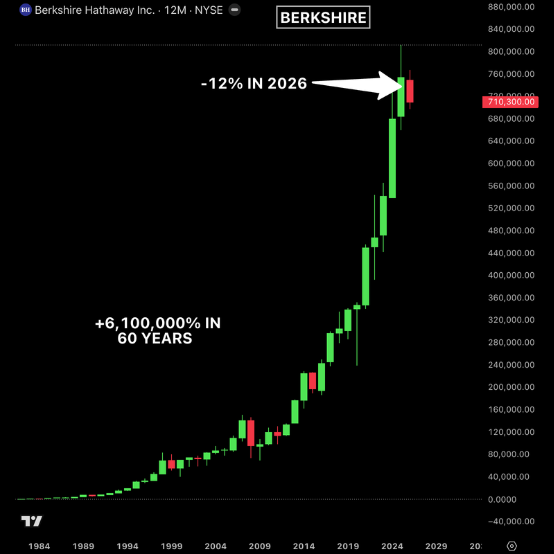
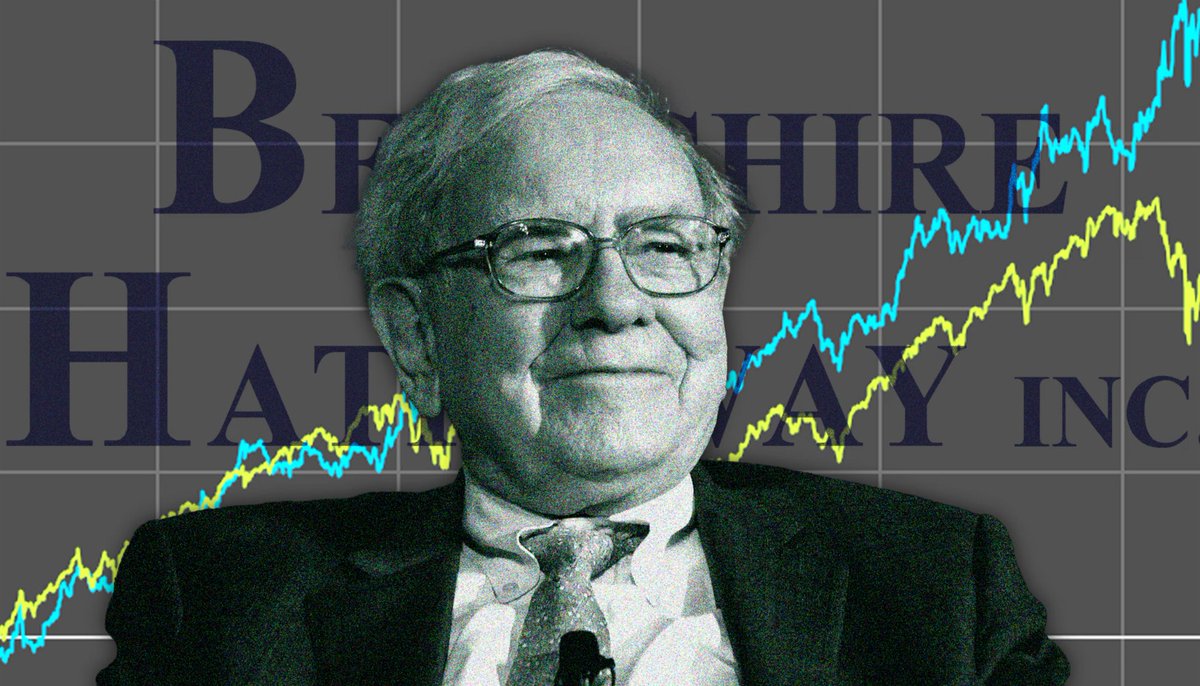
🚨 THIS COMPANY IS IS MAKING $20 BILLION A YEAR JUST BY HOLDING CASH. Berkshire Hathaway's cash pile just hit a record $397 billion. That’s larger than the entire GDP of countries like Portugal, Finland, and New Zealand. And at current Treasury rates of around 5%, Berkshire is earning roughly $20 billion a year just by doing nothing. The US Treasury's operating cash balance regularly sits below $800 billion. Berkshire is sitting on half of what the US government keeps in its checking account. Also Berkshire Hathaway just reported earnings without Warren Buffett, for the first time in 60 years. Buffett ran Berkshire for 60 years and turned a failing textile company into a $1 trillion conglomerate. Over those 60 years Berkshire's stock gained 6,100,000%. The S&P 500 returned 39,000% over the same period. Greg Abel's first quarterly report showed operating earnings up 18% to $11.35 billion and net income more than doubling to $10.1 billion from $4.6 billion a year ago. The cash pile hit a new record of $397.4 billion, bigger than the GDP of most countries and Berkshire was again a net seller of equities, offloading $24.1 billion in stock against only $16 billion in purchases. Despite all of this, Berkshire's stock is down 11.19% over the last year while the S&P 500 gained 29.5%. The market is not sure yet if anyone can replace 60 years of Warren Buffett. The numbers are strong,The cash is at a record, the profits doubled and the stock is still going down because investors are waiting to see what Greg Abel does with $397 billion that Buffett never spent.
Bull Theory tweet mediaBull Theory tweet mediaBull Theory tweet media
English
76
154
1K
66.2K
Investing Notes
Investing Notes@bplus607·
Absolutely agree — the first $100k is brutal as you're doing all the heavy lifting. Once compounding kicks in, the second and third come quicker and the market starts working for you. Key caution though: surviving isn't enough; actively learn high-quality places to allocate capital where returns can truly accelerate. Smart selection multiplies the power of time
English
0
0
0
54
THE DIVIDEND DOMINATOR
THE DIVIDEND DOMINATOR@TheAlphaThought·
Your first $100k is the hardest money you will ever make in the market. Your second $100k comes faster. Your third comes faster than that. By $500k the market is doing most of the work for you. The whole game is just surviving long enough to get there.
English
22
11
126
5.4K
Investing Notes
Investing Notes@bplus607·
Water treatment doesn’t sell water, it sells safety—turning raw sources like rivers, lakes, or groundwater into usable supply. #WaterTreatment Because it sits between sourcing and distribution, even a small failure can halt the entire system. And here’s the catch: complexity isn’t fixed. Poorer input needs more filtration, chemical dosing, and disinfection—raising cost, energy use, and sludge handling. But pricing is regulated. So returns don’t come from selling more water, but from running the system better—efficiency, consistency, and uptime become the real levers. As contamination rises, value is shifting toward advanced treatment and automation, where reliability improves and long-term costs fall. If water is abundant but treatment fails - do we really have supply? Examples: VA Tech Wabag Limited, Ion Exchange (India) Limited (India) | Veolia Environnement, Xylem Inc. (Global)
English
1
0
2
186
Investing Notes
Investing Notes@bplus607·
Main battle tanks don’t generate demand through usage, they depend on long, lumpy procurement cycles driven by defense budgets and geopolitics. #DefenseSystems Because platforms are selected through complex, once-in-decades decisions, revenues are irregular—but lifecycle support and upgrades remain more predictable. But growth isn’t smooth. Delays, policy shifts, and long development cycles make earnings volatile and entry difficult. As warfare evolves, value is shifting from steel to subsystems—electronics, sensors, and software—where upgrades are frequent and margins higher. If platforms are static but subsystems evolve continuously—where does real compounding happen? Examples: Emerging? (India) | Rheinmetall AG, BAE Systems (Global)
English
0
0
0
164
Investing Notes
Investing Notes@bplus607·
Consumer durables demand is not steady, it often depends on the season. For products like air conditioners, even small changes in summer can affect sales a lot. #consumerdurables  A common mistake is reading yearly demand without accounting for seasonal volatility. Can strong demand overcome a weak season? Examples: Voltas, Blue Star Limited (India) | Daikin Industries, Carrier Global (Global)
English
0
0
2
185
Investing Notes
Investing Notes@bplus607·
Coal may look like it’s declining, but demand isn’t going away — it’s changing. As renewables grow, coal is used more when solar or wind is not available, so grid reliability matters more than total usage. #coal #energy Investors should track peak demand support and utilization patterns, not just total generation. Is coal declining, or just changing its role in the energy system? Examples: Coal India Limited, NTPC Limited (India) | Peabody Energy, China Energy Investment Corporation (Global)
English
0
0
1
192
Investing Notes
Investing Notes@bplus607·
@stockifiabhijit The shift was driven by BSE's lower fees, including zero charges on futures and reduced rates on options, combined with a change in weekly expiry day and SEBI's limit of one weekly expiry per exchange.
English
0
0
3
246
Abhijit Chokshi | Investors का दोस्त
BSE just overtook NSE in F&O for the first time ever! April data: BSE grabbed 55.4% market share vs NSE’s 44.6%. Daily turnover: ₹2.69L cr (BSE) vs ₹2.16L cr (NSE). Historic shift in India’s derivatives market!
English
13
9
138
10.6K